REVIEW · LISBON
Lisbon: History, Stories and Lifestyle Walking Tour
Book on GetYourGuide →Operated by LISBOA AUTÊNTICA LDA · Bookable on GetYourGuide
Lisbon works in layers. This 3-hour tour strings together hills, streets, and key turning points so the city feels logical fast, not like a pile of postcards. I especially like the big moments at Miradouro São Pedro de Alcântara and the fun switch-up with the iconic tram.
My favorite part is how the walk mixes scenery with real stories. You’ll pass places tied to art, church design, and politics, including the Carmo area tied to the Carnation Revolution, with guides like Paulo and Ana known for storytelling that makes names and dates stick.
One thing to plan for: Lisbon is hilly. Expect uneven sidewalks, some steps, and a pace that still involves walking up and down. If you’re not great on stairs, wear solid shoes and plan for frequent breaks.
In This Review
- Key highlights you’ll feel right away
- A 3-Hour Lisbon Walk That Makes the City Click
- Bairro Alto: How Lisbon Reinvented Itself After 1755
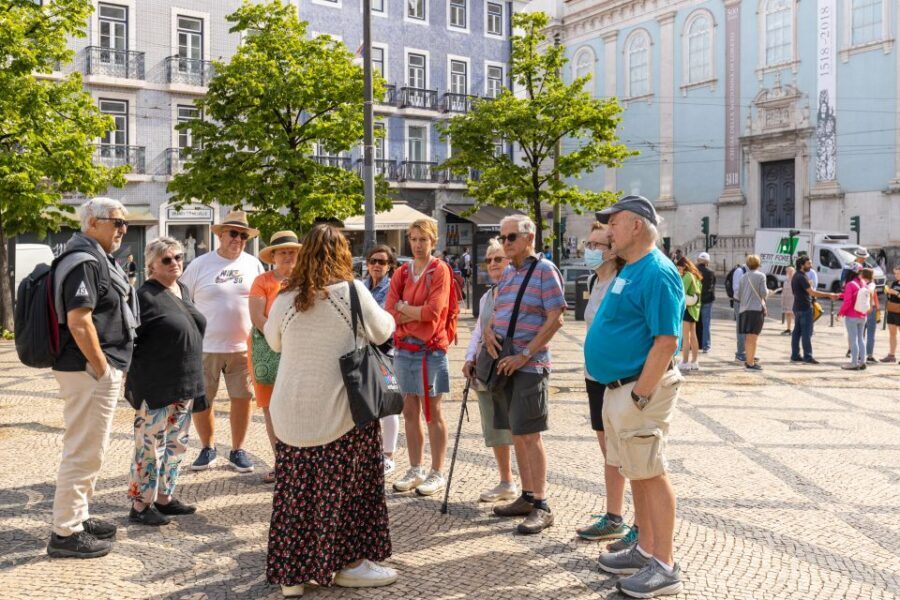
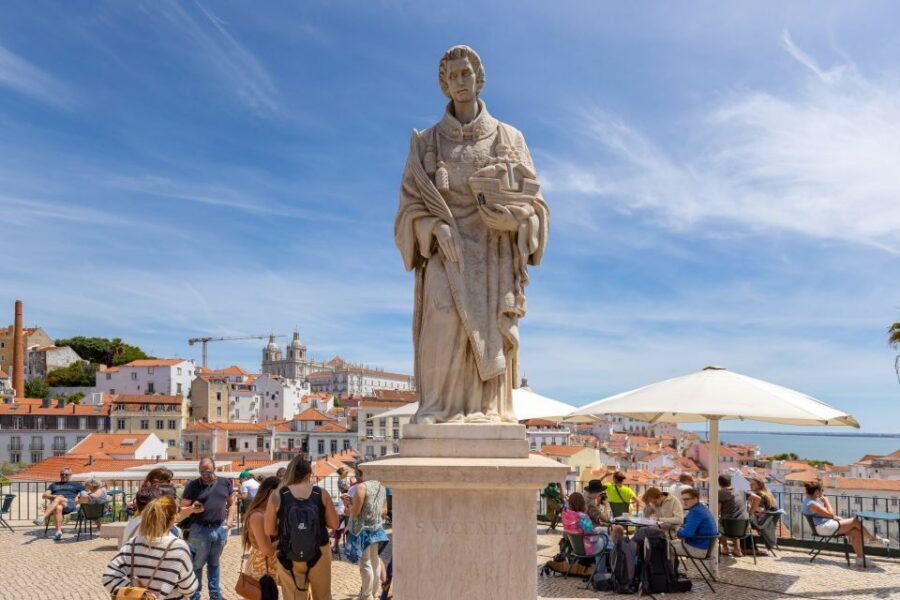
- Miradouro São Pedro de Alcântara: The View With a Job
- São Roque Church: When a Jesuit Facade Hides a Visual Party
- Carmo Convent and Church: Gothic Architecture Meets 1974 Reality
- Santa Justa Elevator and Baixa: A Viewpoint Above the Center
- Taking the Tram Up to Portas do Sol
- Portas do Sol to Alfama: Monastery, Pantheon, and Old-Street Life
- Alfama to Lisbon Cathedral: Finishing With the Big Timeline
- Included Coffee and Cake: Small Stops That Actually Matter
- Price and Value: What $29 Buys You in Real Terms
- The Kind of Guide That Makes or Breaks a Tour
- Who Should Book This Tour (and Who Might Skip It)
- Should You Book This Lisbon History and Lifestyle Walking Tour?
- FAQ
- Where does the tour start and meet?
- How long is the walking tour?
- What’s included in the price?
- Is hotel pickup or drop-off included?
- What languages are available for the live guide?
- Is the tour cancellation flexible?
Key highlights you’ll feel right away
- Bairro Alto’s 16th-century start sets the tone, then the tour explains why Lisbon’s modern look grew after the 1755 earthquake
- Miradouro São Pedro de Alcântara viewpoints give you the city math—how Baixa and the Tagus line up
- San Roque Church interior is a visual “museum stop” with Mannerist and Baroque details after an austere Jesuit façade
- Carmo Convent and Church connects Gothic architecture to the 1974 Carnation Revolution
- Santa Justa Elevator viewpoint energy adds a dramatic “wow, Lisbon is tall” moment before you head toward the river
- Tram ride up to Portas do Sol, then Alfama switches the mood from big sights to old-street life
A 3-Hour Lisbon Walk That Makes the City Click
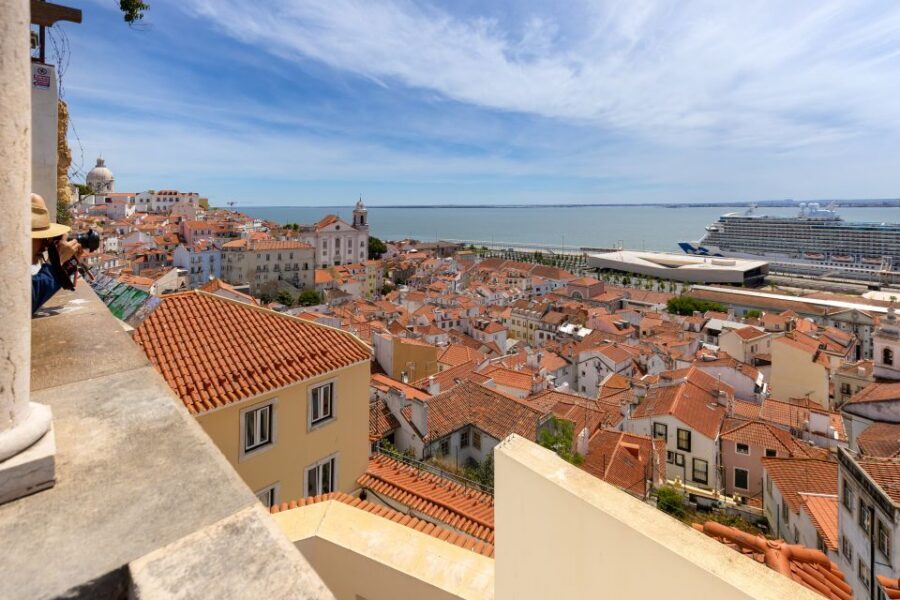
Lisbon is built on hills, so your legs do some of the guiding. The payoff is that a short tour can explain a lot: how neighborhoods formed, why certain buildings look the way they do, and how the city’s major historical events changed daily life.
What makes this one practical is the flow. You start with Bairro Alto, then you work your way down through viewpoints and churches, across to Baixa, and finally toward the oldest streets in Alfama. You’re not bouncing randomly between far-apart spots. You’re moving like Lisbon itself: up, look out, then down again into another chapter.
You can also read our reviews of more walking tours in Lisbon


Bairro Alto: How Lisbon Reinvented Itself After 1755
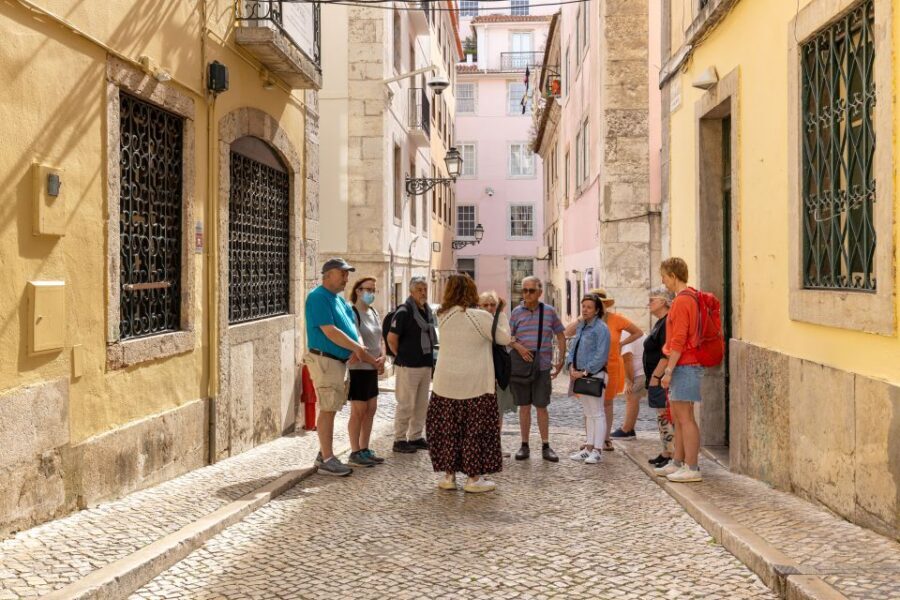
The tour starts in Bairro Alto, a neighborhood dating from the 16th century. That timing matters. It gives you a baseline before the city’s major break: the earthquake of 1755.
Here’s the story you’re meant to understand as you walk: after the earthquake, families shifted and rebuilt, and areas around Baixa and Bairro Alto became part of Lisbon’s renewal. Even if you don’t know Lisbon history yet, the tour helps you “read” the streets—why this area is here, and why Lisbon’s center-of-gravity changed.
This is also a great first stop because Bairro Alto is where views and street rhythm start to make sense. You’ll get the sense that the city was designed for looking out, not just for getting from A to B.
Miradouro São Pedro de Alcântara: The View With a Job
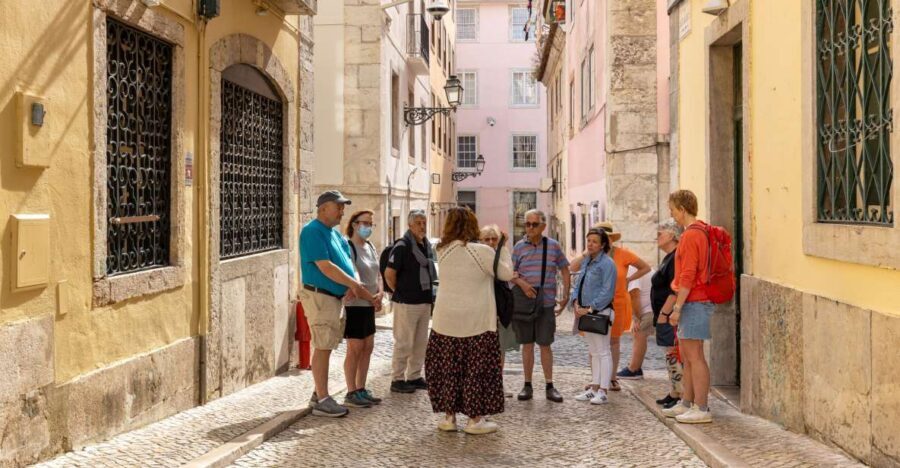
Lisbon has a lot of viewpoints. What you want is a viewpoint that helps you orient. Miradouro São Pedro de Alcântara does that.
From this garden, you get wide views that help you connect what you’re walking through. You’ll look toward Baixa and out across the south bank of the Tagus River. That matters because Lisbon’s geography is the real “map” of the city. Once you see how the river and the center line up, later neighborhoods feel less confusing.
Also, don’t rush this stop. This is where you can take a breath, do photos, and ask your guide one of those questions that suddenly makes everything clearer: Why does the city seem to sit at angles? Where do people traditionally gather? What’s the first thing locals look for?
São Roque Church: When a Jesuit Facade Hides a Visual Party
Next comes San Roque Church, built by the Jesuits. From the outside, the façade is described as austere. That’s not a warning sign—it’s contrast.
Step inside and the tone changes. You’re met with gilding, tiles, and paintings that the tour frames as a mix of Mannerist and Baroque styles. Think of it like this: the outside gives you structure; the inside shows how Portuguese religious art played with emotion and spectacle.
This is a smart inclusion for a walking tour because it isn’t just “another church you pass.” It works as a short museum-like break that refreshes your brain and gives you something concrete to look for: ornament, material, and style shifts.
Carmo Convent and Church: Gothic Architecture Meets 1974 Reality
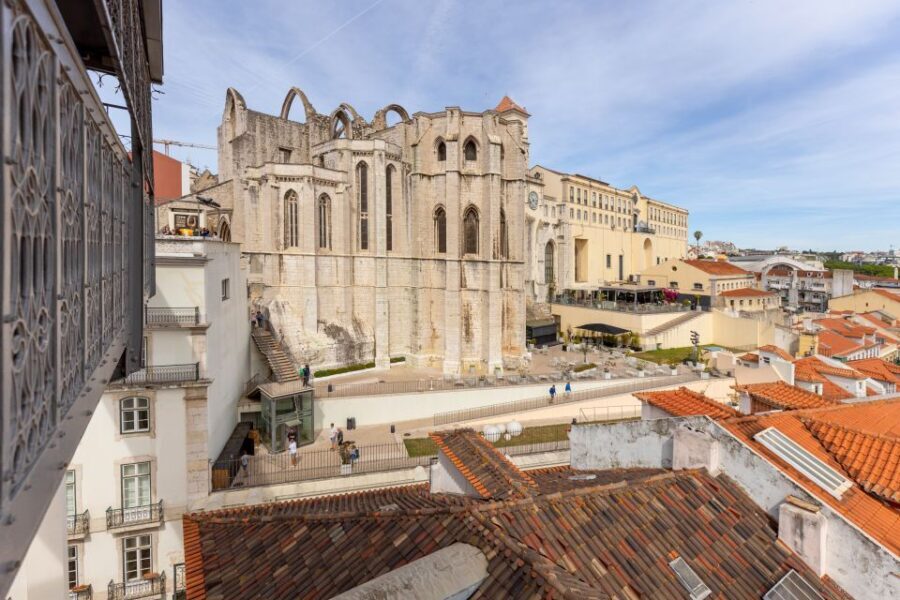
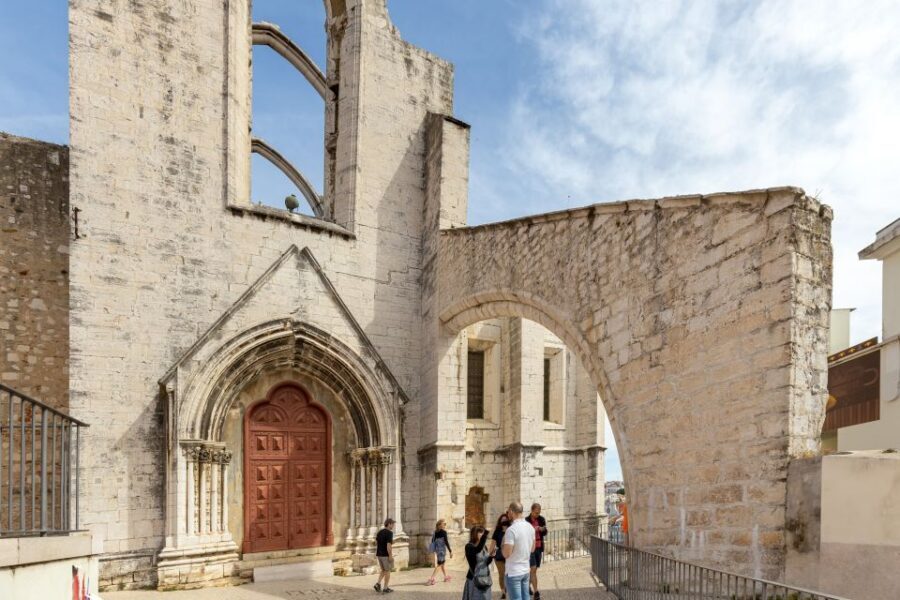
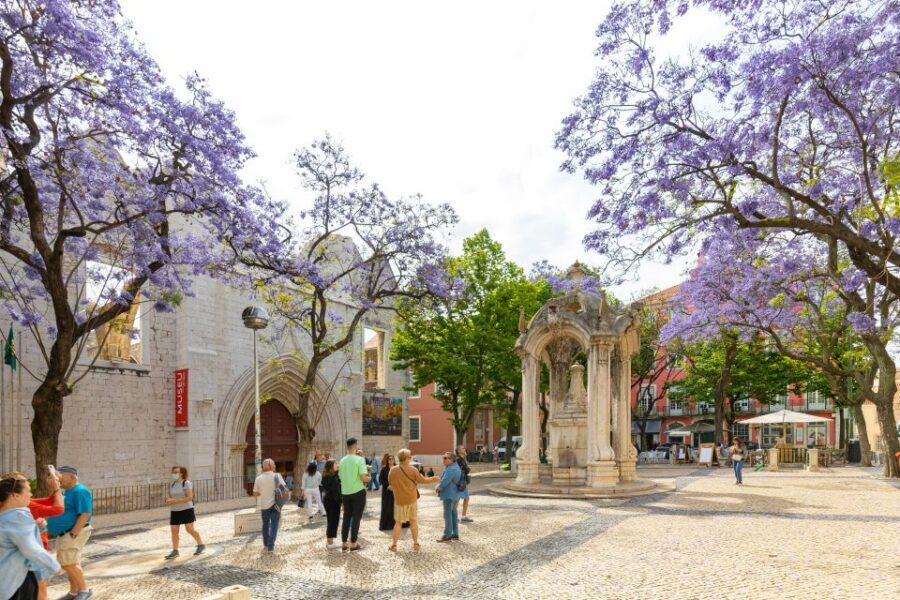
As you head down hill, you reach the Carmo convent and church. The buildings here are tied to Lisbon’s Gothic architecture, and they come with weight beyond architecture.
This stop matters because it’s linked to the Carnation Revolution in 1974, which put an end to nearly five decades of dictatorship. That connection turns the site into more than a pretty ruin or church stop. It becomes a place where political history and built form overlap.
If you’re the kind of traveler who likes to understand how a city’s identity was shaped, this is one of the best moments in the tour. A guide can connect the architecture to the era’s mood and then connect that era to the revolution. It’s a reminder that Lisbon wasn’t always a tourist city. People lived through real fear, real change, and then real rebuilding.
You can also read our reviews of more historical tours in Lisbon





Santa Justa Elevator and Baixa: A Viewpoint Above the Center
Then you arrive at Santa Justa elevator, an imposing structure in the Gothic Revival style. Even if you’re not riding it, the stop does something useful: it gives you another altitude check and one of Lisbon’s strong viewpoints.
From there, you move into Baixa, the heart of the city. Baixa is where Lisbon’s planning and rebuilding make themselves obvious. It’s the kind of district where details aren’t just decoration—they’re part of how the city functions.
This is also a nice rhythm shift. After steep walks and historic corners, Baixa feels more ordered, wider, and easier to navigate. It’s the moment where your brain starts to relax, and you can focus on what’s in front of you rather than what’s uphill.
Taking the Tram Up to Portas do Sol
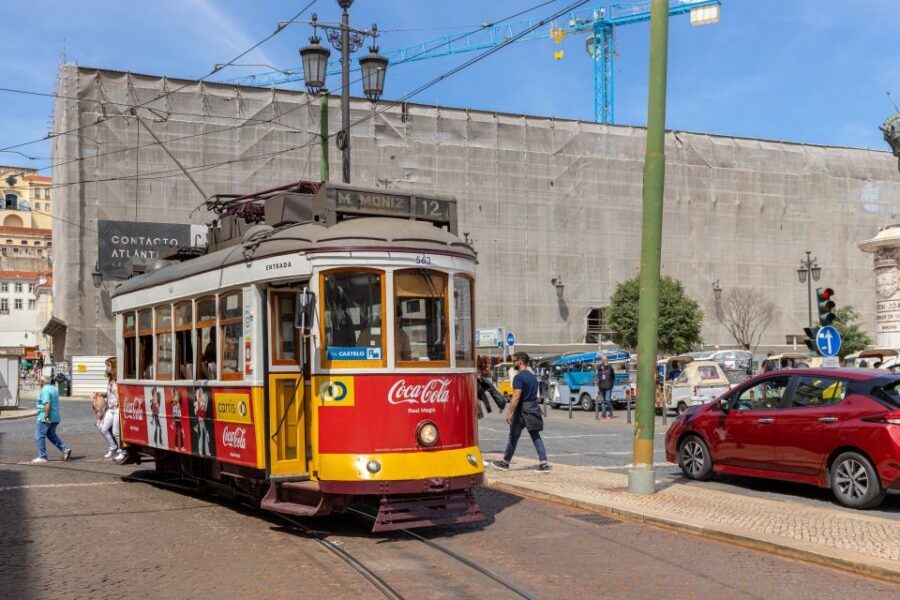
Now comes the fun, classic Lisbon reset: the tram trip.
The tour describes riding from the castle area toward Portas do Sol. Reviews also mention that you may ride a classic line such as the No. 12, depending on the day. Either way, you get the unique sensation Lisbon trams give: you see streets at a moving angle, not as a static postcard.
And here’s a practical reason the tram matters. After walking, a tram ride helps your legs recover while still keeping you on the sightseeing path. You get transit built into the experience instead of commuting outside it.
Portas do Sol to Alfama: Monastery, Pantheon, and Old-Street Life
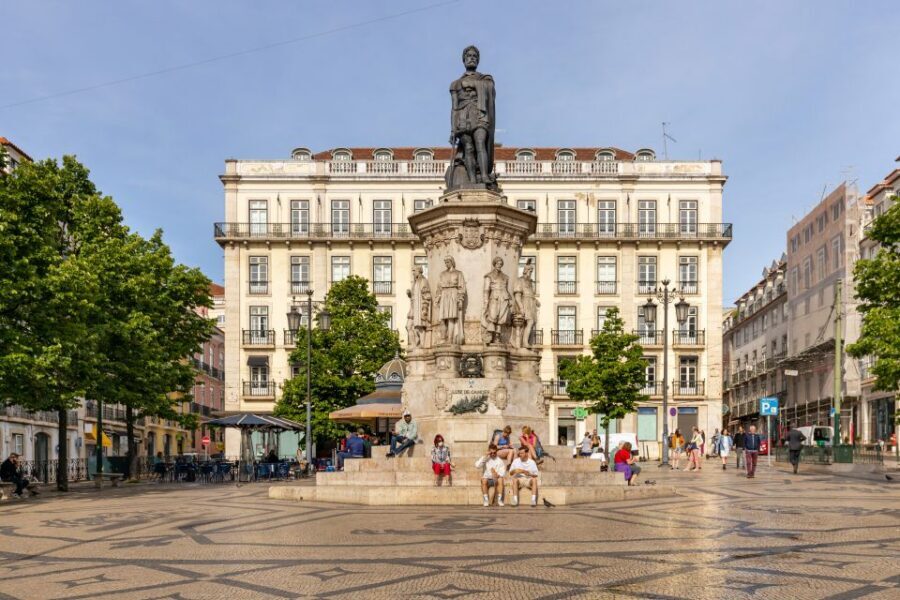
At Portas do Sol, you start seeing the major anchors around the river side of Lisbon—then you pivot into Alfama, the city’s oldest and most traditional neighborhood.
On the way, you’ll see highlights including:
- Monastery of São Vicente de Fora
- National Pantheon
- Alfama’s narrow streets descending toward the Tagus River
This is a big reason the tour works well as an early trip. Alfama can feel like a maze at first. Having context—this is where key religious and historic sites sit, and this is why the streets loop and slope the way they do—makes the neighborhood easier to explore later on your own.
Alfama also has a cultural pulse. The tour points out the presence of fado houses and the role of saints’ festivals, especially St. Anthony. You’re not sent to an event calendar, but you’ll understand why this area feels different from Baixa. It’s more about tradition continuing in real time.
Alfama to Lisbon Cathedral: Finishing With the Big Timeline
The tour ends at Lisbon Cathedral, built in 1150, about three years after the city was taken back from the Moors. That “after conquest” timing helps anchor the long timeline of Lisbon in one spot.
You’ll learn how the cathedral changed over time, becoming a mix of architectural styles. That’s the key takeaway here. Lisbon doesn’t preserve one moment. It layers moments.
Ending here makes sense because the cathedral is easy to remember as a final landmark. It also closes the loop of the tour’s theme: Lisbon’s hills hold stories, but the city’s power is in how those stories changed what got built, rebuilt, and protected.
Included Coffee and Cake: Small Stops That Actually Matter
This tour includes coffee and cake. That might sound minor, but it’s part of why this walk doesn’t feel like a nonstop slog.
In reviews, the sweet-and-coffee break often comes up as a highlight—people mention things like pastel de nata and espresso-style coffee. You get a tasty pause right when your legs and brain need it, and it also gives you a chance to chat with your guide about where to go next.
That’s the best use of a food stop in a history tour. It’s not random. It’s fuel. Plus, it helps you take Lisbon at street level, not just monument level.
Price and Value: What $29 Buys You in Real Terms
At $29 per person for a 3-hour walking tour, the value comes from three bundled pieces:
1) A live guide for the full route
You’re paying to turn “I saw a church and a viewpoint” into “I understand why it exists and what it meant.” The best reviews repeatedly point to guides like Paulo and Ricardo as strong storytellers who connect eras and everyday life.
2) A tram ride included
You’re not using the tram as basic transportation. You’re using it as part of the experience, moving you toward viewpoints and Alfama while you’re still sightseeing.
3) Coffee and cake included
That’s a built-in break so you don’t have to hunt for a café when you’re already tired.
And the small-group angle matters too. Reviews mention small groups—sometimes as few as 3 people, other times around 8—so it often feels easier to hear the guide and ask questions without the whole group steamrolling the conversation.
So yes, it’s inexpensive for what you cover. But the better way to think about it is: you’re buying interpretation. That’s what makes Lisbon feel less like memorization and more like understanding.
The Kind of Guide That Makes or Breaks a Tour
A tour like this rises or falls on the guide. The good news: the feedback you’ve been given shows a clear pattern.
People praise guides for being:
- funny and engaging while still covering history
- able to explain complex events clearly
- flexible when conditions change
One review mentions a guide adapting when a tram broke down and rain hit. That’s not guaranteed every day, but it’s a useful clue: you’re not stuck if something goes sideways. A good guide can reroute the story and keep the experience moving.
If you want a more personal angle on the 1974 revolution, names like Paulo come up with firsthand perspective from growing up in Lisbon during that era. Others—like Ana, Ricardo, Beatrice, and Raquel—are praised for strong explanations and keeping the pace relaxed.
Who Should Book This Tour (and Who Might Skip It)
This tour is a strong fit if you:
- want a first-day orientation to Lisbon
- like history, but also want stories tied to the streets
- want a route that includes both big sights and neighborhoods (not just monuments)
- appreciate viewpoints that help you map the city in your head
It may feel less ideal if you:
- have limited comfort with hills and steps
- hate mixing indoor stops (churches) with outdoor walking
- want a slower, photo-heavy day with zero schedule pressure
That said, some reviews suggest it can still feel manageable thanks to frequent stopping and lots of photo opportunities. So it’s not a sprint. It’s more of a “walk with breaks and explanations.”
Should You Book This Lisbon History and Lifestyle Walking Tour?
If you’re planning a short stay, I’d book it. This route does a smart job of connecting Lisbon’s neighborhoods into one story: Bairro Alto’s early fabric, viewpoints that teach your eye, churches that show art style and belief, a major political site tied to 1974, and then Alfama’s traditional streets that lead you to the cathedral.
The value is real for the money because you get three essentials—a guide, a tram ride, and a food pause—while still covering the city’s key “why it looks like this” moments.
If you’re visiting Lisbon for the first time, this is the kind of tour that helps you decide where to return afterward with purpose. If you’re already deep into Lisbon research and want only offbeat corners, you might find it more “highlights with context” than “maximum obscurity.” Still, as an anchor experience, it’s a strong pick.
FAQ
Where does the tour start and meet?
The meeting point may vary depending on the option booked.
How long is the walking tour?
It lasts about 3 hours.
What’s included in the price?
The tour includes a live guide, a tram trip, the walking tour itself, coffee, and cake.
Is hotel pickup or drop-off included?
No. Hotel pickup and drop-off are not included.
What languages are available for the live guide?
Portuguese, Spanish, Italian, German, French, and English.
Is the tour cancellation flexible?
Yes. You can cancel up to 24 hours in advance for a full refund.