REVIEW · LISBON
Best of Lisbon Small-Group Guided Walking Tour
Book on Viator →Operated by Inside Lisbon · Bookable on Viator
Lisbon looks different when someone points things out. This small-group, guided half-day walk strings together the city’s biggest sights with enough local context to help you connect the dots fast. I like that it blends classic landmarks with everyday streets, so you get both the postcards and the lived-in feel.
Two big wins: the small group size keeps it personal, and the included pastel de nata, wine tasting, and tapa make the tour feel like a real Lisbon morning, not just a museum-style march. One thing to plan for: you’ll cover a lot of ground on hills and viewpoints, and the pacing may be better suited to people with moderate walking stamina rather than total beginners.
In This Review
- Key Points Before You Go
- Getting Oriented in Lisbon’s Tight, Hill-Focused Layout
- Rossio Square and São Domingos: Where the City Starts Thinking in Stones
- Restauradores Square and the Rossio Station: Independence Plus Engineering Pride
- Largo do Carmo to Elevador de Santa Justa: Revolution Stops and One Huge View
- Chiado and Rua Augusta: Shopfronts, Theaters, and Lisbon’s Smart Side
- Baixa’s Earthquake Rebuild: Urban Planning You Can Actually Feel
- Miradouro Chão do Loureiro and the First Big Panorama
- Alfama: Moorish Roots, Fado Melancholy, and Narrow Street Reality
- Praça do Comércio: Lisbon’s Atlantic Greeting on the Riverfront
- Price and What You Actually Get for $23.94
- Pace, Comfort, and Who This Walking Tour Suits Best
- Should You Book This Lisbon Highlights Walking Tour?
- FAQ
- How long is the Best of Lisbon Small-Group Guided Walking Tour?
- Where does the tour start and end?
- What’s included in the tour price?
- Is museum or monument entry included?
- What’s the maximum group size?
- What is the cancellation policy for a full refund?
Key Points Before You Go
- Max 14 people, real guide attention so questions do not get lost.
- Pastel de nata plus wine and tapa included—a tasty break that saves you planning time.
- A route that covers Lisbon’s layout from Rossio and Baixa to Alfama and the riverfront.
- Views are part of the story including stops tied to viewpoints and landmark viewpoints.
- Great for orientation on day one—use it to plan what you do next.
Getting Oriented in Lisbon’s Tight, Hill-Focused Layout
This tour is designed for your first hours in town, when you need orientation more than facts. You start in the city core, work your way through the neighborhoods people always mention, then finish near the Tagus where the city opens up.
What makes it work is the flow. The route moves from grand squares to busy shopping streets, then shifts into the maze of Alfama. Along the way, you’re not just told what you’re looking at—you’re given the “why,” like how Lisbon rebuilt itself after disaster, or how Portuguese independence is carved into public spaces.
Another plus: the group stays compact. Guides such as Felipe, Maria, Jose, and Joana have been praised for staying patient with questions and keeping a steady pace, which matters when you’re navigating hills and corners with a camera in one hand.
You can also read our reviews of more walking tours in Lisbon


Rossio Square and São Domingos: Where the City Starts Thinking in Stones
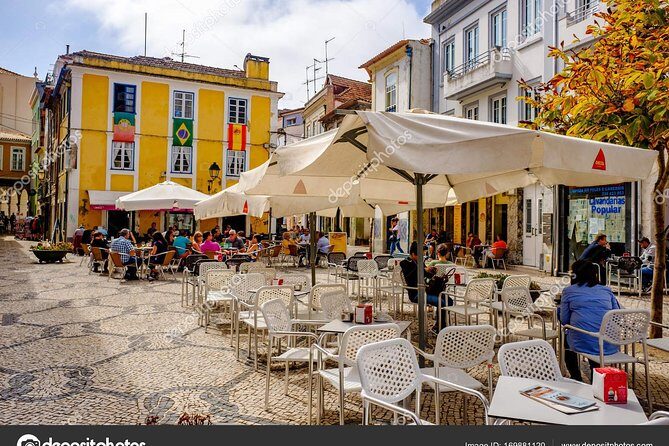
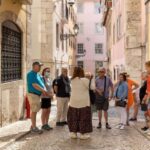
You begin at Praça Dom Pedro IV, also known as Rossio. This is Lisbon’s nerve centre in the Baixa area, the kind of place you’ll keep passing by once you learn the city. The flooring and materials are part of the lesson too—your guide explains how the square’s design uses typical Portuguese stonework to create a sense of waves from the nearby ocean.
Right nearby, you step into the rhythm of daily Lisbon with Igreja de São Domingos on São Domingos square. Even if you do not go inside, the stop helps you calibrate what “historic” means here: big public spaces sit next to working streets, and the old and practical share the same blocks.
Practical note: the Rossio start is good because it gets you into the center logic quickly. If you are arriving jet-lagged, this first stretch helps your brain stop feeling lost.
Restauradores Square and the Rossio Station: Independence Plus Engineering Pride

Next comes Praça dos Restauradores, dedicated to Portugal’s restoration of independence in 1640. The standout feature is the obelisk, inaugurated in 1886, which lists names and dates from the battles of the Portuguese Restoration War. It’s one of those moments where a monument stops feeling abstract because the guide places it in the story of Spain and Portugal.
From there, you head to Estação do Rossio, another Lisbon anchor. The exterior design is inspired by Manueline architecture, a style tied to Portugal’s maritime wealth and decorative flair. If you’re into transportation history, you’ll also hear how the trains connect toward Sintra through a tunnel—rail engineering as a kind of national achievement.
This is a good stop for photos, but also for understanding scale. Lisbon’s center looks built for people, yet it hides major infrastructure. Once you learn what’s underneath, the city’s shape makes more sense.
Largo do Carmo to Elevador de Santa Justa: Revolution Stops and One Huge View
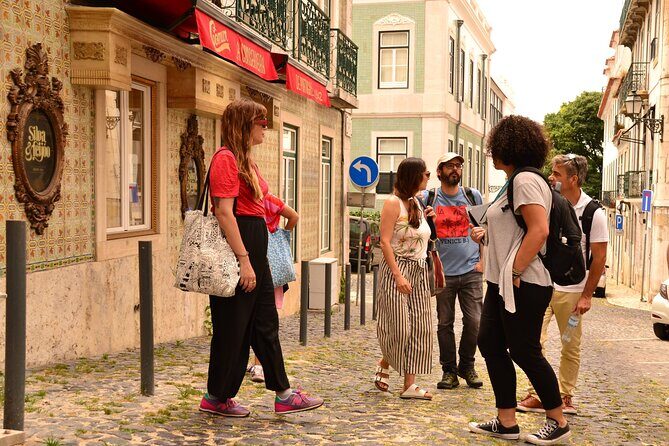
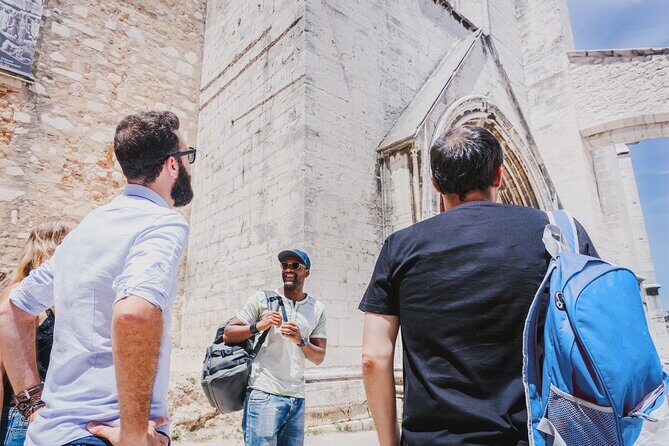
You reach Largo do Carmo, a small square that carries heavy meaning. The guide frames it around the site’s older past and the later turning point of the Carnation Revolution in 1974, when a long dictatorial rule collapsed. The atmosphere of a quiet square makes the revolution feel even more real than it does in textbooks.
Then it’s time for the iconic Elevador de Santa Justa area. Even if you are not riding it, this is a key landmark stop because it gives you a view of Lisbon’s layered neighborhoods. You get a better sense of where Baixa ends and the hillside quarters begin, which makes the rest of your wandering easier later.
One review point you should take seriously: comfortable shoes matter here. You can use elevators or escalators when available to reduce strain, and guides like Felipe have been praised for using these city tools to keep the walk smoother, even when weather turns rough.
Chiado and Rua Augusta: Shopfronts, Theaters, and Lisbon’s Smart Side
After the viewpoint moment, you move into Chiado, a neighborhood shaped in the 19th century for Lisbon’s intellectual and wealthier circles. It’s a stroll where the facades do the talking—boutiques, theaters, bookstores, and older-style cafés. This is the part where you start seeing Lisbon as a city of taste, not only a city of tiles and viewpoints.
From Chiado, you walk toward Rua Augusta, often described as Lisbon’s main central street. It’s also known as one of the city’s most expensive and fancy avenues, so expect it to feel more polished and commercial than Alfama. If you’re looking for souvenirs that feel like Lisbon rather than generic tourist stock, this is where you’ll spot them.
A tip: slow down for small observations. Lisbon’s center streets can feel similar at first glance. The guide’s job is to help you notice the differences, like where the street feels designed for foot traffic and where it simply funnels you uphill toward the older quarters.
You can also read our reviews of more guided tours in Lisbon





Baixa’s Earthquake Rebuild: Urban Planning You Can Actually Feel
Then you hit Baixa de Lisboa, Lisbon’s downtown core. This is the neighborhood you want to understand early, because it’s where you’ll return again and again.
The big lesson here is that Baixa was completely rebuilt after the 18th-century earthquake. You’ll hear how the city’s rebuild followed new urban rules and anti-seismic thinking—innovative solutions for its time. In other words, Baixa is not only where you shop and eat. It’s a snapshot of how Lisbon responded to crisis with planning.
This section also helps you grasp Lisbon’s “system.” Streets are laid out with clear shapes, and public spaces feel intentionally positioned. Once you see Baixa’s logic, Alfama’s chaos starts to read as a different kind of design choice rather than just a random maze.
Miradouro Chão do Loureiro and the First Big Panorama

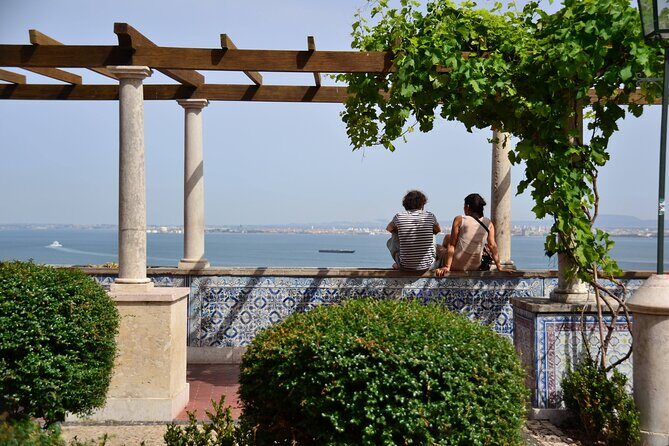
Before heading into Alfama, the route includes Miradouro Chão do Loureiro, a panoramic viewpoint stop. This is a practical move by the tour: you get a big visual reset before descending into narrow streets.
If you like photos, this is where your camera gets a workout. More importantly, it’s where you understand what you’ll be walking through next. Alfama is famous, but it is also physically confusing. A viewpoint helps you mentally map the hills and bends.
If it’s cold or rainy, you’ll still have value here because the guide’s stories keep your attention anchored, even when the weather makes every step feel longer.
Alfama: Moorish Roots, Fado Melancholy, and Narrow Street Reality

Now comes the neighborhood people come to Lisbon for: Alfama. This is Lisbon’s oldest quarter, known for Moorish heritage and for fado music.
As you stroll, the guide helps you connect the sound to the street layout. Fado restaurants appear between alleys and down winding lanes, and the music’s melancholic tone fits the physical mood of the area. You’ll walk past corners that feel made for lingering, even if you’re moving with a tour group.
This part is where guides like Maria and Jose have been praised for adding humor and real local insight, not just dates. You also get time to stop for photos, which matters in Alfama because the best shots are often at awkward angles on narrow streets.
Physically, plan for more slope and more steps than Baixa. You do not need to be an athlete, but you should be comfortable with uneven pavement and hills. The tour is described as moderate fitness level, and the route reflects that.
Praça do Comércio: Lisbon’s Atlantic Greeting on the Riverfront
Your final stop is Praça do Comércio, also tied to the older name Terreiro do Paço. This square sits near the Tagus, and it has a dramatic sense of openness after the tight streets of Alfama.
Here’s the key story: the Royal Ribeira Palace used to stand on this site and was destroyed by the 1755 Lisbon earthquake. After that, the square was remodeled as part of the rebuilding of Pombaline downtown. Your guide also frames the square as a reception hall that welcomed travelers arriving from the Atlantic.
It’s a fitting ending. You start in a dense urban core, then move outward to a riverfront space that feels like a “how Lisbon connects to the world” finale.
When the tour ends, you’re already positioned well for your next moves—whether that means lingering by the water or heading out to add more neighborhoods to your day.
Price and What You Actually Get for $23.94
At $23.94 per person for roughly 3 to 4 hours, this tour is priced like an efficient orientation plus food. You’re not paying museum-admission money, and you’re not paying for private transport. Instead, you’re paying for a local guide and a curated walking route that makes the city’s layout click.
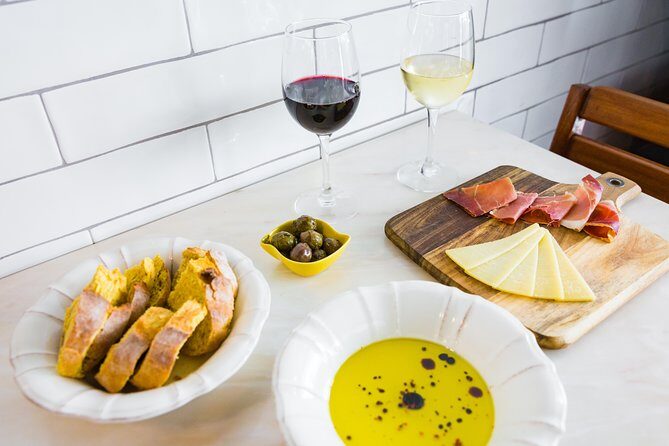
The included items help a lot with value. You get pastel de nata, plus wine tasting and a tapa. That means you’re not spending the whole afternoon deciding what to eat, or getting stuck with a tourist-leaning snack because you ran out of time.
Also, the tour is offered in English and uses a mobile ticket, which keeps things simple. The price is also easier to justify if you’re visiting for a short window and want the highlights in one outing, especially if you plan to come back to one or two neighborhoods afterward.
What you should know before you go: entry to museums and monuments is not included. So if you’re aiming for ticketed attractions, you’ll still need to book those separately.
Pace, Comfort, and Who This Walking Tour Suits Best
This is a half-day walking tour with enough variety to keep it from feeling repetitive. The route includes major squares, train-station architecture, viewpoint time, and Alfama’s older streets. That mix is also why it helps you build a plan for the rest of your trip.
If you like learning in small doses while moving—great. If you prefer slow, linger-at-every-doorway travel, you might find the pacing a bit tight. Group walking helps with efficiency, but it does limit total freedom.
For the hills: the route is described as moderate physical fitness. One review highlighted that the guide made smart use of public elevators and escalators to reduce strain around Baixa and viewing points. Still, expect hills, stairs, and uneven ground, especially once you enter Alfama.
Also note one potential mismatch: if you are hoping for a stop by Lisbon Cathedral, you may feel the tour does not hit that specific landmark. If it’s a must-see for you, plan to add it on your own during free time.
Should You Book This Lisbon Highlights Walking Tour?
Book it if you want the best first-day tool in Lisbon: a small-group overview that covers the city’s key zones and helps you understand how neighborhoods connect. It’s especially worth it if you only have a short stay and you’d rather use your energy wisely instead of guessing your own route.
Skip or supplement it if your priority is one or two specific monuments that are not part of this walk. Also, if you cannot handle hills and stair-stepped viewpoints, you may want a lighter option or to pair this with more rest-heavy sightseeing.
If you do book, wear comfortable shoes and keep your plan flexible. After this, you’ll know exactly where to return—whether that’s Baixa for repeat strolls, Chiado for cafés and shops, or Alfama for fado at the right hour.
FAQ
How long is the Best of Lisbon Small-Group Guided Walking Tour?
It lasts about 3 to 4 hours.
Where does the tour start and end?
It starts at Praça Dom Pedro IV, 1100 Lisboa, Portugal and ends at Praça do Comércio, 1100-148, Portugal.
What’s included in the tour price?
You get a local guide, plus a pastel de nata pastry, wine tasting, and a tapa.
Is museum or monument entry included?
No. Entry to museums and monuments is not included.
What’s the maximum group size?
The tour has a maximum of 14 travelers.
What is the cancellation policy for a full refund?
You can cancel up to 24 hours in advance for a full refund. If you cancel less than 24 hours before the start time, the amount paid is not refunded.