REVIEW · LISBON
Lisbon: River Tagus Sightseeing Cruise in Traditional Vessel
Book on GetYourGuide →Operated by Nosso Tejo · Bookable on GetYourGuide
Lisbon looks better from water. This cruise turns the Tagus River into a moving viewpoint, with a traditional 1947 boat and live commentary that helps you connect the dots fast. You’re not stuck staring at a phone map—you get the city unfolding in real time, including the historic center and key landmarks along the way.
What I like most is the combination of river views and quick, guided context. You get standout perspectives of Lisbon’s seven hills and major sights like Praça do Comércio, Castelo de São Jorge, Lisbon Cathedral, and Santa Engrácia. One thing to plan for: the ride can be brisk and windy, and that can affect comfort if you’re not prepared.
In This Review
- Key Things You’ll Notice Right Away
- A 1947 Traditional Cargo Boat Makes This Feel Different on the Tagus
- Where You Board: Terreiro do Paço and the Flow of the River Route
- Praça do Comércio to Ribeira das Naus: The River’s Big Lesson
- Castelo de São Jorge, Sé Cathedral, and Santa Engrácia From the Water
- Lisbon’s Seven Hills Effect: A View That Changes Your Sense of Scale
- Christ the King: Spot It, Then Get the Story
- Belém: Jerónimos Monastery, Belém Tower, and the Age of Discovery
- Live Commentary in Multiple Languages (and How to Get the Most From It)
- Weather, Clothing, and Getting Your Best Photos
- Price and Time: Is $28 Worth It?
- Who This Cruise Fits Best (and Who Might Want Something Else)
- Should You Book the Lisbon Tagus Sightseeing Cruise?
- FAQ
- How long is the Lisbon Tagus sightseeing cruise?
- What does the ticket include?
- Where do I meet the tour?
- Where does the tour end?
- Are food and drinks included?
- What languages are offered for the live commentary?
- What should I wear?
- Is the cruise wheelchair accessible?
- Can kids go on this cruise?
- Do I need to arrive early?
Key Things You’ll Notice Right Away
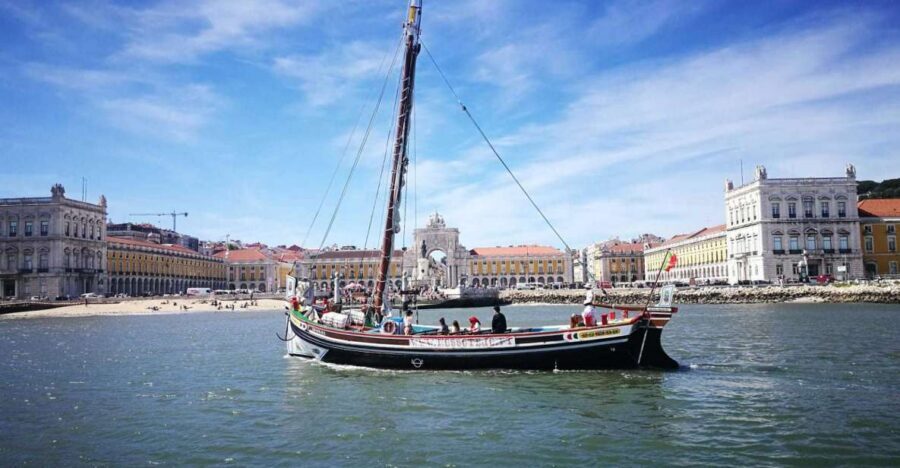
- A 1947 traditional cargo boat used for sightseeing, hand-painted with flowers for a classic touch
- Only seven boats like this remain at this size, all inscribed in the Navy Museum
- A route built around recognition, from Praça do Comércio past Cais do Sodré and along Ribeira das Naus
- Seven-hill views from the Tagus, including Castelo de São Jorge and Lisbon Cathedral from angles you won’t get on foot
- Belém on the same cruise, with Jerónimos Monastery and Belém Tower in Gothic Manueline style
- Wind can be real, and blankets may be offered for extra warmth depending on conditions
A 1947 Traditional Cargo Boat Makes This Feel Different on the Tagus
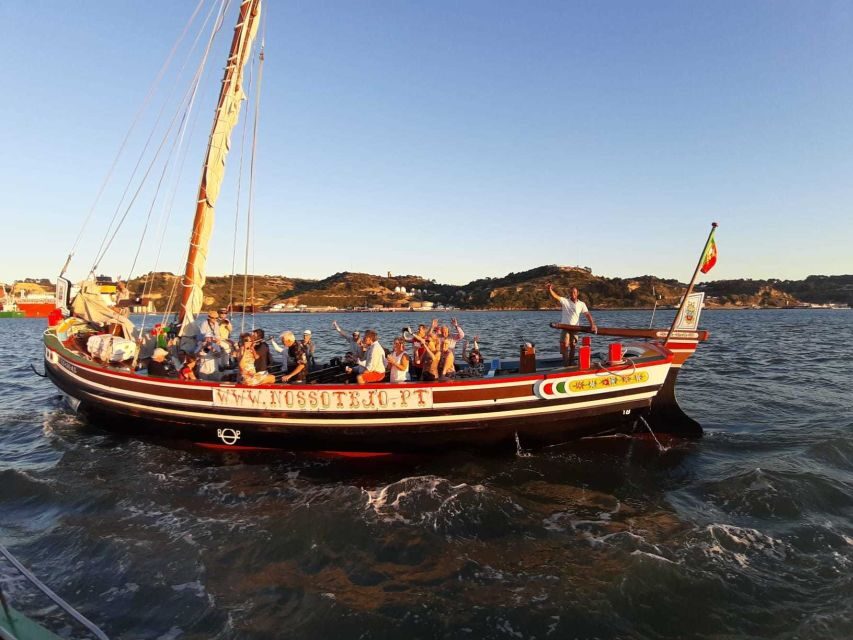
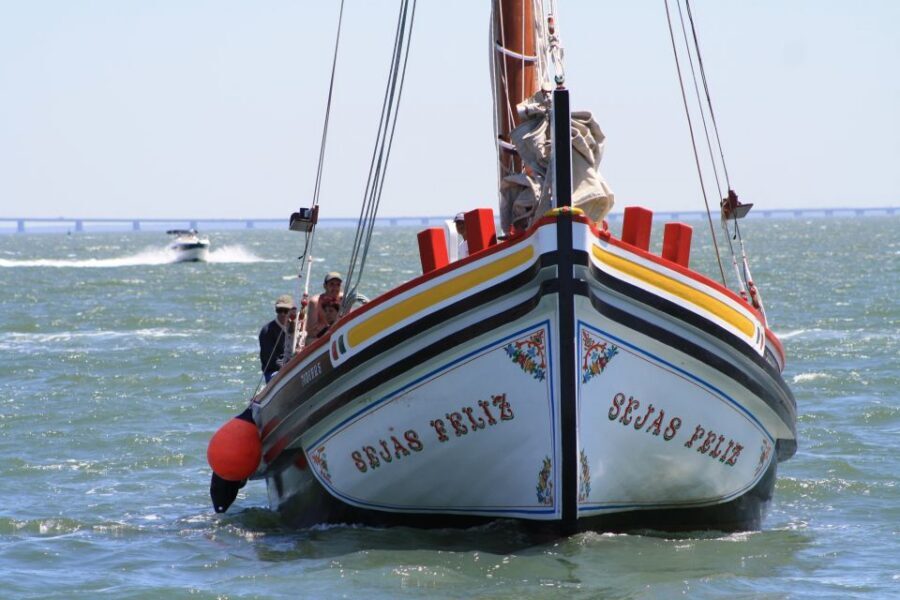
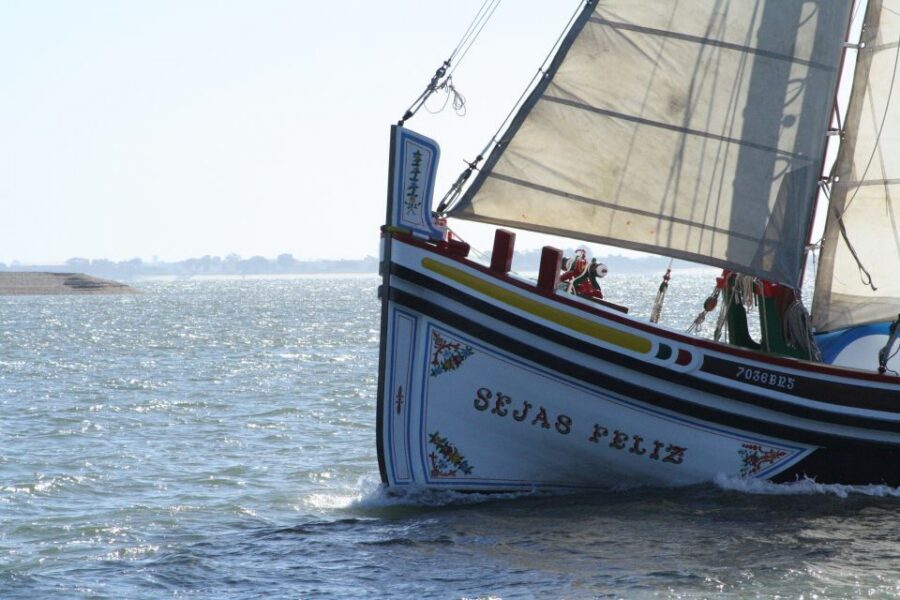
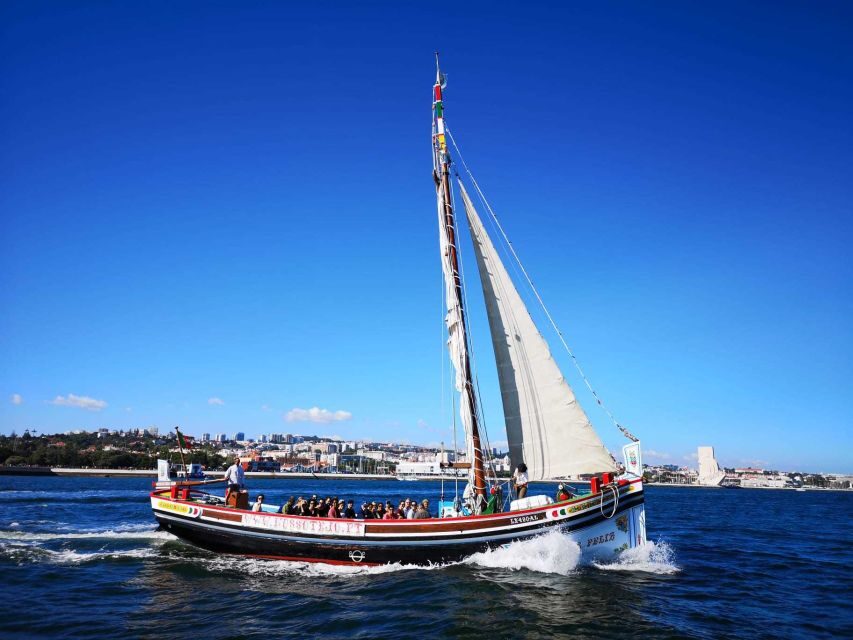
Most Lisbon river cruises are fine. This one feels different because of the boat itself. You’ll ride a traditional cargo vessel from 1947, styled for sightseeing and painted with floral details that look like they belong on a postcard, but still feel charmingly old-school.
There’s also a strong sense of rarity. Only seven boats of this size remain, and they’re all inscribed in the Navy Museum. That matters because it turns the cruise from a generic “see the sights from the water” outing into something closer to a living piece of Lisbon’s maritime story.
Comfort is practical, not fussy. People highlight that the boat is comfy enough for the full stretch, and the crew tends to keep things friendly and helpful. You’ll also get live guide commentary, and that’s a big deal here: the city moves quickly, and the best payoff comes when you can name what you’re seeing while it’s still in your sightline.
You can also read our reviews of more boat tours in Lisbon
Where You Board: Terreiro do Paço and the Flow of the River Route
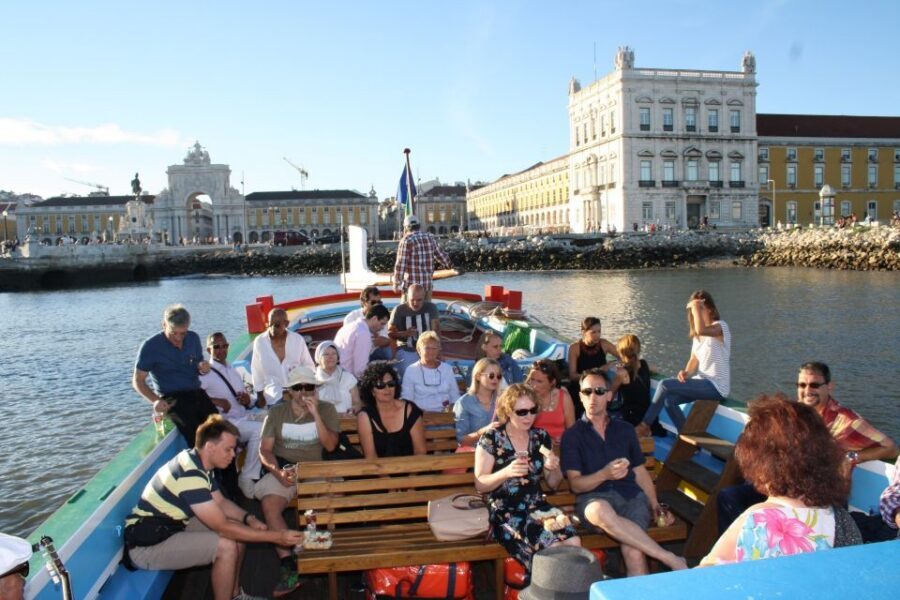
You start at the waterfront by Terreiro do Paço (Commerce Square). The meeting point is very specific: go to the first white building by the river on the left side of Terreiro do Paço, and look for ticket office number 8. The activity ends back at the meeting point after your sightseeing loop.
Once you’re settled, the cruise is built around two classic Lisbon river ideas:
- The waterfront stretches you can’t fully appreciate from streets.
- The Tagus connects different eras of Lisbon—trade, exploration, defense, and the rebuilt city after disaster.
The route begins with the waterfront area between Praça do Comércio and Cais do Sodré, then continues along the zone called Ribeira das Naus, where Portuguese explorers’ ships were built. That part is more than scenery. When you learn you’re looking at a shipbuilding area, the city’s river history clicks into place.
Praça do Comércio to Ribeira das Naus: The River’s Big Lesson
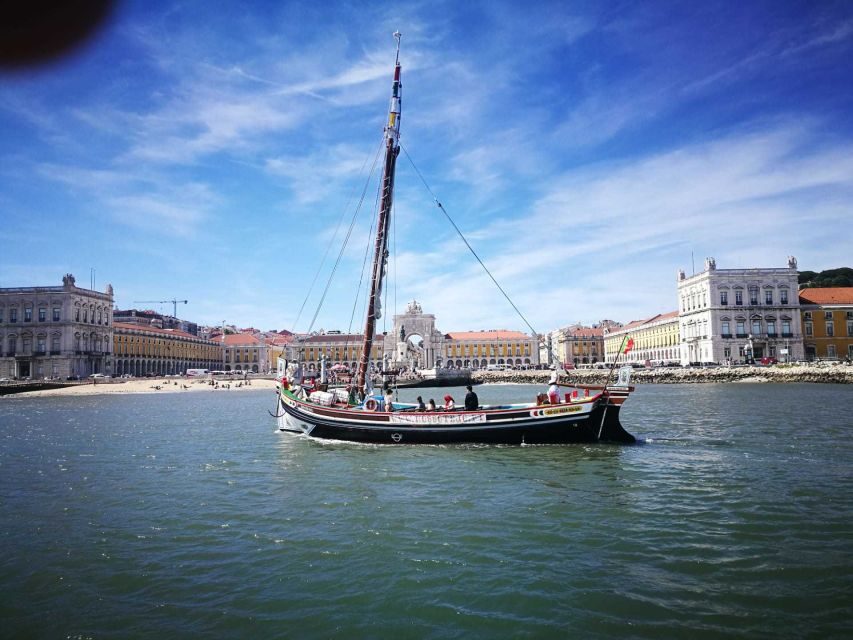
When you pass Praça do Comércio, you’re looking at Lisbon’s largest square—and one of its most iconic symbols. The guide’s take on the space is important because the square was rebuilt after the great earthquake of 1755. From the water, you can also see how open the waterfront is compared to the tighter streets inland. That contrast makes it easier to understand why the river has always been a key stage for Lisbon life.
Then you move toward Cais do Sodré and the area known as Ribeira das Naus. This is the historic shipbuilding stretch, tied to the Portuguese Age of Discovery. Even if your travel style is more casual than museum-deep, this portion gives you a mental map: Lisbon wasn’t only a city of hills and churches. It was a shipyard and departure point, too.
Practical tip: this is the part where you’ll want your camera ready. As you glide along, the waterfront gives long sightlines and clean angles—ideal for photos without the clutter you get on busy streets.
Castelo de São Jorge, Sé Cathedral, and Santa Engrácia From the Water
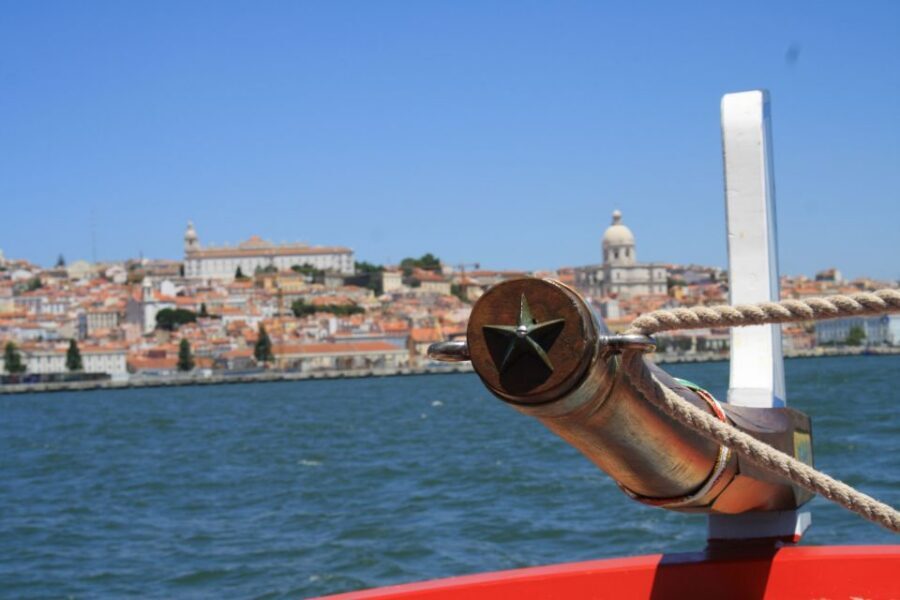
Now you hit the fun part: the historic center arriving in layers.
As the boat travels, you’ll look for Castelo de São Jorge, the Moorish castle overlooking the historic center. You don’t just spot it—you get a guided way of reading it in context, which helps when you see the castle from an angle that’s different from the viewpoints on the hills themselves.
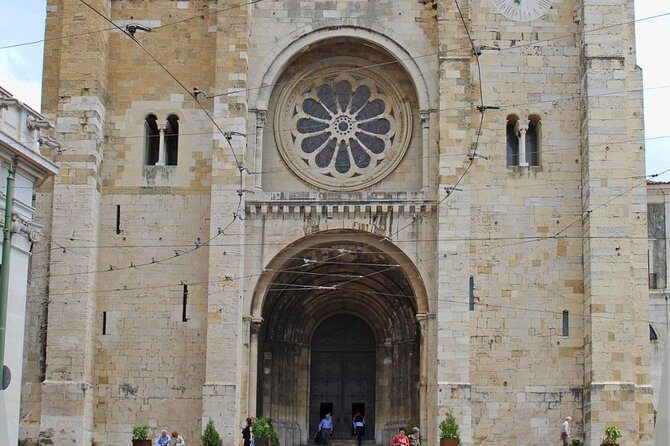
Next comes Lisbon Cathedral (Sé), described as the oldest church in the city, built in 114. Hearing the guide connect age, style, and placement as you pass helps your brain do the simple work of sorting landmarks quickly.
You’ll also spot Church of Santa Engrácia, a 17th-century monument that’s been converted into the National Pantheon. From the river, it’s one of those landmarks that can look smaller than you expect—until the live commentary helps you understand why it matters.
Why this part is valuable: river cruising is good at one thing—orientation. It helps you understand where things are in relation to the water, so any later walking you do feels more logical. Instead of randomly exploring, you’ll know what direction you’re moving and why.
Lisbon’s Seven Hills Effect: A View That Changes Your Sense of Scale
Lisbon is built on hills. From street level, that’s obvious. From the Tagus, it becomes a pattern.
Your cruise gives you a “seven hills” perspective that’s hard to recreate on foot without a lot of climbing. You’ll see the city rise and fold away in real space, which is useful if you’re the type who likes to grasp a city’s layout before committing to big walks.
This is also where the live commentary earns its keep. When the guide points out a sight and explains what you’re seeing in simple language, you’re far more likely to remember it later—especially if you plan to visit a few landmarks on land after the cruise.
One small reality check: if you’re sensitive to wind, you may feel the Tagus breeze. People note it can be brisk, and blankets may be offered for extra warmth. That’s a small comfort bump that can make the difference between enjoying the whole ride and counting minutes until you’re back inside.



Christ the King: Spot It, Then Get the Story
As you continue, the cruise includes a stop-in-your-sightline for Christ the King. The guide will also share its interesting background while you’re viewing it from the river.
The key here is timing and context. Even if you’ve seen Christ the King before in photos, the Tagus angle and the guided explanation help you understand how it fits into Lisbon’s visual lineup. It becomes a landmark you can place, not just a distant silhouette.
Belém: Jerónimos Monastery, Belém Tower, and the Age of Discovery
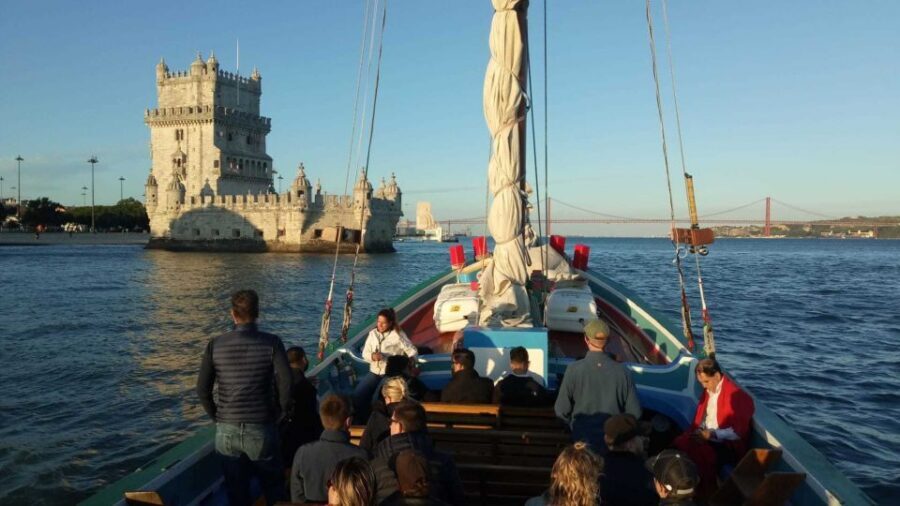
The Belém portion is where the cruise feels most rewarding for first-timers and for people short on time. You’ll see Belém, home to two UNESCO World Heritage monuments:
- Mosteiro dos Jerónimos
- Belém Tower
Both are in Gothic Manueline style, and from the river they’re easier to appreciate than you might expect. Up close, you tend to focus on details. From water, you focus on shape, mass, and the way they sit along the coastline and river mouth area. The result is a different kind of appreciation—still impressive, just from a new angle.
You’ll also spot Padrão dos Descobrimentos, a monument tied to Portuguese exploration—specifically, a place that connects to ships departing to trade with the East. Again, the value isn’t just in the sight. It’s in having the guide connect the monument to what Lisbon did outward to the world.
If you’re building a trip with both Belém and central Lisbon, this is a smart way to “pre-learn” the landmarks. By the time you visit on foot later, you’ll likely recognize shapes and styles faster.
Live Commentary in Multiple Languages (and How to Get the Most From It)
This is a guided cruise with live commentary. The guide languages listed are Spanish, English, Portuguese, and French. That’s a strong coverage list, and it matters because the Tagus route includes several landmarks in quick succession.
The commentary is meant to help you do three things:
- identify what you’re passing (so you’re not guessing),
- connect landmarks to their significance (so they’re not just pretty),
- and understand the “why” of the river route (so it feels purposeful).
A practical note from experience-style feedback: some people wish the guide went a bit deeper into Lisbon’s history, while others praised the guides as well-informed and capable across languages. If you’re the kind of person who loves long, detailed stories, you might still want to pair this with one or two targeted walking visits afterward. If you want quick clarity and a good overview, this fits well.
Weather, Clothing, and Getting Your Best Photos
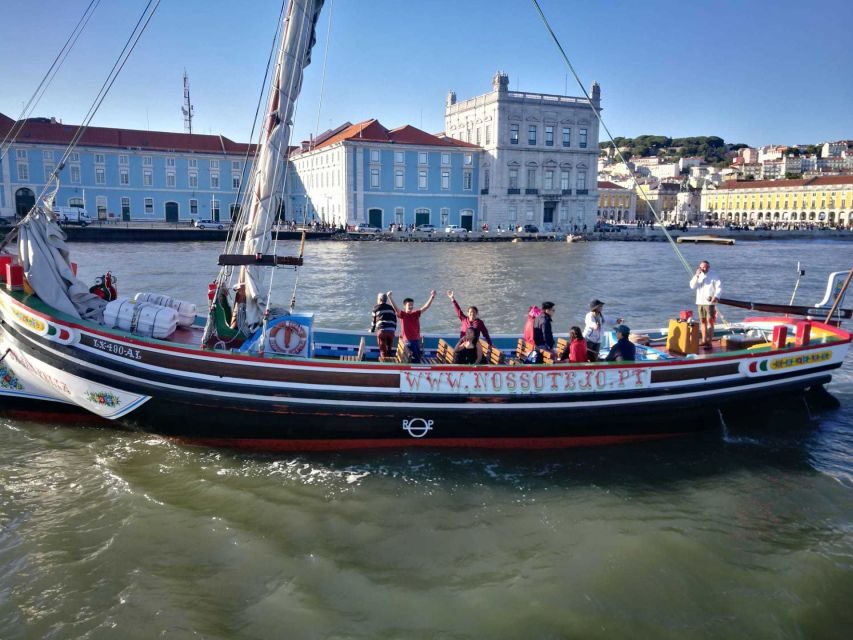
You’ll be on the water for 105 minutes, so conditions matter. Comfortable clothes are recommended, and you should plan for a mix of sun and wind depending on the day.
If you get motion-sick easily, bring your usual remedy. The cruise is steady, but you are moving on open water.
For photos, keep expectations realistic. You’re shooting from a boat, and reflections can happen. Still, people note they got amazing pictures, especially because the route creates long lines of sight across the city center and out toward Belém.
And yes, the wind can be a thing. That’s why you’ll want layers you can manage. People also mention blankets being offered if you need extra warmth, which is a thoughtful touch.
Price and Time: Is $28 Worth It?
At $28 per person for a 105-minute guided river cruise, the price feels reasonable for what you get: time-efficient sightseeing plus live interpretation. You’re paying for (1) a longer stretch on the water than a short photo stop and (2) a guide who helps you process what you’re seeing.
This is also a good value fit because it covers a lot of well-known landmarks across two major areas:
- historic center sights (from river-level perspectives),
- and Belém highlights like Jerónimos and Belém Tower.
What’s not included is also clear: food and drinks are not part of the ticket. Some people report water being available onboard, but don’t assume meals are covered. If you get snacky, plan to handle it on your own before or after.
If you only have one afternoon (or you want to cut down walking and stairs), this gives you a big hit of Lisbon geography without exhausting you.
Who This Cruise Fits Best (and Who Might Want Something Else)
This cruise is a smart choice if you:
- want a quick, guided overview of Lisbon from a viewpoint that’s genuinely different,
- like classic landmarks and UNESCO sites,
- prefer comfort and ease over climbing around for views,
- and enjoy learning from live commentary rather than reading on your phone.
It may be less ideal if you:
- want a long, deep lecture on Portuguese history (the format is more overview than textbook),
- get uncomfortable in wind (plan layers and be ready for Tagus breeze),
- or need wheelchair access, since it’s not suitable for wheelchair users based on the provided information.
Children must be accompanied by an adult, and unaccompanied minors aren’t allowed. If you’re traveling with kids, this can still be a win because it’s straightforward sightseeing with named stops, but it’s best when an adult is engaged and managing comfort on the water.
Should You Book the Lisbon Tagus Sightseeing Cruise?
If you want a practical first-pass at Lisbon, I’d book it. The combination of a traditional 1947 boat, a guided route along historic river areas, and major sights from the water makes the experience feel efficient and memorable.
I’d especially recommend it if you’re planning to spend time both in central Lisbon and Belém. This cruise helps you connect the dots before you start walking and it can save time when you’re deciding what’s worth your energy.
Skip it only if wind comfort is a dealbreaker for you or if you’re looking for a deep-history, museum-style experience. For most people, though, this is a solid use of time—and it’s one of the easiest ways to see Lisbon’s scale without doing a hill marathon.
FAQ
How long is the Lisbon Tagus sightseeing cruise?
The cruise lasts 105 minutes.
What does the ticket include?
It includes the 105-minute sightseeing cruise, live commentary, and a driver/guide.
Where do I meet the tour?
Meet at the first white building by the river on the left side of Terreiro do Paço (Commerce Square), and look for ticket office number 8.
Where does the tour end?
The activity ends back at the meeting point.
Are food and drinks included?
No. Food and drinks are not included.
What languages are offered for the live commentary?
The live guide commentary is available in Spanish, English, Portuguese, and French.
What should I wear?
Wear comfortable clothes.
Is the cruise wheelchair accessible?
No, it’s not wheelchair accessible.
Can kids go on this cruise?
Children must be accompanied by an adult, and unaccompanied minors are not allowed.
Do I need to arrive early?
Yes. Please show up 15 minutes in advance.