REVIEW · LISBON
Welcome Lisbon Tour with Local Guide in Private Eco Tuk Tuk
Book on Viator →Operated by Eco Tuk Tuk - Portugal · Bookable on Viator
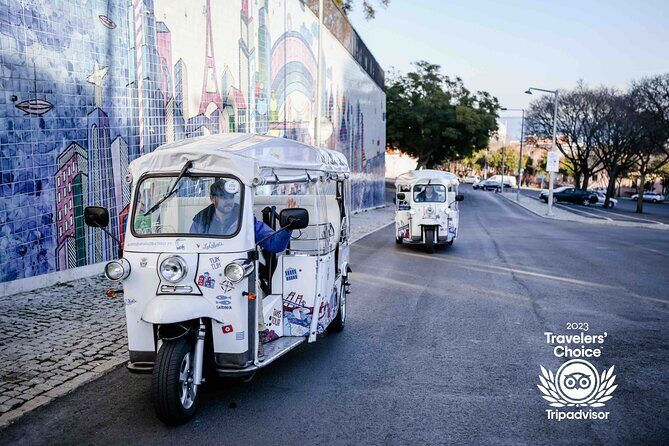
Lisbon hills can be brutal. This private electric eco tuk-tuk welcome tour lets you cover key neighborhoods without the uphill grind. I like that it moves you farther than walking, yet still slows down for photo pauses and local guide tips that make the city feel less random.
Two things that really land: you get a private vehicle for your group, and the driver-guide tells you what you’re looking at as you pass major sights. One heads-up: the route is fixed with preset photo stops, so you can’t swap in new viewpoints on the fly.
In This Review
- Key Highlights Worth Planning For
- Why a Private Electric Tuk-Tuk Is Perfect for Lisbon Hills
- Meeting Point at Tv. do Carvalho: Easy Start, No Fuss Ending
- Cais do Sodré to Chiado: Riverside Atmosphere, Then the City’s Creative Core
- Bairro Alto and Baixa: The Hill Streets and the Great 1755 Rebuild
- Sé de Lisboa and Portas do Sol: Two Stops That Explain Lisbon’s Timeline
- Miradouro Senhora do Monte in Graça: One of the Best Panorama Payoffs
- São Vicente de Fora, the Pantheon, and El-Rei Fountain: Lisbon’s Old Water and Old Power
- Praça do Comércio: Where Lisbon Feels Most Like a Capital
- Price and Value: What You Really Get for $17.23
- Comfort, Safety, and the Real-World Ride Feel
- Who Should Book This Tuk-Tuk Welcome Tour
- Should You Book This Welcome Lisbon Tour?
- FAQ
- How much does the tour cost?
- How long is the tour?
- Is the tour private?
- Is the vehicle electric?
- Where does the tour start and end?
- Is pickup offered from the Lisbon Cruise Port?
- Does the tour run in rain or heat?
- Are there age or other restrictions?
Key Highlights Worth Planning For

- 100% electric tuk-tuk rides that make Lisbon’s hills much easier on your body
- Private pacing: stop as often as you like within the preset stop plan
- No waiting around at the start, since the tour begins without queues
- Miradouros and viewpoints built into the route for those Lisbon panorama moments
- Rain and wind protection with blankets and covers, because weather in Lisbon happens
- Local driver-guides who answer questions and often tailor conversation to your group
Why a Private Electric Tuk-Tuk Is Perfect for Lisbon Hills
Lisbon is beautiful, and it’s also a workout. One moment you’re strolling on level streets, and the next you’re staring at a hill that looks like it belongs in a training plan. The tuk-tuk changes the math. You still see the city up close, but you spend less time climbing and more time looking.
This is a private setup, meaning your group rides together in your own vehicle. That matters because you’re not herded, and your guide can work at your speed. In practice, it feels like a guided city orientation where you can ask a question without someone else’s schedule barging in.
The ride is also designed for everyday comfort. You’ll have blankets and protective covers for rain or wind, and the tour runs in heat and rain (only cancelled under extreme conditions). Still, keep expectations realistic: Lisbon streets are often cobbled, and you should plan for some bumpiness even in a tuk-tuk.
You can also read our reviews of more guided tours in Lisbon



Meeting Point at Tv. do Carvalho: Easy Start, No Fuss Ending
You meet at Tv. do Carvalho 25, 1200-058 Lisboa. The good news is the tour ends right back at the meeting point. That simple loop helps on day one, because you don’t have to figure out where your next move starts.
You’re also near public transportation, which can be useful if you’re building a flexible day around a few neighborhoods. If you’re doing this right after arriving, it’s a strong way to get your bearings fast without committing to a long walking route.
Cais do Sodré to Chiado: Riverside Atmosphere, Then the City’s Creative Core

Your tour begins in Cais do Sodré, a riverside district known for its nightlife and restaurant scene. Even if you’re not planning to party, this area gives you a feel for Lisbon’s energy—close to the water, close to action, and close to where people actually move through the city.
A key stop here is the Ribeira Market area. The big draw is that the market zone functions like a food hub, with plenty of stalls mixing international dishes and Portuguese favorites. Your guide’s job isn’t just to point out where to eat later. It’s to explain how this riverside pocket became such a gathering spot.
From there, you head toward Chiado, Lisbon’s historic center that also feels fashionable and cultural. Expect elegant architecture, classic cafés, and a strong arts-and-theater vibe. This is where names matter. Your guide will point you toward Café A Brasileira, the well-known Livraria Bertrand (the world’s oldest operating bookstore), and São Carlos Theater.
One practical benefit of the Chiado stop: it’s a good place to reset. If you’ve been walking elsewhere, these streets are more manageable. If you’re planning your next days, this is where you’ll start connecting the dots between Lisbon’s old institutions and modern life.
Bairro Alto and Baixa: The Hill Streets and the Great 1755 Rebuild
Next comes Bairro Alto, sitting on one of Lisbon’s seven hills. This is where the city’s personality shows up in narrow cobblestone lanes and a mix of old and new places—bars, restaurants, and fado venues. The stop is about giving you a sense of the neighborhood’s layout so you can navigate it later without feeling lost.
Even if you’re not there for the nightlife, Bairro Alto helps you understand Lisbon’s street logic. By day it feels calmer, with shops and cafés. By evening, it turns into one of the city’s late-day and late-night hubs. A quick pause lets you see why people love getting around here and why the hills make it feel like a maze.
Then you drop into Baixa, the downtown grid that anchors Lisbon’s main sights. This area is known for its neoclassical buildings and wide streets—and importantly, for the fact it was rebuilt after the 1755 earthquake. The guide context you get here matters. Once you understand the planning logic, you read the city differently as you walk later.
Baixa gives you several big-square moments. You’ll see Praça do Comércio on the riverfront later as a highlight, but Baixa is where you connect it to Lisbon’s central streets. This is also where you’ll spot the monumental Arco da Rua Augusta and the iconic Santa Justa Lift from the surrounding area, which helps you decide whether you want to ride it on your own.
Sé de Lisboa and Portas do Sol: Two Stops That Explain Lisbon’s Timeline
You’ll also stop at the Basilica of Saint Mary Major, known locally as Sé de Lisboa. Construction began in 1148, shortly after Afonso Henriques conquered the city. That time stamp is the point. You’re not just seeing a church—you’re seeing how early the city’s religious landmark stayed important and how long Lisbon has been layering new eras on top of older ones.
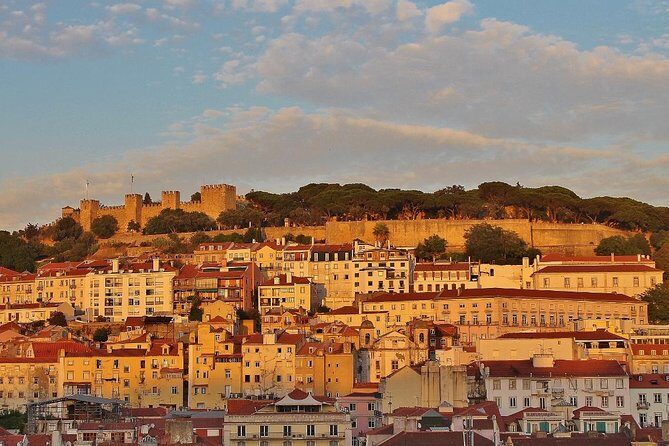
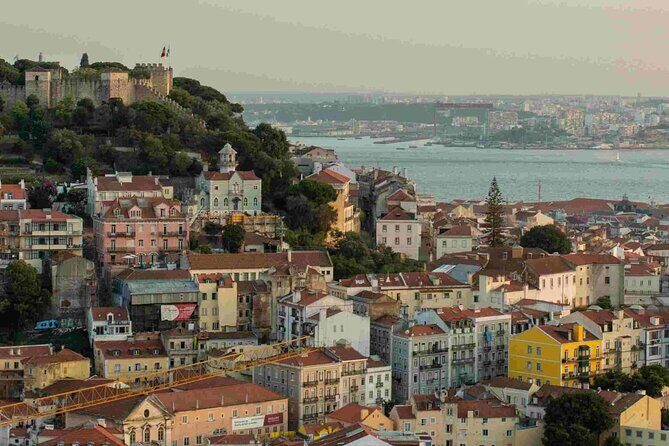
Then you’ll head toward Largo das Portas do Sol in Alfama, famous for one of those instantly recognizable Lisbon views. From here, your eyes can take in the Tagus River, the Baixa Pombalina area, and the Castelo de São Jorge in one sweep. This is a stop that’s mostly about angles and scale—exactly what you want on a welcome tour.
If you’re traveling with a knee issue or you just don’t want to “earn” your photos, this is one of the routes where a tuk-tuk makes sense. You get the view without the long haul up the hill streets.
You can also read our reviews of more private tours in Lisbon




Miradouro Senhora do Monte in Graça: One of the Best Panorama Payoffs
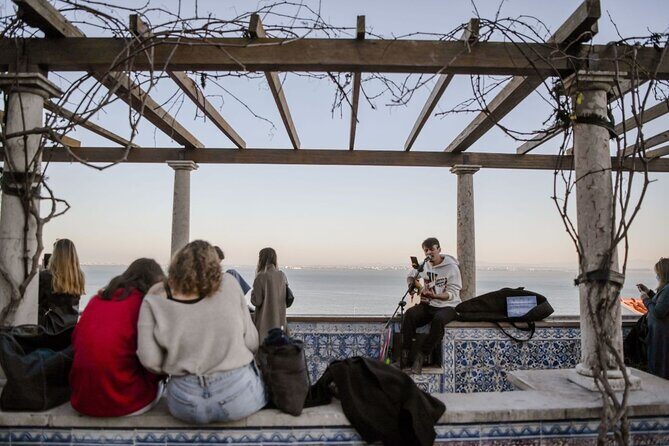
One of the strongest moments on this route is Miradouro Nossa Senhora do Monte, in Graça. This viewpoint is known as one of Lisbon’s iconic panoramic stops, with wide views over the city and the Tagus River.
Graça itself is the kind of neighborhood you appreciate more the longer you look. It’s full of narrow cobbled streets and local life, with key landmarks like Graça Church and the National Pantheon area nearby. It’s often felt as more local and less centered on tourist-only routines, which makes it a nice contrast to places like Baixa and Chiado.
This viewpoint is also about timing. If you hit it in soft daylight, the city looks huge and detailed without being harsh. And with only a short stop built into the plan (about 10 minutes), you learn quickly whether you want to come back later for a longer sit.
The big tip here is simple: hold onto your phone/camera settings and don’t overthink it. When the view is this good, you’ll spend less time fiddling and more time enjoying the big picture.
São Vicente de Fora, the Pantheon, and El-Rei Fountain: Lisbon’s Old Water and Old Power

After the main viewpoints, you move through areas where Lisbon’s heritage gets more specific. You’ll visit the Monastery of São Vicente de Fora, which sits on high ground near the historic neighborhoods of Graça and Alfama. The name de fora matters: it refers to being outside the city walls, and also to how the parish was arranged at the time.
Nearby, there’s the National Pantheon of Portugal (Panteão Nacional), located in the Church of Santa Engrácia. Your guide can connect the dots between what you see now and the earlier church structure that existed on the same site. It’s not just a stop for photo ops—it’s a reminder that Lisbon’s religious and civic identity has been shaped over centuries.
Then you’ll reach the Chafariz de El-Rei, described as the first public ornamental fountain in Lisbon. It dates back to the 13th century, built using excellent groundwater in Alfama during the reigns of Afonso III and Denis I. This is a great moment for people who like the practical side of history. A fountain isn’t just decoration. It’s infrastructure, and it tells you where the city drew its daily needs and attention.
Praça do Comércio: Where Lisbon Feels Most Like a Capital
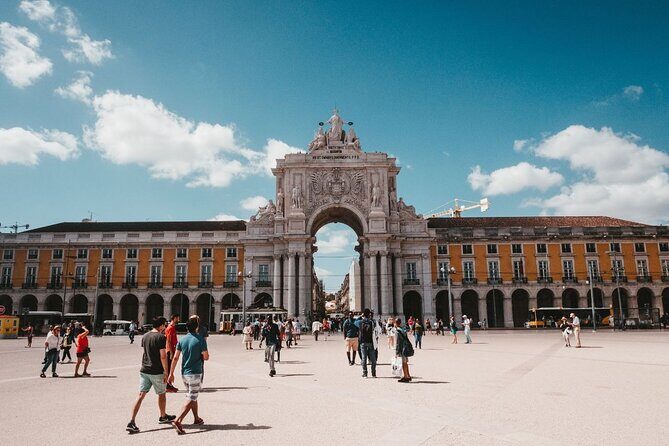
The route finishes with Praça do Comércio, still called Terreiro do Paço by many. This is Lisbon’s giant riverside square, bordered by arches and tied directly to the Tagus River. The setting is monumental: you can stand in the open space and feel how the city once centered royal power here for about two centuries.
Why it’s a smart end point: it’s easy to process everything you’ve just seen. You’ll have names and neighborhoods in your head, and the broad riverfront view helps your brain organize them. It’s also a good spot to decide what you want next—stroll the waterfront, grab food nearby, or plan a museum day.
Price and Value: What You Really Get for $17.23
At $17.23 per person, this tour sits in an accessible range for what you’re buying. The value isn’t just the vehicle. It’s the fact you’re getting a guided overview with a local driver-guide, without queue time at the start, and with a route designed to hit major districts and viewpoints.
You’re also buying back energy. Lisbon’s hills can drain you early. A tuk-tuk means you can keep walking for fun later instead of treating your first day like recovery.
The trade-off is that the plan is preset. You can choose how often you stop for photos within the flow, but you can’t rewrite the route into something entirely different. If you want maximum control over exactly which sights you enter and which miradouro you chase for sunset, you may want to pair this with later solo time.
Comfort, Safety, and the Real-World Ride Feel
This tour uses a 100% electric vehicle, which is part of why it feels smooth and modern. Safety support is also built into how guides run the day. The vehicles are designed for seniors, and drivers help you get on if needed.
One practical point: the ride can be bumpy, mainly because Lisbon streets aren’t designed for comfort—especially on cobblestones. The good news is that blankets and protective covers help when weather flips on you.
I also like that the tour is designed to run in rain and heat, rather than treating one forecast as fate. Only extreme conditions cancel it, so you aren’t constantly second-guessing your plans.
Who Should Book This Tuk-Tuk Welcome Tour
This is a great fit if you’re:
- doing Lisbon for the first time and want your bearings quickly
- dealing with limited mobility or simply want to avoid steep hill walking
- traveling with kids, where a slower, stop-friendly approach keeps everyone engaged
- planning to return for specific sights later and want a short list of what matters
This may be less ideal if you:
- want a fully customizable sightseeing route with spontaneous stops
- prefer long museum time inside sites rather than quick orientation pauses
- are bringing very young children, since there’s a minimum age of two (2) years and no babies allowed
Also note the unusual condition about weight: there’s a minimum mandatory weight of 9 kg listed for participation. If that applies to your group planning, it’s worth confirming before you lock in.
Should You Book This Welcome Lisbon Tour?
If you want an efficient, comfortable first look at Lisbon—Alfama views, Graça panoramas, Chiado culture, and Baixa’s downtown structure—this is an easy yes. The private setup, electric tuk-tuk ride, and local guidance make it a smart early decision.
I’d book it on day one or day two. You’ll learn the city layout faster, and you’ll know what to chase later. Skip it only if you’re already confident navigating Lisbon on foot and you don’t need help choosing what’s worth your time.
FAQ
How much does the tour cost?
The Welcome Lisbon Tour with Local Guide in Private Eco Tuk Tuk is listed at $17.23 per person.
How long is the tour?
It runs for 1 to 4 hours, depending on which duration option you choose.
Is the tour private?
Yes. It’s a private tour/activity, so only your group participates. Tuk tuks are booked privately, with up to 4 passengers per tuk tuk.
Is the vehicle electric?
Yes. The tour uses a 100% electric and sustainable vehicle.
Where does the tour start and end?
It starts at Tv. do Carvalho 25, 1200-058 Lisboa, Portugal and ends back at the meeting point.
Is pickup offered from the Lisbon Cruise Port?
For the 3- and 4-hour options, you can request pickup at the Lisbon Cruise Port (Jardim do Tabaco Quay). You’ll be asked to select a pickup point one day before your tour.
Does the tour run in rain or heat?
Yes. Tours are conducted in rain or heat, and they can only be cancelled under extreme conditions. Blankets and protective covers are provided for wind and rain.
Are there age or other restrictions?
Yes. The minimum age is two (2) years, and no babies are allowed. There’s also a minimum mandatory weight of 9 kg, and pets or animals are not allowed for security reasons.