
REVIEW · LISBON
Lisbon: Oceanário de Lisboa Entrance Ticket
Book on GetYourGuide →Operated by Oceanário de Lisboa · Bookable on GetYourGuide
Lisbon has a great indoor ocean reset. The Oceanário de Lisboa is Europe’s largest indoor aquarium, built on the Expo 98 waterfront, and it turns an ordinary rainy day into a full afternoon of salt-water drama. I love the scale—over 8,000 sea creatures in 500 species—and I love how the big tank layout keeps you moving without feeling rushed. One consideration: it can get crowded, especially with school groups, so timing matters.
You’ll walk into a space designed to make you feel like multiple seas are part of one giant system. The main tank uses huge acrylic panels to separate four regions, yet the center view makes it feel like everything shares the same ocean world. I also like that the experience is flexible: you can go solo and wander, or add a pre-booked guide in Portuguese, Spanish, or English (the guides I saw named in recent bookings include Sophia, Bruno, Katie, and Silvia). The one drawback is simple: if you hate crowds and lines, plan around them.
In This Review
- Key things to know before you go
- Entering Oceanário: what you’re really buying
- A giant indoor aquarium on the Expo 98 waterfront
- How the Oceanarium layout helps you see more (without rushing)
- The main tank: sharks, rays, and that unforgettable central view
- Sea otters, coral reefs, and the small details that add up
- Should you book a guided tour with a guide like Sophia or Bruno?
- When to go: avoid the busiest crunch
- Getting there from central Lisbon: Oriente is the key
- Budget and what to plan around inside
- Who this is best for (and who can skip)
- Should you book this Oceanário ticket?
- FAQ
- What’s included with the Lisbon Oceanário entrance ticket?
- How long should I plan for my visit?
- What time does the Oceanário open, and when is the last entry?
- Is a guided tour included with the ticket?
- How do I get there using public transportation?
- How much does it cost?
Key things to know before you go

- Europe’s largest indoor aquarium on the Expo 98 site makes this a true “day-plan” stop, not just a quick look.
- Four ocean zones (North Atlantic, Antarctic, Temperate Pacific, Tropical Indian Ocean) are separated by acrylic panels, but the main tank ties it all together.
- Sea otters in Europe: you may spot one of the only two existing sea otters in Europe, a highlight for kids and adults.
- The central tank is the main event; several people say they lose track of time just watching sharks and rays glide through.
- Plan around feeding times if you want extra action; it’s worth checking posted feeding schedules online before you arrive.
Entering Oceanário: what you’re really buying
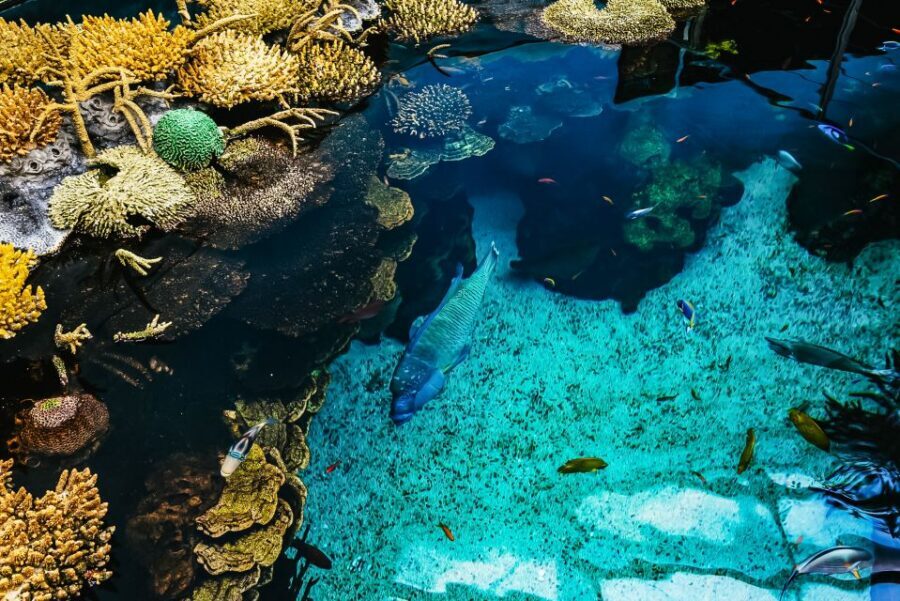
Your ticket is straightforward, and that’s the good news. For about $29 per person, you get admission to the Oceanário de Lisboa for one day, with access to all permanent and temporary exhibitions. You also get the practical perk of skipping the ticket line, which can save real time in a place that can be busy.
What makes the value click is the mix of scale and variety. You’re not paying to see one small display. You’re walking through a carefully arranged indoor aquarium that’s built around a giant central viewing tank, plus multiple sections that explain habitats and species, not just “look at the fish.”
You can also read our reviews of more tours and experiences in Lisbon



A giant indoor aquarium on the Expo 98 waterfront

The Oceanário sits in Parque das Nacões, along Lisbon’s waterfront area tied to Expo 98. That location matters because it’s easy to reach from many directions—by bus, subway, train, boat, or car—so you’re less likely to lose time getting there.
It’s also a big, weather-proof plan. Lisbon’s sun is great, but when it’s too hot or pouring rain, this is one of the best ways to keep your day moving. The building is designed so you can spread out, rest, and sit for long looks without the whole place feeling cramped.
And yes, it’s popular. The Oceanário opened in 1998 and has welcomed 28 million visitors from 182 countries. That reputation is earned, but it also means you should think about when you arrive.
How the Oceanarium layout helps you see more (without rushing)

The Oceanário is organized around four bodies of water, and the design is the point. Instead of one flat “aquarium hall,” you’ll find zones representing:
- North Atlantic
- Antarctic
- Temperate Pacific
- Tropical Indian Ocean
Each zone is separated by large acrylic panels, while the central aquarium pulls your attention back to one shared salt-water world. That trick is smart because it keeps your brain from turning the visit into a checklist. You naturally follow the sightlines: up high, around the tank, then back for another pass when you realize you missed something.
One of the best parts is the viewing experience. There are plenty of places to pause—people talk about benches, nooks, and spots where you can even sit on the floor and just watch the animals moving through the water. If you like a slow museum pace, this place supports it.
If you only have limited time in Lisbon, be realistic: this isn’t a “15-minute detour” aquarium. Some people spend three to four hours mainly watching the central tank, and that makes sense. The main displays hold your attention.
The main tank: sharks, rays, and that unforgettable central view

The central tank is the headline. Even if you don’t know marine science, you’ll recognize the feeling: you’re watching sharks and rays cruise through water that looks deep and clear, with visitors positioned on multiple levels for different angles.
This is also where you tend to feel closest to the animals. People specifically call out the graceful movement—rays and sharks gliding past in a way that doesn’t feel like you’re looking at “stuff behind glass,” but more like you’re watching behavior in a real habitat.
If you want a simple strategy, use this order:
- Go straight to the central tank to get oriented.
- Then walk the side exhibits while you learn what you’re seeing.
- Come back to the central tank again if you have time.
It works because the information in the surrounding areas helps you notice things on your second lap that you might miss the first time.
Sea otters, coral reefs, and the small details that add up

It’s not just big predators that make the visit memorable. The Oceanário highlights a wide range of marine life, including coral reef scenes and species that don’t show up in your average aquarium outing.
One standout detail is the chance to see sea otters. The Oceanário is home to the only two existing sea otters in Europe, and that fact alone draws people in. Even if you aren’t a “mammals person,” otters usually bring a different kind of energy—more active, more playful, and often the species visitors watch for longer.
Another practical tip: if you want that extra burst of activity, plan your timing around feeding moments. Several people recommend checking feeding times online so you can line up your visit. Watching otters during a feeding time turns a great exhibit into a more vivid one.





Should you book a guided tour with a guide like Sophia or Bruno?

Your entrance ticket gives you self-guided access. A guided tour is available at extra cost and must be pre-booked, with options in Portuguese, Spanish, and English. If you choose to add one, it can change the whole experience from sightseeing to understanding.
The reason is simple: a good guide connects the visuals to facts, behaviors, and conservation stories in a way that you won’t get as quickly on your own. In the bookings I saw, guides were often praised for bringing deep species knowledge and answering questions clearly. Names that came up include Sophia, Bruno, Katie, and Silvia.
Here’s how to decide:
- If you like learning while you walk, a guided tour is worth considering.
- If you prefer your own pace and just want to watch animals, you can skip the tour and still have a great time.
Either way, you’ll be able to spend time on the exhibits that catch your interest. A guide doesn’t remove freedom; it just helps you notice the right details sooner.
When to go: avoid the busiest crunch
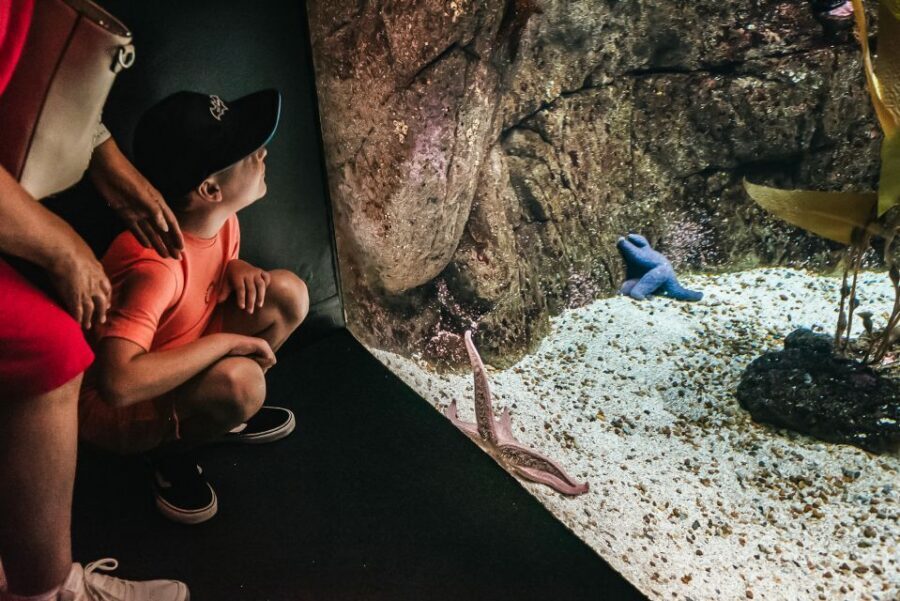
Opening hours are daily from 10:00 AM to 8:00 PM, with the last entry at 7:00 PM. That long day window is handy, but crowds can shape your experience.
If you want the calmer version:
- Aim to arrive earlier in the day.
- If you’re visiting during a school-trip period, expect higher traffic and slower movement.
Some people report that it gets very busy and that queues can form. In that situation, you may struggle to take photos if you’re squeezed into tight viewing spots. The good news is the building is large, and once you find a good area to pause, the exhibits still feel engaging.
If you’re flexible, one simple move is to schedule your Oceanário visit as either your morning anchor or your late-afternoon reset (depending on your other Lisbon plans).
Getting there from central Lisbon: Oriente is the key

You can reach the Oceanário from Lisbon’s historic center without much fuss. The Oceanário is on the Parque das Nações waterfront, and the best transit target is Oriente.
By subway:
- Follow the red M signs.
- Take the red line to Oriente, which is the last stop.
By bus:
The bus routes serving Oriente include 5, 10, 19, 21, 28, 50, 68, 81, 82, 85.
If you like planning with a map, here’s the GPS location provided:
- N 38º 45′ 48,61” W 9º 5′ 37,62”
Practical note: hop-on hop-off buses often stop near here, so if you’re already on one, you might be able to use it as your drop-off point.
Budget and what to plan around inside

Food and drink are available for purchase, but they aren’t included with the ticket. Souvenirs are also available to buy, but not included in admission.
So build your day budget like this:
- Ticket cost is your main upfront expense.
- Add money for snacks and drinks if you’ll be there several hours.
- Add a little extra if you want a souvenir (and you will see plenty of tempting stuff near exits and gift areas).
Also plan to move slowly. This is not a “through-the-door and out” kind of place. If you want to watch the central tank properly, you’ll likely spend enough time that you’ll appreciate having water or a snack option nearby.
Who this is best for (and who can skip)
This is a strong fit for nearly everyone, but it shines for certain types of visitors.
You’ll love it if:
- You have kids. The exhibits are designed for families, and the animals give kids a reason to stay curious.
- You like science without a lecture. The visuals plus info panels do the heavy lifting.
- You want a rain-proof Lisbon activity that still feels like a “real attraction.”
You might not need it if:
- You have only a short window and are mainly looking for a quick sight.
- You strongly dislike crowds, especially around school-trip times.
- You only care about one or two animals. In that case, you’d need to be very selective about what you focus on, or you’ll feel like you paid for variety you didn’t fully use.
Should you book this Oceanário ticket?
I’d book it if you want a high-value, weather-proof aquarium that gives you both big moments and lots of small details. The ticket price makes sense when you consider you’re getting access to all permanent and temporary exhibitions plus a design that supports long viewing—especially around the central tank.
If you’re on the fence, here’s the practical test:
- Do you have at least half a day you can give to a calm indoor walk? If yes, book.
- Do you want an extra layer of learning? Add a pre-booked guided tour if English (or your language) is available.
- If crowds will stress you out, go early and plan your timing around feeding moments.
Bottom line: for most visitors, the Oceanário de Lisboa is one of those Lisbon stops that justifies itself once you’re inside and watching the animals move.
FAQ
What’s included with the Lisbon Oceanário entrance ticket?
Your ticket includes admission to all permanent and temporary exhibitions. It also comes with access for a 1-day visit.
How long should I plan for my visit?
You should plan around the amount of time you want to spend at the central tank and the different ocean zones. Many visitors end up spending several hours mainly watching the main aquarium.
What time does the Oceanário open, and when is the last entry?
It’s open daily from 10:00 AM to 8:00 PM, and the last entry is 7:00 PM.
Is a guided tour included with the ticket?
No. A guided tour is available at extra cost and must be pre-booked in Portuguese, Spanish, or English.
How do I get there using public transportation?
The Oceanário is on the Parque das Nações waterfront. The nearest subway stop is Oriente on the red line. Several bus routes serve Oriente, including 5, 10, 19, 21, 28, 50, 68, 81, 82, 85.
How much does it cost?
The ticket price is $29 per person.