REVIEW · LISBON
Historical Private Walking Tour of Lisbon
Book on Viator →Operated by Tours Bernardo · Bookable on Viator
Lisbon climbs, then pays you back. This private walking tour stitches the historic center together with Alfama streets and hilltop miradouros in about 3–4 hours. You start near Praça dos Restauradores and end at Largo do Carmo, so the day has a satisfying arc.
I love the way the guide keeps it practical. Bernardo steers the walk with clear English and strong Portugal context, and the route is set up to show you squares like Pedro IV and Comércio at the right moments (when the views make sense). I also like the included break: pastel de nata plus a sip of local ginja.
One drawback to plan for: this is not a flat stroll. Lisbon has 7 hills, and you’ll walk around 5 km with plenty of ups and downs, so good shoes are non-negotiable.
In This Review
- Key things that make this Lisbon walk worth your time
- The route feels like a story, not a checklist
- Praça dos Restauradores: the city-center warm-up
- Monumento a D. Pedro IV: Lisbon’s center, packed with landmarks
- São Domingos Church area: details you can spot on the street
- Praça da Figueira: food, institutions, and quirky Lisbon touches
- Miradouro Chão do Loureiro: first real “wow” over Lisbon
- Santo António pastry break: pastel de nata made for eating, not just admiring
- Miradouro de Santa Luzia: tiles, angles, and the top-of-Alfama feeling
- Miradouro das Portas do Sol: Lisbon with bridges in frame
- Calcada da Amalia: fado street art you can walk through
- Alfama: narrow lanes, old Portugal energy, real atmosphere
- Lisbon Cathedral (Sé): oldest cathedral landmark, simple exterior focus
- Praça do Comércio (Terreiro do Paço): river front grand entrance feel
- Rua Augusta: your central-city connector
- Chiado: boutique streets and historic café culture
- Largo do Carmo: the revolution ended here, with a final viewpoint payoff
- Budget reality check: what’s included vs what costs extra
- Getting the most out of a 3–4 hour private walk
- Who should book this tour (and who might skip it)
- Should you book this private Lisbon walking tour?
- FAQ
- How long is the Historical Private Walking Tour of Lisbon?
- Where do I meet the guide, and where does the tour end?
- What is included in the tour price?
- Are any attraction entrances included?
- Is the tour easy to do if I’m not very fit?
- Is this a private tour or shared group?
- What is the cancellation policy?
Key things that make this Lisbon walk worth your time
- Bernardo’s guiding style: clear, friendly explanations with strong Portuguese context in excellent English
- Top-view payoff: multiple miradouros with sweeping angles over the Tejo and bridges
- Alfama on foot: narrow lanes in one of Portugal’s oldest areas, not just a quick look
- Included snack break: pastel de nata (custard tart) and beverage, plus ginja as part of the tour
- Historic squares in sequence: Restauradores → Pedro IV → Comércio → Chiado, so the story flows naturally
- Mobile ticket: simpler than hunting paperwork on a busy street
The route feels like a story, not a checklist
This tour is built for orientation. You’ll move from one major “anchor” square to the next, and each stop gives you a new way to understand Lisbon’s layout: formal avenues, then older quarters, then river life, then the city-center streets where people shop and linger.
The start point is Praça dos Restauradores, near Avenida da Liberdade. From there you’ll head toward central Lisbon landmarks and slowly work your way into the oldest neighborhood feel of Alfama. By the time you reach Largo do Carmo, you’ve gone from grand city center to revolutionary history to city views.
You can also read our reviews of more walking tours in Lisbon
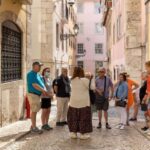


Praça dos Restauradores: the city-center warm-up
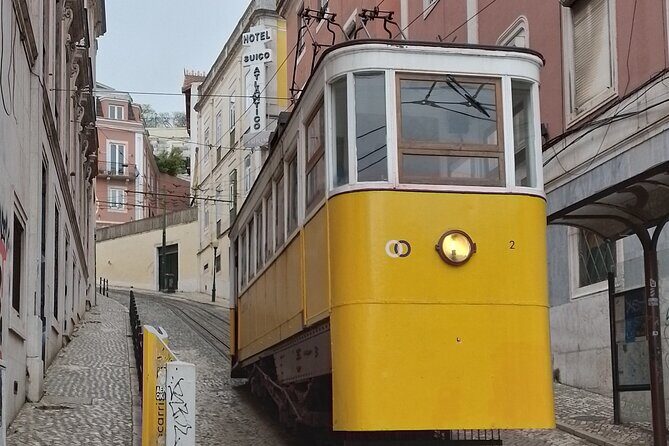
Your walk begins at Praca dos Restauradores, a square with several good “first-Lisbon” clues. You can spot the Restauradores obelisk, see points tied to classic Lisbon landmarks like the Glória elevator, and connect the area to Avenida da Liberdade’s grand, wide feel.
This first stop is also a timing breather. It’s only around 15 minutes, so you get oriented without losing momentum. If you arrive early, take 60 seconds to look around before you meet your group spot—this is one of those places where the details help you follow the rest of the day.
Monumento a D. Pedro IV: Lisbon’s center, packed with landmarks
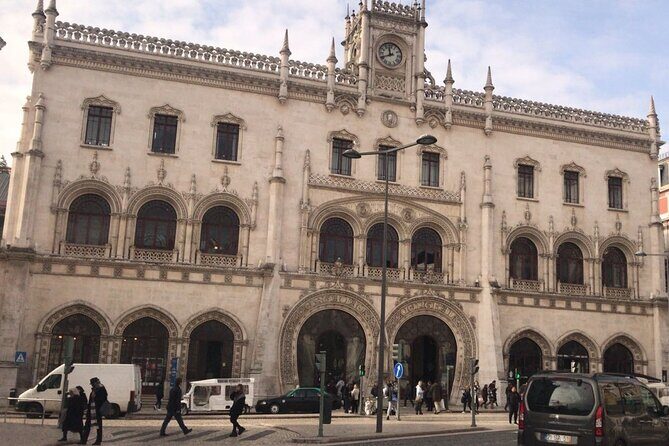
Next is Monumento A D. Pedro IV, the kind of central square where a lot of Lisbon seems visible at once. This area gives you an overview, letting you connect what you’ll see later: landmarks like Carmo convent, Maria II Theatre, and the Castle of São Jorge.
Think of this as your “zoom out” moment. Once you’ve got that bird’s-eye mental map, the later turns in Alfama make more sense because you’re not walking blindly through twists and sight lines.
São Domingos Church area: details you can spot on the street
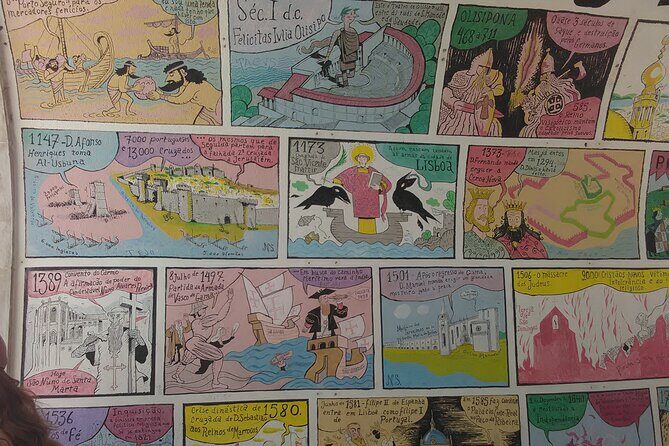
At Igreja de Sao Domingos, you’ll pause near São Domingos Church, plus a couple of specific street-level curiosities. The area includes the monument of the Star of David and the oldest ginja shop, which is handy because it ties straight into the local flavors you’ll try later.
This is the kind of stop that rewards paying attention. Even if you only spend 10 minutes, it’s long enough to notice small things that most people miss while they’re busy taking photos.
Praça da Figueira: food, institutions, and quirky Lisbon touches
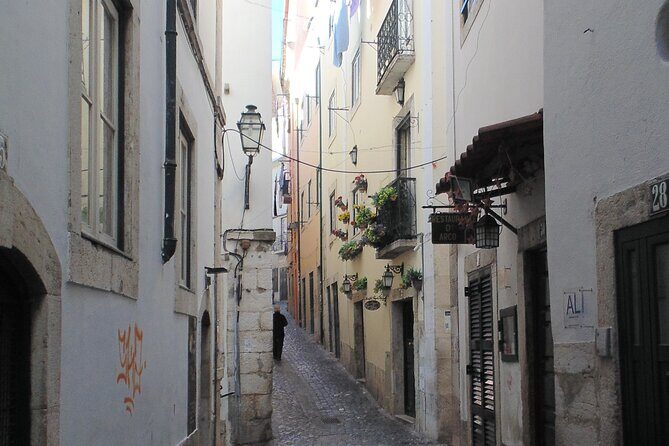
Then you land at Praca Da Figueira, a market square feel with several iconic references nearby. You’ll pass the statue of D. João I, and you’ll be close to Confeitaria Nacional (a well-known Lisbon pastry address). You also get a nod to a quirky Lisbon landmark: the doll hospital.
If you like travel days that mix big famous places with odd-but-true details, this stop does it well. It’s also a helpful bridge from the religious/monument areas into the view-focused parts of Lisbon.
You can also read our reviews of more private tours in Lisbon





Miradouro Chão do Loureiro: first real “wow” over Lisbon
Your next highlight is Miradouro Chao do Loureiro, a viewpoint right below the Castle of São Jorge area. From here you’ll look out toward the Tejo river and the 25th of April Bridge.
This is where your walking effort starts paying back. The viewpoint stage is short (around 10 minutes), but it’s long enough to get photos, take in the scale of Lisbon, and spot how bridges and river shape the city’s story.
A practical note: you’ll be moving between viewpoints and squares on foot. If you’re worried about stamina, pace yourself here and don’t try to race the group.
Santo António pastry break: pastel de nata made for eating, not just admiring
At Santo António, you’ll take a short break at a pastry shop. This is where you can try custard tarts—the classic pastel de nata—and have a beverage.
You’ll also see the custard work being made. That small “how it’s done” moment matters because it turns the snack from a tourist item into something more personal. The included stop is also a smart energy reset, because the day’s remaining part includes more hill-top viewpoints.
Miradouro de Santa Luzia: tiles, angles, and the top-of-Alfama feeling
Next up is Miradouro de Santa Luzia, another viewpoint, but from a different angle. You’re positioned just on the top side of Alfama, and the viewpoint includes beautiful tile portraits, which make your photos feel more Lisbon than generic.
I like this stop because it shows you that Lisbon’s beauty isn’t just “big skies” and famous towers. It’s also the human-scale texture—tiles, walls, and a patchwork of rooftops.
Miradouro das Portas do Sol: Lisbon with bridges in frame
Then you’ll reach Miradouro Das Portas Do Sol, with views that expand in a new direction. From here you can see the Vasco da Gama bridge and St. Vincent church.
This viewpoint is ideal if you want proof that Lisbon is a river city. Bridges aren’t just infrastructure here—they’re landmarks that help you keep your mental map straight as you move through neighborhoods.
Calcada da Amalia: fado street art you can walk through
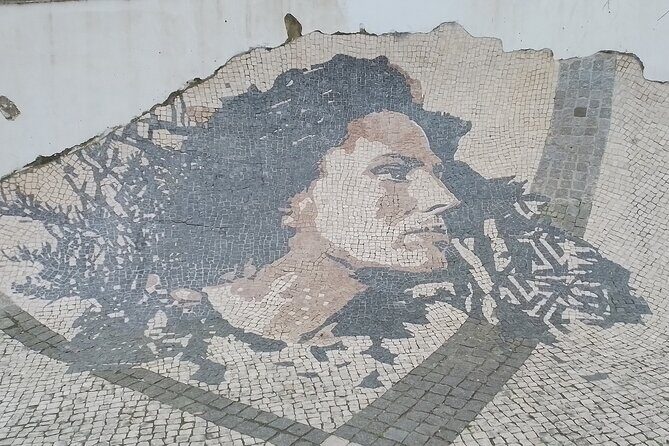
At Calcada da Amalia, you’ll see a cobble mural dedicated to Amália Rodrigues, Lisbon’s most famous fado singer. It’s a cultural “pause” that still feels physical, because you’re seeing it on the ground as you walk.
If you love fado, this stop makes the music feel anchored in place rather than floating in a show. Even if fado isn’t your thing, it’s a good example of Lisbon identity showing up in everyday streets.
Alfama: narrow lanes, old Portugal energy, real atmosphere
Now comes the heart of the day: Alfama. You’ll walk through the oldest neighborhood in Lisbon and one of the oldest in Europe, threading narrow, winding streets that feel different from the wider city-center squares.
This portion is about time scale. Lisbon’s modern layers are there, but Alfama brings you back to older street patterns, tighter corners, and the kind of neighborhood where views appear suddenly between buildings.
A useful strategy: slow down during this section. If you rush it, you’ll miss how the streets gradually open into sightlines toward the river and the higher miradouros.
Lisbon Cathedral (Sé): oldest cathedral landmark, simple exterior focus
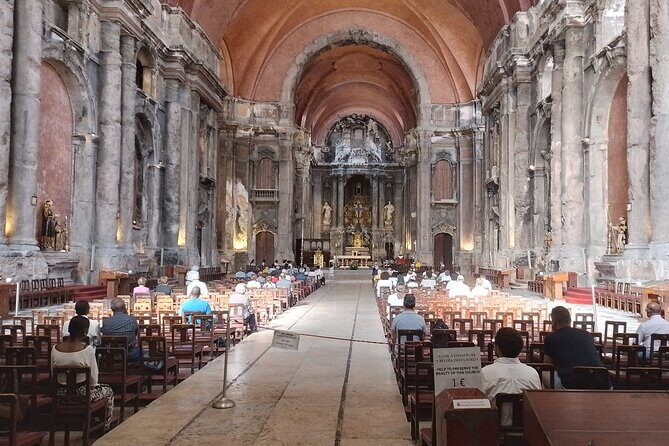
At Lisbon Cathedral (Sé), you’ll pause at the oldest cathedral in Lisbon, an obvious city symbol. Opposite it is also the Santo António church.
The tour notes that Sé Cathedral entrance is not included. Even without going inside, you still get the location and the “why this matters” context. If you care about interiors, plan for the fact that you’d pay extra to enter.
Praça do Comércio (Terreiro do Paço): river front grand entrance feel
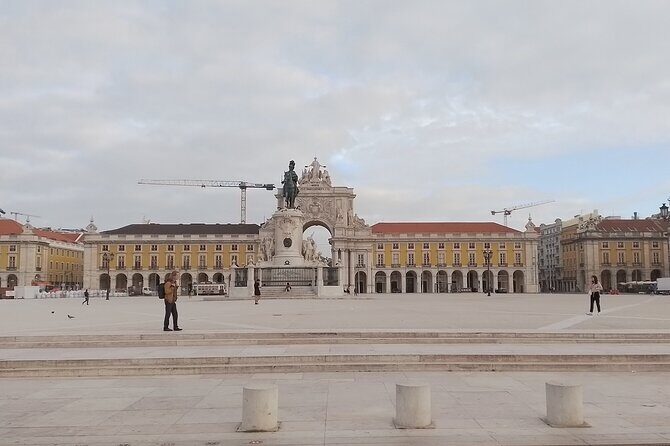
Then you come to Praca do Comercio (Terreiro do Paco), right by the river. This is Lisbon’s biggest square and the grand entry feeling from the water, with the Rua Augusta Arch nearby.
This stop is crucial because it changes the mood. Alfama’s lanes narrow and intimate, while Comércio opens wide. It’s a breath in the middle of the day, and the river view helps you understand how Lisbon historically welcomed ships, trade, and travelers.
Rua Augusta: your central-city connector
After that you’ll walk along Rua Augusta, the famous street linking Praça do Comércio to Pedro IV square. It’s the city’s classic connector: part shopping streets, part people-watching, part “this is how the center moves.”
Don’t expect a quiet village lane here. Rua Augusta is more about atmosphere and flow—an effective way to get from river-side to the Chiado area without losing the thread.
Chiado: boutique streets and historic café culture
Next is Chiado, an emblematic Lisbon neighborhood with boutique shops and theater-hub energy. The tour area includes points like Camões square and the Brasileira Café, plus a reference to the oldest bookshop in the world.
This is where Lisbon feels more polished and urban. I like this segment because it’s not only monuments. It’s the “today” Lisbon—people shopping, café life, and street corners that invite you to slow down.
Largo do Carmo: the revolution ended here, with a final viewpoint payoff
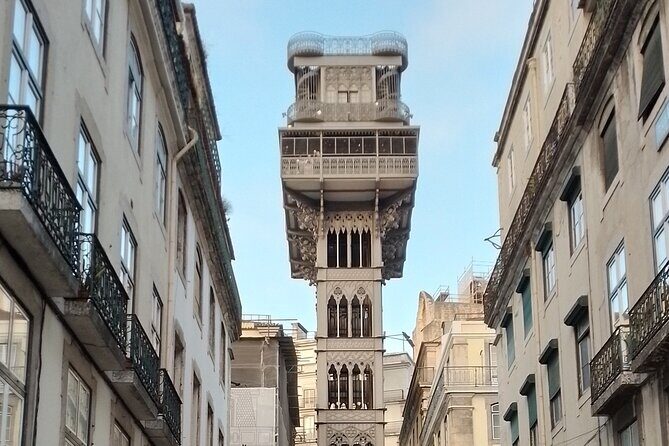
Finally you reach Largo do Carmo, where the Carnation Revolution ended with the end of dictatorship. This square also connects to sites like Carmo convent and provides access to the Santa Justa elevator area.
Santa Justa elevator entrance is not included, and Carmo convent entrance is not included either. That’s not a dealbreaker, because the square still gives you the historical anchor and a good last chance to look around before the tour ends at Carmo square.
Budget reality check: what’s included vs what costs extra
The price is $72.30 per person, and it covers the guided walking and the food elements that actually matter on a walking day. You’ll also get included ginja (the local liquor) and a breakfast stop with pastel de nata plus a beverage.
Expect extra costs if you want to go inside certain attractions. Sé Cathedral entrance is not included (adult and child pricing is listed), Santa Justa elevator isn’t included (return trip is listed), Carmo convent isn’t included, and the Rua Augusta Arch costs extra too. If you’re aiming for maximum value, you can treat those as optional add-ons depending on your energy and interests.
The good news: the walk still works even if you skip entrances. The viewpoint stops and square-to-square layout do the heavy lifting.
Getting the most out of a 3–4 hour private walk
This is a private tour, meaning only your group participates. That matters because you can move at a pace that fits you, and you can ask questions without worrying about slowing others down.
Bring comfortable walking shoes. If you’re on the less-fit end, plan for breaks and take slower steps on hills. The tour says moderate physical fitness is best, and it estimates about 5 km of walking with multiple climbs.
Also note: the experience is designed for good weather. If conditions are poor, you may be offered a different date or a full refund.
Who should book this tour (and who might skip it)
You’ll like this tour if you want a first-time orientation to Lisbon’s historic center with a real focus on views and neighborhoods. It’s especially strong for people who like architecture, small street details, and seeing how Lisbon shifts from formal squares to older alleys.
I’d think twice if you hate walking on hills. This route includes steep sections, and the schedule doesn’t promise lots of long sit-down breaks. If you’re looking for a totally low-effort sightseeing day, you’ll likely be happier with a lighter option.
You should also consider it if you want a guide name you can rely on: Bernardo. In recent experiences, he showed up on time and spoke English very well, which makes a big difference when you’re trying to understand what you’re seeing.
Should you book this private Lisbon walking tour?
Book it if you want the best kind of Lisbon intro: squares, viewpoints, and Alfama on foot, with a practical snack-and-drink break included. The $72.30 price feels fair because it covers more than narration—it includes time-saving guidance plus actual local tasting.
Skip or adjust expectations if you need minimal walking or you’re very strict about entrance fees. Many key spots are outside and visible without tickets, but a few famous interiors do cost extra.
If your plan includes Alfama and multiple miradouros, this walk is a smart way to stitch the city together in a half-day.
FAQ
How long is the Historical Private Walking Tour of Lisbon?
The tour lasts about 3 to 4 hours.
Where do I meet the guide, and where does the tour end?
You start at Praça dos Restauradores, 1250-096 Lisboa, Portugal. The tour ends at Largo do Carmo 13, 1200-203 Lisboa, Portugal.
What is included in the tour price?
The tour includes alcoholic beverages (local ginja) and a breakfast stop where you can try pastel de nata (custard tarts) and have a beverage.
Are any attraction entrances included?
No. Entrance to Sé Cathedral, Santa Justa elevator, Carmo convent, and the Rua Augusta arch are not included.
Is the tour easy to do if I’m not very fit?
The tour is best for travelers with moderate physical fitness. Lisbon has 7 hills, and the walking is estimated at about 5 km. If you are very unfit, the tour may not be a good idea.
Is this a private tour or shared group?
This is a private tour/activity, so only your group participates.
What is the cancellation policy?
You can cancel for a full refund if you cancel at least 24 hours in advance. If you cancel less than 24 hours before the start time, the amount paid is not refunded.