REVIEW · LISBON
Private Tour: Discover the Rich Medieval History of Obidos
Book on Viator →Operated by Knight Riders Tourism · Bookable on Viator
Obidos is like stepping into a walled story. The pull here is the mix of medieval streets and the real-life tradition behind why it’s called the wedding gift city, with commentary that connects the town’s walls to royal moments starting in 1214. I especially love the stop-by-stop way you learn what you’re actually looking at, and the blue-tile Chapel of our Lady of Mercy, with its tomb and centuries-old interior. One possible drawback: it’s a full 8-hour day with plenty of cobblestones and church interiors, so comfy shoes matter.
Because it’s private, you’re not stuck with a rushed group shuffle. You’re picked up in an air-conditioned vehicle, then you can shape the day to add nearby favorites like Sintra or Alcobaça (and in some versions of this outing, Nazare and Peniche also get worked in). The overall feel is practical sightseeing with room to breathe, even if the medieval lanes can feel tight.
In This Review
- Key points that make this Obidos tour worth your time
- Entering Obidos’ walled lanes, and the wedding-present tradition
- Lisbon pickup to an 8-hour medieval day: how the pacing works
- Chapel of our Lady of Mercy: tiles, the Renaissance tomb, and a rebuilding story
- The pillory, Eleanor of Viseu, and the fountain that once served the town
- The hexagonal sanctuary detour: an ancient cross with a local route story
- Optional add-ons: Sintra, Alcobaça, Nazare, and coast stops
- Sintra and Pena Palace
- Alcobaça
- Nazare and a coastal feel
- Peniche and “working Portugal”
- The Westernmost pony monument
- Price and value: what about $325.80 per person makes sense?
- Comfort, walking, and what to pack for medieval lanes
- Who should book this Obidos medieval tour?
- Should you book this tour?
- FAQ
- What time does the Obidos tour start?
- How long is the tour?
- Is hotel pickup and drop-off included?
- Is this tour private or shared?
- Can I add Sintra or Alcobaça to the plan?
- Is admission required for the Chapel of our Lady of Mercy?
- What health and hygiene measures are provided?
- Are children allowed?
Key points that make this Obidos tour worth your time

- Door-to-door pickup in Lisbon with an air-conditioned private ride
- Walled-town classics: castle walls, narrow cobbled lanes, and painted houses
- Chapel of our Lady of Mercy: 1600s–1700s tiles plus a Renaissance tomb by French sculptors
- Pillory, fountain, and Eleanor of Viseu details that turn monuments into stories
- A stone cross dated to the 2nd or 3rd centuries at the hexagonal sanctuary area
- Flexible add-ons such as Sintra or Alcobaça, based on your day’s choice
Entering Obidos’ walled lanes, and the wedding-present tradition
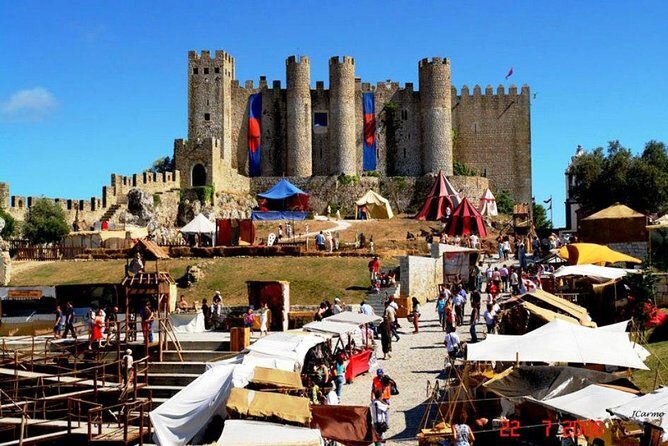
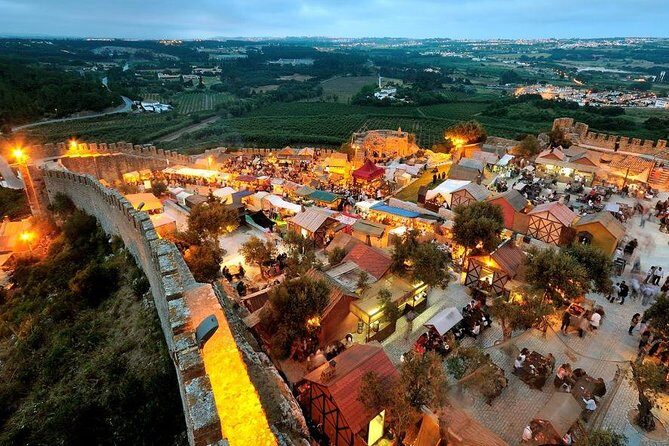
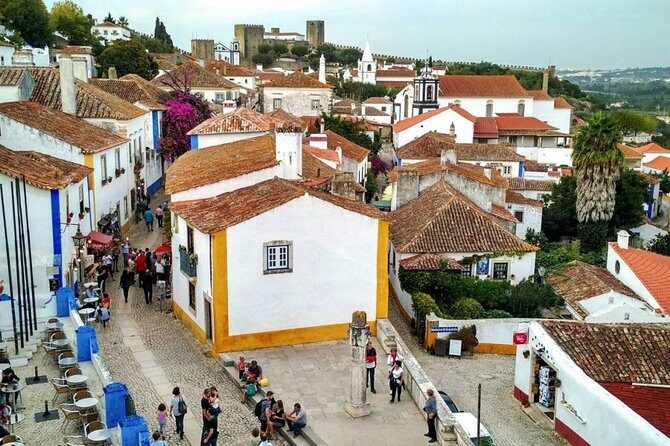
Obidos is one of those places where the setting does half the work. The town is famous for being one of Portugal’s best examples of a Portuguese walled town, and once you’re inside, you immediately see why the walls have stayed part of the identity. Expect narrow, cobbled lanes, traditional painted houses, and the medieval castle that frames the whole experience like a stage set.
What makes this tour more than just photos is the story behind the town’s name for weddings. Obidos was presented to the Queen of Portugal on her wedding day, starting with Queen Urraca in 1214 and continuing until the 19th century. That long tradition helps explain why people treat Obidos like something special—not just a stop on a map.
My advice: look up as you walk. The architecture and defensive lines aren’t only for background; they guide how you move through the town. Even if you only have a few hours on foot, you can still get a strong sense of medieval planning because everything funnels through those tight, historic lanes.
You can also read our reviews of more private tours in Lisbon



Lisbon pickup to an 8-hour medieval day: how the pacing works

This is scheduled as an 8-hour outing, starting around 9:00 am, with hotel pickup and drop-off in Lisbon. That timing is smart because Obidos is easiest to enjoy when you’re not fighting the busiest parts of the day.
Since it’s private, the transport part stays calm. You travel in an air-conditioned vehicle with a driver/guide, and the tour includes all taxes, fees, and handling charges. There’s also a mobile ticket, which usually means less paperwork fuss once you’re out.
One thing to keep in mind: the itinerary is built around specific walking and church visits, including stops where you’ll have about 30 minutes on site for key sights. That’s enough time to see what matters without sprinting, but it still adds up. If you’re sensitive to walking on uneven stone or you hate stairs inside older churches, plan for a slower rhythm and bring water.
Chapel of our Lady of Mercy: tiles, the Renaissance tomb, and a rebuilding story
The Chapel of our Lady of Mercy is the sort of stop that changes how you see the town. It’s located on the main square, and it has a layered backstory that starts soon after Obidos was recaptured from the Moors in 1148.
The building you see today isn’t a simple medieval relic. After an earthquake in the 15oos, the first wave of reconstructions led to the present Mannerist design. That matters because it means the chapel isn’t just old—it’s old with scars and repairs you can sense in the style.
What you’ll notice inside is the visual wall-to-wall detail:
- Almost every inch of the interior walls is clad with tiles from the 1600s and 1700s
- There’s a marvellous retable from the same general period
- And the standout moment is the Renaissance tomb of João de Noronha
The tomb is credited to French sculptors Jean de Rouen and Nicolas Chantereine. That’s a great detail to file away because it connects Obidos to a broader European art world, not just local legends.
Tip: go in with your eyes ready for patterns. The chapel isn’t about one single object. It’s about the way everything is covered—tiles, carvings, and the tomb—so the longer you look, the more you catch.
The pillory, Eleanor of Viseu, and the fountain that once served the town

After the church stop, you get time to potter around the square area. This is where Obidos starts feeling less like a checklist and more like a lived-in town with traces of power.
One of the most meaningful objects is the pillory. It’s a monument tied to the town’s autonomy and was used as a place to punish criminals. The example here dates to the 1400s and carries the coat of arms of Eleanor of Viseu.
Eleanor’s crest includes a poignant detail: a net symbol. It represents the fisherman’s net that her infant son was wrapped in after he drowned in the Tagus. That kind of human detail can make a stone monument feel suddenly close.
You’ll also spot a fountain once fed by the town’s aqueduct. It’s a reminder that even inside an old walled town, the everyday mechanics of life—water included—were a big deal.
Then there’s the Telheiro on the north side: a building recognizable for its portico with six columns. Historically, it housed the town’s indoor market until the 1900s. Even if you’re visiting today mainly for medieval architecture, it helps to remember that these structures weren’t built just for show. They served daily life.
The hexagonal sanctuary detour: an ancient cross with a local route story

This stop is the kind of detour that makes the day feel smart, not just scenic. North of Óbidos, the hexagonal sanctuary area is worth it for the stone cross in its altar.
Here’s the wild part: the cross has an image of the crucifixion, and it’s dated to the 2nd or 3rd centuries. That means you’re looking at an object older than the surrounding church setting, and it’s been in this place for a long time—before the Baroque church was finished.
The local story says Queen Eleanor of Viseu placed the cross nearby in the 1500s to mark the route to Caldas da Rainha, the hot springs she founded. Later, the cross was forgotten and then rediscovered in 1730 by a farmer. The church was finished in 1737, which explains why the space feels like layers of devotion rather than one straight timeline.
Practical tip: allow a little extra time at this stop to take in the altar area. When you’re dealing with a cross that’s both ancient and religiously significant, it’s worth a slow look so you don’t just glance and move on.
You can also read our reviews of more historical tours in Lisbon





Optional add-ons: Sintra, Alcobaça, Nazare, and coast stops
A big reason people like this tour style is the flexibility. You can customize the itinerary to include nearby cities such as Sintra or Alcobaça, and some versions of the day can add other coastal and cultural stops.
Sintra and Pena Palace
Sintra is a common add-on, and in this type of day plan, you might see Sintra’s town feel and also visit Pena Palace. The palace is a huge visual hit—expect the kind of architecture that’s hard to describe because photos flatten it. If you go, give it time to look at details rather than treating it like a quick stop.
Alcobaça
Alcobaça is another frequent match, and it’s a natural partner for the medieval theme. The point isn’t just to tick off another location; it’s to compare how different Portuguese regions expressed medieval power through buildings, art, and sacred spaces.
Nazare and a coastal feel
In some outings, Nazare is included along with Obidos. It can break up the medieval mood with a more coastal atmosphere. If the day includes a coast drive, you’ll also get a chance to see viewpoints rather than just sit in town squares.
Peniche and “working Portugal”
The broader region around Obidos can include Peniche, known as a working fishing port. If this gets added, it’s a good contrast to the postcard look of walled Obidos. You get to see a functional side of the coast.
The Westernmost pony monument
Some schedules also include a drive to the monument to the Westernmost pony on the European continent. It’s not essential, but it’s one of those quirky photo stops that makes a long day more fun.
Price and value: what about $325.80 per person makes sense?
At $325.80 per person, this isn’t a cheap group bus deal. So you’ll want to know what you’re really buying.
You’re paying for:
- Private tour format (your group only)
- Hotel pickup and drop-off in Lisbon
- An air-conditioned vehicle
- A driver/guide
- Included taxes, fees, and handling charges
- Mobile ticket convenience
- And the flexibility to shape the itinerary with places like Sintra or Alcobaça
For many people, the value comes down to time and comfort. Lisbon to Obidos takes effort on your own—planning transport, managing schedules, and figuring out how to layer stops efficiently. Here, the transport and routing are handled, and the guide makes the medieval details make sense, like why the pillory has that coat of arms story or how the cross ties to Caldas da Rainha.
Where the price might feel less worth it is if you’re the kind of traveler who hates timed stops and wants total freedom. This day is structured around key sights, especially churches and monuments. If you want to wander with no plan at all, a car rental might beat this.
Comfort, walking, and what to pack for medieval lanes
Because this is a medieval-town day, your comfort will make or break it.
You can expect:
- Cobblestones and narrow lanes in and around Obidos
- Church interiors where you’re expected to look around
- Short focused time blocks (often around 30 minutes per stop)
Pack like you’re doing a city walking day, not a light stroll. Solid shoes matter. Bring a small bottle of water if you tend to get thirsty, and consider a hat or sunglasses since you’ll be outdoors in Portugal.
The good news: the tour includes an air-conditioned vehicle for breaks between stops, so you’re not stuck overheating between sights.
On the health and hygiene side, the provider is certified with the Turismo de Portugal Clean & Safe hygiene stamp. The operation uses private tour format with vehicle cleaning and disinfection, plus hand sanitizer and masks provided.
Who should book this Obidos medieval tour?
Book this if you want:
- A private day trip that starts with pickup and ends with drop-off
- A guide-led explanation that turns medieval monuments into stories you can repeat later
- A medieval-focused route that still has room for nearby highlights like Sintra or Alcobaça
- A smooth, timed structure without having to plan the logistics
You might choose something else if:
- You strongly dislike walking on uneven cobblestones
- You want lots of free time and zero scheduled stops
- Your main goal is beach time or long meals rather than architecture and monuments
Should you book this tour?
Yes, if you want Obidos done properly in one day—with the guide explaining what you’re seeing, not just dropping you at gates. The standout wins are the Chapel of our Lady of Mercy with its tile-covered walls and the Renaissance tomb, plus the pillory and Eleanor of Viseu details that make the square feel historic in a personal way. The hexagonal sanctuary stop with the extremely old stone cross also adds a rare “how old is this?” moment.
If you’re deciding between a basic Obidos visit and this private format, the difference is the guided context and the ability to customize add-ons like Sintra and Alcobaça. For many people, that makes the higher price feel justified.
FAQ
What time does the Obidos tour start?
It starts at 9:00 am.
How long is the tour?
The duration is about 8 hours.
Is hotel pickup and drop-off included?
Yes. Hotel pickup and drop-off are included, and transportation is provided in an air-conditioned vehicle.
Is this tour private or shared?
This is a private tour. Only your group participates.
Can I add Sintra or Alcobaça to the plan?
Yes. The itinerary can be customized to include other nearby cities such as Sintra or Alcobaça.
Is admission required for the Chapel of our Lady of Mercy?
The Chapel of our Lady of Mercy stop notes a free admission ticket.
What health and hygiene measures are provided?
The tour states it is certified with the Turismo de Portugal Clean & Safe hygiene stamp, vehicles are cleaned and disinfected, and hand sanitizer and masks are provided.
Are children allowed?
Children must be accompanied by an adult.