Alfama is best when you move. This tuk-tuk tour strings together the neighborhood’s top views and key monuments in about 90 minutes, with quick photo stops and plenty of story time along the way. I especially like the miradouro rhythm: viewpoints get you oriented fast, and then each terrace makes Lisbon look different again. One thing to consider: it runs on good-weather energy, and the timing is tight—each viewpoint gets around 10 minutes, so you may want to come back later if you fall in love with a particular spot.
What you’ll like most is how this feels like a guided first pass through Alfama without wasting hours in transit. Some departures have guides with the upbeat, funny touch you want on a hill-filled route (names like Otoni and Marlon have shown up with this style). The main drawback is simple: not every place has admissions included, and one stop (the Panteão Nacional) doesn’t include an admission ticket in the package details you see here.
In This Review
- Key things to know before you go
- Why a tuk-tuk tour works so well for Alfama
- The 9:00 AM plan: a 90-minute run through Lisbon’s most photogenic corners
- Lisbon Cathedral: old stones, big Lisbon energy
- Santa Luzia and Portas do Sol: two miradouros, one dramatic river
- Graça viewpoint terraces: Sophia de Mello Breyner Andresen and the castle connection
- Senhora do Monte: the highest viewpoint stop for Mouraria and Castelo de São Jorge
- Mosteiro de São Vicente de Fora: faith, then medieval Lisbon context
- Panteão Nacional stop: respectful, symbolic, and note the ticket detail
- Museu do Fado and the quick Alfama stroll (plus ginginha)
- Price and value: what $55.85 buys you in real terms
- Small-group feel and guide energy you can lean on
- Who should book this Alfama tuk-tuk tour
- Should you book? My honest take
- FAQ
- Where does the Alfama tour start?
- What time does the tour begin?
- How long is the tour?
- Is pickup available?
- Is this a private tour?
- Do I get admission tickets during the tour?
- Is it a mobile-ticket experience?
- Is it canceled if the weather is bad?
- Can service animals join?
- What is the cancellation window?
Key things to know before you go
- Tuk-tuk transport keeps the route moving on steep streets without turning your day into a climb-fest
- Multiple miradouros give repeat views of the Tagus River from different angles
- Cathedral + viewpoint tickets included at several major stops, so you’re not guessing what’s covered
- Fado Museum time includes a short Alfama walk and a chance to try ginginha
- Short stop windows (about 10 minutes each) mean you’ll see a lot, not linger much
- Good weather matters since the best moments are outdoor terraces
Why a tuk-tuk tour works so well for Alfama
Alfama’s charm is real, but so are the hills. Walking can be great, but it’s also slow and tiring—especially if you only have a morning and you want photos from multiple vantage points. That’s why I like the tuk-tuk format here. You get the thrill of street-level Lisbon, but you’re not spending the whole tour negotiating steep cobblestones and sudden dead ends.
Another smart thing is the pacing. This isn’t a long museum day where you sit inside for hours. It’s a “get your bearings fast” approach: you ride, stop, look, snap a few photos, then roll on to the next viewpoint. The guide’s job is to connect what you’re seeing—cathedral architecture, river views, castle sightlines—so it starts to feel like a story instead of a checklist.
You can also read our reviews of more tours and experiences in Lisbon.



The 9:00 AM plan: a 90-minute run through Lisbon’s most photogenic corners

You start at Praça da Figueira at 9:00 am, and the experience ends back at the same meeting point. The stated duration is about 1 hour 30 minutes, so the whole morning is built like a concentrated highlight reel.
Here’s what that means for you in real life. You’ll want comfortable shoes, a camera ready, and an open mind about moving quickly. If you’re the type who likes to sit for 45 minutes while you watch clouds drift over the river, you might feel rushed at some viewpoints. If you’re more like me and want to see as much as possible while it’s still early, this format is efficient.
Also note that pickup is offered. If you’re staying outside the exact meeting area, it can be worth checking whether pickup works for your hotel location so you don’t burn time getting to Praça da Figueira.
Lisbon Cathedral: old stones, big Lisbon energy

Your first stop is Lisbon Cathedral, a Romanesque-style church that began in 1147 and was completed in the early decades of the 13th century. This is the kind of place that makes Lisbon’s age feel visible. Even if you don’t go deep into architecture details, you’ll get the right feeling fast: old faith, thick walls, and a sense of continuity.
The tour includes entry, and it’s described as the oldest church in Lisbon. That matters because cathedral interiors can be hit-or-miss on a quick outing—if you’re arriving for views only, you can miss what’s unique. Here, you actually get inside, which helps you understand why Alfama has always been tied to Lisbon’s civic and spiritual life, not just its scenery.
A practical tip: since the stop time is around 10 minutes, go in with a plan—look at the main interior space first, then if you have time, scan details. You’ll cover more if you don’t try to read every label.
Santa Luzia and Portas do Sol: two miradouros, one dramatic river

After the cathedral, you switch to viewpoints that do their job immediately: Miradouro de Santa Luzia and Miradouro das Portas do Sol. Both focus on wide views over Alfama and the Tagus River, but they each give you a slightly different angle on the neighborhood.
At Santa Luzia, you’re taking in a broad picture—rooflines, river activity, and the layered feeling of Alfama stacked on hills. Portas do Sol is described as balcony-like, and the views combine Lisbon’s eastern part with the Tagus. In plain terms: it’s where your photos start to look like postcards, but with the guide’s explanations, you’ll also understand what you’re actually looking at.
One consideration here: these viewpoints are outdoor stops. If the weather is bright and clear, you’ll get strong results. If it’s misty or windy, you might get a softer, moodier view—but you’ll have less detail for photos.
Graça viewpoint terraces: Sophia de Mello Breyner Andresen and the castle connection
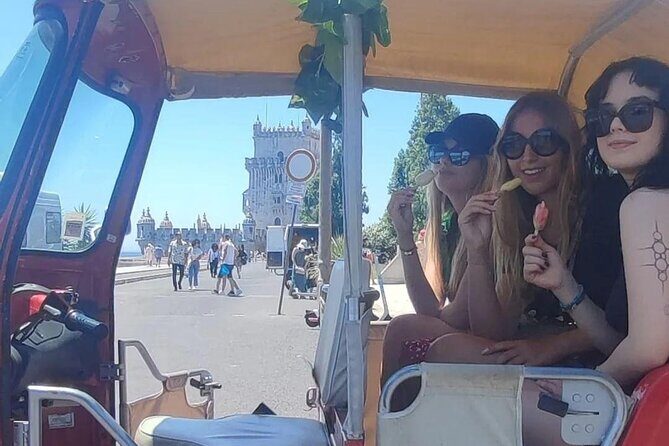
Next comes Miradouro da Graça (named for Sophia de Mello Breyner Andresen). It’s in Largo da Graça next to the church, and the key idea is simple: you get one of the best panoramic views of the city, plus a strong sightline toward São Jorge Castle.
This part of the tour is valuable because it changes the picture from “pretty streets” to “big Lisbon geography.” The castle connection helps you see where Alfama sits in the wider city story. Your photos won’t just look scenic; they’ll show the relationship between hills, neighborhoods, and the river.

Senhora do Monte: the highest viewpoint stop for Mouraria and Castelo de São Jorge

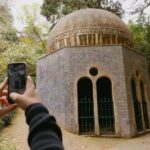
Your route continues to Miradouro da Senhora do Monte, located in the churchyard of a small hermitage. This viewpoint is remodeled twice in the 20th century, and it’s described as being at the highest point in Bairro da Graça. That’s why it tends to deliver strong “you can see everything from here” views.
You also get a notable direction shift: it’s especially good over Mouraria and Castelo de São Jorge. Even if you don’t visit Mouraria separately that day, seeing it from up high makes the neighborhood make sense. It’s one of those moments where the city suddenly feels readable.
Since this is also a short stop (about 10 minutes), move quickly once you arrive: find your photo spot, take your shots, then look around for the best angle. Wind and sun can change fast at higher points.
Mosteiro de São Vicente de Fora: faith, then medieval Lisbon context
After the viewpoints, you shift back to a monument: Mosteiro de São Vicente de Fora. The tour describes it as dating back to a church begun in 1582, and it’s in an area that helps show the context of medieval surroundings in 16th-century Lisbon.
This stop is useful because it adds depth. Viewpoints can make Lisbon look like a set of views stacked next to each other. A monastery helps you understand that Alfama and nearby neighborhoods are built on real institutions—religion, power, culture—not just scenic streets.
Admission is included here, and the stop is short. So focus on what’s different from your earlier cathedral stop. One is older Romanesque style; this is tied to later beginnings and a different kind of setting. Even without a long lecture, you’ll notice the shift in vibe.
Panteão Nacional stop: respectful, symbolic, and note the ticket detail

Then comes Panteão Nacional, described as honoring Portuguese citizens who distinguished themselves across public life, military service, cultural work, scientific and artistic creation, and defense of freedom and human dignity.
That mission statement matters because the building isn’t just a pretty stop. It’s a national symbol with civic meaning. If you’re the type who likes to see how a country tells its own story in stone, this is a strong addition.
But here’s the practical note: the information provided says admission ticket is not included for this stop. So if you care about going inside for a full experience, check ticket expectations before you show up or be ready to adjust how much time you spend there.
Museu do Fado and the quick Alfama stroll (plus ginginha)
The best way to round out a morning in Alfama is culture, not just scenery. That’s where Museu do Fado comes in. The museum is dedicated to the universe of fado and guitar, and it opened on September 25, 1998. Even if you only know fado as a mood, this museum is a chance to understand it as a living tradition.
The tour includes a brief walk in Alfama: you’ll move through alleys, local restaurants, and traditional shops. This is the moment where the “views” tour turns into a “feel the neighborhood” walk. It’s not a long shopping spree, but it helps you connect the monuments to everyday Lisbon life.
You’ll also get a ginginha test (cherry liqueur). That part is small, but it’s one of those experiences that makes the day memorable because it’s a taste. It’s the kind of extra that doesn’t require much time and feels authentically Portuguese.
Price and value: what $55.85 buys you in real terms
At $55.85 per person for about 1 hour 30 minutes, this isn’t a bargain-tour price. It’s more like a “pay for convenience and saved time” price—and in Alfama, convenience matters.
Here’s the value math I see:
- You’re getting transport via tuk-tuk, which can reduce the physical drain and time cost of hopping between viewpoints.
- Several stops have admission ticket included, including the cathedral and multiple miradouros, plus the Fado Museum. That reduces the hassle factor.
- You’re getting a guided flow between major viewpoints, so you’re not spending your own energy working out where to go next.
One reason the tour can feel worthwhile is the ticket coverage at key moments. If you were trying to stitch together cathedral entry plus viewpoint stops plus museum time on your own, you’d likely spend more time and more mental effort—even if the total cash ends up similar.
A fair caution: since Panteão Nacional admission is not included, you might decide to bring extra money or accept that this stop may be more of a look-from-outside moment depending on your preference.
Small-group feel and guide energy you can lean on
This experience is described as private—meaning only your group participates. That’s a real advantage for a quick tour because you can actually ask questions without feeling like you’re competing with a crowd.
The style seems to focus on friendliness, fun, and stories. Based on guide names associated with this route like Otoni and Marlon, the energy is meant to keep things light while you learn. For you, that usually translates to less staring at a phone map and more understanding what each view or building represents.
If you’re traveling with friends, it can also be a good way to break the day into manageable pieces. The group can stay together, take photos quickly, and still feel like you did something meaningful.
Who should book this Alfama tuk-tuk tour
This tour fits best if you:
- Want a high-impact Alfama overview without turning your day into a workout
- Are short on time and want major viewpoints plus key monuments
- Like guided context, not just scenic stops
- Appreciate museums that connect culture to place, like the Fado Museum
It might not be ideal if you:
- Hate schedules and prefer long stays at each stop
- Expect a slow, contemplative walk—this is more fast-and-fun
- Want every monument fully covered with included admissions (Panteão Nacional is not included)
Should you book? My honest take
If you’re visiting Lisbon for the first time and you want the fastest path to an Alfama feel, I think you should seriously consider booking this. The combination of tuk-tuk mobility, big miradouro views, and the culture finish at Museu do Fado is a strong recipe for a satisfying morning.
Just plan with two realities in mind. First, weather affects the outdoor viewpoint experience. Second, the timing is tight, so you’ll likely need a second trip later if you want to linger somewhere specific.
If you’re okay with that trade-off, this is a practical way to see the highlights without wasting time, and it adds small local touches—especially the ginginha—that help the day stick in your memory.
FAQ
Where does the Alfama tour start?
It starts at Praça da Figueira, 1100-241 Lisboa, Portugal.
What time does the tour begin?
The start time is listed as 9:00 am.
How long is the tour?
The duration is about 1 hour 30 minutes.
Is pickup available?
Pickup is offered.
Is this a private tour?
Yes. Only your group participates.
Do I get admission tickets during the tour?
Admission tickets are included for some stops, including Lisbon Cathedral, the listed miradouros, Mosteiro de São Vicente de Fora, and Museu do Fado. Panteão Nacional is listed as admission ticket not included.
Is it a mobile-ticket experience?
Yes, mobile ticket is offered.
Is it canceled if the weather is bad?
The experience requires good weather. If it’s canceled due to poor weather, you’ll be offered a different date or a full refund.
Can service animals join?
Service animals are allowed.
What is the cancellation window?
Free cancellation is available up to 24 hours in advance for a full refund. If you cancel less than 24 hours before the start time, the amount paid is not refunded.