REVIEW · LISBON
Private Belem tour with tram and the new Quake Museum
Book on Viator →Operated by Pentravel · Bookable on Viator
Lisbon’s earthquake story hits different in person. This private tour stitches together the 1755 disaster and the Age of Discovery, with a guide leading you through Belém and the newest Quake Museum in a smooth, timed route. I especially liked the pairing of the tram ride with the museum stop, and I loved how the guide names dates and causes so the city’s buildings make sense fast.
The only real catch: the itinerary packs a lot into about four hours, so Jerónimos and Belém Tower are more like focused visits than slow roaming.
In This Review
- Key Highlights You’ll Care About
- Lisbon’s 1755 Lesson Plus a Belém Day Plan That Actually Works
- Meeting in Central Lisbon and Getting Oriented Fast
- Augusta Street to the Arches and the 1755 Backstory You Can Use
- Tram 28 to Belém: A Classic Ride With Real Landmark Payoff
- Quake Museum: The Best Piece of the Puzzle
- Pasteis de Belém: The Custard Tart Stop That Isn’t Just a Photo
- Jerónimos Monastery: UNESCO With Purpose, Not Just Name-Dropping
- Padrao dos Descobrimentos and the Discoveries Monument Photo Moment
- Belém Tower: The UNESCO Finish That Feels Like a Finale
- Price and Value: Why $98.90 Makes Sense for This Mix
- What If You’re Short on Time or Hate Planning? Here’s Who This Fits
- Guides Matter Here, and You’ll Feel It
- Should You Book This Quake + Tram + UNESCO Belém Tour?
- FAQ
- How long is the private Belem tour with tram and the Quake Museum?
- How much does the tour cost per person?
- Where does the tour start and where does it end?
- Is the Quake Museum admission included?
- Is the tram ride included?
- Do I need to buy tickets for Jerónimos Monastery?
- Is there a custard tart stop?
- Is this a private tour?
- Are service animals allowed?
- Can I cancel for a full refund?
Key Highlights You’ll Care About
- Quake Museum gets you inside the 1755 story with dedicated time in the new exhibits
- An old-style tram ride moves you through Belém while you spot landmarks
- Two UNESCO stops in one run: Jerónimos Monastery and Belém Tower
- Pasteis de Belém fits neatly in between the bigger monuments
- Discoveries Monument photo time gives you the Henry the Navigator era context
- Private guide attention means you can ask questions without racing the group
Lisbon’s 1755 Lesson Plus a Belém Day Plan That Actually Works
Lisbon can feel layered: hills, tiles, churches, forts, and then a sudden moment where the ground story matters. This tour leans hard into that turning point. You start with the events around the 1755 earthquake, then you move into Belém, where Portugal’s later power and maritime ambition are carved into stone.
What makes the pacing work is that you don’t treat the earthquake as a textbook. You see the city’s story in the same morning you’re looking at monuments tied to Lisbon’s comeback and the next big era. And because this is private, your guide can keep the explanation tight and tailored to your pace.
You can also read our reviews of more private tours in Lisbon



Meeting in Central Lisbon and Getting Oriented Fast
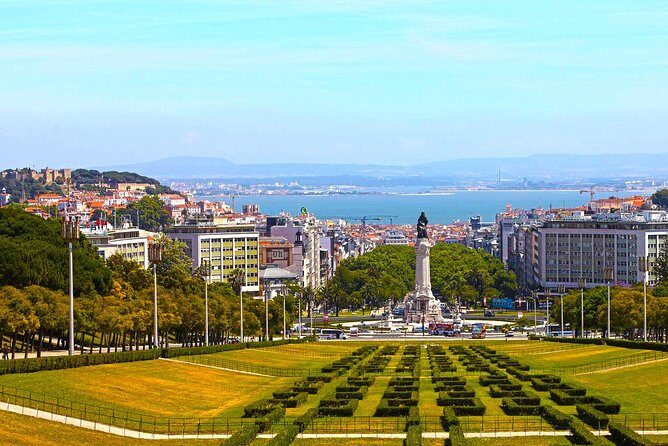
You begin near Praça do Comércio, one of the best places to understand Lisbon’s layout. Your first stop set-up includes an orientation around Rossio square and the view of the surrounding classic buildings. Then you head down Augusta Street, with your guide connecting what you’re seeing to what happened in 1755.
This is a smart move because Augusta Street and its nearby landmark area sit inside the broader map of Lisbon that people try to picture in their heads. Your guide frames the day so you understand why the city looks the way it does after the quake—something you miss if you just bounce from attraction to attraction.
One practical tip: if you’re sensitive to walking early, keep some water handy. This start is about orientation and story, not a long hike, but it still sets you up for later transfers.
Augusta Street to the Arches and the 1755 Backstory You Can Use
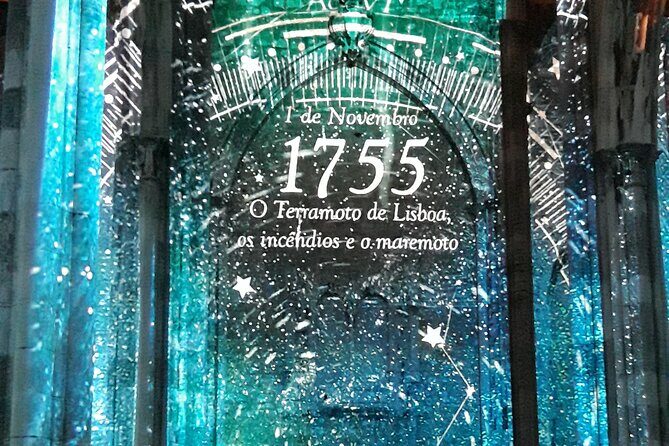
The tour introduces the terrible accident that destroyed medieval Lisbon in 1755—earth, fire, wind, and water all tied into the disaster story, with the quake hitting on 1 November 1755. You’re also given scale: roughly 85% of the city destroyed and more than 20,000 deaths that day.
That sounds heavy. But it becomes useful on the street. You’ll be able to look at architectural details and think, okay, this is part of what came after. You’re not just learning dates; you’re learning how a city rebuilds its identity.
This is also where the guide quality matters. One of the guides named in recent experiences was Pedro Gil, and the standout theme was how clearly he connected the history to the scenery. Another guide, Antonio, was noted as fluent in English and focused on making the city’s story feel logical rather than random.
Tram 28 to Belém: A Classic Ride With Real Landmark Payoff
Then comes the fun part: the tram. You take an old historical tram toward Belém for about 30 minutes, with time built in to spot architecture and major historic sites.
Tram rides in Lisbon are never just transport. They’re slow enough to let you look. And in a route like this—earthquake first, Belém monuments second—that movement becomes part of the narrative. You go from central Lisbon story to the riverside zone of memorials and monuments.
What to expect: a fixed ride time. So you get the charm of being on the tram, but you’re also accountable to the schedule. If you’re hoping for a long, self-guided tram detour, this tour isn’t that. It’s a focused Belém sampler.
Quake Museum: The Best Piece of the Puzzle

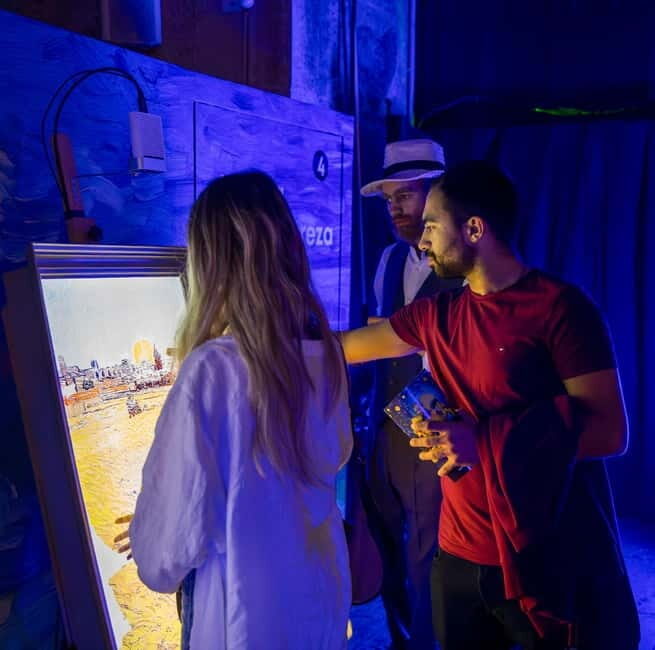
The highlight for many people is the Quake – Lisbon Earthquake Museum, dedicated entirely to the 1755 disaster. You get about 1.5 hours here, and the fact that it’s included is a big reason this tour feels like value rather than a list of stops.
This museum works because it gives you something action-based: context that makes you stop and think. You’re not only told the quake happened—you get the story packaged in a way that helps you understand why Lisbon’s later look feels different. And once you’ve seen that framing, Jerónimos and the Tower stop being just pretty buildings. They become symbols of a city that rebuilt and reasserted itself.
Recent experiences also called out the museum as a cool way to experience history, with guides being kind and informative through the flow. If you like museums but hate feeling rushed, the time here is the one section that feels properly weighted.
You can also read our reviews of more museum experiences in Lisbon




Pasteis de Belém: The Custard Tart Stop That Isn’t Just a Photo
After the museum, the itinerary leads to Pasteis de Belém for about 20 minutes, and yes, it’s a custard tart stop. If you only eat tarts in airports or tourist strips, you’ll notice the difference here. This is one of those Lisbon rituals that fits perfectly between heavier stops.
But the practical value isn’t only the pastry. It’s the pause. After a museum and story-heavy explanations, you get a short window to snack, reset your energy, and keep the day from feeling like one long lecture.
How I’d do it if you’re visiting in peak season: arrive hungry, take the few minutes you need, and then be ready to move. The timing is built to keep the whole route from dragging.
Jerónimos Monastery: UNESCO With Purpose, Not Just Name-Dropping
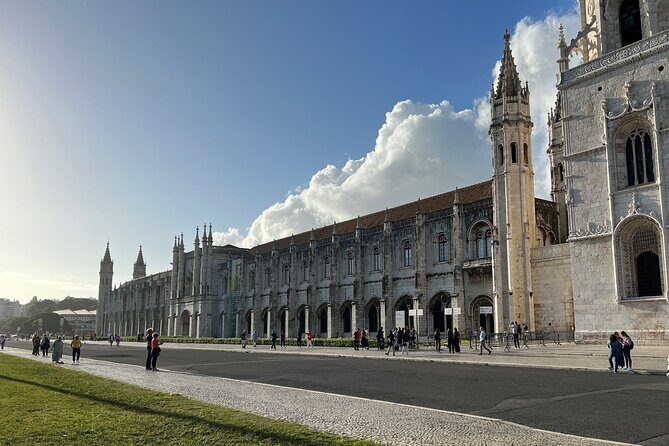
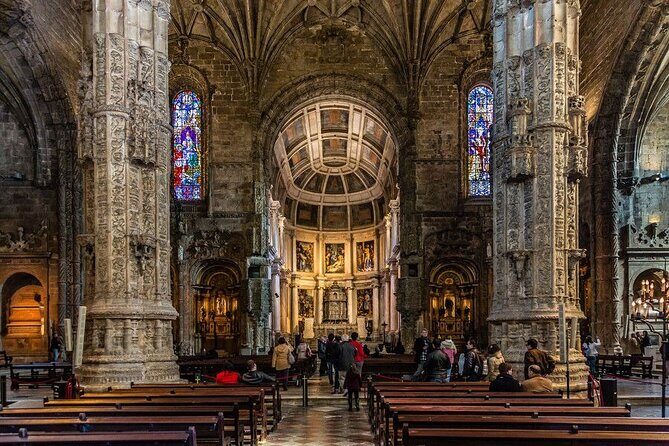
Next up is Mosteiro dos Jeronimos, a 16th-century monastery and UNESCO World Heritage Site. You’ll have about 20 minutes here, and the admission is included.
This stop is worth it because Jerónimos isn’t a random landmark. It’s tied to Portugal’s cultural and religious identity during the period after the country’s maritime momentum. When you’ve already learned the 1755 context, it makes sense to see how the city’s later greatness shows up in architecture.
Realistic expectation: 20 minutes means you won’t see every corner. You’ll get focused viewing and guided interpretation, which is exactly what you want in a half-day tour like this. If you’re the type who wants long, contemplative wandering with zero schedule pressure, you may prefer a longer, separate visit. But as a pairing with the Quake Museum and Belém Tower, this slot is efficient.
Padrao dos Descobrimentos and the Discoveries Monument Photo Moment
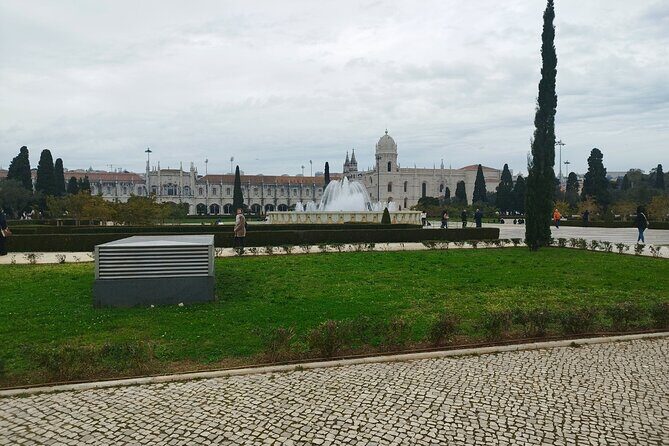
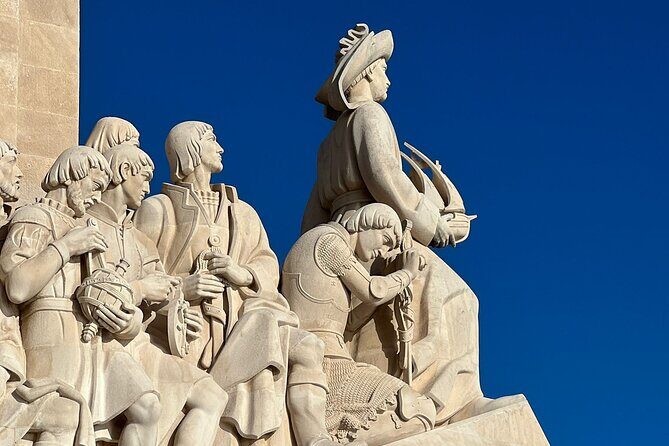
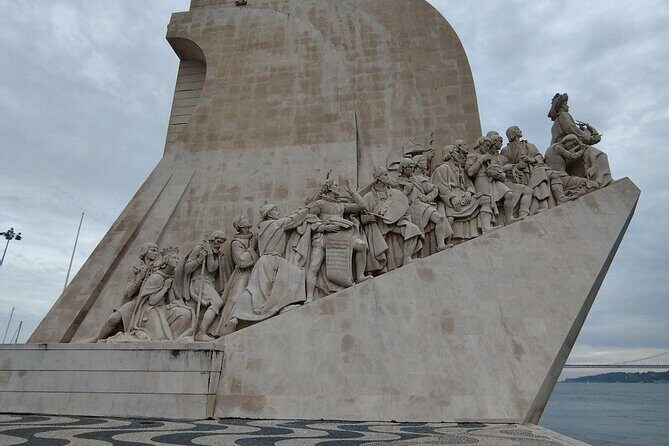
Between the big sites, you get a quick photo stop at Padrão dos Descobrimentos. About 15 minutes here is mostly about images and names.
You’ll learn the names of main navigators important to the Age of Discovery era, and you’ll take a beautiful picture in front of the Discoveries statues. The tour framing also points out the Discoveries Monument as being constructed in Belém during the 1960s as a memorial to Henry the Navigator.
This is short by design. It’s there so you don’t reach Belém Tower and only absorb it visually. You also absorb it conceptually: Portugal’s story is a loop—earthquake trauma, then rebuilding, then maritime ambition, then monuments built to remember that ambition.
Belém Tower: The UNESCO Finish That Feels Like a Finale
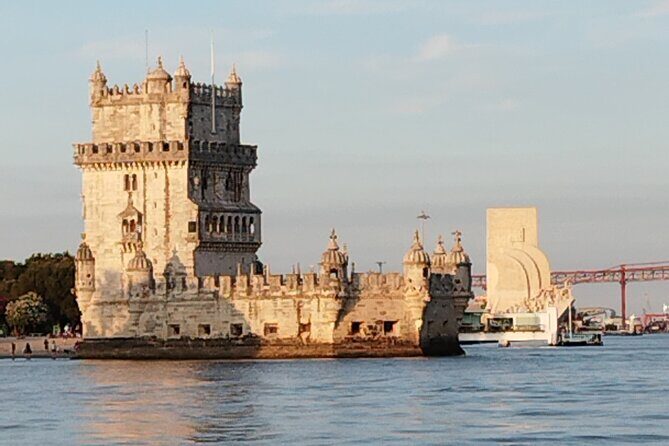
Finally, you visit the Torre de Belem, a 16th-century fortress and UNESCO World Heritage Site. You’ll have about 20 minutes.
A tower like this can become just a postcard if you rush. Here it works better because the day’s earlier stops prime you. You’ve already understood 1755’s disruption, then you learned about the later Discoveries theme, and now you stand in a place tied to the maritime identity of Lisbon.
You also end the experience at Belém Tower area (Av. Brasília), which is convenient if you’re staying in Belém afterward. You’re not forced to retrace everything immediately.
Price and Value: Why $98.90 Makes Sense for This Mix
At $98.90 per person for roughly four hours, this isn’t a bargain snack tour. It’s more like paying for three things at once: guidance, transport, and admissions.
Here’s what you’re effectively buying:
- Quake Museum admission included, and you get 1.5 hours there
- UNESCO Jerónimos admission included
- Tram 28 transport in an old historical tram included
- A certified tour guide with the story stitched together
- Responsibility and personal accident insurance
The value comes from not having to coordinate the museum entry, tram timing, and site order yourself. On a day with several fixed stops, time is money—and the route design matters.
Also, booking demand is high: on average, people book around 27 days ahead. That’s usually a sign this isn’t a sleepy niche tour.
What If You’re Short on Time or Hate Planning? Here’s Who This Fits
This tour is ideal if you want:
- a private guide and a clear story arc
- a mix of streets, tram riding, and museums
- UNESCO sites in Belém without spending your whole day there
It’s not perfect if you’re the type who needs:
- long, unhurried visits to monuments
- lots of free time for wandering, shopping, or detailed interior exploration
Belém can also get crowded. A fixed schedule helps you avoid the chaos, but it won’t magically turn popular sites into empty rooms.
Guides Matter Here, and You’ll Feel It
Two guide names came up in recent experiences: Pedro Gil and Antonio. The common thread was strong English and clear explanations that made the historical links click. One note that stuck: the guides were described as kind and informative, and that kindness matters when you’re spending a half-day walking and learning.
In a route like this, good guiding turns locations into connections. Otherwise, it’s just a set of stops on a map.
Should You Book This Quake + Tram + UNESCO Belém Tour?
Yes, I think you should book it if you want a smart, story-forward Belém day that doesn’t leave you hunting for tickets or figuring out timing between sites. The museum time is the real anchor, and it gives the UNESCO monuments more meaning than you’d get from pure sightseeing.
Skip it if you want slower monument browsing or lots of independent tram time. Also, if you can’t handle structured schedules well, you might find the short stops too tight.
If you’re in Lisbon for a limited window and you want both the 1755 quake story and the Belém monuments in one clean run, this is a solid use of your day.
FAQ
How long is the private Belem tour with tram and the Quake Museum?
The tour is about 4 hours.
How much does the tour cost per person?
The price is $98.90 per person.
Where does the tour start and where does it end?
It starts at Praça do Comércio and ends at Belém Tower (Av. Brasília, 1400-038 Lisboa).
Is the Quake Museum admission included?
Yes. Quake – Lisbon Earthquake Museum admission is included.
Is the tram ride included?
Yes. Transport in an old historical tram is included, with a Tram 28 ride as part of the itinerary.
Do I need to buy tickets for Jerónimos Monastery?
Admission for Mosteiro dos Jeronimos is included.
Is there a custard tart stop?
Yes. The itinerary includes Pasteis de Belém for a custard tart stop.
Is this a private tour?
Yes. It’s a private tour/activity, and only your group participates.
Are service animals allowed?
Yes, service animals are allowed.
Can I cancel for a full refund?
You can cancel up to 24 hours in advance for a full refund.