
REVIEW · LISBON
Lisbon: National Tile Museum E-Ticket & Audio Guide
Book on GetYourGuide →Operated by Clio Muse Tours Portugal · Bookable on GetYourGuide
Few places mix art and industry like this.
The National Tile Museum experience turns Portuguese azulejo tiles into a story you can follow room by room using an offline audio guide. I love the convenience of the e-ticket (you just show up and go), and I especially like how the audio connects specific famous displays—like the Mickey Mouse tile panel and the Diamond-patterned panel—to the bigger history of Portugal’s tile industry.
There is one catch: the audio guide is self-guided, so if you expect a strict step-by-step walking order, you may want to pause, jump ahead, or even skip sections depending on your timing. Also, headphones and smartphone compatibility matter, since the guide is delivered on your phone (and not included with the ticket).
If you’re the kind of visitor who likes details you can control—pause, replay, or move faster—you’ll probably have a great time here.
In This Review
- Key things to know before you go
- Getting Your E-Ticket Ready: Fast Entry, Fewer Headaches
- Downloading the Offline Audio Guide: How to Make It Actually Work
- Your First Walk Through: What the Museum Does Best
- The Mickey Mouse Panel and Diamond Patterns: When Familiar Shapes Meet Craft
- Mudéjar Patterns and the Dona Leonor Chapel: Where Details Feel Sacred
- How the Self-Paced Route Actually Feels (And What to Do If Audio Gets Confusing)
- Courtyard Garden, Cafeteria Nearby, and Building Time Around Breaks
- Price and Value: Is $16 a Fair Deal for Tiles and Stories?
- Who This Experience Fits Best (And Who Might Prefer Something Else)
- Should You Book the National Tile Museum E-Ticket and Audio Guide?
- FAQ
- FAQ
- How long does the National Tile Museum audio guide visit take?
- Is the ticket an e-ticket or do I buy it on-site?
- Is the audio guide included, and what language is it in?
- Do I need headphones?
- Can I use the audio guide offline?
- What phone types does the audio guide work on?
- Does the ticket include skip-the-line entry?
- Is the museum wheelchair accessible and are children free?
Key things to know before you go
- Skip-the-line entry with an e-ticket means you spend less time waiting and more time looking.
- Offline audio guide on your phone (plus offline text and maps) keeps you moving even if the Wi-Fi is spotty.
- Iconic stops include the Mickey Mouse tile panel, a Diamond-patterned panel, and a 16th-century tile display.
- Mudéjar patterned tiles and the Dona Leonor Chapel add variety beyond the famous playful visuals.
- Small group size (up to 10) helps keep the flow smoother at key moments like entry.
- Headphones are not included, so plan to bring your own.
Getting Your E-Ticket Ready: Fast Entry, Fewer Headaches

The biggest practical win here is the way you access the museum. After you book, you get an email with instructions on how to access your ticket and download the audio guide. You can’t just wing it without a little phone prep, but once it’s loaded, the visit runs smoothly.
Expect a bit of a wait at the entrance at times. The good news: the experience includes a skip-the-line service, so you’re not stuck in the slow-moving part of the crowd for as long. Still, if you arrive at a busy hour, give yourself a little buffer.
You’ll also want to check your phone storage before you go. The offline audio guide uses about 100 to 150 MB, so make sure your device isn’t packed full. The museum content is designed to work offline once it’s downloaded, which is a comfort in a place where coverage can be inconsistent.
You can also read our reviews of more tours and experiences in Lisbon



Downloading the Offline Audio Guide: How to Make It Actually Work
This is a smartphone audio guide experience, so the value comes from using it. The audio is included in English, and it’s built around short stories tied to the tile displays you’re seeing.
To make it easy on yourself:
- Download in advance using the email instructions.
- Plan for offline use (offline text, audio narration, and maps are part of the package).
- Bring headphones, since they are not included.
One important compatibility note: the guide isn’t compatible with all devices. It requires an Android (version 5.0 or later) or an iOS phone that isn’t too old (it’s not compatible with certain older iPhone/iPad generations). If your phone is near the edge of that cutoff, double-check before you head out.
Also, the app experience gives you flexibility. You’re not forced into one rigid order. If you want to focus on a few areas and then come back later, you can. That said, the audio is most satisfying when you use it to guide your attention rather than treat it like a radio show you have to finish.
Your First Walk Through: What the Museum Does Best

Once you’re inside, the museum’s layout is the start of the storytelling. You’re not only looking at pretty patterns—you’re learning how the tile industry developed, changed, and spread through Portugal over time.
The audio guide is designed to help you connect three things:
1) what you’re seeing (the designs and tiles),
2) where it fits in time (like the 16th-century tile focus), and
3) why it mattered for the culture and craft of the country.
If you enjoy small details, this place rewards you. The tiles invite close looking, and the guide gives you reasons to slow down. If you prefer a faster visit, you can still benefit, because you can treat the audio as a highlight reel instead of a must-finish script.
The Mickey Mouse Panel and Diamond Patterns: When Familiar Shapes Meet Craft
Some museum moments are instantly eye-catching. Here, two standouts are the Mickey Mouse tile panel and the Diamond-patterned panel.
The Mickey Mouse panel is a fun hook, but the value isn’t only the surprise of it. The audio approach encourages you to look past the novelty and into the craftsmanship and context around how these designs became part of the tile world. In other words, it’s not just a prank or a novelty photo spot—it’s a starting point for learning how tile design can carry popular imagery.
The Diamond-patterned panel is more about visual structure—how repeating shapes create rhythm and order. When you pair that with audio storytelling about tile-making and trade, it becomes easier to see how patterns weren’t random decorations. They were part of a bigger language of design.
If you like taking photos, plan a little extra time for these sections. They’re the kind of displays where your first look turns into a second look because you start noticing the finer details once you’re not rushing.
Mudéjar Patterns and the Dona Leonor Chapel: Where Details Feel Sacred
After the bright, memorable panels, the museum shifts gears toward more ornate, patterned work. You’ll get to see Mudéjar patterned tiles, which are known for their geometric style and historical influence.
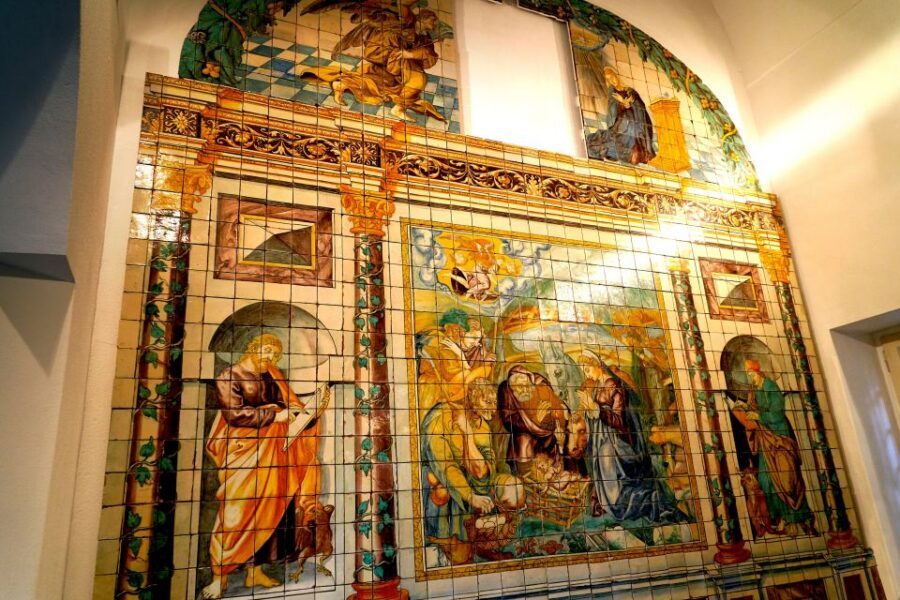
Then comes the Dona Leonor Chapel area, which is one of the most atmospheric parts of the visit. This is the stop where the audio guide helps you move from surface-looking to interpretation. The tiles here work like visual pages from a historical book, where design is tied to devotion, status, and identity.
This is also where a phone audio guide can be especially useful. Tiles can look overwhelming if you’re just trying to name patterns on the spot. The guide gives you a way to stay grounded: what you’re seeing, what it meant, and what it connects to in Portugal’s wider story.
You can also read our reviews of more guided tours in Lisbon





How the Self-Paced Route Actually Feels (And What to Do If Audio Gets Confusing)
A self-guided audio experience has one big advantage: you control the pace. You can replay sections as many times as you want, and you’re free to spend longer where your curiosity pulls you in.
The downside is also simple: you might find the audio isn’t perfectly aligned with the exact walking order you chose. Some people prefer a storyline that matches the physical path every step of the way. If you start at the very beginning but then change your route midstream, you can feel briefly behind.
If that happens, don’t panic. Use the app controls to jump ahead to the picture or room you’re in. That ability to move the guide forward is key to keeping the experience smooth—especially if you’re on a time limit.
Also keep your expectations realistic. The museum is detailed, and it can be tempting to keep looking long after you planned to stop. Even if the ticket says 1–2 hours, you can absolutely end up spending longer if you’re absorbed.
Courtyard Garden, Cafeteria Nearby, and Building Time Around Breaks

One of the nicer surprises is that the museum includes a beautiful courtyard and garden area. There’s a cafeteria nearby, and the garden space is a good place to sit, eat, and decompress without leaving the museum vibe.
This matters because tile museums are visual workouts. Your eyes need breaks. Even a quick pause in the garden can make the next room feel fresh instead of exhausting.
Timing tip: if you want a relaxed visit, plan more toward the upper end of the time range. If you want a quick hit—icons only—stick closer to the shorter end and use the audio guide as your guide to the must-see parts.
Price and Value: Is $16 a Fair Deal for Tiles and Stories?

At about $16 per person, this ticket can feel like a bargain or like a splurge depending on how you like to travel.
It’s a strong value if you:
- want e-ticket convenience and skip-the-line entry,
- enjoy learning through short audio storytelling tied to what you see,
- like the ability to use offline maps and replay sections.
It’s also a good deal if you’re going with a group of mixed interests, because you can tailor your own pace without needing everyone to follow a live guide in sync.
It may feel less worthwhile if you expect a human-led experience. A live guide isn’t included here. Instead, you’re getting structure through the audio. And if you forget headphones, or your phone can’t load the audio properly, you’ll be limited to wall labels and whatever you notice yourself.
Still, when it works, the experience delivers something that many museums don’t: a way to connect craftsmanship with real historical change, without forcing you to sit through long lectures.
Who This Experience Fits Best (And Who Might Prefer Something Else)
This is a great match for you if:
- you like museums where you can go at your own speed,
- you want a mix of famous visual displays and deeper context,
- you’re comfortable using your phone as your guide.
It’s also ideal if you enjoy patterns—especially if you like when a museum explains why a design exists, not just what it looks like.
You might reconsider booking if:
- you dislike audio guides in general,
- you need a fully supervised, step-by-step experience,
- you’re traveling with a device that may not meet the compatibility requirements.
The small group size (limited to 10) helps keep entry feeling manageable, but the experience itself is still built around independent listening.
Should You Book the National Tile Museum E-Ticket and Audio Guide?
I’d book it if you want a smooth, low-stress way to see Lisbon’s standout tile displays and understand the craft behind them. The combination of skip-the-line entry, offline audio, and the chance to focus on specific highlights like the Mickey Mouse panel, Diamond patterns, Mudéjar tilework, and the Dona Leonor Chapel makes it a practical choice.
Before you do, make one simple check: bring headphones, confirm your phone compatibility, and download the guide before you arrive. If you do that, you’ll get the best kind of museum visit—one where you can look longer, replay what you missed, and leave with actual understanding instead of just photos.
FAQ
FAQ
How long does the National Tile Museum audio guide visit take?
The visit is listed as 1 to 2 hours. The exact start times depend on availability.
Is the ticket an e-ticket or do I buy it on-site?
It’s an e-ticket. You receive it by email, along with instructions for accessing and downloading your audio guide.
Is the audio guide included, and what language is it in?
Yes, a smartphone audio guide is included in English.
Do I need headphones?
Yes. Headphones are not included, so you’ll need to bring your own.
Can I use the audio guide offline?
Yes. The package includes offline content such as text, audio narration, and maps.
What phone types does the audio guide work on?
You need an Android (5.0 or later) or an iOS smartphone. It’s not compatible with Windows Phones, and it also isn’t compatible with certain older Apple models listed in the requirements.
Does the ticket include skip-the-line entry?
Yes. The experience includes skip-the-line service. (Note: free and reduced admission tickets don’t include skip-the-line privileges.)
Is the museum wheelchair accessible and are children free?
The museum is wheelchair accessible. Children up to 12 years old have free entrance.