REVIEW · LISBON
Privat Walking Tour in Alfama, Baixa, Chiado
Book on GetYourGuide →Operated by Nicifeel Lisboa · Bookable on GetYourGuide
Lisbon feels like it was built for walking. This tour strings together Alfama, Baixa, and Chiado so you get the old-street vibe plus downtown structure in one smooth loop.
I like that the guide doesn’t just point at buildings; they shape the stories to your interests and keep things lively on the move. Two highlights I’d count on are the viewpoint at Portas do Sol and the time spent in Alfama’s tight lanes. One thing to keep in mind: it’s a 3-hour walking tour and it isn’t meant for kids under 10, so plan your pace and wear closed-toe shoes.
In This Review
- Key things to know before you go
- Entering Lisbon by Walking: why this route makes sense
- Meet at the Statue of S. Vicente, then get oriented fast
- Alfama for 80 minutes: photo moments, street art, and medieval-feeling lanes
- Baixa de Lisboa (30 minutes): the downtown “reset” you can feel
- Santa Justa Lift in 10 minutes: a quick viewpoint and a big-story moment
- Chiado and Rossio Square: central Lisbon energy, without rushing
- Ending at Miradouro de São Pedro de Alcântara: the payoff view
- Price and what $58 buys you in real value
- Who this tour fits best (and who should skip it)
- Should you book this Alfama–Baixa–Chiado walking tour?
- FAQ
- How long is the tour?
- Where do I meet the guide?
- What are the tour languages?
- Is this a small group tour?
- What’s included in the price?
- What should I wear?
- Is the tour suitable for children?
- Is alcohol allowed during the tour?
- What’s the cancellation policy?
Key things to know before you go
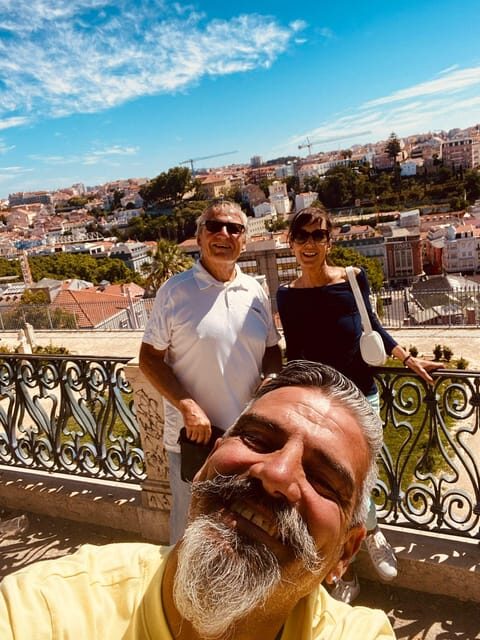
- Small group (up to 10) means less crowding and more chance to ask questions.
- Ginjinha included adds a real local break into the walk.
- Alfama gets the most time (80 minutes), so it’s not just a drive-by.
- Multiple photo stops along the way keep the highlights from feeling rushed.
- A finish at Miradouro de São Pedro de Alcântara gives you a classic payoff view.
- Guide Ingo has strong reviews for enthusiasm, detailed historical stories, and restaurant suggestions off the tourist trail.
Entering Lisbon by Walking: why this route makes sense
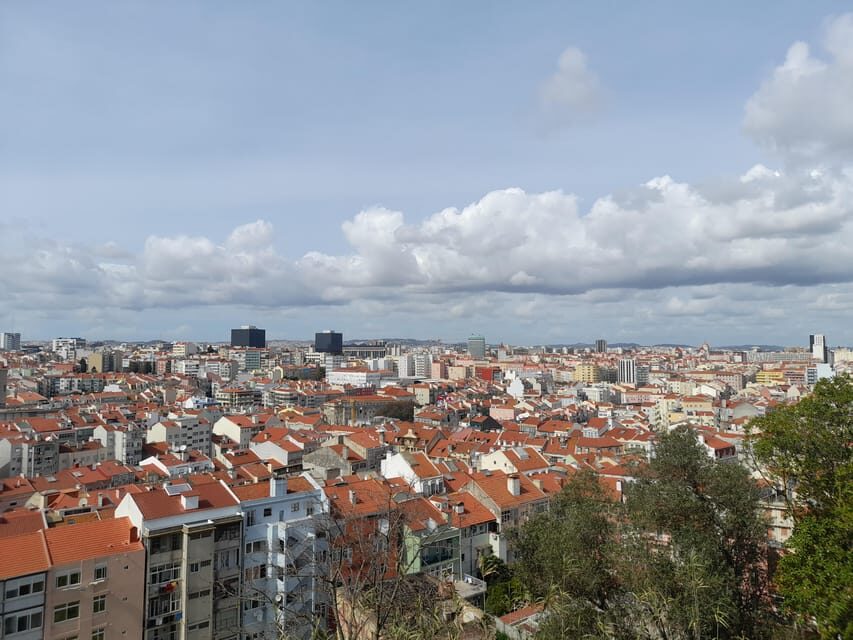
This is a practical way to see Lisbon without spending your day bouncing between far-apart stops. You start near São Vicente, then work your way through the neighborhoods that feel oldest first, then shift into the downtown sections where the city looks more planned.
The best part is the pacing. You’re not trying to cram every landmark into a checklist. Instead, you’re moving through photo-stop windows and guided segments that help you connect what you’re seeing—especially in Alfama, where the streets are narrow and the views pop at odd angles.
If you’re the type who likes streets, architecture, and street art as much as famous sights, this works well. And if you’d rather hear a few stories with meaning than stare at signs all day, you’ll probably enjoy how the guide keeps the walking tour feeling like a guided conversation.
You can also read our reviews of more walking tours in Lisbon
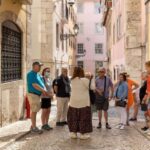


Meet at the Statue of S. Vicente, then get oriented fast
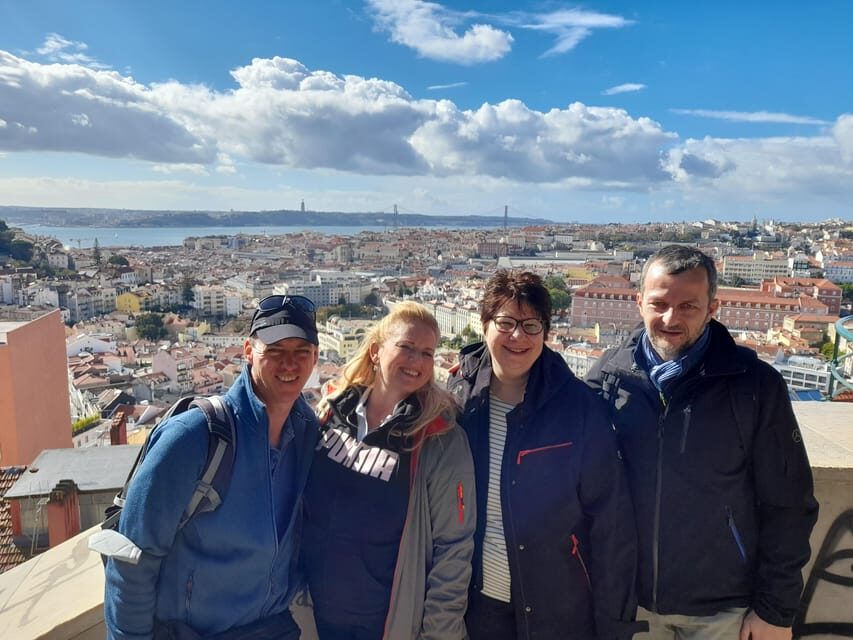
You meet the guide at the Statue of Saint Vicente. That’s a smart starting point because you’re already positioned near a part of Lisbon that’s associated with viewpoints and the older feel of the city.
Right at the beginning, I’d expect the tour to set the tone: what to watch for, where the best angles tend to be, and how the different areas of Lisbon connect. This matters because Lisbon can feel confusing at first. A walking tour like this helps you learn the city’s logic quickly—where the views are likely to open up and how the neighborhoods “hand off” to each other.
Also, the tour guide language options—German, Spanish, or English—are solid for international visitors. That’s a real comfort factor when you’re trying to follow stories while you’re also walking and looking up.
Alfama for 80 minutes: photo moments, street art, and medieval-feeling lanes
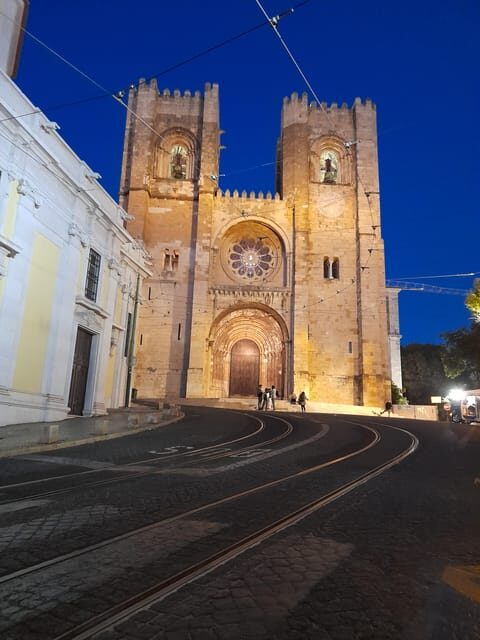
Alfama is where the tour earns its name. You spend 80 minutes here, and that’s enough time for the neighborhood to stop feeling like a blur.
You get a mix of:
- guided time (so it’s more than sightseeing)
- walking through smaller old streets
- photo stops that help you catch the angles people usually miss
The tour is framed around ancient stories—specifically the history going back to the 12th century—and the idea that you’re walking streets where early Lisbon kings once moved. Whether you’re into the exact dates or the bigger picture, the effect is the same: you start to feel how the city’s layers overlap, with older routes and buildings still shaping how you experience the neighborhood today.
I also like that the tour explicitly includes architecture and street art. Alfama isn’t just stone-and-history. It has character you can see in modern touches too, and the guided approach helps you notice them instead of zoning out while you walk.
Practical drawback: Alfama’s streets can be tight and uneven. Even though the tour only says closed-toe shoes, I’d treat that as a serious hint. If your feet don’t do well on uneven ground, your enjoyment will drop fast.
Baixa de Lisboa (30 minutes): the downtown “reset” you can feel
After Alfama, the tour shifts to Baixa de Lisboa for 30 minutes. This is the part that helps you understand Lisbon as more than one mood.
Baixa is where the city feels more organized and open compared to the old lanes. That contrast is valuable. It turns your earlier walking into context: you can better grasp why people moved where they did, and how Lisbon’s planning changed as the city evolved.
You also get a photo stop here, which matters because Baixa’s layout can look obvious from a distance but feel different up close. With a guide, you’re more likely to catch the lines, angles, and street connections that make the downtown area feel coherent.
This section is shorter than Alfama, but it works as a bridge. It’s the moment where you stop thinking only about the past and start seeing how Lisbon’s newer center developed around older instincts—like the pull of views and the flow of crowds through key areas.
Santa Justa Lift in 10 minutes: a quick viewpoint and a big-story moment
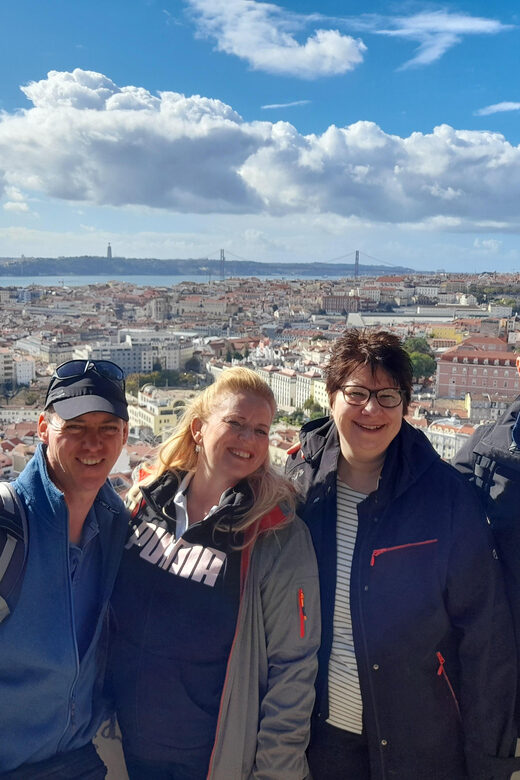
You’ll spend 10 minutes at Santa Justa Lift, with a photo stop and guided explanation.
This is not a long, ticket-based experience here. Instead, it’s more like a focused taste: you get the visual hook of the lift and the context that helps you place it in the broader Lisbon story. For some people, that’s exactly right—especially if you’re already walking a lot and don’t want to lose time waiting or entering.
The value of this brief stop is timing. You don’t break the tour rhythm, and you still come away with a sense of what makes this landmark important. Even if you only catch exterior views, the guide’s framing is what turns it into more than just a photo.
If you’re the type who loves engineering or wants more time at the lift itself, you might later add your own visit. But for a 3-hour route that also includes several neighborhoods, this stop is efficiently placed.




Chiado and Rossio Square: central Lisbon energy, without rushing
Next you move into Chiado for 40 minutes, followed by Rossio Square for 20 minutes.
Chiado can feel like Lisbon’s “in-between” space—more central than Alfama, but not as open and structured as Baixa. On this tour, it’s guided, with photo stops that help you see how Chiado connects the surrounding districts. You’re likely to notice storefront energy and a more downtown rhythm as you walk.
Then Rossio Square gives you another anchor point. It’s one of those public spaces where the city’s daily life shows up fast. With a guided stop, you’re not just walking through; you’re getting the reason the square matters and how it fits into Lisbon’s overall map.
These two sections together are useful because they round out the day. Alfama tells you the “old street” story. Baixa tells you the “planned city” story. Chiado and Rossio show you how Lisbon feels when it’s moving—right now, not just in photos.
Ending at Miradouro de São Pedro de Alcântara: the payoff view
The tour ends at Miradouro de São Pedro de Alcântara. This is a perfect finishing move because it turns the walking effort into a view you can actually enjoy.
You’re not walking away with only memories of streets. You finish with a classic Lisbon viewpoint payoff, which helps your brain build a final picture of the city you just walked through.
My advice: when you arrive, take a slow minute before you start snapping pictures. Lisbon viewpoints are all about angles and depth, and those details hit harder once you’ve stopped walking and can actually look.
Price and what $58 buys you in real value
At $58 per person for 3 hours, the price makes sense if you want a guided route that’s focused and small. This isn’t a “see everything” bus tour. It’s a walking experience with time in multiple districts and a guide who handles the storytelling and route flow.
Two value points stand out:
- Small group size (up to 10): you’re less likely to get separated from the guide, and questions are easier to fit in.
- Ginjinha included: you’re not hunting for a snack stop that matches your schedule. You get the local treat built into the tour.
Also, the reviews give you a clear signal about guide quality. One praised guide, Ingo, is described as enthusiastic with detailed historical storytelling, plus restaurant tips that point you beyond the main tourist lanes. Another review highlights the guide as friendly and easy to like. That kind of guide energy changes how much you enjoy a walking tour, even when the route is the same.
If you’re comparing costs, the real question isn’t whether $58 is cheap—it’s whether you’d rather pay for a focused guide or spend that time figuring out districts on your own while also losing hours to getting oriented.
Who this tour fits best (and who should skip it)
This works best for you if:
- you enjoy old streets and want architecture and street art woven into the walk
- you like viewpoints and photo stops but still want guided context
- you prefer a small group over a crowd
It may not be the right fit if:
- you need a tour that’s easy on small-foot-travel (this is a walking route and it’s not marketed for kids under 10)
- you’re going to want alcohol during the tour (it isn’t allowed)
If you’re traveling with kids under 10, you’ll likely want a different option. And if you’re the type who hates even short uphill or uneven walking, you may feel the strain before the big viewpoint finish.
Should you book this Alfama–Baixa–Chiado walking tour?
Yes, I’d book it if you want a guided, human-paced way to connect Lisbon’s old lanes to its downtown structure in just 3 hours. The route is built around the highlights you care about—Portas do Sol, Praça do Comércio, Santa Justa Lift, Alfama, and central squares—without turning the day into a stamp-collecting exercise.
The deal-breaker for me would be comfort. If your feet and legs don’t love walking, you might feel the full weight of three hours. But if you can handle closed-toe shoes and steady strolling, this is the kind of tour that helps Lisbon click into place fast.
FAQ
How long is the tour?
The tour lasts 3 hours.
Where do I meet the guide?
Meet the guide at the statue of S. Vincente.
What are the tour languages?
The guide offers live tours in German, Spanish, and English.
Is this a small group tour?
Yes. It is limited to 10 participants.
What’s included in the price?
The tour, the guide, and ginjinha are included.
What should I wear?
Wear closed-toe shoes.
Is the tour suitable for children?
No. It is not suitable for children under 10 years old.
Is alcohol allowed during the tour?
No. Alcohol and drugs are not allowed.
What’s the cancellation policy?
You can cancel up to 24 hours in advance for a full refund.