REVIEW · LISBON
Porto Full Day Private Tour from Lisbon
Book on Viator →Operated by TOPTOUR PORTUGAL® · Bookable on Viator
Porto in one day feels like a stylish sprint. This private full-day trip strings together Porto’s top sights with port wine cellars and a possible Douro river cruise, all with door-to-door pickup from Lisbon.
I like that it’s built for people who want structure but not rigid rigidity. You get a set circuit of major stops like Clérigos Tower, Ribeira, São Francisco, Bolsa, and Porto Cathedral, and you can customize your itinerary during the day.
One thing to weigh: it’s a long day (about 12 hours) with an early start, and several big-name sites charge admission on top of the tour price.
In This Review
- Key things to know
- The Big Idea: A Private Porto Day That Doesn’t Leave You Guessing
- From Lisbon to Porto: The 12-Hour Rhythm and Why It Works
- Entering Clérigos Tower: A Baroque Landmark With Real Panoramas
- Palácio de Cristal Gardens: A Calm Reset With Douro Views
- Ribeira’s Cais da Ribeira: Medieval Streets by the Douro
- Igreja de São Francisco: Gilded Wood and Gothic Planning
- Palácio da Bolsa: The Stock Exchange That Became a Stage
- Porto Cathedral: Marian Titles, Gothic Cloister, and Baroque Makeovers
- The Douro Cruise and Port Wine Cellars: The Part You Should Confirm Early
- Price and Value: When $402.19 Feels Fair (and When It Doesn’t)
- Who This Tour Fits Best (and Who Should Skip It)
- Service and Human Touch: Drivers and Guides You’ll Want
- Should You Book This Private Porto Full Day Tour?
- FAQ
- How long is the Porto private tour from Lisbon?
- What time is pickup in Lisbon?
- Is this tour private or shared?
- Are admission tickets included for the monuments?
- Is a Douro river cruise included?
- Does the tour include port wine cellar visits?
- What does the tour include?
- What’s not included besides tickets?
- Can I cancel if plans change?
Key things to know
- Private door-to-door pickup from Lisbon at 07:00 or 07:30
- Baroque to neoclassical in one line-up: Clérigos, São Francisco, Bolsa, Porto Cathedral
- Optional Douro cruise if you confirm ahead (boat fee not included)
- Most main stops are timed well, so you won’t spend the day stuck in queues
- Tickets and meals aren’t included, so budget a bit extra at monuments
- Personal service with drivers and guides praised for professionalism in prior trips (Tom, Pedro M., José, Zeca)
The Big Idea: A Private Porto Day That Doesn’t Leave You Guessing
This is the kind of day trip that helps you get your bearings fast. Porto can feel like a maze if you try to do everything alone, but here you’re carried from stop to stop in an air-conditioned vehicle with bottled water and WiFi on board.
I especially like how the tour mixes postcard views with real architectural details. You don’t just glance at places; you get enough context to notice the stuff that makes each building different.
The other smart part: it’s private. That matters for timing. If you want a quick photo stop at a viewpoint, or you need a slower pace, the day can bend around you.
You can also read our reviews of more private tours in Lisbon



From Lisbon to Porto: The 12-Hour Rhythm and Why It Works
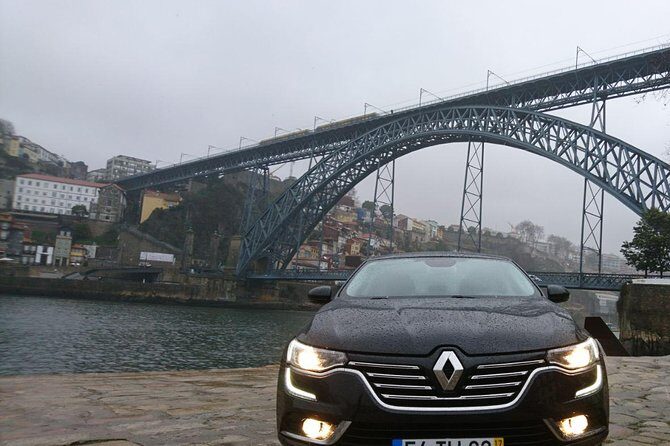
You’re picked up early—either 07:00 am or 07:30 am—and that shapes the whole day. The benefit is that you arrive in Porto with more daylight to enjoy viewpoints, and you avoid some of the crush that builds later.
A private car also means you’re not wasting time on transfers. You’re simply using the day efficiently: scenic moments, monument time, then back on the road.
Here’s your practical planning tip: because the day runs long, bring a small snack plan even if meals aren’t included. The tour includes water, but you’ll still want something for energy once you’re out at the river and churches.
Entering Clérigos Tower: A Baroque Landmark With Real Panoramas
Clérigos Tower (Torre dos Clérigos) is Porto’s most recognizable silhouette. It’s attached to the Church of São Francisco de Clérigos area, designed by the Italian-origin architect Nicolau Nasoni in the mid-18th century.
What you’re really looking at is light baroque drama. The granite tower rises in rhythmic stages for about 75 metres and finishes with a spherical clock house. It’s detailed, but not heavy-looking—think delicate and elegant.
The key practical choice is access to the tower:
- There’s an inner staircase and the tour info notes a 240-degree turn as part of the climb.
- If you want the best views, this is your moment. The tower is one of the best ways to see Porto from above.
Admission isn’t included, so expect a separate ticket. Plan for about 30 minutes at this stop, including time to get oriented and decide if you’ll climb.
If stairs aren’t your thing, you can still enjoy the church exterior and the tower views from ground level. But if you do climb, do it calmly. This isn’t a quick jaunt—it’s the main event.
Palácio de Cristal Gardens: A Calm Reset With Douro Views
After the tower, you get a softer change of pace at Jardins do Palácio de Cristal. These romantic gardens cover about 8 hectares in central Porto, created in the 19th century by German garden designer Émile David as part of the Palácio de Cristal complex.
This stop is valuable because it breaks the day’s intensity. You get room to breathe, plus strategic viewpoints over the river Douro and the city.
It’s also practical that admission is free, and the allotted time is about 30 minutes. That means you’re not forced to rush, but you also won’t lose the day to wandering.
If you like gardens, look for the design elements that still match the original plan, like the main entrance garden area and the river-facing balconies. Even if you’re not a garden person, the viewpoints help you understand where the city bends around the water.
Ribeira’s Cais da Ribeira: Medieval Streets by the Douro
Then you hit Cais da Ribeira, Porto’s riverfront zone. This used to be the center of the city’s commercial life in medieval times because the Douro River was the highway.
The area has layers. Medieval construction remains, and after a devastating fire in the 15th century, the zone regained its role. Later archaeological work in the 1980s uncovered a fountain from 1601–1700, still located at the center of the square area.
This is one of those stops where you’ll get more out of it if you let yourself slow down for a bit. Don’t treat it only like a photo backdrop. Notice how the buildings hug the river and how the city’s layout makes sense once you’re looking from the water side.
Time-wise, plan around 1 hour here. Admission is free, so it’s a good place to spend your energy on walking and atmosphere instead of tickets.
You can also read our reviews of more tours and experiences in Lisbon




Igreja de São Francisco: Gilded Wood and Gothic Planning
São Francisco is where Porto shifts from outdoor river views to an indoor architectural flex. The church dates to the 14th century, originally tied to Franciscan friars who arrived in Porto in 1223.
Architecturally, it follows mendicant Gothic rules: three naves, a prominent transept, and a tripartite top section. One detail mentioned in the tour info that’s worth seeking is the decoration of balls in the window slits of the main chapel.
Then comes the reason people remember it: the interior feels like it’s covered in gold due to the amount of gilt woodcarvings. Big baroque works were carried out later, and the main chapel’s altarpiece is dedicated to the Tree of Jessé.
Admission isn’t included, and the stop is about 30 minutes. That’s enough time to take in the main nave and focus on the altarpiece area without feeling like you’re speed-running.
Practical tip: go in expecting contrast. The church is built with older Gothic bones, but the visual effect is baroque. You’ll feel the shift immediately once the light hits the carvings.
Palácio da Bolsa: The Stock Exchange That Became a Stage
Palácio da Bolsa (Porto’s Stock Exchange building) is a “you should care” stop. It’s neoclassical in style and was built in the second half of the 19th century for the Porto Commercial Association. Use that fact when you look around: this city has always been tied to trade, and this building shows it.
It began functioning as the stock exchange in 1841, and later returned to the association in 1911. Architecturally, it reflects influences including English Palladianism, with references similar to other notable Portuguese buildings designed by English architects.
Inside, you’ll want to look for two highlights:
- Pátio das Nações, the main courtyard
- Salão Árabe, the Arabian Hall, in neo-Moorish style
Salão Árabe is the star: it was created by Gonçalves e Sousa in 1862 and used for major official ceremonies in the city. Now it’s used for cultural events. Even if you can’t attend an event, seeing the room is a reminder that Porto was once a stage for leaders.
Time for this stop is about 1 hour 30 minutes, and admission isn’t included. This is a longer one, so it’s also a good moment to take a breath and let the architecture do the talking.
Porto Cathedral: Marian Titles, Gothic Cloister, and Baroque Makeovers
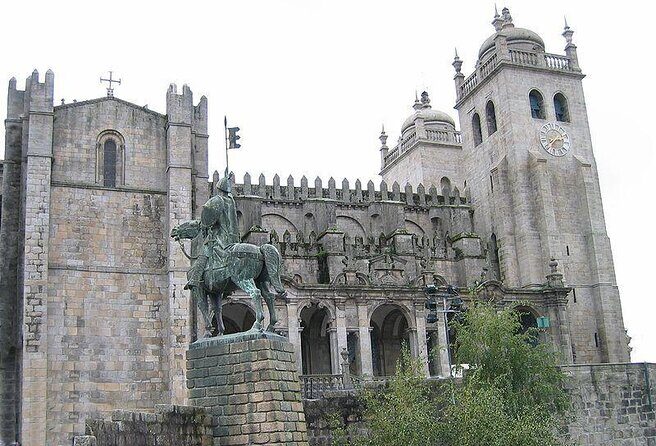
The cathedral stop, Catedral do Porto, is one of those places where you can feel centuries stacking on top of each other. The church traces back to the 12th century, started by the first bishop D. Hugo.
It’s also known by multiple names tied to the Marian cult, including Nossa Senhora do Porto da Eterna Salvação and Nossa Senhora da Vandoma. If you like reading symbols, watch for how those titles connect to what the city considered important.
By the 13th century, the building reached its larger shape. The next century added a Gothic cloister, and the tomb of Knight João Gordo appears in the chapel of St. John the Evangelist.
Then the big human moment: King D. João I and D. Filipa de Lencastre were married in Porto Cathedral in 1387. The tour info even notes the city dressed up with finery and fragrant herbs for the feast.
After that come baroque changes in the 17th and 18th centuries, including updates to portals, facades, and chapels. The portal still conserves a medieval rose window, which is the kind of detail you’ll appreciate once you’re inside and comparing styles.
Admission isn’t included, and you’re usually there for about 30 minutes. Use that time to do one thing well: pick a few chapels and look for recurring Marian themes. It will make the whole building feel more coherent.
The Douro Cruise and Port Wine Cellars: The Part You Should Confirm Early
Two elements often decide whether this trip feels like a postcard day or a memorable day: port wine cellars and the Douro river cruise.
The tour includes port wine cellar time, and the Douro cruise is described as optional. You must advise in advance if you want the river cruise—if they don’t hear from you 24 hours ahead, they assume you don’t want it. The boat fee isn’t included, so you’ll pay separately.
Why this matters: a cruise changes your timing. You’ll want that slot planned so you don’t feel rushed afterward at the churches.
What you can do before you go: ask what’s the best way to handle the cruise add-on based on your energy level. If you’re doing the climb at Clérigos Tower and you’re also sensitive to long walking, keep an eye on how much time you’ll spend on your feet after the river.
I also like that this day doesn’t fake it with just a quick exterior stop at the water. Porto’s river life is the point, and the cruise helps you understand why the city grew where it did.
Price and Value: When $402.19 Feels Fair (and When It Doesn’t)
The price—about $402.19 per person—isn’t “cheap day trip” pricing. But you’re paying for real value drivers:
- Private transportation with an air-conditioned vehicle
- Pickup from Lisbon at a set morning time
- Bottled water and onboard WiFi
- A tight route that hits major Porto anchors in one go
- Customization and private-group flexibility
Where the cost can surprise you is admissions. Several of the most famous spots listed have tickets not included: Clérigos Tower, São Francisco, Bolsa, and Porto Cathedral. Meals also aren’t included.
So the value equation is simple:
- If you hate logistics, want convenience, and plan to pay monument admissions anyway, this is usually a fair deal.
- If you’re trying to minimize spending and would rather pick your own stops by public transport, you might feel it’s pricey.
My advice: budget for admissions and any Douro cruise fee. Once you do, you’re basically buying a guided, private “greatest hits” route with transportation handled.
Who This Tour Fits Best (and Who Should Skip It)
This private Porto day works best for you if:
- You want major sights without navigating connections across town
- You like architectural detail and church interiors, not just views
- You prefer a driver who can keep the day moving smoothly
- You want door-to-door comfort from Lisbon
It may be less ideal if:
- You hate long days or early starts
- You’re trying to avoid stairs completely (the Clérigos Tower route includes a substantial internal stair climb option)
- You want a free-form wandering day with no fixed monument stops
If you’re a small group, also pay attention to group discounts. This is private, but discounts can make the per-person cost feel more reasonable.
And if anyone in your party has limited mobility, the tour info says to advise at booking so the itinerary can be adjusted. That’s a big deal for comfort and pacing.
Service and Human Touch: Drivers and Guides You’ll Want
One of the best parts is how consistently people praise the people running the day. In past trips, names like Tom showed up as a guide, Pedro M. as a chauffeur for an event, and José and Zeca as guides who helped highlight Porto’s key points.
Even without naming every role, you’ll benefit most if you use the private setup: ask questions in the car, request small timing changes, and be clear about your pace. In a day this packed, good communication turns a route into a real experience.
Should You Book This Private Porto Full Day Tour?
Book it if you want a clean, well-paced way to see Porto’s biggest hits with transportation handled and optional time for the river. This is especially worth it if you care about architecture and you’d rather pay for convenience than spend energy on logistics.
Think twice if you dislike long days, don’t want to pay separate admission fees, or you want a more laid-back itinerary with lots of unscheduled time.
My final rule: if you’re choosing between DIY and a guided private loop, this tour is the better choice for getting value out of a single day—just plan your budget for tickets and the cruise add-on.
FAQ
How long is the Porto private tour from Lisbon?
It runs about 12 hours, approximately.
What time is pickup in Lisbon?
Pickup is offered at 07:00 am or 07:30 am.
Is this tour private or shared?
It’s private. Only your group will participate.
Are admission tickets included for the monuments?
No. Tickets for stops like major churches and tower visits are not included. The tour includes some free-admission stops.
Is a Douro river cruise included?
The river cruise is not automatically included. You need to advise if you want it at least 24 hours in advance. The boat fee is not included.
Does the tour include port wine cellar visits?
Yes, the day includes port wine cellars as part of the experience.
What does the tour include?
Private transportation, an air-conditioned vehicle, bottled water, WiFi on board, and a clean and safe certificate are included.
What’s not included besides tickets?
Meals and gratuities are not included, and a private guide is listed as not included.
Can I cancel if plans change?
Yes. Free cancellation is available up to 24 hours in advance of the experience start time for a full refund.