REVIEW · LISBON
Historic Tuk Tour 1h30
Book on Viator →Operated by Lisbon By TukTuk · Bookable on Viator
Lisbon moves fast, and this tour keeps up. A Historic Tuk Tour is a smart way to see Lisbon’s core neighborhoods, hit standout viewpoints, and hear real stories behind the city’s big moments in just 1 hour 30 minutes. You’ll also get a tasting of sour cherry liqueur, ginjinha, plus a guided explanation of the catastrophic 1755 earthquake.
I like two things in particular. First, I like the way the route strings together compact old-street areas and major viewpoints (so you get variety without spending half the day traveling). Second, I like that the plan includes meaningful stops like Lisbon Cathedral and the National Pantheon, not just photo stops.
One thing to consider: the stops are intentionally short, so if you’re the type who wants long museum time or extended walking in each neighborhood, you may want to pair this with extra independent exploring afterward.
In This Review
- Key Things You’ll Actually Remember
- Why a 1h30 Historic Tuk Tour Works for Lisbon
- Getting Oriented in Baixa and Lisbon Cathedral
- Miradouro Das Portas do Sol: Tagus Views Plus Alfama Context
- Miradouro Da Senhora do Monte: Lisbon’s Big “Wow” View
- Panteão Nacional and the Cathedral: Why These Stops Matter
- Alfama on Foot: The Oldest Neighborhood, at the Right Pace
- Praça do Comércio (Terreiro do Paço): Finishing by the Water
- The Ginjinha Tasting and the Storytelling Connection
- Who This Private Tuk Tuk Tour Fits Best
- Price and Value: $192.66 per Group (Up to 4)
- Should You Book This Historic Tuk Tour 1h30?
- FAQ
- How long is the Historic Tuk Tour?
- What does it cost and what group size is it for?
- Is the tour private?
- What language is the tour offered in?
- Where does the tour start?
- Does it include entrance tickets?
Key Things You’ll Actually Remember

- Private Tuk Tuk for up to 4 so your guide can pace the ride to your group
- 1755 earthquake storytelling that gives the city’s layout more meaning
- Ginjinha tasting for a quick, Lisbon-specific flavor moment
- Miradouro viewpoints over the Tagus and the Alfama area
- Core landmarks with free admission listed (cathedral and more) during the scheduled visit
Why a 1h30 Historic Tuk Tour Works for Lisbon
This tour is built for getting oriented. Lisbon is all hills, switchbacks, and sudden viewpoints, so the fastest path to understanding it is a route that mixes driving with a little walking and timed pauses for views.
In 1 hour 30 minutes, you’ll cover the city’s central historic spine: Baixa, the cathedral area, major miradouros, Alfama, and the big waterfront square at Praça do Comércio. It’s compact, but it doesn’t feel rushed in content because you’re not just “driving around.” You’re stopping at points that help you read the city.
Also, it’s private. That matters more than people think. On a private tour, your guide can adjust for your pace and keep the story going while you’re looking around, not while you’re stuck waiting.
If you like tours that teach you what to notice—street patterns, viewpoints, and why certain areas matter—this one fits that style well.
You can also read our reviews of more historical tours in Lisbon


Getting Oriented in Baixa and Lisbon Cathedral
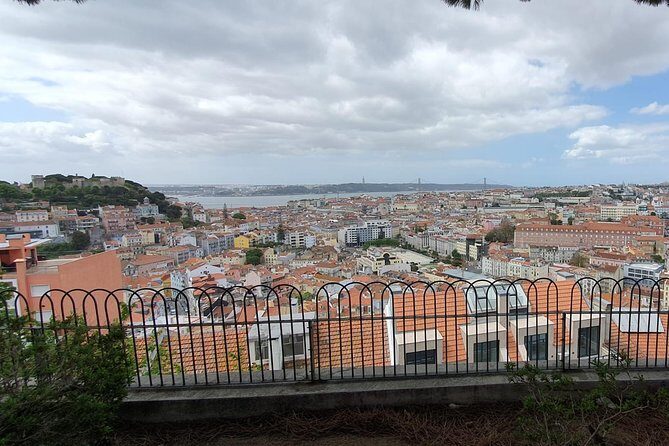
Stop 1 is Baixa de Lisboa, where you start in the city center’s classic street grid and monuments. Even in a brief visit, this is helpful because it gives you a reference point for the rest of the day. You’ll get a feel for how Lisbon’s central area connects to the older quarters uphill.
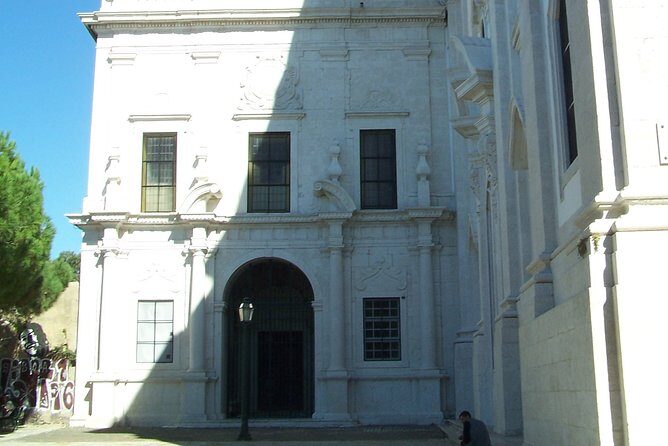
Then you move to Lisbon Cathedral, a strong anchor stop. The plan gives you about 15 minutes, which is enough time to actually look at the building and soak up the symbolism. This is the kind of stop that makes the rest of your walk make sense, because you’ll understand you’re not just hopping between viewpoints—you’re moving through places that define Lisbon.
Practical note: cathedral areas can be busy around peak hours. You’ll still have time to see what’s important, but if crowds are your stress point, plan to arrive ready for a bit of atmosphere.
Miradouro Das Portas do Sol: Tagus Views Plus Alfama Context
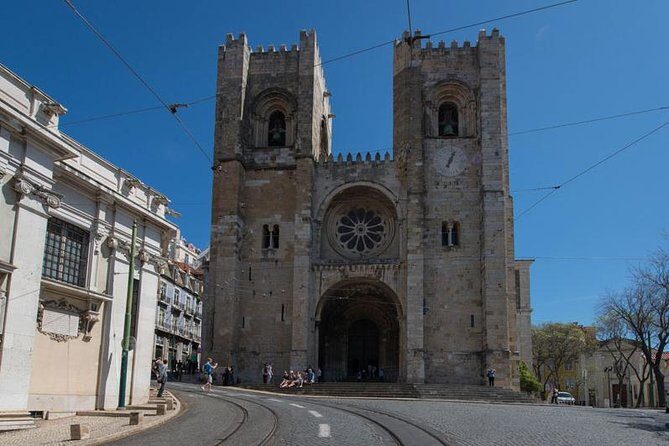
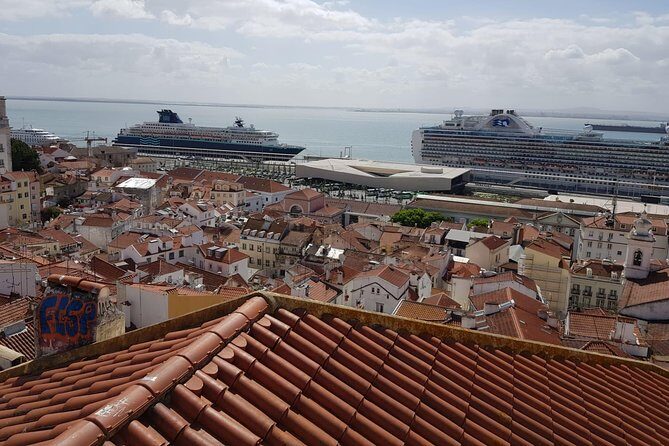
Miradouro das Portas do Sol is one of those places you can’t really fake. The view reaches over the Tagus River and toward the Alfama neighborhood, and that matters because it’s the kind of perspective that explains why people build where they build.
You’ll have around 15 minutes here. That’s a good length: long enough to find a viewing spot, short enough that you’re not trapped waiting for perfect light. You’ll also learn what you’re looking at, not just where to stand for a photo. That’s where the earthquake story starts to connect with real geography—how Lisbon’s rebuild and its neighborhood shapes influence what you see today.
If you’re planning to grab photos, go a few minutes early inside that 15-minute window. You’ll get a calmer moment to compose shots before the area fills.
Miradouro Da Senhora do Monte: Lisbon’s Big “Wow” View

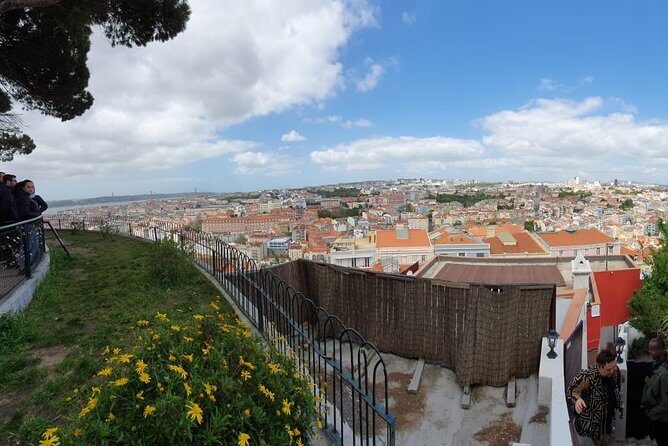
Next up is Miradouro da Senhora do Monte, often considered the best viewpoint in Lisbon, and the tour gives you another 15 minutes. The reason this stop is worth your attention is simple: it’s a high vantage point over the city center. On a short itinerary, that “from above” perspective gives you the quickest sense of Lisbon’s layers.
From here, you’ll likely notice patterns you missed earlier. Streets look more logical from a distance, and you can start picturing how Alfama sits in relation to downtown.
A quick consideration: viewpoints mean stairs and uneven ground nearby. You don’t need to be an athlete, but wear shoes that handle Lisbon’s stone surfaces. This is also where a private Tuk Tuk helps, because it reduces the amount of hill-hiking you have to do to get to the next stop.
Panteão Nacional and the Cathedral: Why These Stops Matter

The tour includes Panteão Nacional (the National Pantheon) with admission listed as free in the schedule. You’ll get a set visit time, and the value here is context. Lisbon doesn’t just look old; it carries meaning through its landmark buildings and how they represent national identity.
When you mix Panteão Nacional with Lisbon Cathedral earlier, your mental map gets stronger. You start seeing the city as a system of places that represent religion, national story, and public memory—not just scenic stops.
Keep your expectations realistic: in 1 hour 30 minutes, you won’t be doing a slow, detailed interior tour of everything. But you will walk away with clear “anchors.” Those anchors help when you later explore on your own, because you’ll know what area you’re in and why it matters.




Alfama on Foot: The Oldest Neighborhood, at the Right Pace
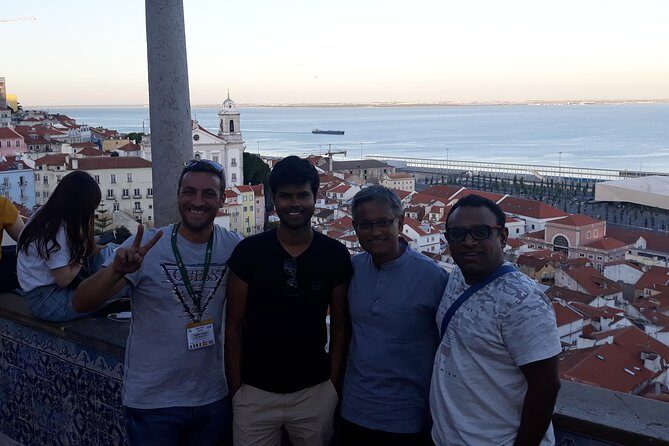
One of the best parts of this itinerary is that it doesn’t keep everything inside the Tuk Tuk. Stop 6 is Alfama, about a 10-minute walking stretch through Lisbon’s oldest and most authentic neighborhood.
Ten minutes doesn’t sound like much until you remember the tradeoff: if you try to do Alfama “big,” you’ll end up stuck walking longer than planned on steep, twisting streets. This short walk is a compromise that works. You get the feel of Alfama—its age, its tight street character, and its connection to the viewpoints you just visited—without turning the day into a full hike.
This is also the section where you’ll likely understand why stories like the 1755 earthquake hit harder here. Alfama’s character isn’t just architecture; it’s a lived-in map of how the city survived, rebuilt, and kept evolving.
If you’re prone to getting tired on cobblestones, consider this your gentle introduction. Then, if you want more, you’ll know exactly where to return.
Praça do Comércio (Terreiro do Paço): Finishing by the Water

The tour wraps with Praca do Comercio, also called Terreiro do Paco. This is Lisbon at its most open and ceremonial: a large, bright square that feels like a reset after tighter old streets and uphill views.
It’s a strong finishing point because you can take in the change of scale. From crowded alleys and steep viewpoints, you end in a space that feels spread out and easy to breathe in.
If you’re planning what to do next, this location is helpful. After the tour, you’re positioned to continue exploring nearby at your own pace, whether you want waterfront views, quick snacks, or a longer wander through central Lisbon.
The Ginjinha Tasting and the Storytelling Connection
One of the highlights is sampling a sour cherry liqueur—ginjinha. Even if you don’t usually order liqueurs, it’s a quick way to taste a Lisbon tradition tied to the city’s vibe.
The best part is how it fits the tour theme. You’re not just hearing about Lisbon’s big historical moment (the 1755 earthquake). You’re also experiencing the city’s everyday culture in a small, memorable way.
When guides focus on stories, taste moments help your brain file the trip under real memories instead of just facts. In Lisbon, where neighborhoods and history blend together, a short flavor stop is a smart tool.
Who This Private Tuk Tuk Tour Fits Best
This tour is ideal if you want an efficient, guided introduction to Lisbon’s core areas. It’s especially good for:
- First-timers who want to feel oriented fast
- Couples or small groups who prefer a private, paced experience
- Travelers who like viewpoint time but don’t want to manage the route on foot for long stretches
- Anyone who enjoys stories that explain why the city looks the way it does
It may be less ideal if you plan to spend most of the trip inside churches and museums or if you hate short stop durations. This is a “see, learn, and move” experience.
Also, because the tour is offered in English and is described as suitable for most travelers, it’s a straightforward choice if you’re not traveling with special language needs.
Price and Value: $192.66 per Group (Up to 4)
The price is listed as $192.66 per group, up to 4 people. That pricing model is what makes this tour feel fair, because the cost doesn’t jump as you add people.
So the real value depends on your group size:
- If you have 2–4 people, you can often treat this like a cost-effective way to cover multiple neighborhoods with a guide.
- If you’re traveling solo, you’ll likely feel the price more, because you’re paying for the whole group capacity.
Where it justifies itself is the private format plus the number of meaningful stops for such a short duration. You’re getting transportation, guided context, and time at several landmarks and viewpoints, including Lisbon Cathedral and Panteão Nacional, with admission listed as free in the schedule.
If you like tours that reduce decision fatigue—where to go, how to connect neighborhoods, what to look for—this is the kind of booking that saves time and energy.
Should You Book This Historic Tuk Tour 1h30?
I’d book it if you want a short, guided hit of Lisbon’s oldest areas, viewpoints, and major landmarks without building your own route. It’s built for momentum: you get the city center (Baixa), the cathedral area, panoramic miradouros, Alfama’s feel, and a classic finish at Praça do Comércio.
I’d hesitate only if you know you want long, slow museum-style time at interiors, or if short stop durations make you feel unsatisfied. In that case, you might treat this as a prelude, not the whole trip.
One more reason to feel confident: the tour has an average rating of 4.9 with 10 reviews, and the standout feedback emphasizes how energetic the guide is and how well 1.5 hours fits the central sights.
FAQ
How long is the Historic Tuk Tour?
It’s approximately 1 hour 30 minutes.
What does it cost and what group size is it for?
The price is $192.66 per group, for up to 4 people.
Is the tour private?
Yes. It’s a private tour/activity, so only your group participates.
What language is the tour offered in?
The tour is offered in English.
Where does the tour start?
The meeting point is Rossio1100-240 Lisbon, Portugal.
Does it include entrance tickets?
The schedule lists Admission Ticket Free for the stops included in the itinerary, and you’ll also get a mobile ticket.
If you tell me when you’re going (morning vs afternoon) and how many people are in your group, I can help you sanity-check whether 1 hour 30 minutes feels like the right pace for your Lisbon plan.