REVIEW · LISBON
Lisbon Highlights for Newcomers Private Tour
Book on Viator →Operated by Local CoolTour · Bookable on Viator
Two hours can change your Lisbon. This private highlights tour strings together the city’s key neighborhoods in a smart loop: starting in lively Chiado, then moving through baroque churches and viewpoints before finishing at Praça do Comércio by the Tagus. It’s built for getting your bearings fast, without making you waste time figuring out what’s worth seeing.
I especially like the punchy mix of stops that are mostly quick photo-and-look moments, yet still meaningful. You’ll also appreciate how many locations have free admission for your short visits, with the one paid upgrade saved for the Carmo Archaeological Museum.
One drawback to plan for: the whole thing is about 2 hours, so you won’t linger long. If you like slow museum time, you’ll probably want to return later on your own.
In This Review
- Key highlights you’ll feel right away
- How this 2-hour Lisbon route helps newcomers get their bearings
- Starting in Largo do Chiado: the Lisbon “livewire” neighborhood
- Two churches with different personalities: Loreto and São Roque
- Trindade and Lisbon’s tile-and-arc style: food, architecture, and memory
- Santa Justa: engineering wonder plus a skyline lesson
- Largo do Carmo and Carmo Archaeological Museum: shade now, earthquake memory next
- Rossio station and the neo-Manueline facade: a quick wow moment
- Ginjinha stop: Lisbon taste in a traditional spot
- São Domingos and Casa do Alentejo: monuments and the art of reuse
- Rua Augusta and Praça do Comércio: where the city finally opens to the river
- Price and value: paying for guidance, not just ticking sights
- Who this tour suits best (and who should plan differently)
- Should you book Lisbon Highlights for Newcomers?
- FAQ
- What is the duration of the Lisbon Highlights for Newcomers Private Tour?
- Is this tour offered in English?
- Is this a private tour or a group tour?
- Where does the tour start and end?
- Is a mobile ticket included?
- Are any attractions included with tickets?
- Can I cancel if my plans change?
Key highlights you’ll feel right away

- Chiado-to-river route that connects neighborhoods without long transit breaks
- André-style storytelling that turns landmarks into memorable scenes
- Santa Justa panoramic stop with views toward Alfama and São Jorge Castle
- Carmo Museum ruins + skip-the-line ticket included in the route
- Historic food break for ginjinha at a classic address
- Big Lisbon icon moments like the Rua Augusta arch and Praça do Comércio
How this 2-hour Lisbon route helps newcomers get their bearings
Lisbon can feel like a puzzle at first. Hills, trams, tiled facades, and sudden viewpoints make it hard to tell what connects to what. This tour helps by moving in a logical flow through central areas—so you’re not just checking boxes, you’re learning how the city pieces fit together.
The route is also practical in pacing. Many stops are short and focused, which keeps your energy up, especially if you’re arriving jet-lagged or only have a small window of time. And because it’s a private tour, you can ask questions and get answers that match what you actually care about.
Value-wise, the design is clever: you’re paying for guidance and time, while most stops are free for the visits. The one exception is the Carmo Museum, where a skip-the-line ticket is included—because that’s the place where time often matters.
You can also read our reviews of more private tours in Lisbon



Starting in Largo do Chiado: the Lisbon “livewire” neighborhood
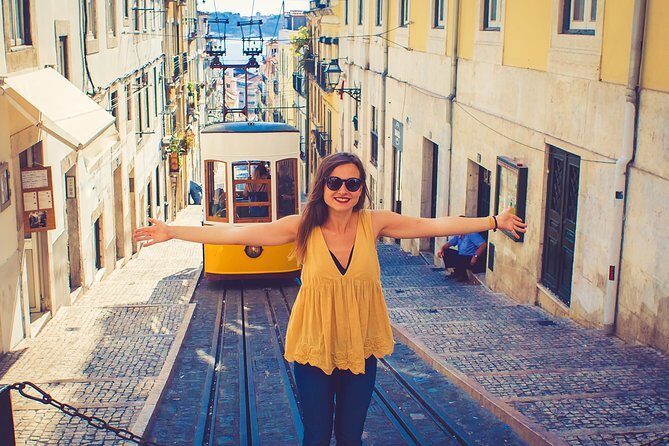
You meet at Largo do Chiado, a classic starting point because it immediately puts you in the center of Lisbon’s day-to-day life. Chiado has history, but it doesn’t feel like a museum district. It’s more like the city’s living room: shops, cafés, people moving through the streets, and a lot of grand buildings that still feel used.
From here, the first stop is Praca Luis de Camoes, the main square in Chiado. This is a good early anchor, because a square teaches you how neighborhoods “breathe.” It also sets context for the religious, political, and cultural landmarks you’ll see just down the street.
The practical takeaway: arrive with comfortable shoes and a relaxed mindset. Early on, you’ll likely be doing the kind of walking where you’re looking up a lot. That’s the right move in Lisbon.
Two churches with different personalities: Loreto and São Roque
Next up is a small, sweet stop: the Church of Our Lady of the Loreto of the Italians. Don’t expect a huge spectacle. The charm is the story behind it: in the sixteenth century, Italian merchants dedicated this chapel to Our Lady of Loreto. In a short visit, you get a glimpse of how Lisbon welcomed international communities and how devotion traveled with trade.
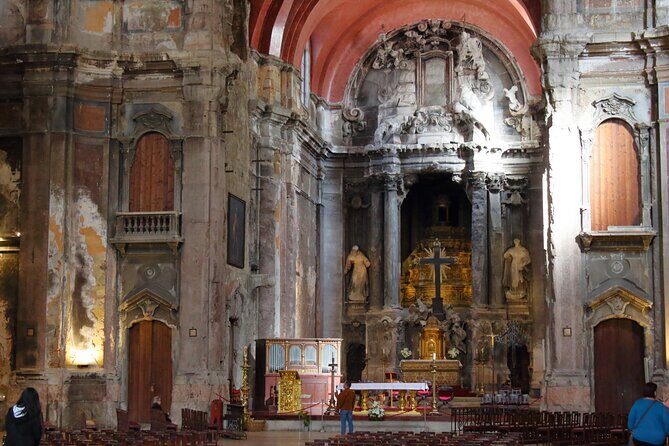
Right after that, you shift gears into something you can’t miss: Igreja de São Roque. This is described as the first Jesuit church in the Portuguese empire, and the key word here is baroque. The church’s 17th-century style makes it a visual reward after smaller stops. Even if you only have minutes, you can still catch the baroque feel—ornament, drama, and that old-world “serious art” energy.
Consideration: churches can vary in how they’re lit and how crowded they feel depending on the time of day. Plan to be flexible. Lisbon moves to its own clock.
Trindade and Lisbon’s tile-and-arc style: food, architecture, and memory
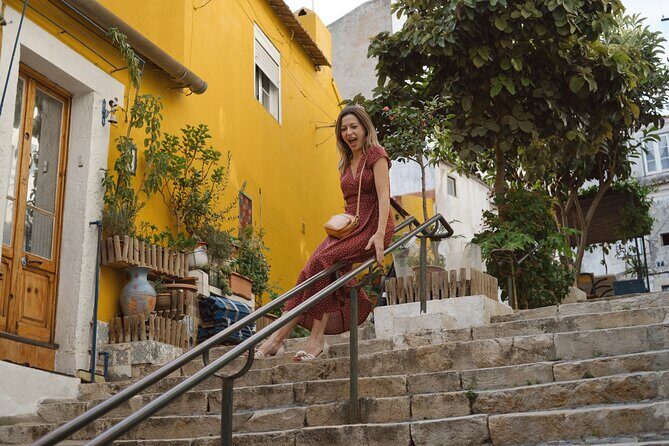
A lot of Lisbon’s best details are hidden in everyday places. That’s why Trindade is such a smart mid-tour stop. You’ll admire a restaurant with tiles, frescoes, and arches, built on the bones of an older monastery and rebuilt from it.
This matters because it shows how Lisbon reuses space. The city doesn’t always discard the past; it folds it into what people do now—eat, meet, hang out, keep going. You’ll see the result of that approach in the building’s look and character.
Time is short here, so I’d treat it like a “look closely, don’t rush” stop. You’re not trying to finish a meal in 10 minutes. You’re sampling the idea: Lisbon’s art is often sitting right next to your lunch.
Santa Justa: engineering wonder plus a skyline lesson
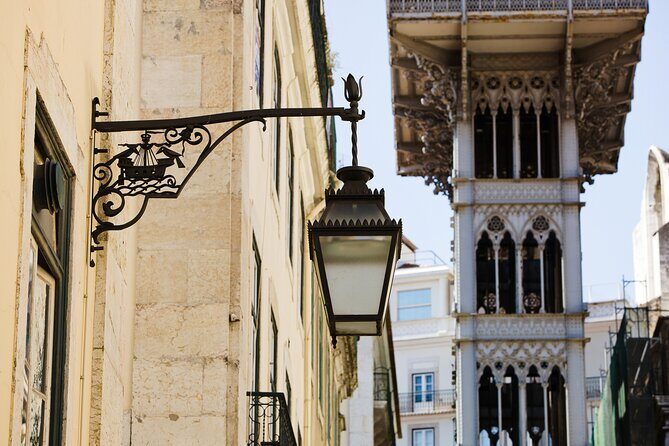
Then comes a classic Lisbon high point: Elevador de Santa Justa. The elevator is from 1902, and it’s more than a ride—it’s an engineering landmark that also functions as a panoramic viewpoint.
This stop is valuable even if you’re not the type to chase photos. The reason is perspective. From Santa Justa, you can get a better mental map of how Lisbon’s geography works: the Baixa Pombalina district, the Alfama hill, and the presence of São Jorge Castle in the skyline.
If you’ve been told Lisbon is hilly, this is your proof, not just your theory. You’ll understand why neighborhoods look close on a map but feel far when you’re walking.



Largo do Carmo and Carmo Archaeological Museum: shade now, earthquake memory next
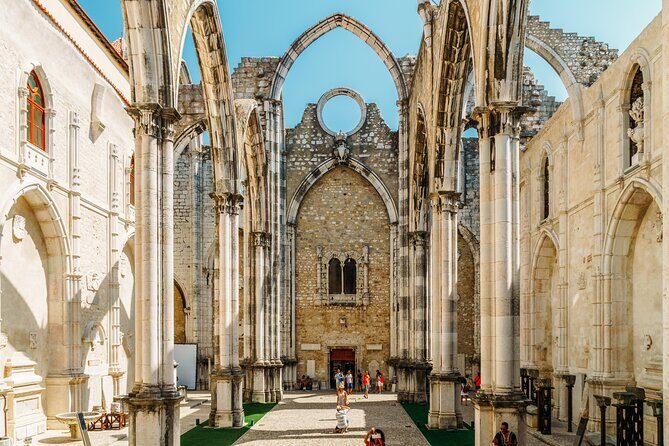
Largo do Carmo is one of those squares you’ll notice immediately because it invites you to slow down. The trees offer shade, and the vibe is calmer than some of the earlier streets. It’s a nice mental reset before the museum portion.
Right after, you’ll hit the Carmo Archaeological Museum. Here’s the included ticket detail that matters: it comes with a skip-the-line pass. That’s not just convenience; it helps you keep the momentum of the tour and reduces the time you spend waiting.
What you’ll see is the ruins of a Gothic temple destroyed in the 1755 Lisbon earthquake. This stop adds weight to the city you’ve been walking through. Lisbon’s beauty can make you forget that history has been harsh. The museum helps balance that feeling with something real and specific.
Practical note: because the museum is tied to ruins, weather can affect your comfort. Bring a layer if the day turns cool.
Rossio station and the neo-Manueline facade: a quick wow moment
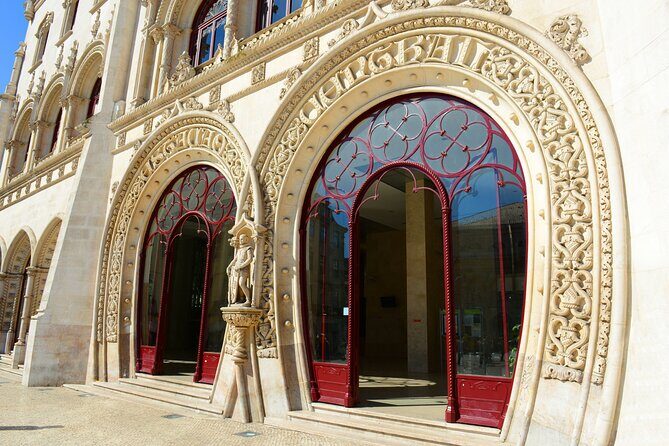
From Carmo, the tour moves toward Estação do Rossio, where you get another high-impact stop in a short time: the station’s Neo-Manueline style.
Why is this worthwhile on a highlights tour? Because stations in Lisbon aren’t just for transportation. They’re part of the city’s identity. You’ll see how Portugal’s architectural language shows up in public spaces people use every day.
This is also a good moment to catch your breath. It’s close to the next stretch and helps you reset before you start crossing into the big, formal central squares.
Ginjinha stop: Lisbon taste in a traditional spot
Now for the fun part: tasting ginjinha, Portugal’s typical cherry liquor, at R. das Portas de Santo Antão 6.
This is valuable because it’s specific. Lisbon has food everywhere, but ginjinha is a quick, iconic taste you can connect to a real address, not just a generic suggestion. Ten minutes here is enough to try it (or at least watch friends try it) without turning your tour into a long lunch.
If you’re not into alcohol, you can still enjoy the cultural aspect of the stop. But the practical goal is simple: add a flavor memory to the landmarks you’re collecting.
São Domingos and Casa do Alentejo: monuments and the art of reuse
Next is Igreja de S Domingos, now a National Monument. The square around it is where tragic events occurred for the city, and the stop is a reminder that Lisbon’s major landmarks often come with major stories.
Then you’ll see Casa do Alentejo, a distinctive palace built in the last quarter of the seventeenth century. The building is described as neo-Moorish and Art Nouveau, and today it functions as a restaurant. That blend matters. It shows Lisbon as a place where different styles and eras keep overlapping rather than living in separate, tidy time periods.
This pair of stops works because it contrasts mood. One is about national recognition and historic events. The other is about how history turns into daily life through food and architecture.
Rua Augusta and Praça do Comércio: where the city finally opens to the river
Now you shift into the grand finale section of the tour: big architecture, wide views, and clear symbolism.
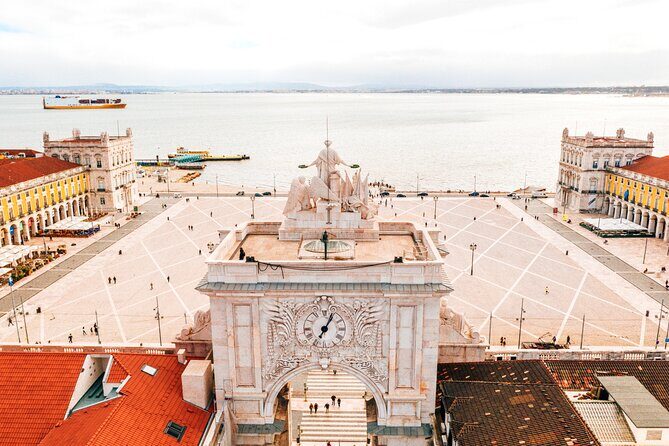
You walk along Rua Augusta, and the highlight is the imposing monumental arch leading toward Comércio Square. This is the kind of Lisbon landmark that makes you stop without even trying. The street feels designed for arrival.
Then you reach Praça do Comércio, which is described with three key features:
- View of the Tejo River
- Masonic symbolism
- The Cais das Colunas, the old footbridge for kings and presidents
That mix of riverfront scale, symbolism, and historical function makes this more than a pretty square. It’s a finishing point that connects Lisbon’s past status with its role today. You get closure to your walk with a sense of where the city faces outward.
Price and value: paying for guidance, not just ticking sights
The tour costs $82.21 per person and lasts about 2 hours. On a highlights product like this, the value question is always: what are you paying for?
Here, you’re paying mainly for:
- A guided route that keeps you moving efficiently
- Private group time (only your group participates)
- English narration
- A mobile ticket setup
- A skip-the-line ticket for the Carmo Archaeological Museum
- A well-paced mix of meaningful stops, with most other visits free
The free admissions are a big part of the practical value. It means your money goes toward experience and interpretation rather than entry fees stacking up. And because it ends at Praça do Comércio, you finish somewhere you’ll likely want to explore further on your own, especially with the river right there.
One thing to watch: because it’s private and time-limited, it’s not the best fit if you want a slow, deep dive into a single museum. It’s a “get the story and get oriented” format.
Who this tour suits best (and who should plan differently)
This Lisbon highlights walk is a strong match if you:
- Are new to Lisbon and want a clean overview in 2 hours
- Like seeing churches, squares, and viewpoints without spending your whole day in lineups
- Want a guide who tells the story in an engaging way
It’s also ideal if you enjoy specific details, because this route is packed with them: the Jesuit connection at São Roque, the earthquake ruins at Carmo, and the panoramic payoff at Santa Justa.
Based on the guide praise, the experience lands well when you appreciate anecdotes and personality. One review specifically praised André, calling him a guide who loves his city and shares Portuguese history with warmth, making the time pass fast.
If you’re the type who needs lots of quiet time inside buildings, you might prefer a longer, single-attraction tour. For that, you’ll likely treat this as your setup day, then return later.
Should you book Lisbon Highlights for Newcomers?
I’d book it if you want a fast, well-planned orientation to central Lisbon, with landmark variety that goes from neighborhood squares to churches to viewpoints to the riverfront finish. The combination of mostly free stops, an included skip-the-line museum ticket, and the short private format makes it feel efficient without feeling cheap.
I’d skip it (or book something longer) if you want heavy museum time, lots of sitting, or a slow pace. This tour is designed to move, see, and connect dots.
If you’re arriving with limited time, you’ll likely leave with a clearer mental map and a few new favorites—especially after Santa Justa and the earthquake story at Carmo.
FAQ
What is the duration of the Lisbon Highlights for Newcomers Private Tour?
It runs for about 2 hours.
Is this tour offered in English?
Yes, the tour is offered in English.
Is this a private tour or a group tour?
It’s a private tour/activity, meaning only your group participates.
Where does the tour start and end?
It starts at Largo do Chiado, 1200-273 Lisboa, and ends at Praça do Comércio, 1100-148 Lisboa.
Is a mobile ticket included?
Yes, the tour includes a mobile ticket.
Are any attractions included with tickets?
Yes. The Carmo Archaeological Museum stop includes a skip-the-line ticket. Other stops listed are free for admission.
Can I cancel if my plans change?
You can cancel for a full refund if you cancel at least 24 hours before the experience start time.