REVIEW · LISBON
Setúbal,Sesimbra & Palmela – Private tour, Nature & Culture
Book on Viator →Operated by The Guru Guide · Bookable on Viator
A day like this keeps Portugal’s coast from feeling like a blur. You’ll move through castles, forts, and church architecture, then slow down for sea views and easy beach time in the Arrábida area.
I especially like the way the itinerary balances major viewpoints (Palmela Castle, São Filipe Fort, Cabo Espichel) with places you can actually browse—like Mercado do Livramento and the Church of the former Monastery of Jesus. One more big plus: many stops are effectively no-drama for your budget since there’s free admission at each listed site.
One possible drawback: it’s a full day of driving and sightseeing, so if you want lots of long, unplanned wandering or a super relaxed pace, this tight route may feel like “one more stop” after stop.
In This Review
- Key highlights you’ll care about
- Palmela to Sesimbra: the coast road trip that actually makes sense
- Value for the money: what you’re paying for (and what you aren’t)
- Entering Palmela Castle: defense history from the top of the Serra da Arrábida edge
- Mercado do Livramento: a fish market stop that’s about more than shopping
- SetúbalSouv: small craft energy without turning it into a time sink
- The Church of the former Monastery of Jesus: Manueline architecture, explained in plain sight
- São Filipe Fort in Setúbal: where coastal defense becomes a panorama
- Serra da Arrábida: blue sea, green slopes, and the feel of a natural park
- Portinho da Arrábida beach: calm water vibes and a practical break
- Sesimbra Castle: medieval walls and sea-first views
- Fortaleza de Santiago and the Sesimbra Maritime Museum connection
- Cabo Espichel Sanctuary: cliffside pilgrimage with practical awe
- Finishing with Santuario Nacional de Cristo Rei: a 360º view of the Tagus
- Guide experience: why the right person can make this day feel personal
- What to expect on the road: timing, group size, and how not to lose the day
- Who should book this tour, and who should skip it
- Should you book this private-feeling coastal day?
- FAQ
- How long is the tour?
- What’s included in the price?
- Is pickup offered?
- Are admission tickets included?
- Is lunch included?
- Can I cancel for a full refund?
Key highlights you’ll care about
- Fort views that work as photo stops: São Filipe Fort and Sesimbra’s walls give you wide-bay panoramas.
- Architecture with a specific why: the Manueline-era Church of Jesus is more than pretty stone.
- A top fish market experience: Mercado do Livramento is recognized internationally for fish.
- Arrábida Natural Park, close and scenic: sea color, green slopes, and several viewpoint chances.
- Marine-meets-medieval storytelling: Sesimbra’s castle and restored Fortaleza de Santiago connect the dots.
- A human guide matters: one standout guide named Hugo is described as kind, knowledgeable, and making the day feel like family.
Palmela to Sesimbra: the coast road trip that actually makes sense
This tour is basically a coast-and-culture sampler across three towns that all orbit the same idea: how people lived, defended, fished, and prayed along the Tagus-to-Sado region. You get a packed route, but it’s not random—each stop adds a new layer, from medieval defense to market life to cliffside sanctuaries.
It starts at 9:00 am and runs about 7–8 hours, which is long enough to feel like a real day out, but not so long that you lose the thread. You’re also not stuck on your own for logistics: you’ll ride in an air-conditioned vehicle with WiFi on board, and the tour includes all fees and taxes.
If you’re booking as a private group, you get pick-up and drop-off at hotels, Airbnbs, cruise terminals, and the airport. If you’re on the shared option, you’ll meet at Hard Rock Café – Lisbon or Casa da Baía – Setúbal, depending on the version you choose.
You can also read our reviews of more private tours in Lisbon



Value for the money: what you’re paying for (and what you aren’t)
At $90.31 per person, this isn’t a budget bus tour, but it also isn’t built around ticket costs. Most of the listed stops have admission marked as free, and the included price covers transportation plus the guided component.
Here’s how I read the value:
- You’re paying for planning + a guide + direct driving between sites, not for a stack of expensive entry fees.
- The route includes several “big name” structure types—castles, forts, and a significant church—plus market time.
- Lunch is not included, so you’ll want to budget a meal or plan snacks. The tour does note you’ll find restaurant options that won’t disappoint, but you still choose and pay.
If you like day trips where you’re not constantly checking bus times or guessing parking, this is one of the more efficient ways to see a lot without turning your day into logistics work.
Entering Palmela Castle: defense history from the top of the Serra da Arrábida edge
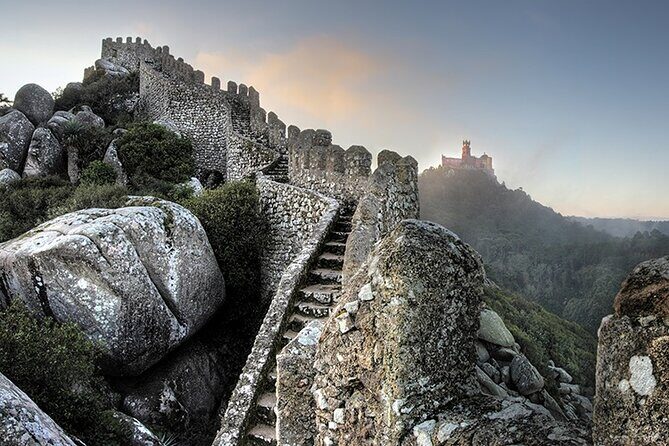
Your first major stop is Castelo de Palmela, perched high in the Serra da Arrábida area. The location matters. This castle sits on a difficult-to-access point, which is exactly why it worked as a territorial defense site.
The story line you’ll hear is tied to the Portuguese Reconquista period led by D. Afonso Henriques. Palmela wasn’t just a fortress—it was part of a defensive chain south of the Tagus. Later, the Order of Sant’Iago da Espada gets installed in the castle, and you’ll also hear about restorations and building campaigns linked to D. João I and changes under D. Pedro II.
You’ll likely spend about 45 minutes here. The best way to use that time is to treat it as a viewpoint stop first, museum second. Even when you’re not deep into medieval details, standing high over the region helps everything click.
Possible drawback: access can feel a bit strenuous because it’s a hard-to-reach high point. If you have walking limitations, ask your guide what the easiest route will be before you commit.
Mercado do Livramento: a fish market stop that’s about more than shopping
Next is Mercado do Livramento. This isn’t just a place to buy souvenirs or grab a quick snack—this is about how Setúbal’s economy and daily life meet under one roof.
It opened in 1930 to replace an earlier market that was demolished in 1876, and it later received a full interior remodel during renovations between 2010 and 2011. The interior tile panels are a highlight: they depict the city’s economic activities, designed by Portuguese engraver and painter Pedro Pinto (dating from 1929). There are also additional panels near the north entrance by Rosa Rodrigues (from 1944).
You get around 30 minutes here. The smart move: walk the inside with your camera ready, then pause for something simple if you want a taste. Even if you don’t buy much, it’s a great cultural reset between the castles and forts.
SetúbalSouv: small craft energy without turning it into a time sink
You’ll then stop at SetubalSouv, a local souvenir shop built around handmade work by local artisans. The standout detail here is the fish-shaped building made from cork and wood.
This is a short 15-minute stop, so it’s not going to steal your day. Use it like a quick palette cleanser: if you like crafts, you’ll probably enjoy browsing. If you don’t, you won’t feel trapped.



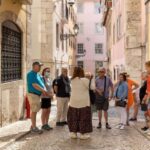

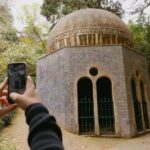
The Church of the former Monastery of Jesus: Manueline architecture, explained in plain sight
Then comes a Portugal architecture anchor: the Church of the former Monastery of Jesus. This is considered a landmark for Portuguese architectural history and tied to the beginning of the Manueline style.
The key dates you’ll hear are a building period starting in 1490, apparently ending in 1496, with works led by Diogo Boitaca—and the context includes other major Portuguese monuments associated with his era, like Jerónimos Monastery, Belém Tower, and Batalha Monastery.
Why it’s more interesting than it sounds: the church is noted as Portugal’s first attempt at a church-hall type with a homogeneously lit space. You’ll also hear about innovative structural choices for the time, including round arches, lowered-arch vaults, and a rib network.
You’ll have about 15 minutes. That’s short, but enough if your guide helps you focus on a few “look for this” elements rather than trying to memorize details. If you’re the kind of person who loves architecture, this is a stop worth paying attention to even briefly.
São Filipe Fort in Setúbal: where coastal defense becomes a panorama
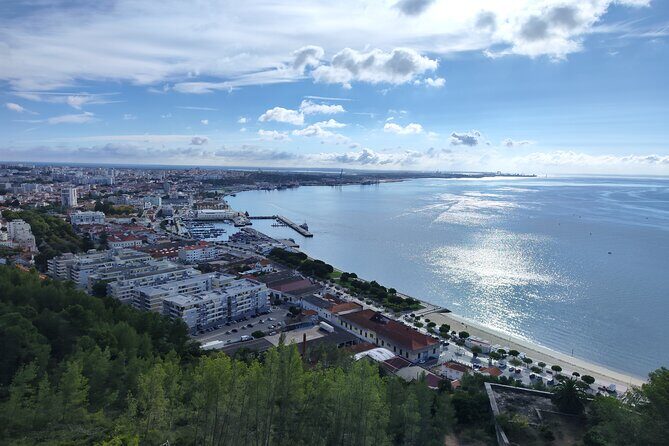
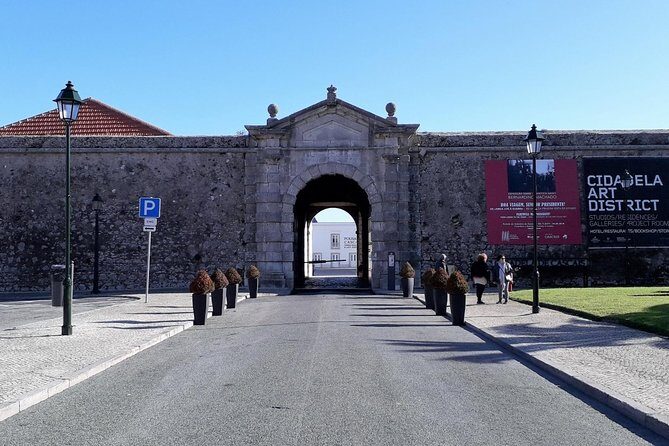
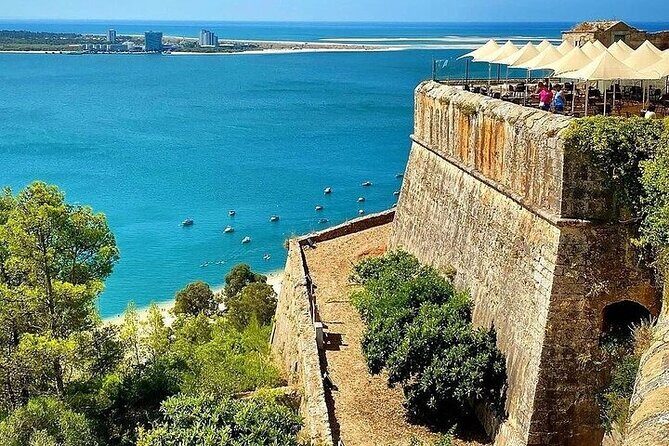
The tour’s fortress chapter gets real at Forte de São Filipe. This fort was built as part of Spain’s coastal fortification efforts under Philip II, with defensive design orders aimed at protecting Setúbal and the mouth of the Sado River.
Designed by Captain Fratino in 1583, the fort uses an irregular polygonal plan in the shape of a six-pointed star with six bastions, set on a steep slope over the sea. The fort also had strategic support, including a second walled line on the north side.
You’ll spend about 45 minutes. The practical reason to go: from these walls you get breathtaking panoramic views of the city and the bay. The historical reason: you can see how pirates and maritime threats shaped coastal fort design along the Portuguese coastline.
If you want a photo moment with meaning, this is one. Go early in your time here if you can, since the best viewpoints depend on light and weather.
Serra da Arrábida: blue sea, green slopes, and the feel of a natural park

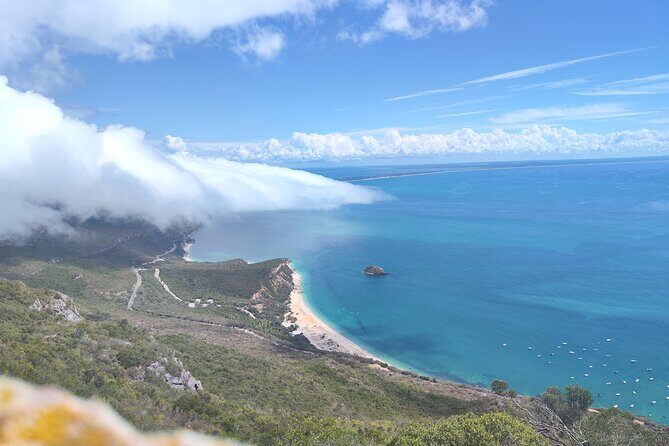
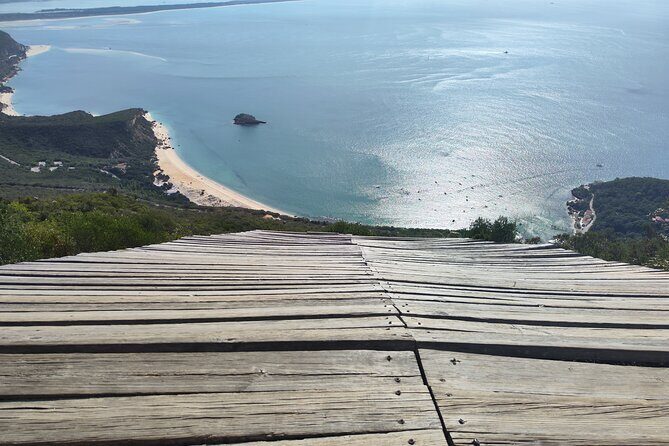
Now you switch from stone defenses to living scenery: Serra da Arrábida. This is part of Arrábida Natural Park, and it’s close—about 10 km from Setúbal, roughly 45 km from Lisbon, and around 17 km from Sesimbra.
You’ll likely hear the quick geography: the park covers steep terrain from multiple smaller ranges, including Serra do Louro, Serra de São Francisco, and more, with the highest point at 501 meters. With around 10,800 hectares, the park spans the municipalities of Palmela, Sesimbra, and Setúbal.
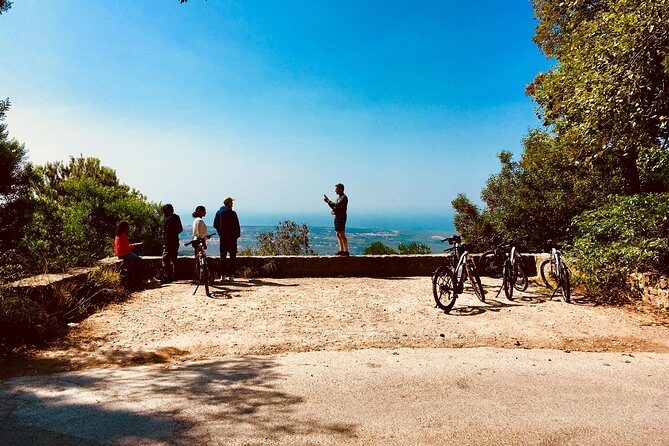
This stop is listed at 45 minutes. The best way to use it is to treat it like a viewpoint-and-walk window, not a long hiking session. Since the itinerary later hits more specific beach and town areas, you don’t need to burn energy here unless your guide suggests a specific short route based on conditions.
Portinho da Arrábida beach: calm water vibes and a practical break
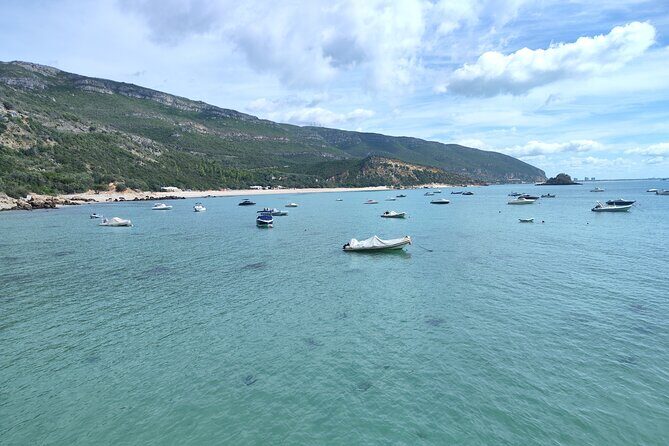
From the park, you’ll head to Portinho da Arrábida, described as a small sandy area beside the village of the same name. It sits at the foot of the mountain between other nearby beaches, and what you’ll notice first is the water: calm, clear, and cold, which makes it appealing for people who like diving.
This stop also gets noted for winning a distinction in 2010 as being considered one of the seven natural wonders of Portugal in its beach category. You’ll have about 30 minutes, so it’s not a full beach day, but it is a real break in the schedule.
Tip for using the time: keep your beach break simple—water check, quick walk, shade where you can. You’re going to climb and walk again later.
Sesimbra Castle: medieval walls and sea-first views
Next is Castelo de Sesimbra, described as the last Portuguese castle on the sea that keeps its medieval design. It’s recognized as a National Monument since June 16, 1910.
The walls are the star here, because they offer unique views over town and sea. Inside you’ll find two permanent exhibitions about the castle’s history, a heritage interpretation center, a church, and a disused cemetery. There’s also a museum circuit that lets you enjoy different points at your own pace.
You’ll have about 45 minutes. This is a good stop for both types of travelers:
- If you want history, you can use the exhibitions and interpretive areas.
- If you’re mostly in it for views, the wall-walk still delivers.
Fortaleza de Santiago and the Sesimbra Maritime Museum connection
Right after the castle, the tour shifts to another layer of coastal protection: Fortaleza de Santiago. It has coexisted with the Sesimbra community for 365 years, built in a time when dangers came from the sea and maritime borders needed defending.
What changed is as important as what didn’t. Over time, the fortress lost defensive importance, but it eventually got restored. After specialized restoration preserving as much of the initial structure as possible, it opened to the public in July 2014.
Today, the spaces you can learn about include areas like the magazine zone, the Governor’s house, dormitories—basically a guided understanding of how the fortification worked. In 2016, it became the home of the Sesimbra Maritime Museum, focused on sea history, fishing, and the fishing community from early times to the present.
You’ll have around 45 minutes. I like this stop because it ties together the day’s themes: defense, working life, and coastal culture.
Cabo Espichel Sanctuary: cliffside pilgrimage with practical awe
Then you climb into a different kind of monument at Cabo Espichel. The Cabo Espichel Sanctuary, also associated with the name Sanctuary of Nossa Senhora da Pedra Mua, sits in the Arrábida natural park west of Sesimbra, marking the southwestern tip of the peninsula. It looks toward Lagosteiros Bay.
This is where legend and architecture meet. The tour includes the idea of an apparition of Our Lady taking place there. The original sanctuary referenced by Order of Santiago sources is gone, but worship continued through the cult of Nossa Senhora do Cabo and a 14th-century Ermida da Memória.
In the 18th century, construction continued under D. Pedro II and D. José. Today the sanctuary brings together:
- a church built 1701–1707 with a full-height style,
- two wings of inns built 1745–1760,
- a water house dating from 1770 supplied by an aqueduct,
- and an opera house from the late 1800s.
You’ll likely spend about 1 hour here, which is the right length for a place like this. You’ll want a bit of time to just look out first, then take in the buildings second.
Finishing with Santuario Nacional de Cristo Rei: a 360º view of the Tagus
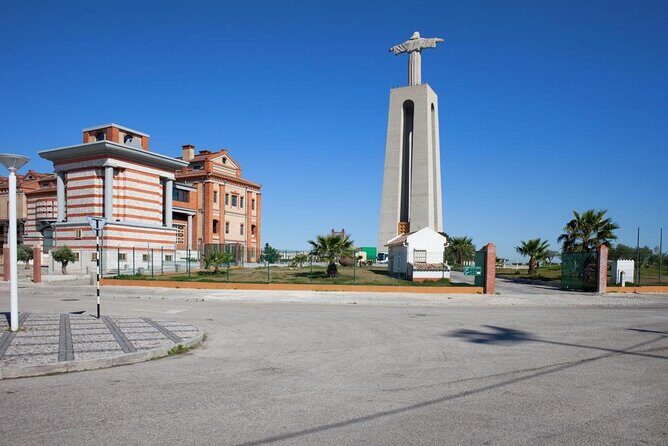
To close the loop, the tour includes Santuario Nacional de Cristo Rei in Almada. The idea began in 1940 when Portuguese bishops vowed to build a Christ the King monument over Lisbon if Portugal were spared from World War II. Construction moved forward through a national fundraising campaign, and the monument was inaugurated in 1959.
The statue and monument rise 113 meters above Almada and Lisbon, with a 360º panoramic view over both banks of the Tagus and surrounding areas. Inside the four pillars is the Chapel of Our Lady of Peace, with an image that’s described as a replica linked to Rome’s Saint Eugene.
This stop is listed at 45 minutes. I like the logic of ending here: by now you’ve seen fortifications on the coast, and now you see the bigger system—how the Tagus ties the region together.
Guide experience: why the right person can make this day feel personal
The tour is powered by its guide. One standout example from the Guru Guide team is Hugo, described as knowledgeable and kind, and someone who loves what he does. The day can go beyond facts because a good guide connects the dots between stops and keeps the pace comfortable.
You’ll also get the chance to communicate in advance via WhatsApp (using the contact provided) to confirm the meeting point and coordinate smoothly. That matters more than it sounds, especially when you’re moving between towns.
What to expect on the road: timing, group size, and how not to lose the day
This tour runs with a maximum of 16 travelers, so it won’t feel like a giant crowd. Still, it’s a “see a lot” route. That means:
- You’ll be doing short entries and viewpoint time rather than museum-style wandering.
- You’ll want comfortable shoes for stairways and walls at castle and fort stops.
- You’ll want a light plan for food since lunch isn’t included.
A practical way to enjoy days like this: decide what you’ll prioritize in each town. For example, castles and fort walls for views; markets and church interiors for culture. Then you stop trying to do everything.
Who should book this tour, and who should skip it
You’ll love this if you:
- want a single day that covers Palmela, Setúbal, and Sesimbra without transfer headaches,
- enjoy fort and church architecture, especially when it’s explained in clear, human terms,
- like sea views, even if you don’t have time for a full beach vacation.
You might want to skip or choose a slower plan if you:
- need long, unstructured free time at each stop,
- prefer minimal driving and minimal walking,
- don’t like tight itineraries.
If you’re traveling with friends or family, the private option can make the day feel even less rushed because you can adjust your pace with your guide.
Should you book this private-feeling coastal day?
I’d book it if your goal is to get a strong sense of Setúbal and Sesimbra in one organized day: castle viewpoints, market culture, church architecture, restored maritime fort spaces, and a cliffside sanctuary finish. The value is strong because transportation and guidance are included, and so many sites are effectively free to enter.
One last check before you commit: ask yourself if you’re okay with a full schedule that includes beaches and viewpoints, but not long stays. If that fits your travel style, this is a smart way to see Portugal’s coastline with context, not just postcards.
FAQ
How long is the tour?
The tour lasts about 7 to 8 hours (approx.), starting at 9:00 am and ending back at the meeting point.
What’s included in the price?
The price includes an air-conditioned vehicle, WiFi on board, private transportation, all fees and taxes, and guided visits to the listed monuments. Full insurance coverage is also included.
Is pickup offered?
Yes. For the private tour, pick-up and drop-off are included at hotels, local accommodations (Airbnbs), the cruise terminal, and the airport. For the shared tour, you’ll meet at Hard Rock Café – Lisbon or Casa da Baía – Setúbal.
Are admission tickets included?
For the attractions listed in the itinerary, admission is marked as free. The tour also includes all fees and taxes, so you’re not expected to pay separate attraction costs for these stops.
Is lunch included?
No. Lunch is not included, but the tour notes you’ll have a selection of incredible restaurants nearby that never disappoint.
Can I cancel for a full refund?
Yes. You can cancel up to 24 hours in advance of the experience for a full refund. If you cancel less than 24 hours before the start time, the amount paid is not refunded.