REVIEW · LISBON
Mouraria: The Multicultural District – Private Walking tour
Book on Viator →Operated by Lisbon Art & Soul · Bookable on Viator
Mouraria is where Lisbon’s stories overlap. This private walking tour threads together street art, old churches, and local lore in the neighborhood that was once written off as a slum. You’ll learn how Moorish history shaped the area, and why people think Fado music took root here.
What I like most is how the route keeps changing texture. One moment you’re on a hillside viewpoint like Miradouro Chao do Loureiro, the next you’re beside churches and squares that feel like the old city still has the keys. I also love that you’re not just looking at walls; you get someone like Luis who brings the area’s history to life, and the tour includes a professional photographer guide for great documentation.
One drawback to keep in mind: it’s a walking route through hilly, tight streets and lively squares. If you’re sensitive to uneven sidewalks or you hate walking more than you meant to, you’ll want comfortable shoes and a slower pace with your guide.
In This Review
- Key highlights worth your time
- Why Mouraria feels like Lisbon at its most mixed
- Miradouro Chao do Loureiro: the fast way to get your bearings
- Igreja Paroquial de Sao Cristovao e Sao Lourenco: churches with multiple eras
- Casa da Achada and Centro Mario Dionisio: where old buildings meet XXI-century street art
- Largo dos Trigueiros and Camila Watson’s street art projects
- Rua Marquês de Ponte de Lima: Mouraria’s first Modern street and an old remnant
- Igreja de Nossa Senhora do Socorro: the Mouraria hub and Moorish echoes
- Largo da Severa: Fado music’s cradle
- Praca Martim Moniz and Largo do Intendente Pina Manique: multicultural Lisbon in motion
- Private guide + professional photography: how to make 3 hours count
- Price and value: what $32.51 gets you in Mouraria
- Should you book this private Mouraria walking tour?
- FAQ
- How long is the Mouraria private walking tour?
- Where does the tour start and end?
- What language is the tour offered in?
- Is this tour private?
- What’s included in the price?
- What’s not included?
Key highlights worth your time

- Miradouro Chao do Loureiro viewpoints between Alfama and Mouraria for quick orientation
- Igreja Paroquial de Sao Cristovao e Sao Lourenco with a mix of Mannerist, Baroque, and Gothic details
- Casa da Achada and Mario Dionisio’s legacy, where medieval buildings meet XXI-century street art
- Street art stops tied to local projects, including work by Camila Watson
- Fado origins at Largo da Severa, framed in neighborhood history
- Martim Moniz to Intendente Pina Manique, showing how Lisbon renews older areas without erasing them
Why Mouraria feels like Lisbon at its most mixed
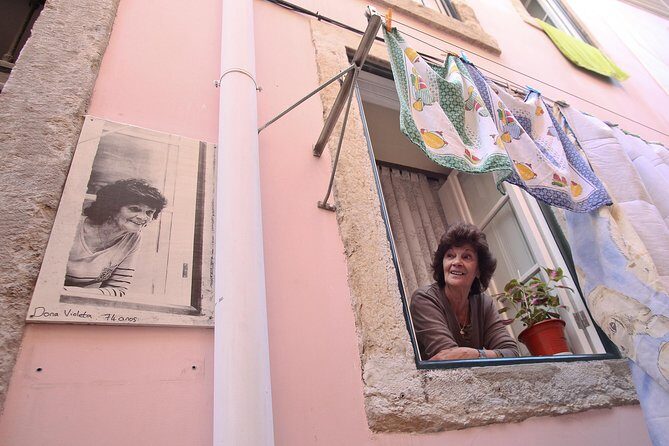
If you’ve only seen Lisbon from the big-name postcards, Mouraria can feel like a side door into the real city. This neighborhood has long been a meeting place of cultures, religions, and communities. And it didn’t always have an easy reputation. The area was once considered a slum, but it kept its identity through layers of change.
That’s what makes this tour work. It doesn’t treat Mouraria as a museum. It treats it like a living neighborhood. You’ll walk past places tied to Moorish presence, then shift into Christian landmarks and local traditions. And when you reach the Fado “cradle” at Largo da Severa, it lands better, because you already understand the neighborhood’s mix and struggles.
You’ll also see how Lisbon talks to itself. Old stone, new paint, and street corners used for everyday life all sit within a short walk. It’s a good reminder that “history” isn’t just plaques—it’s built into street layout, architecture, and even what people choose to paint.
You can also read our reviews of more walking tours in Lisbon


Miradouro Chao do Loureiro: the fast way to get your bearings
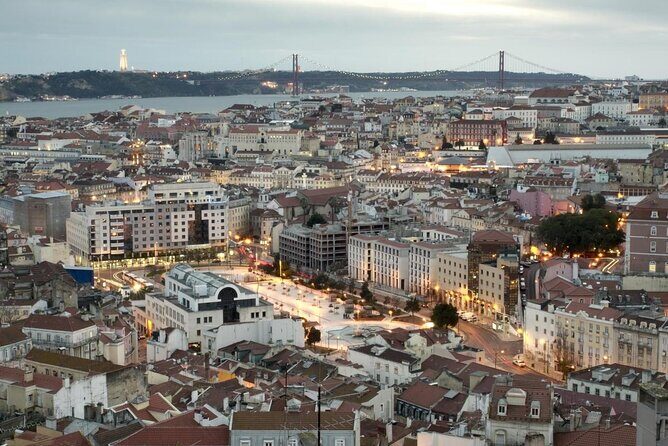
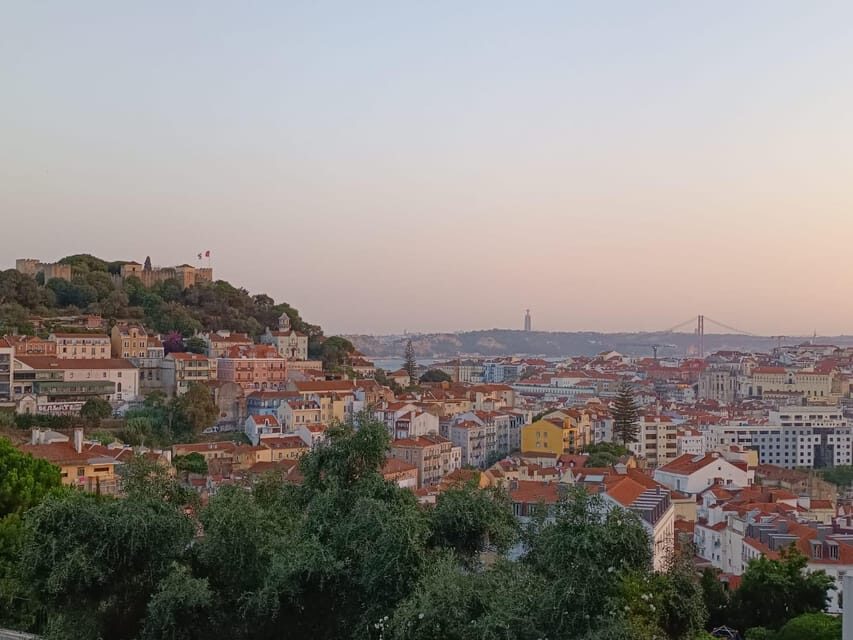
Your tour starts at Miradouro Chao do Loureiro, a viewpoint hanging over downtown. This is a smart first stop because it gives you a sense of where you are. You’re somewhere between Alfama and Mouraria, and from up here you can start connecting the dots of the walk ahead.
Even if you’re not a “view person,” this stop helps. Lisbon’s hills can make neighborhoods feel like separate worlds. From this miradouro, you can calm that confusion quickly.
What to do in those ~20 minutes: look for the street patterns below, notice where the neighborhood rises and falls, and mentally mark the squares and churches you’ll pass later. If you’re into photos, this is often one of your best angles because you’ll be photographing the whole area, not just a close-up wall.
Igreja Paroquial de Sao Cristovao e Sao Lourenco: churches with multiple eras
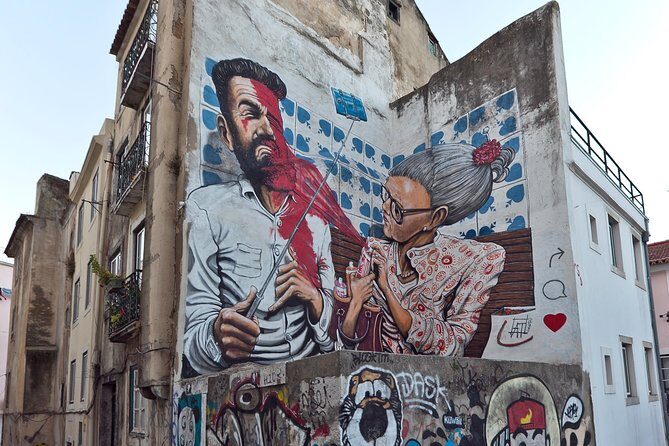
Next up is Igreja Paroquial de Sao Cristovao e Sao Lourenco, described as a Mannerist church plus Baroque palace touches, with a Gothic door. That mix matters because it shows how Lisbon layered style over time instead of replacing everything at once.
You’ll also be in one of Mouraria’s most popular squares. Squares are key here. In neighborhoods like this, squares are social engines. They’re where people linger, where stories get traded, and where the architecture becomes part of daily life.
Practical tip: keep your eyes up and to the sides, not just straight ahead. With a place like this, the “main face” isn’t the full story. The details are part of how the guide explains Mouraria’s evolution.
Casa da Achada and Centro Mario Dionisio: where old buildings meet XXI-century street art
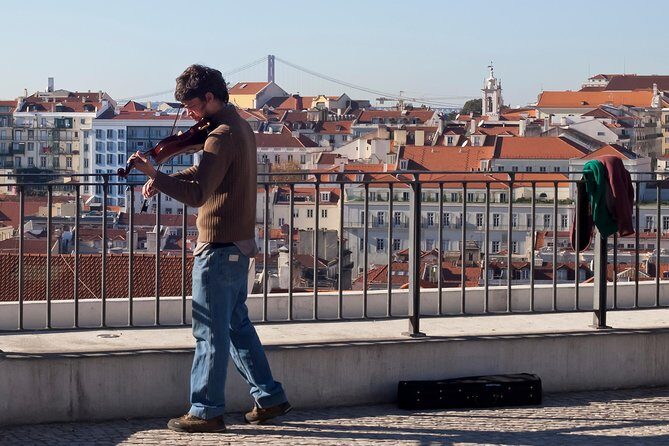
At Casa da Achada – Centro Mario Dionísio, you’re stepping into a social and cultural center rooted in the legacy of Mario Dionísio. The setting is also important: you’ll see Medieval buildings combined with XXI-century street art.
This is one of the most useful stops on the tour because it shows a modern truth. Art in Mouraria isn’t only decorative. It often plays a role in community memory and identity—especially when a cultural center is involved.
What I like about this part of the walk is the contrast. Medieval structure gives you the “bones” of the neighborhood, while the modern street art gives you its current voice. If you like street art with context (not just pretty walls), this stop makes it feel purposeful.
Time here is about ~15 minutes. That’s enough to pause, look, and let your guide explain why particular artworks and spaces matter.
Largo dos Trigueiros and Camila Watson’s street art projects
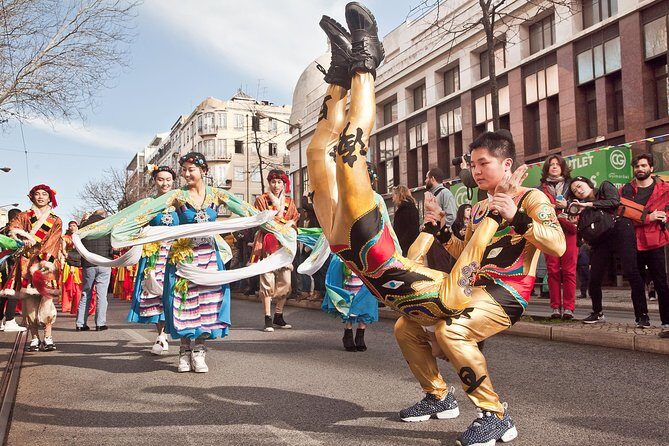
Then you’ll head to Largo dos Trigueiros, a smaller moment that can still hit hard if you pay attention. This stop focuses on the street art projects of Camila Watson.
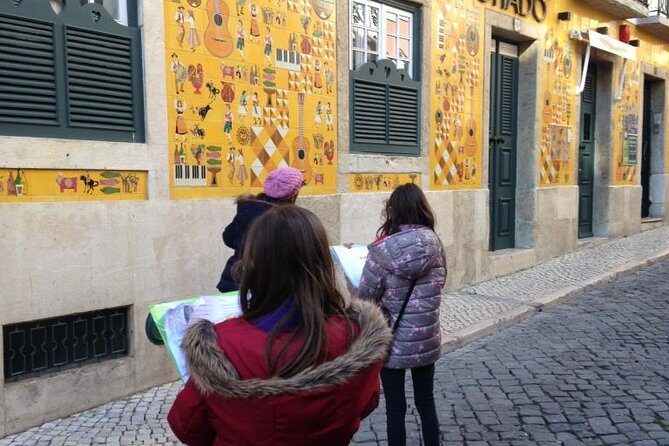
Street art can be easy to “skim” when you’re moving fast. The guide format helps here. You’re not simply seeing art; you’re learning how the artwork fits the neighborhood and what you should notice while you’re standing there.
A good way to approach this stop: don’t hunt for the biggest piece. Look for layers—smaller details, how art interacts with doorways and stairways, and how the work sits within the flow of the street. Those are the things you’ll remember later.
Expect about ~15 minutes.
You can also read our reviews of more private tours in Lisbon





Rua Marquês de Ponte de Lima: Mouraria’s first Modern street and an old remnant

At Rua Marquês de Ponte de Lima, you get a neat historical pivot. This street is described as Mouraria’s first “Modern” street, placed beside the oldest palaces, churches, and convents. And there’s a bonus detail: it’s home to the only genuine tower of the Old Remparts.
This is the kind of stop that rewards curiosity. You get a sense of how cities shift from medieval patterns toward newer planning—and how fragments of older defenses stay visible even as the neighborhood changes.
Don’t rush this section. Even if you only have ~15 minutes, you’ll benefit from standing still and letting the guide point out what makes the street “modern” compared to what’s around it.
Igreja de Nossa Senhora do Socorro: the Mouraria hub and Moorish echoes

The tour then moves to Igreja de Nossa Senhora do Socorro, called the hub of Mouraria since the time it was a Moorish suburb. The description also points to the Company of Christ legacy and an area nicknamed the little Punjab.
That combination is what makes this stop more than a photo break. You’re seeing how different communities and influences overlap in one location over long periods. Moorish-era presence may be centuries old, but the neighborhood’s center of gravity can remain—churches and squares often act like long-term anchors.
Time here is around ~15 minutes. Use it to observe the square energy around the church. Even if you don’t know the names of every architectural style, you can feel what kind of place it is: a meeting point, a reference point, a “default” location for local life.
Largo da Severa: Fado music’s cradle
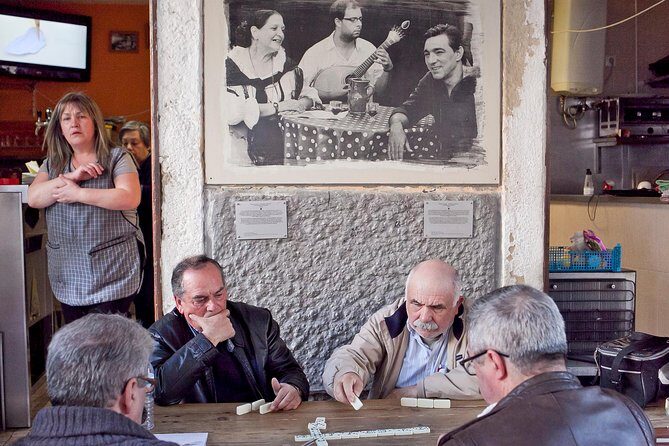
If you’re coming for the Fado angle, this is the moment. Largo da Severa is described as the cradle of Fado music, and your tour gives it proper attention with about ~20 minutes here.
What makes this stop valuable is the framing. Fado isn’t treated as a generic show or tourist script. It’s tied back to Mouraria’s social story—how people lived, where communities gathered, and why music and mood make sense in a place with that history.
How to get more out of it: take in the square, notice surrounding streets, and let the guide explain how the neighborhood’s identity connects to the music. Even if you don’t consider yourself a “music history” person, this kind of context changes how you’ll interpret Fado later.
Praca Martim Moniz and Largo do Intendente Pina Manique: multicultural Lisbon in motion
From here, you head toward Praca Martim Moniz, described as one of Lisbon’s most multicultural squares. This is where Mouraria’s present-day character shows up more clearly. Multicultural squares in Lisbon are usually busy, layered, and full of everyday energy.
Then you finish at Largo do Intendente Pina Manique, described as a case study in Lisbon urban renewal. The tour ends around this area, and it’s a great spot to keep exploring on your own afterward because you’re still close to public transport.
Time is ~20 minutes for Martim Moniz and ~15 minutes for Intendente Pina Manique. That pacing keeps the tour moving without feeling like a sprint.
Private guide + professional photography: how to make 3 hours count
This is a private tour, meaning it’s only your group. That matters because Mouraria has a lot happening—historical layers, street art, and small architectural details. With a private format, you can ask follow-up questions and slow down when something catches your eye.
Also, this tour includes a professional photographer guide (along with the local and professional guides). If you care about photos, this is a practical advantage. You’re less stuck trying to hold your phone at arm’s length and more focused on looking, listening, and getting better angles at each stop.
For the best experience, I’d do three simple things:
- Wear comfortable shoes. The streets can be uneven and steep in places.
- Bring a camera you can actually use one-handed if needed.
- Use the viewpoint and church stops for slower looking time, not just quick snapshots.
And yes, you can buy drinks if you want. Alcoholic drinks and snacks are not included, so plan for that if you tend to snack during tours.
Price and value: what $32.51 gets you in Mouraria
At $32.51 per person, this tour is priced like a serious neighborhood experience, not a “quick taste.” You’re paying for more than walking. You’re paying for a guide who can connect street art, architecture, and neighborhood history into one story—and you’re also getting photographer support.
Two other value signals:
- The stops are described as admission ticket free, so your cost stays predictable.
- It’s private, with a requirement of a minimum of 2 people per booking, so you’re not likely to end up squeezed into an overcrowded group vibe.
One extra note: this tour is often booked in advance (about 26 days on average). If you’re traveling in a busy season or have a specific day in mind, booking earlier helps you lock in your preferred time.
Should you book this private Mouraria walking tour?
I think you should book this if you want Lisbon that feels local and layered. This tour is especially good for you if you like street art with context, you’re curious about Moorish influences, and you want a grounded explanation of why Fado is tied to Mouraria.
You might skip it if you prefer only major monuments or if you hate walking through mixed, working-neighborhood streets. But if you’re comfortable with a “real streets” style of tour, this one is strong.
If your goal is to come away with more than pictures—actual understanding of why Mouraria looks and sounds the way it does—this private format does the job.
FAQ
How long is the Mouraria private walking tour?
It runs for about 3 hours.
Where does the tour start and end?
It starts at R. dos Fanqueiros 170, 1100-227 Lisboa and ends at Largo do Intendente Pina Manique, 1100-395 Lisboa. The end point is near the Intendente subway station.
What language is the tour offered in?
The tour is offered in English, and it may be operated by a multi-lingual guide.
Is this tour private?
Yes. It’s a private tour/activity, meaning only your group participates.
What’s included in the price?
The tour includes a local guide, a professional guide, and a professional photographer guide, plus the private tour experience.
What’s not included?
Alcoholic drinks, drinks, and snacks are not included.