You’ll walk Portugal’s coastline in a way cars can’t. This Sintra-Cascais Natural Park hike mixes trail time with real context, from the Sanctuary of Peninha area to the sandier stretches near Cresmina Dune. I love that you get both scenery and story, plus a guide who keeps the walk fun, practical, and easy to follow.
Two things stand out to me: the long, open views over the Atlantic and Cascais from the Peninha side, and the chance to spot wildlife and take photos in natural settings. One thing to consider: it’s not a walk on flat pavement—this is a moderate hike with uneven ground, so you’ll want decent walking shoes and steady energy for about 4 hours.
In This Review
- What makes it worth the time
- Key Points to Know Before You Go
- Why the Sintra-Cascais Natural Park is best on foot
- Meeting at Cascais Train Station and getting to the trails
- Santuario da Peninha: the 5 km hike where the coast opens up
- Snack break timing: fuel when you need it
- Cresmina Dune: the 1.5 km sand walk with photo-friendly pauses
- Why the dunes are a win for first-timers
- Guide Pedro, and why the stories land (especially cork)
- What the tour includes (and what you should budget for)
- Price and value: is $59.29 a fair deal?
- Pace, weather, and what to pack for the day
- Who should book this hike (and who might prefer another plan)
- Should you book this Sintra-Cascais Natural Park hike?
- FAQ
- Where does the tour start?
- What time does the hike begin?
- How long is the experience?
- How much hiking is involved?
- Is the hike suitable for beginners?
- Does the tour run in bad weather?
- How big is the group?
- What’s included in the price?
- What should I bring or expect for food and drinks?
- Is it possible to cancel for a refund?
What makes it worth the time
This is also a smart format for visitors. You meet at Cascais Train Station, then a driver/van handles getting you to the trail area and back. With a max group size of 8 people, the guide can actually pause for questions and still keep the day moving.
Key Points to Know Before You Go
- Small group size (up to 8): less crowd pressure and more room to ask questions.
- Two trail zones in one: a 5 km Peninha hike plus a 1.5 km Cresmina Dune section.
- Views that earn their reputation: coastline panoramas from the Peninha area.
- History tied to what you’re seeing: cork and local traditions come up in a natural way.
- Station pickup and drop-off: no figuring out buses or taxi timing.
- Snacks included, coffee time built in: you’ll have fuel during the hike.
Why the Sintra-Cascais Natural Park is best on foot
The Sintra-Cascais Natural Park is the kind of place where the best parts hide in the in-between spaces—along ridgelines, through scrub, and out toward sand and wind-shaped dunes. On a hike, you’re not just looking at the coast. You’re moving with it, so the views change every few minutes.
I like how this tour balances “big scenery” with “small details.” The walk isn’t just about hitting landmarks. You also get time for the things that make Portugal feel like Portugal: how the land is used, what locals notice, and why certain materials and traditions matter. In the reviews, the guide’s stories—especially about cork—show up again and again, because you can connect the talk directly to what you’re passing on the trails.
Meeting at Cascais Train Station and getting to the trails
You start at Largo da Estação in Cascais, then you’re picked up and driven to the hike areas. That sounds simple, but it’s a big deal in coastal towns where getting from station to trail entrances can waste time.
The tour is scheduled for a 9:00 am start and runs about 4 hours total, including transport and breaks. Keeping the group small helps here too: you’re not herded, and the handoff between vehicle and trail feels smooth.
Also, you can plan your day more easily. Since the activity ends back at the same meeting point, you’re not left guessing how to get back into town—especially handy if you’re pairing this with sightseeing in Cascais.
Santuario da Peninha: the 5 km hike where the coast opens up
The day is split into two hiking sections. The first is about 5 km in the Santuario da Peninha area. This is where the park starts to feel expansive. You’ll get sustained views over Cascais, the coastline, and the Atlantic.
This stretch is a good choice if you want value from the first hour. You don’t just walk to get somewhere. You walk while the scenery keeps widening. In the guide’s storytelling, this is also a strong moment to pay attention: you’ll get context that makes the surroundings feel less random—like you’re seeing a living landscape with history behind it.
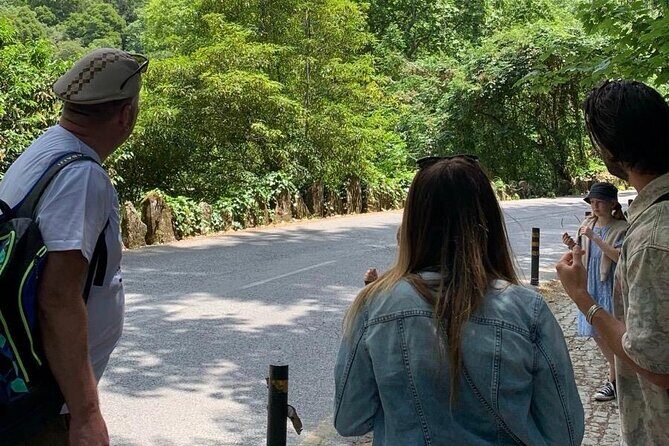
What to expect on the ground? The tour is aimed at people with moderate physical fitness, and the trail is outdoors in mixed park terrain. Wear shoes you trust on uneven paths, and plan for wind and sun (or mist) depending on the weather that day.
Snack break timing: fuel when you need it
The plan includes a small snack in the Peninha area. That’s a nice rhythm for a mid-morning hike. Instead of reaching the “hangry” stage, you get a quick reset and then you’re ready for the dunes section that follows.
Cresmina Dune: the 1.5 km sand walk with photo-friendly pauses
After Peninha, the hike continues with a 1.5 km section in the dunes of Cresmina. This is where the scenery changes character. The ground feels different, the light can look more dramatic, and the coastline view often feels closer—like the park is breathing right up against the sea.
This part is short on paper, but it can feel like a workout depending on conditions (wind and sand texture can add resistance). Even so, it works well as a second act because you’re already warmed up and ready to focus on the scenery.
You’ll have time for a coffee break in the dunes. The tour includes snacks, but drinks aren’t listed as included, so think of coffee time as a chance to take a breather and grab something if you want it.
Why the dunes are a win for first-timers
If you’ve never seen coastal dunes up close, this is the type of area that makes you understand the park’s geography. You’re not just looking at sand—you’re walking through a real coastal system shaped by wind and shoreline changes. It also tends to be a great spot for photos, and the reviews highlight the natural setting for wildlife sightings and picture moments.
Guide Pedro, and why the stories land (especially cork)
A big reason this hike gets such strong scores is the way the guide connects nature to place. In the feedback, the guide—Pedro—comes up with consistent praise for being able to answer questions and explain what you’re seeing without making it feel like a classroom.
One of the strongest themes is Portugal’s cork. If you’ve ever wondered why cork shows up everywhere in Portuguese everyday life, this is the kind of hike where that question gets answered naturally. Instead of reading a brochure, you hear the “why” while you’re walking through the environment where those traditions matter.
The other theme is practical nature spotting. Reviews mention plant and wildlife knowledge and the guide making it fun while still keeping it informative. You don’t need a biology degree to enjoy it. The payoff is that you’ll start noticing more on your own once you’re back outside town.
And for the record, a sense of humor helps on a long walk. When the pace stays friendly and the group stays small, the day feels less like a schedule and more like a shared outing.
What the tour includes (and what you should budget for)
Here’s what’s clearly covered: national park fees, local taxes, a driver/guide plus a local guide, and pickup/drop-off at Cascais Train Station. You also get snacks during the hike.
What’s not included: food and drinks unless specifically noted. Since there’s a coffee break planned near the dunes, you should assume you may pay for coffee there if you choose to get something.
The included items matter because they remove the “guesswork cost” of doing this independently. If you were trying to arrange transport plus trail access plus a guided route, the planning time alone can be a tax on your trip. For many visitors, paying for a guided format is simply more efficient than trying to DIY the same day.
Price and value: is $59.29 a fair deal?
The price is $59.29 per person. That’s not a bargain price, but it also isn’t a luxury tour. The value is mostly in three places:
- Logistics: round-trip transport from Cascais Train Station is included, and it reduces friction.
- Guiding quality: reviews rate the experience a perfect 5/5 with strong emphasis on the guide’s explanations and answers.
- Time efficiency: in about 4 hours, you get two different park environments—Peninha area views and Cresmina dunes—rather than just one.
If your goal is a high-reward nature outing without spending half your day figuring out how to get to trails, this pricing makes sense. If you already have a rental car and don’t care about guiding stories, you might find cheaper options—but you’d likely trade away the “small-group guide” value that seems to be the heart of what people loved.
Also, note that it’s commonly booked about 27 days in advance on average. If your dates are tight, plan early so you’re not hunting for last-minute spots.
Pace, weather, and what to pack for the day
This tour runs in all weather conditions, so you should treat it like a real outdoor hike. That means you’ll want layers and clothing that can handle a shift in wind, cloud, or coastal fog.
The itinerary is designed around moderate hiking: the Peninha side is about 5 km, then you move to the 1.5 km dunes section. The tour isn’t described as extreme, but it is outdoors and uneven in places. Your best bet is to dress for comfort first—then add weather protection.
Practical packing tips from the reality of this park:
- Good walking shoes (not flimsy sandals)
- A light rain layer or wind layer
- Sun protection if the day is clear
- A small daypack for your snack/water needs (even though snacks are included)
And since the guide provides breaks, you won’t be hiking nonstop. Still, bring the mindset that you’re walking most of the time, not just strolling.
Who should book this hike (and who might prefer another plan)
This hike is a great fit if you want a guided outdoor day that still feels relaxed. It’s especially good for:
- People who like scenic viewpoints and want them without stress
- Travelers who enjoy local context (nature + Portugal traditions)
- Anyone who prefers small groups over big buses
- Visitors staying in Cascais and looking for a nature break they can do in half a day
It may be less ideal if:
- You’re looking for an easy, flat stroll (this involves a moderate hike with uneven terrain)
- You dislike walking in wind or sand environments
- You need a fully barrier-free path (the tour doesn’t promise special accessibility details)
In short: if you can walk 5 km comfortably and handle uneven ground, you’ll likely enjoy this. If you want mostly sightseeing from roads, you may feel the effort isn’t worth it.
Should you book this Sintra-Cascais Natural Park hike?
If I had to summarize the decision in one line: book it if you want a small-group hike where the guide helps you see more than just the views. The strongest selling points are the coastal panoramas, the Peninha-to-Cresmina route, and the way the guide’s stories (like cork and local traditions) connect directly to the walk. Pedro’s explanations and the playful, question-friendly approach show up clearly in the overall experience quality.
I’d skip it only if you want an ultra-easy stroll or you’re not comfortable hiking uneven trails in varying weather. Otherwise, this is a solid way to spend a morning in the area—one that pays you back with scenery, nature moments, and a better sense of what makes the park feel like home to Portugal.
FAQ
Where does the tour start?
The meeting point is Largo da Estação, 2750-427 Cascais, Portugal.
What time does the hike begin?
The start time is 9:00 am.
How long is the experience?
It lasts about 4 hours (approx.).
How much hiking is involved?
The hike is split into two parts: a 5 km hike in the Santuario da Peninha area, followed by a 1.5 km hike in the dunes of Cresmina.
Is the hike suitable for beginners?
It’s best for people with moderate physical fitness.
Does the tour run in bad weather?
Yes. It operates in all weather conditions, so you should dress appropriately.
How big is the group?
The maximum is 8 travelers per booking.
What’s included in the price?
Included are local taxes, national park fees, snacks, the driver/guide and local guide, and pickup and drop-off at Cascais Train Station.
What should I bring or expect for food and drinks?
Food and drinks are not included unless specified. Snacks are included, and there is time for a coffee break in the dunes.
Is it possible to cancel for a refund?
Yes, free cancellation is available up to 24 hours in advance for a full refund.