REVIEW · EVORA
Marble Tour in Vila Viçosa
Book on GetYourGuide →Operated by Rota do Mármore AE · Bookable on GetYourGuide
Marble in Vila Viçosa can look unreal at first. This 2-hour Vila Viçosa marble tour turns Portugal’s “everywhere marble” reputation into something you can actually see up close: deep quarries, working tools, and the workshops where stone becomes design. I like how it starts with the big picture at the Marble Interpretive Center, then moves to hands-on sites where you’ll spot the machinery and hear the safety realities of extraction.
Two things I especially liked were the way the guide explains the geology in plain language and the fact that you’re not just looking at finished products. You’ll also get time to watch how marble blocks become polished pieces and then how artisans shape stone into art. The main drawback to plan for is logistics: you’ll need your own private vehicle to travel between stops, and the tour isn’t set up for wheelchair users or limited mobility.
In This Review
- Quick highlights
- Vila Viçosa Marble: Why This Isn’t Just a Quarry Photo Trip
- Where You Meet and How the 2-Hour Flow Feels
- Marble Interpretive Center: Geology and Community in Plain Terms
- Getting Your Bearings in Vila Viçosa Before the Quarries
- Inside the Quarries: Deep Pits, Big Machines, and Real Safety
- The Factory Stop: From Block to Polished Piece
- Artisan Workshops: Where Marble Becomes Art
- What You’ll Learn About Portuguese Marble (Beyond the Pretty Color)
- Price and Value: Is $29 Worth It?
- Practical Tips That Make the Tour Easier
- Who This Tour Suits Best
- Should You Book the Marble Tour in Vila Viçosa?
- FAQ
- How long is the Marble Tour in Vila Viçosa?
- How much does the tour cost?
- Where is the meeting point?
- Is transportation included?
- What’s included in the price?
- Are food and drinks included?
- What should I bring?
- Are sandals or flip-flops allowed?
- Is the tour suitable for wheelchair users or mobility impairments?
- What languages will the guide speak?
Quick highlights
- Marble Interpretive Center ties geology, geography, and history together before you hit the quarries
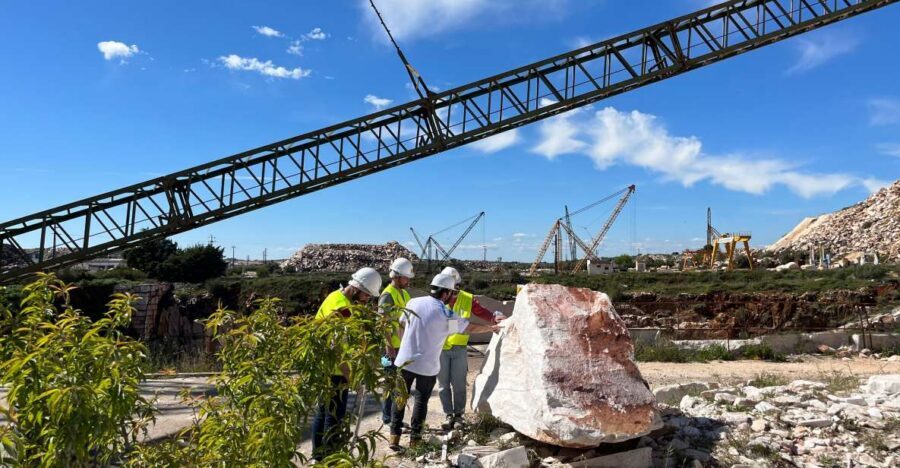
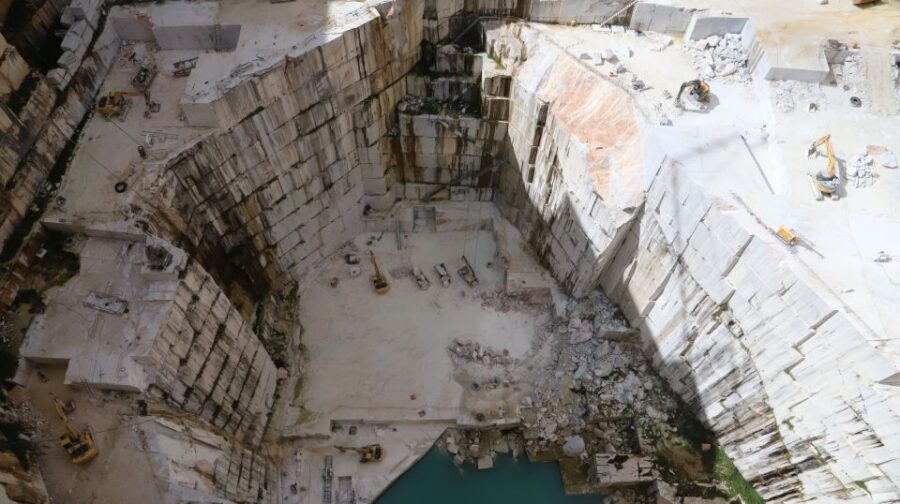
- Three quarry visits with a clear sense of scale, depth, and how the pits evolve
- Safety gear included so you can get close to working sites without feeling clueless
- Factory stage shows cutting, washing, and polishing before pieces reach customers
- Artisan workshops highlight the handmade step that machines can’t fully replace
Vila Viçosa Marble: Why This Isn’t Just a Quarry Photo Trip
Vila Viçosa has a reputation as the Portuguese Marble Capital. You feel that immediately once you’re in town, because marble shows up on buildings and details around you.
This tour is worth your time because it connects what you see above ground with what’s happening below it. You start with the science and community story, then you move into active extraction areas and finally into finishing and craft. It’s the full loop, not a quick stop at a single viewpoint.
Also, the guides bring energy. In my notes from what guides do best here, João (including João Bravenho) stands out for explaining the “why” behind what you’re looking at, and he’s comfortable switching between languages so more people can follow along.
You can also read our reviews of more tours and experiences in Evora.

Where You Meet and How the 2-Hour Flow Feels
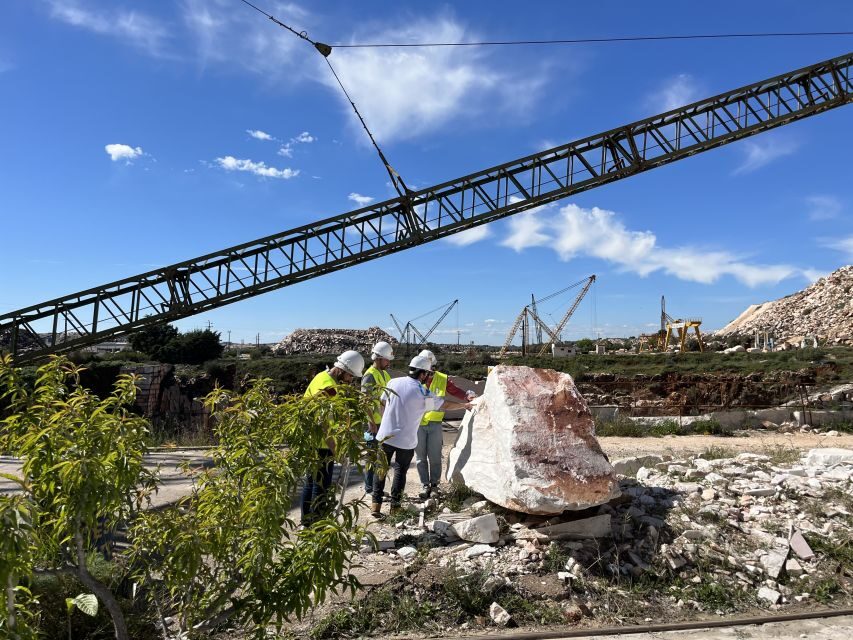
You meet at Rota do Mármore AE in Vila Viçosa, at a white building with three brick arches. Look for the Rota do Mármore AE logo and the CECHAP logo.
The experience moves steadily, with short guided moments and planned photo stops as you go. Expect a pace that’s active but not exhausting, since the total time is about two hours. Still, wear shoes that can handle uneven ground near industrial sites.
One practical heads-up: transportation isn’t included. You’ll need a private vehicle to get between sights. That matters because it keeps the tour flexible, but it also means you’ll want to be organized with parking or a taxi plan.
Marble Interpretive Center: Geology and Community in Plain Terms
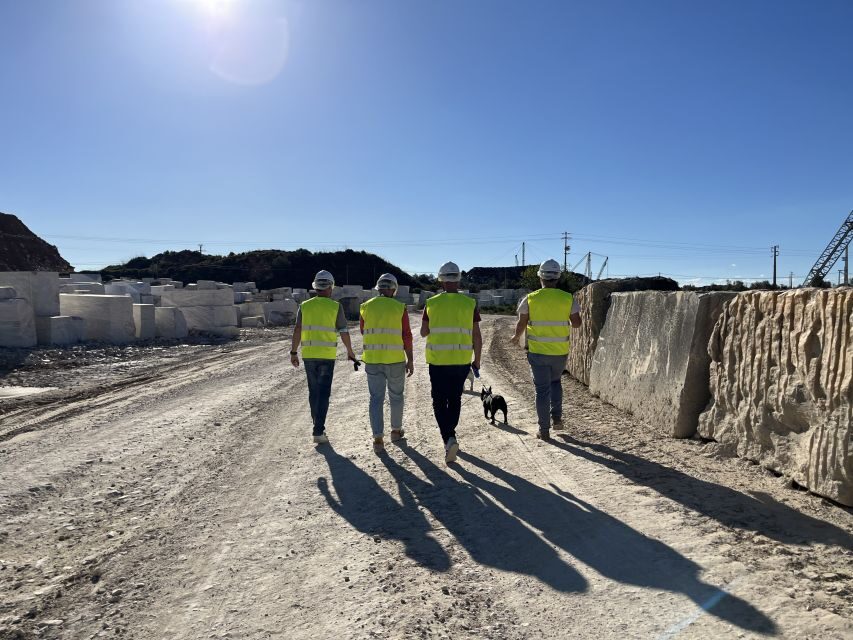
The tour begins with an introduction at the Marble Interpretive Center. This is where you get the foundation, not just a few facts read from a board.
You’ll hear how geology, geography, and local history shape what gets mined and why it matters. The big value here is understanding marble as a material and as an industry, not only as pretty stone. You’ll also learn how important the marble business is for the local community—not only economically, but socially.
This early stop also helps you “read” what comes next. When you later see machinery, quarry cuts, and processing steps, the center gives you a framework so it feels logical instead of random.
Getting Your Bearings in Vila Viçosa Before the Quarries
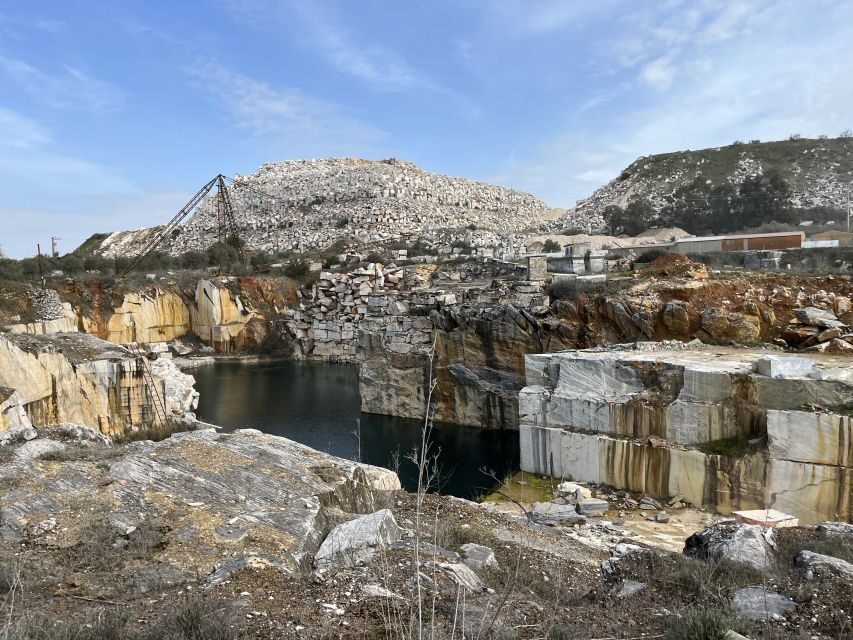
After the intro, there are short breaks for photos and sightseeing as you head toward the industrial sites. This isn’t filler time. It helps you understand the relationship between town, mines, and processing areas.
Vila Viçosa’s marble heritage is one reason the area looks the way it does today. The quarrying process has shaped the terrain over centuries, leaving visible signs of extraction in the area’s scale and form. Even if you’re not a geology person, the guide’s explanation makes the visual “click.”
If you’re the kind of traveler who likes to know what you’re looking at before you look harder, this pacing works well.
Inside the Quarries: Deep Pits, Big Machines, and Real Safety
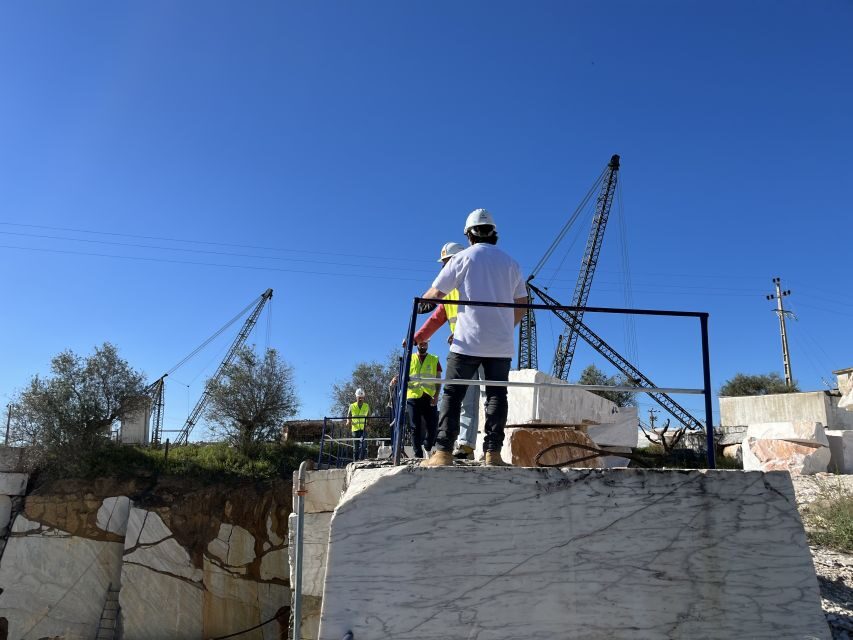
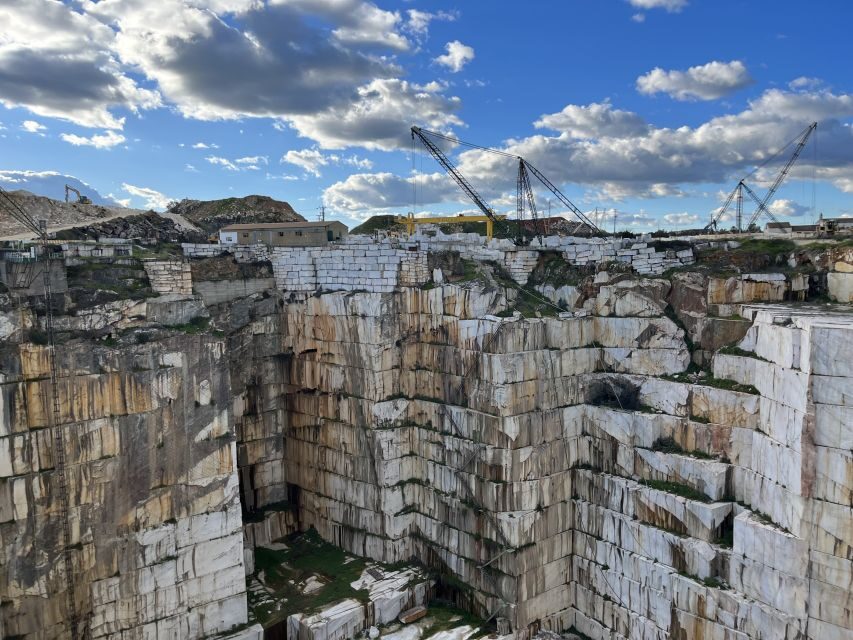
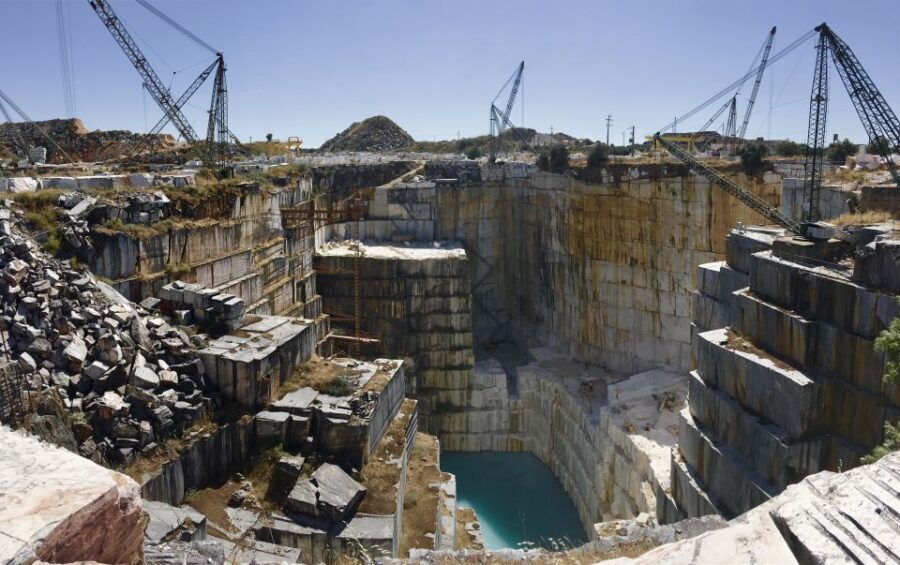
The quarry portion is the main event. You’ll visit several sites where marble extraction is taking place, and you’ll see the machinery used in the process. The scale can be jaw-dropping fast.
One of the most praised moments is how the guide builds the story quarry by quarry. You’re guided through multiple quarries, each bigger and deeper than the last. That stepped approach makes it easier to understand what expansion means operationally and visually.
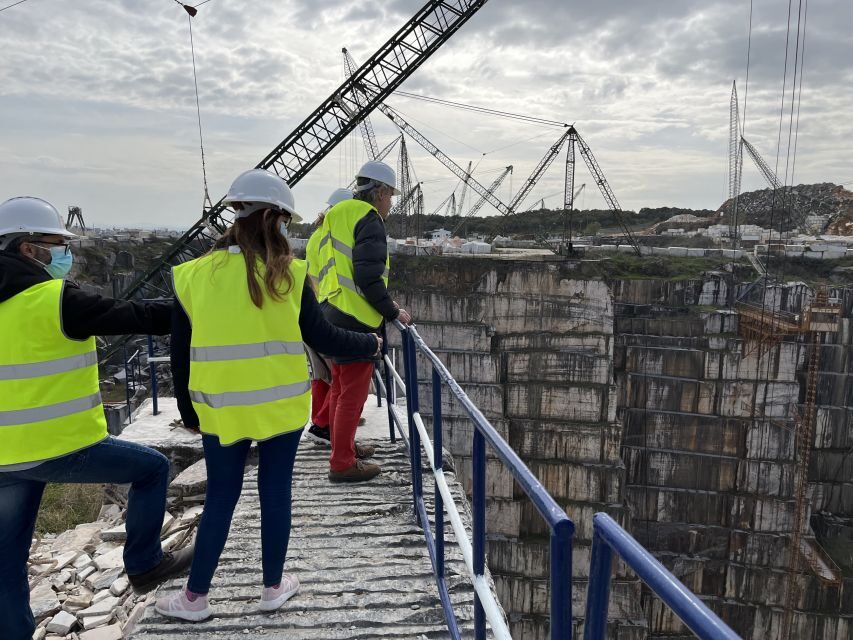
You’ll also learn the dangerous side of working with heavy stone and industrial equipment. You’re given safety equipment for this portion, and you should treat the safety instructions as the point, not as a formality. Industrial sites can change quickly, and marble work is serious work.
A tip from workshop dust concerns also applies in mindset: bring a mindset for industrial environments. If you’re sensitive to smells or dust, plan to handle it calmly and follow what your guide advises. Closed-toe shoes matter here, too.


The Factory Stop: From Block to Polished Piece
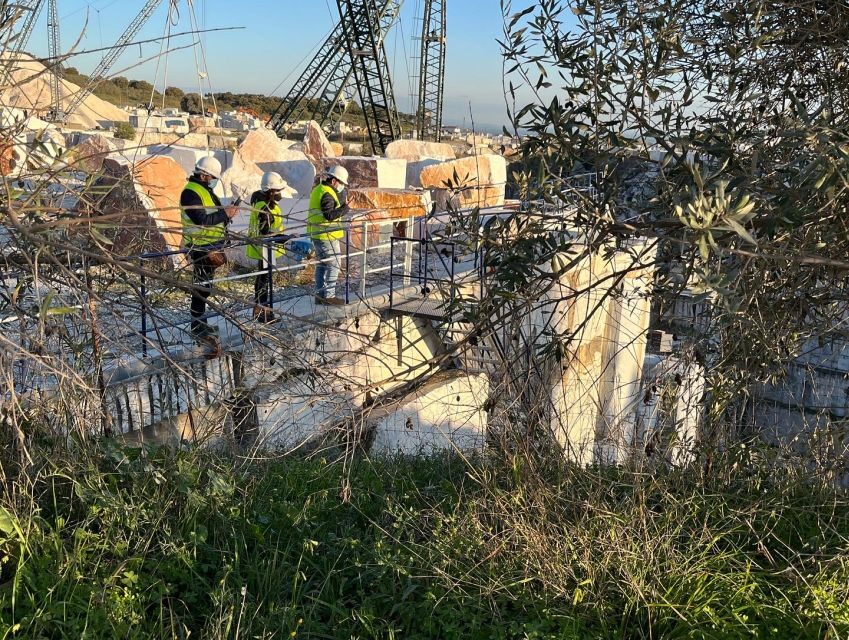
Not all marble becomes a finished product right after extraction. At the factory, you see how the stone is transformed into something that can be used in real projects.
This is where the tour becomes useful if you like craftsmanship and design. You’ll watch how blocks get cut down at stages, and then you’ll see polishing, washing, and finishing steps. Some guides also explain the route from raw material toward market-ready pieces, so you can connect the quarry to what you might see in kitchens, floors, and monuments.
One thing I appreciate in this part: it gives context for why “marble” can look so different across products. The color and the surface finish are part material science, part processing choice. When you understand that, you start seeing marble as a controlled product, not just a rock.
Artisan Workshops: Where Marble Becomes Art
After machinery and processing, the artisan workshops bring the human scale back into focus. Marble is a perfect material for art, but it still has to be shaped carefully.
You’ll watch handmade shaping in action. This is the stage where the finished look—smooth edges, refined surfaces, and detailed forms—makes sense. Machines can cut, transport, and polish. Artisans bring the last layer of intention.
The workshop part can be dusty, so I’d plan for it. In practice, that means having a mask option on hand if you’re dust-sensitive, and expecting the air to be less clean than outside. Also: protect your eyes and keep your phone ready for photos, because these are some of the most visually satisfying stops on the tour.
What You’ll Learn About Portuguese Marble (Beyond the Pretty Color)
Marble here isn’t a random local product. The tour explains how the Portuguese marble story stretches back through history and exports.
Marble colors from the Alentejo region have been appreciated since Roman times. Over centuries, marble from quarries around Vila Viçosa was exported far beyond Portugal. On this tour, you’re reminded that the stone matters because people used it for architecture and design, not just decoration.
You also learn why quarrying has ongoing timelines. You may hear about how many years of mining still remain, based on local planning and continued extraction. That adds an extra layer of perspective: this isn’t a “heritage site” only. It’s a working industry with a long runway.
Price and Value: Is $29 Worth It?
At $29 per person for a roughly 2-hour experience, this tour feels like strong value if you care about craft and industry. For that price, you get a professional local guide and safety equipment. You’re also getting multiple kinds of stops in one run: interpretive intro, quarry visits, a factory, and artisan workshops.
The value equation changes if you need to factor in transportation. Transportation isn’t included, and you’ll need a private vehicle during the tour to travel between sights. If you’re already driving or can easily arrange a taxi, the $29 price lands as a fair deal.
Also remember what’s not included: food and drinks and hotel pickup/drop-off. You’ll want water, and you may want to plan for a meal after, especially since the tour is busy and you’ll likely walk a bit.
Practical Tips That Make the Tour Easier
Start with footwear. You’re walking around industrial areas, so bring comfortable shoes and closed-toe shoes. Sandals and flip-flops aren’t allowed, which is a good policy because the ground and surfaces can be uneven.
Bring water. Even though the tour is short, you’ll be outside in places near active work, and you don’t want to run dry.
Dress for comfort. Comfortable clothes are best because you’ll be standing and walking in sun or dust depending on conditions.
If you’re filming or photographing, keep your phone protected. Industrial sites can mean dust, and workshops can be messy.
Finally, if you’re dust-sensitive, consider a mask for the workshop areas. Some guides recommend it because workshop dust is real. It’s a small thing that can make the experience much more pleasant.
Who This Tour Suits Best
This is a great fit if you like the “how it’s made” side of travel. If your interest runs from architecture to material science, this tour will feel like it connects the dots.
It’s especially good for:
- People who love quarries, machinery, and real-world industrial processes
- Travelers who want context for why marble is important to Vila Viçosa and the surrounding Alentejo area
- Anyone interested in craftsmanship, especially the handmade artisan work
It may not suit you if you have mobility limitations. The tour isn’t suitable for people with mobility impairments or wheelchair users, and it also doesn’t allow baby strollers.
Should You Book the Marble Tour in Vila Viçosa?
Book it if you want a hands-on understanding of Portuguese marble, not just scenic views. The combination of the interpretive center, active quarry access, factory finishing steps, and artisan workshops makes the $29 price feel efficient—if you’re ready for an industrial environment.
Don’t book it if you’re expecting a relaxed, fully accessible walking tour with easy logistics. You’ll need your own transportation between sights, and mobility access is limited.
If you’re in Évora District and want a story you can see with your own eyes, this is one of the better bets for a short, focused experience in Portugal’s marble capital.
FAQ
How long is the Marble Tour in Vila Viçosa?
The tour lasts about 2 hours.
How much does the tour cost?
The price is $29 per person.
Where is the meeting point?
Meet at the white building with three brick arches near Rota do Mármore AE, with the Rota do Mármore AE logo alongside the CECHAP logo.
Is transportation included?
No. Transportation is not included, and you will need private vehicle travel between the sights during the tour.
What’s included in the price?
You get a professional local guide and safety equipment.
Are food and drinks included?
No. Food and drinks are not included.
What should I bring?
Bring comfortable shoes, water, and comfortable clothes, plus closed-toe shoes for the sites.
Are sandals or flip-flops allowed?
No. Sandals or flip-flops are not allowed.
Is the tour suitable for wheelchair users or mobility impairments?
No. The tour is not suitable for people with mobility impairments or wheelchair users.
What languages will the guide speak?
The tour is offered in Portuguese, English, and Spanish.