REVIEW · EVORA
Évora Unforgetable Sidecar Tour
Book on GetYourGuide →Operated by Moma Side My Bike · Bookable on GetYourGuide
Sidecars make Évora feel fast.
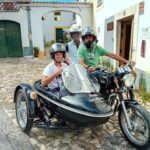
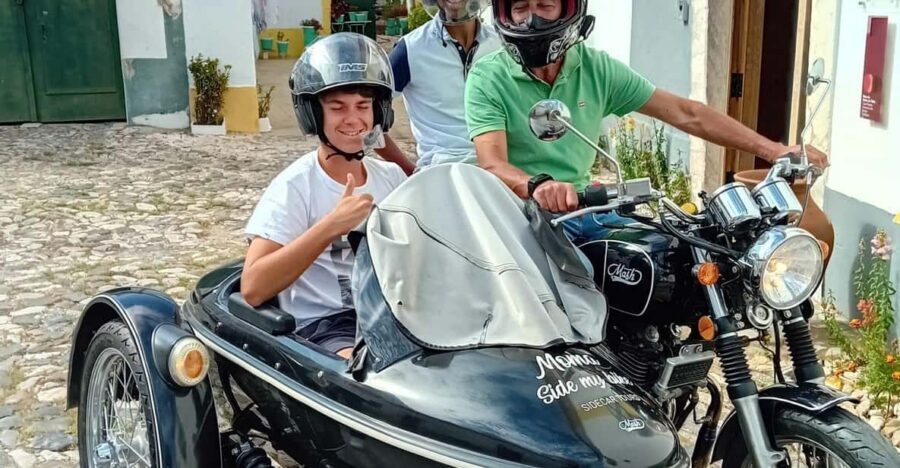
This tour strings together the city’s biggest eras—Celtic first settlers, Roman monuments, and the Visigothic/Muslim layers—using the ride itself to connect the dots. You get helmets with Bluetooth for the guide’s commentary, so you’re not stuck staring at a screen while you’re learning.
I particularly like two things: Paulo’s guiding and the way the route hits major sights without wasting time. You’ll also enjoy the low-effort thrill of being driven while you take in the breeze and the changing architecture.
One note before you book: it’s designed for seeing from the outside. You won’t go inside most buildings, aside from a free entrance offer for the Évora Museum for two people.
In This Review
- Key highlights worth planning around
- Évora by sidecar: why this route feels different
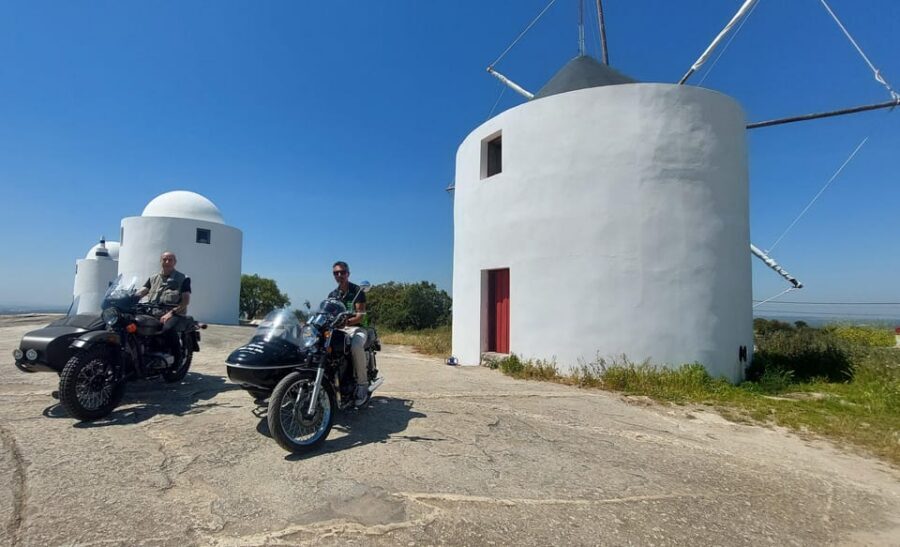
- Getting started near Alto de São Bento windmills
- Celtic viewpoint to Roman monuments: Ébora’s layered streets
- The old citadel: Visigothic and Muslim legacy around Yeborah
- Cathedral area and medieval squares: Romanesque-Gothic in practice
- Medieval walls and 17th-century fortifications: the city’s protective ring
- D. Manuel Palace and Manueline style: Golden Portugal era
- Giraldo Square, Portas de Moura, and the Silver Aqueduct
- A little walk, plus cork crafts and gastronomy tips
- Ending at a classic early-1900s café (with garden charm)
- Price and value: why $53 can make sense
- Who should book this sidecar tour?
- Practical tips for a smoother ride
- Should you book the Évora Unforgettable Sidecar Tour?
- FAQ
- Is this tour a private group?
- How long is the Évora sidecar tour?
- Where can I meet the guide at the start?
- Where will the tour drop off afterward?
- What languages are offered?
- Do I need to buy tickets in advance?
- What safety gear is provided?
- How does cancellation work?
- Is it mostly outside sightseeing?
Key highlights worth planning around
- Celtic to Roman to Muslim timeline: you’ll watch the city’s story change as the route climbs and circles.
- Upfront viewpoint + safety briefing: you get a short setup and photo moment near the windmills in Alto de São Bento.
- Major monuments on the loop: Roman Temple, Sertório Tower, cathedral area, medieval walls, and Manueline stops.
- You learn while moving: the sidecar format makes it easier to cover a lot in 3 hours without feeling rushed.
- Classic ending with local flavor: the ride finishes back at a café tied to the early 1900s, with a garden moment that can include peacocks.
Évora by sidecar: why this route feels different
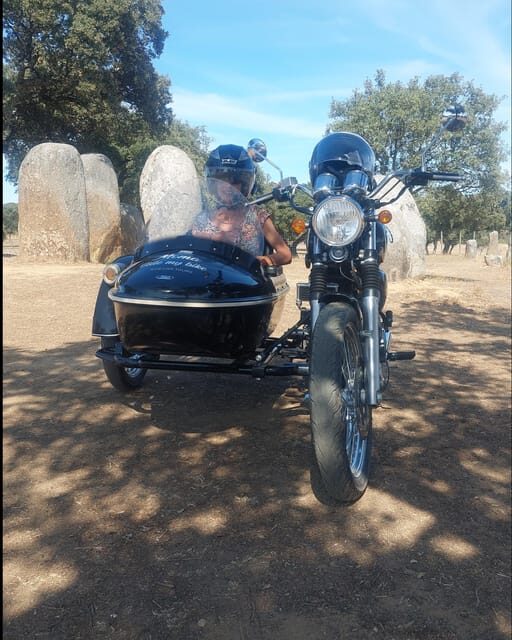
Évora is the kind of town where the stones already have a backstory. What makes this sidecar tour fun is that the “museum” moves with you. Instead of bouncing between disconnected stops, you ride between eras—Celtic roots up the hill, Roman structures down and around the old quarter, then the medieval and early-modern walls that hold everything in place.
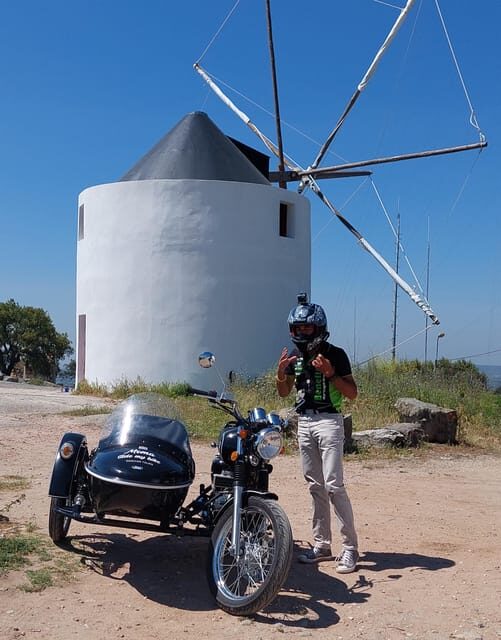
The big practical win is comfort and clarity. You’re in a sidecar setup with helmets connected by Bluetooth, so the English/Spanish/Portuguese guide stays audible while you look around. That matters because Évora’s best details are often small: inscriptions, building shapes, and the way styles shift street by street.
This is also a solid choice if you want a private experience but don’t want to spend half your day on logistics. Pickup is flexible in Évora, and the group stays small and focused—your ride time is your sightseeing time.
You can also read our reviews of more tours and experiences in Evora.

Getting started near Alto de São Bento windmills
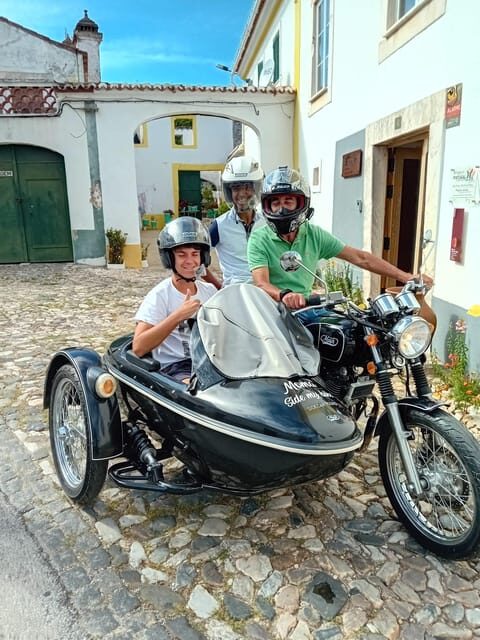
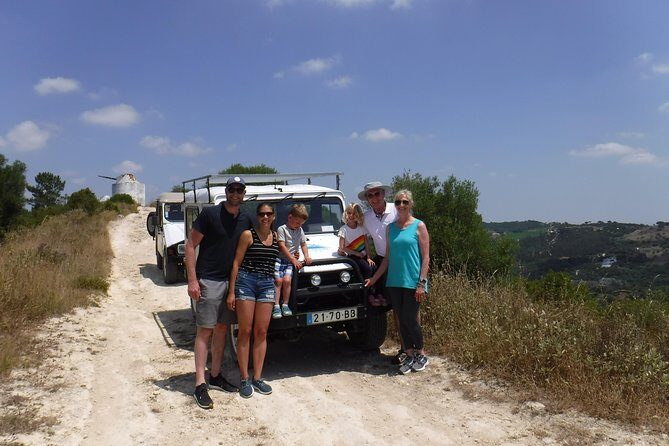
You kick off near the windmills at Alto de São Bento, close to the story of the first Celtic settlers, the Eborones. This first stretch works because it gives you a quick “big picture” angle. You’ll be higher up than most day-walkers, so the town’s layout starts making sense early.
There’s a short photo stop and safety briefing (about 15 minutes). It’s not just paperwork—it’s how the guide sets expectations for the ride so you can relax and enjoy the moving commentary. If you’re sensitive to noise, the helmet audio helps more than you might think.
If you’re traveling during warmer hours, this is also where the breeze can feel like a relief. You’ll still be outside the whole time, but the sidecar ride keeps things lighter than constant walking.
Celtic viewpoint to Roman monuments: Ébora’s layered streets
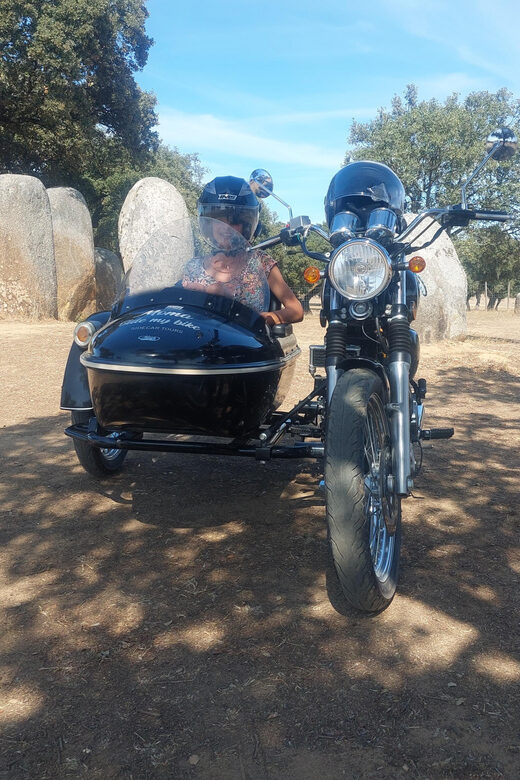
After the hill start, the route begins circling through the roman heritage. You’ll see how the city’s identity didn’t reset once the Romans arrived—it built on what was already here.
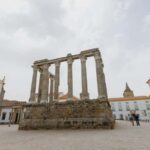
A few Roman-era landmarks the route emphasizes include Ébora Liberalitas Julia (the ancient battlement walls and surrounding fortification story), the Roman Temple, and Tower Sertório. Even if you don’t memorize dates, the visual language is clear: Roman architecture tends to feel ordered and sturdy, and the towers/walls create a sense of enclosure that still shapes how you move through the old town today.
The ride format helps you notice transitions. You get to compare street angles, building materials, and the relationship between towers and squares without constantly stopping to catch your breath. If you love architecture, this is where the tour pays off.
The old citadel: Visigothic and Muslim legacy around Yeborah
Next, the tour shifts to the older citadel layer and the Visigothic and Muslim legacy often described as Yeborah. This part matters because Évora’s medieval identity didn’t appear out of nowhere. You can see it in the way the city’s fortifications and street pattern feel ready-made for defense and community life.
From here, you move toward the period around 1166 A.C., tied to the first Foral (municipal charter) for Évora. That kind of detail doesn’t feel like trivia when it’s placed near real spaces. The guide’s job is to connect the year to what you’re looking at: why a charter exists, what it implies about governance, and how communities organize themselves inside walls.
If you’re the type who likes “why this city looks like this,” this is one of the stronger sections. You’re not just seeing buildings—you’re being coached into reading the city.
Cathedral area and medieval squares: Romanesque-Gothic in practice
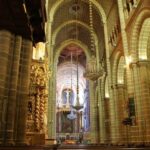
In the old quarter, you’ll get close to Évora’s 13th-century Cathedral area. The cathedral is described as having Romanesque-Gothic influence on the outside—so you’re not relying on interior features to understand the style shift. You’ll also spend time in the square area where multiple heritage stops cluster together.
This is where you can slow down. The route design gives you enough time to take photos and understand connections between nearby sites, including references to the Diana Temple, Lóios Monastery, and the Évora Museum. If you’re choosing this tour to cover the big sights without committing to long lines and extra tickets, this cluster approach is efficient.
Also, an important note: you won’t generally go inside monuments as part of the standard tour. If you do want a deeper museum moment, the operator includes a free entrance offer for two people to the Évora Museum, depending on the tour style you choose.


Medieval walls and 17th-century fortifications: the city’s protective ring
A highlight of the ride is how you trace Évora’s defensive DNA—medieval walls, towers, and 17th-century fortifications. From street level, walls can feel like background. From a sidecar moving along the right route, you start to see how the city “thinks” in layers: control points, vantage spots, and the way the walls create natural corridors.
You’ll be guided through not just where things are, but what they were for. That’s the difference between looking at stone and understanding stone. It also helps you appreciate why certain squares and streets open up where they do—because the fortification logic shaped the town’s growth.
If you’ve ever walked into a walled city and felt disoriented, this portion can reduce that feeling fast. You get a sense of direction without needing a map app.
D. Manuel Palace and Manueline style: Golden Portugal era
One of the most eye-catching stops is the D. Manuel Palace, tied to a 15th-century moment and the “Golden Portugal” period, expressed in Manueline style. This is a shift in tone from older fortification-era stonework to a more decorative, statement-making architecture.
Even if you only see the exterior details, you can tell this wasn’t built to be quiet. Manueline style is about identity, symbolism, and craft—so it’s worth paying attention to ornament and structure rather than treating it like a generic palace stop.
This is also a great moment to ask questions. The guide’s commentary tends to turn palace dates into real-world meaning—how prosperity and politics show up in buildings, and why that style became a recognizable Portuguese signature.
Giraldo Square, Portas de Moura, and the Silver Aqueduct
From there, you move through central Évora landmarks that most day-walkers use as anchors. You’ll see Giraldo Square, the Portas de Moura, and the Silver Aqueduct plus fountains connected to its water story. These spots matter because they show how everyday life, water systems, and public spaces fit together.
- Giraldo Square gives you the social center vibe—this is where you can pause, people-watch, and connect the architectural story to the living city today.
- Portas de Moura is a reminder that gates aren’t just old—they’re functional city interfaces, marking how people entered and exited.
- The Silver Aqueduct and fountains bring you back to the practical side of heritage: water management, civic planning, and public fountains as community life.
This section also gives you a nice rhythm change. After walls and palaces, seeing public infrastructure feels more grounded.
A little walk, plus cork crafts and gastronomy tips
The ride doesn’t end at a gate or a monument. You finish with a short walk in the old city to help you understand how older and newer styles sit next to each other. This part is underrated. It’s where the tour stops feeling like a checklist and starts feeling like a place.
You’ll also pass through areas where you can see shop products made from cork and other materials tied to local craft. If you like bringing home items that actually connect to regional life, this is where it becomes practical—rather than random souvenir shopping.
Finally, the guide shares information about gastronomy and wines. You’re not left with vague suggestions; you get enough context to decide what to try later without guessing.
Ending at a classic early-1900s café (with garden charm)
You wrap up back at a café from the beginning of the 20th century, which makes a neat bookend to the whole ride through earlier eras. A café stop is useful because it gives you time to decompress and compare what you saw on the road.
One small detail that sticks with people: the end garden moment can include peacocks. Even if that part isn’t the main reason you book, it’s the kind of extra charm that makes the conclusion feel memorable rather than routine.
Price and value: why $53 can make sense
At $53 per group up to 1, the value depends on how you like to travel. If you’re going solo or as a small party, this is a budget-friendly way to get a private guided route without spending extra time piecing together transport and tickets.
Here’s what you’re getting for that price based on the tour structure:
- A 3-hour loop covering multiple key heritage points
- A live guide in English, Spanish, and Portuguese
- Pickup included anywhere in Évora (and drop-off flexibility in hotels/outskirts)
- Skip-the-ticket-line benefits
- A free Évora Museum entrance offer for two people (when you choose the general sidecar tour format)
If you were to pay separately for a guided walking route, transport, and museum entry, the combined cost usually adds up fast. This tour is priced like a compact package: you trade long museum time for a high-return overview.
Who should book this sidecar tour?
This is a strong fit if you want:
- A private guided ride without the stress of navigating on your own
- To see a lot of Évora in about 3 hours
- A hands-free way to learn while enjoying the outdoors
You might want to skip it if:
- You specifically want to go inside multiple monuments (the plan focuses on outside viewing)
- You’re hoping to drive the motorcycle yourself (the sidecar is the experience here)
Practical tips for a smoother ride
I’d plan around a few simple realities of sidecar sightseeing:
- Expect wind and movement. Even with Bluetooth audio, you’ll be outside the whole time.
- Wear comfortable shoes for the short walk at the end.
- Bring a camera, but also give your eyes a moment. Some of the best details are the ones you notice when you’re not rushing a photo.
And if you have questions about architecture, ask right away. The guide can connect the style choices to what you’re seeing as you move.
Should you book the Évora Unforgettable Sidecar Tour?
If you want a fast, guided way to understand why Évora looks the way it does—Celtic beginnings, Roman structure, and medieval fortifications—this is a great match. The sidecar format makes the route feel like one continuous story, not a set of unrelated stops.
Book it if you’re excited by the idea of seeing the city’s layers from the road, with a guide who stays readable and organized through the whole ride. Skip it if you need lots of inside-the-building time, because this tour leans toward outside viewing and a final, relaxed café finish rather than museum-heavy hours.
FAQ
Is this tour a private group?
Yes. It’s listed as a private group, with the sidecar tour run by the provider and a live guide.
How long is the Évora sidecar tour?
The duration is 3 hours, covering an around-town route.
Where can I meet the guide at the start?
You have two listed pickup options: Capela dos Ossos and Jardim Público. Pickup is also included, and you can arrange pickup anywhere in Évora.
Where will the tour drop off afterward?
There are two drop-off options listed: Jardim Público and Capela dos Ossos. The operator also notes that drop-off can be done at your hotel in Évora or in the outskirts.
What languages are offered?
The live guide is available in English, Spanish, and Portuguese.
Do I need to buy tickets in advance?
The tour includes a benefit to skip the ticket line. For the Évora Museum, there is a free entrance offer for the two travellers in the general sidecar tour option.
What safety gear is provided?
You’ll travel in a motorcycle sidecar with helmets connected by Bluetooth for the guide’s audio.
How does cancellation work?
You can cancel up to 24 hours in advance for a full refund.
Is it mostly outside sightseeing?
Yes. The standard approach is to see the important monuments, but not go inside most buildings. The Évora Museum free entrance offer is the main interior exception noted.