REVIEW · LISBON
Lisbon Walking Tour – The Perfect Introduction to the City
Book on Viator →Operated by Hi Lisbon Walking Tours · Bookable on Viator
Lisbon clicks into place fast. This 2.5-hour walk is a friendly, English introduction to downtown Lisbon, with your guide easy to spot under an orange umbrella at Praça do Comércio.
I like how it stitches famous sights to the big stories—Santa Justa Elevator, Carmo Church ruins, and the Carnation Revolution site at Largo do Carmo all connect back to the Great Lisbon Earthquake of 1755. I also love the practical payoff: you get real city tips along the way, and you can pay your guide what you see fit at the end.
One consideration: some people say certain guides talk very quickly, so if you want slower pacing, come prepared to ask questions and slow the group down a bit.
In This Review
- Key highlights you’ll notice right away
- Starting at Praça do Comércio: your Lisbon compass, not just a kickoff
- Praça do Comércio to Municipal Square: learning Lisbon through power and planning
- Santa Justa Elevator and Praça Dom Pedro IV: Lisbon’s drama in steel and stone
- The 1755 earthquake story shows up in real places
- Igreja de S Domingos and Igreja de Sao Roque: churches you can read like documents
- A memorial for 1506: why this stop makes the city feel honest
- Avenida da Liberdade to Casa do Alentejo: contrast time in one walk
- Largo do Carmo and the Carnation Revolution: modern history at street level
- Estação do Rossio to Igreja de Sao Roque: old transit energy, then a quiet moment
- Praca Luis de Camões to Bairro Alto: end near a landmark, then choose your vibe
- Price and value: how $1.25 plus a tip can still feel like a deal
- How to get the most from this walk
- Who this Lisbon intro walk is for (and who may want a different plan)
- Should you book this Lisbon Walking Tour?
- FAQ
- How long is the Lisbon walking tour?
- Where does the tour start and end?
- What sights will I see during the walk?
- What’s the price, and is it tip-based?
- Is the tour offered in English?
- Do I need a mobile ticket?
- How big is the group?
- What if I need to cancel?
Key highlights you’ll notice right away
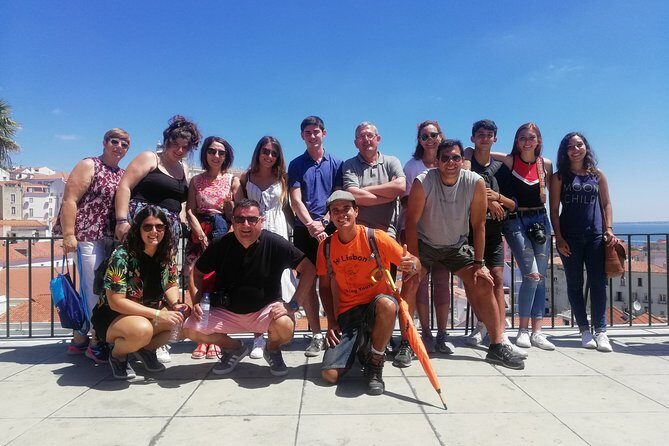
- Easy meeting point at Praça do Comércio, look for the orange umbrella between the big arch and the statue.
- Downtown focus on Baixa and Chiado, with landmarks you’ll recognize immediately.
- 1755 earthquake storytelling tied directly to churches and ruins, not just facts.
- Carnation Revolution stop at Largo do Carmo, so modern Portugal has a street-level moment too.
- A tip-based end where the tour fee is only the start of the value.
- Smaller group size (up to 20) keeps it walkable and question-friendly.
Starting at Praça do Comércio: your Lisbon compass, not just a kickoff
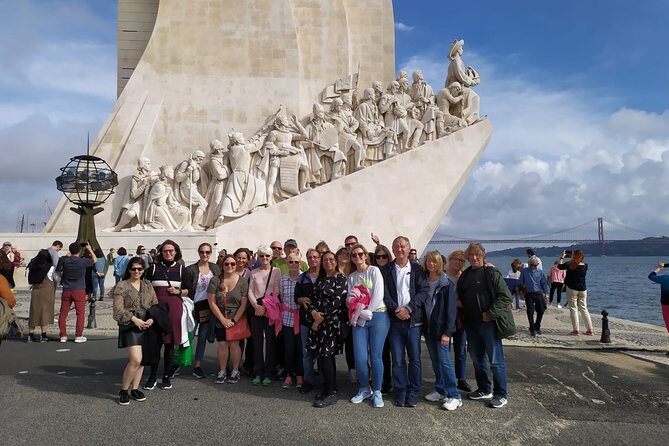
Your tour begins at Praça do Comércio, Lisbon’s grand front door by the river. The instruction is simple: find the guide with the orange umbrella at the square, between the big arch and the statue in the middle.
This matters more than you think. Starting in this kind of iconic, open space helps your brain map what’s coming next, especially in a city where the hills and streets can otherwise feel like a maze.
The group is capped at 20, which is a big deal for a walking tour. It’s small enough to hear explanations at normal street noise, and big enough that you won’t feel like you’re walking with a private tutor who forgets to stop for photos.
You can also read our reviews of more walking tours in Lisbon


Praça do Comércio to Municipal Square: learning Lisbon through power and planning
Right from the start you’ll pass the Statue of D. Jose I, then continue through the core civic spaces—like Municipal Square, where Lisbon’s city hall sits. These stops give you the “who mattered” version of the city, before you get lost in architecture and street scenes.
You’ll also pick up the rhythm of Lisbon’s downtown: broad squares, then narrow streets that funnel you toward bigger junctions. That pattern will help you later when you’re walking on your own and suddenly recognizing where you are without needing a constant map check.
Santa Justa Elevator and Praça Dom Pedro IV: Lisbon’s drama in steel and stone
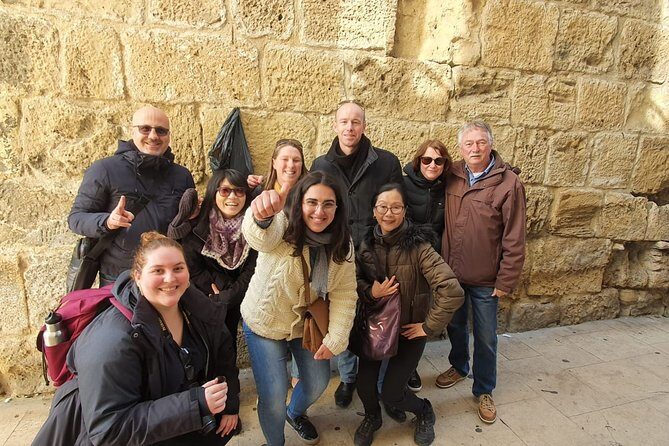
One of the tour’s headline stops is the Elevador de Santa Justa area. Even if you never ride it, it’s one of those landmarks that instantly tells you Lisbon loves a grand visual effect.
From there, the route swings toward Praça Dom Pedro IV, described as the oldest square in Lisbon. It’s a good “pause point” because you get to stop thinking like a tourist for a minute and start reading the city like a local: plazas are social rooms, not just photo backdrops.
Then comes Rua Augusta, Lisbon’s most important street—an easy one to love because it feels like the city’s main corridor. People tend to remember Rua Augusta because it’s where Lisbon’s downtown energy becomes obvious, even if you’re there on a quiet morning.
If you’re worried about pacing, this section is also where you’ll feel how the group moves. Some guides keep it brisk; that can be great for momentum, but if you prefer slower explanations, don’t be shy about asking for repeats.
The 1755 earthquake story shows up in real places
Lisbon has a “before and after” moment, and this tour brings it out with specific stops. A big theme is the Great Lisbon Earthquake of 1755, and the way the city rebuilt itself, physically and politically.
That theme comes through strongest in the churches. You’ll visit Igreja de S Domingos and then later Igreja de Sao Roque, with one of them tied to survival from the quake. You’ll also see the Carmo area approach—Largo do Carmo is where the Carnation Revolution connection lands, but it’s also close to the earthquake-era scars you’ll be thinking about.
Here’s why this matters for you: if you only learn the earthquake as a date, it stays abstract. When you connect it to what’s still standing, what looks broken, and what was reconstructed, the history becomes something you can point to and remember.
Igreja de S Domingos and Igreja de Sao Roque: churches you can read like documents
Igreja de S Domingos is one of the most impressive churches in Europe on this route. You’ll get explanations that connect architectural choices to Lisbon’s survival and rebuild story, not just generic art history.
Then Igreja de Sao Roque lands with a powerful angle: it’s one of the churches in Lisbon that survived the 1755 earthquake. That single fact changes how you look at the building. Instead of thinking, That’s pretty, you’ll think, This endured, and Lisbon kept going.
If you care about detail, this is where the best guides shine. In particular, guides such as Tiago and Natalia have been praised for making the city’s Portuguese history feel alive through storytelling, not a memorization exercise.
You can also read our reviews of more city tours in Lisbon






A memorial for 1506: why this stop makes the city feel honest
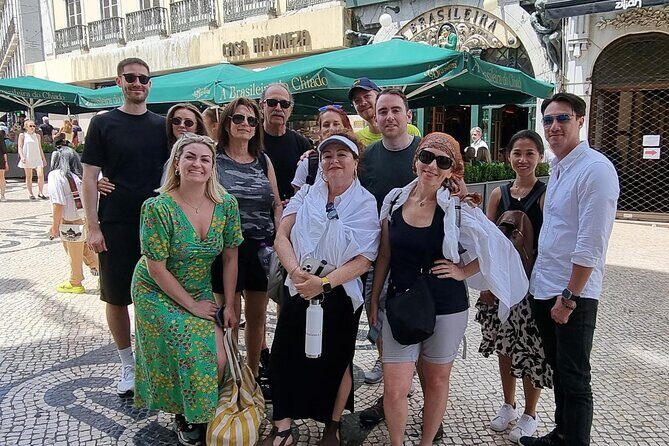
Between the big-name sights, you’ll also reach the Memorial as Vitimas do Massacre Judaico de 1506. It’s a reminder that Lisbon’s past includes cruelty and loss, not only art, royalty, and rebuilding after disaster.
I like this inclusion because it keeps the tour grounded. It prevents Lisbon’s story from turning into a nonstop parade of charming facades. You get a clearer sense that the city’s identity was shaped by hardship, migration, and community suffering as well.
Avenida da Liberdade to Casa do Alentejo: contrast time in one walk
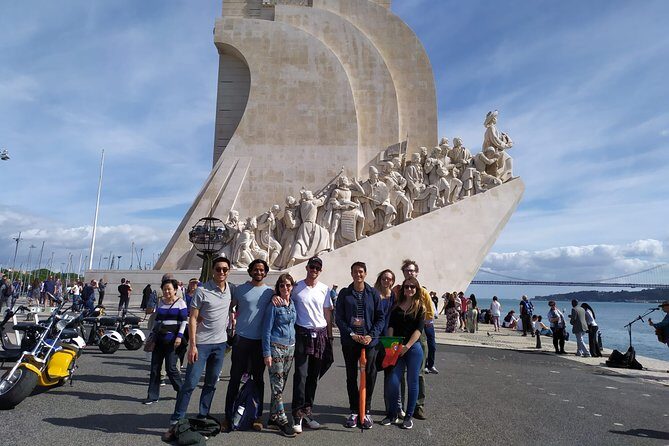
Next you’ll hit Avenida da Liberdade, Lisbon’s most fancy avenue. It’s a nice contrast after the older downtown bones, and it helps you understand Lisbon’s range—from historic squares to more modern grandeur.
You’ll also pass Casa do Alentejo, described as a charming house in Lisbon. This is the kind of stop that works even if you don’t know what to look for yet, because it gives you texture: Lisbon isn’t only monuments. It’s also homes, meeting places, and social buildings.
This is also a moment where you’ll likely pick up practical tips about where to eat and where to linger. Some guides are especially strong at sending you to inexpensive options and viewpoints you might miss on your own.
Largo do Carmo and the Carnation Revolution: modern history at street level

Largo do Carmo is one of the most memorable stops because it’s where the Carnation Revolution took place. This is Lisbon’s modern political turning point, woven into a place you can stand in right now.
I like that the tour doesn’t treat this as a lecture slide. The stop is physical, and that makes the story feel closer to you than a chapter in a book.
Even if you only take one emotional takeaway from Lisbon, make it this: Lisbon has layers. Revolution is part of the same story as rebuilding after earthquake, just with newer stakes.
Estação do Rossio to Igreja de Sao Roque: old transit energy, then a quiet moment
You’ll reach Estacao do Rossio, the old central station. This helps you understand why people move through Lisbon the way they do—stations are gravity points, and they shape daily life.
Then the route brings you back toward a church moment at Igreja de Sao Roque. It’s a good pairing: movement and public routes on one side, then a quieter place for reflection on the other.
This section tends to work well for different travel styles. If you’re a history fan, you get stories to track. If you’re more casual, you still get a sense of where to return later, especially because Rossio connects to lots of easy exploring.
Praca Luis de Camões to Bairro Alto: end near a landmark, then choose your vibe
The tour ends around Praça Luís de Camões, and from there you’re positioned to keep exploring. This is a smart ending because it doesn’t trap you back at the starting square. You’re closer to areas where you can branch out in the direction you like.
One of the final stops is Bairro Alto, Lisbon’s famous nightlife area. You’ll get the feel of the neighborhood without needing to plan a big night out on day one. It’s a helpful orientation point because Lisbon’s nightlife clusters by district, and Bairro Alto is one of the most visible.
Price and value: how $1.25 plus a tip can still feel like a deal
The listed price is $1.25 per person, and the tour is structured as pay-what-you-see-fit at the end. That combination can sound confusing until you understand how walking tours usually work: the “entry” gives you the guide and the route, and the tip is the final value check.
So what’s the real value for you? You’re buying three things:
- A guided map of downtown Lisbon that prevents you from wandering randomly for hours
- A story thread (earthquake + rebuilding + revolution) that helps you remember what you see
- Practical tips for what to do next, including where to eat and where to look for viewpoints
The reviews strongly back up the guide impact. People describe guides like Tiago as funny and passionate with excellent storytelling skills, and Natalia for charming city tips and clear explanations that make the city click.
Still, here’s the honest caution: you don’t always control how fast a guide talks. If you’re sensitive to that, treat the $1.25 as the ticket price, and plan your own pace by asking questions when you need clarity.
How to get the most from this walk
Wear comfortable shoes. This is a walking tour through downtown streets and squares, and at least one person noted it’s a fair amount of walking (still manageable). Lisbon’s stones can be slippery when wet, so if rain hits, plan for it.
Also, show up ready to listen. If you’re the kind of person who enjoys asking questions, this tour style rewards you. You’ll be moving often, so if something grabs your attention—like the 1755 earthquake details or the Carmo Revolution context—ask right away instead of waiting for the end.
Finally, keep an eye on pacing. Some guides are described as fast talkers. If your tour guide is speaking quickly, it’s okay to ask them to slow down. A good guide will adjust, especially with a small group.
Who this Lisbon intro walk is for (and who may want a different plan)
This tour is ideal if you’re in Lisbon for the first time and want your bearings fast. It’s also great if you like history, but you prefer it tied to buildings you can stand beside.
If you already know Lisbon well and want deep dives into museums, this might feel too focused on orientation. It’s a 2.5-hour introduction, not a day-long specialty course.
If you want slow, gentle storytelling with lots of time at each spot, you might feel rushed with a fast-speaking guide. In that case, come early, be vocal, and ask for key points to be repeated.
Should you book this Lisbon Walking Tour?
Yes, I’d book it if you want an efficient, street-level intro to Lisbon’s downtown. You get the major landmarks—Santa Justa Elevator, key squares like Praça Dom Pedro IV and Rua Augusta, and the church perspective tied to the 1755 earthquake—plus a modern history hit at Largo do Carmo.
I’d skip or compare if you hate fast pacing or you only want fixed-schedule ticketed sights. This is a guided walk with a pay-what-you-feel setup at the end, so it works best when you enjoy interacting with a guide and following a moving route.
FAQ
How long is the Lisbon walking tour?
It runs about 2 hours 30 minutes.
Where does the tour start and end?
It starts at Praça do Comércio and ends around Praça Luís de Camões (Largo Luís de Camões).
What sights will I see during the walk?
You’ll pass major downtown highlights including Santa Justa Elevator, Rua Augusta, Praça Dom Pedro IV, and areas tied to the 1755 earthquake, plus Largo do Carmo connected to the Carnation Revolution.
What’s the price, and is it tip-based?
The listed price is $1.25 per person, and at the end you can pay your guide whatever you see fit.
Is the tour offered in English?
Yes, it’s offered in English.
Do I need a mobile ticket?
Yes, the tour uses a mobile ticket.
How big is the group?
The tour has a maximum of 20 travelers.
What if I need to cancel?
Free cancellation is allowed up to 24 hours in advance for a full refund.