REVIEW · LISBON
Lisbon: Walking Tour in the Center (Max 12 Participants)
Book on GetYourGuide →Operated by WALK 'N' ROLL Tours · Bookable on GetYourGuide
A Lisbon walk with real texture. This 3.5-hour route strings together four key neighborhoods and up to three hills, so you get orientation fast and see how the city layers on itself. I like that it focuses on big hitters like the Elevador de Santa Justa and the Carmo Monastery ruins, while also getting you close to the tile work and viewpoints that make Lisbon feel unmistakably Lisbon.
Two things I’d put at the top: the guide’s storytelling (with reports of excellent leadership from Pedro, Sara, and Melina) and the payoff at the viewpoints over the Tagus. One thing to keep in mind: it’s rain or shine, and you’ll be doing plenty of uphill walking, so comfy shoes matter a lot.
Key points at a glance
- Max 12 participants keeps the group small and helps you actually hear the guide.
- Rossio Square start puts you in the city’s center, then you move outward naturally.
- Santa Justa + Carmo ruins connect Lisbon’s engineering pride with a history-shaped wound.
- Chiado and Bairro Alto show two sides of the same cultural engine: poets and people watching.
- Alfama viewpoint + Tagus finish gives you a satisfying end-to-end city-feel.
- Liquor tasting included, but food isn’t (so plan one small snack or meal after).
In This Review
- Entering Lisbon’s center: Baixa to Alfama in 3.5 hours
- Meeting at Rossio Square North Fountain (and what to look for)
- Baixa de Lisboa: the calm, central start where the city makes sense
- Santa Justa Lift: a working landmark with a big viewpoint payoff
- Carmo Monastery ruins: history you can walk through
- Chiado: poets’ quarter vibes with real street-level context
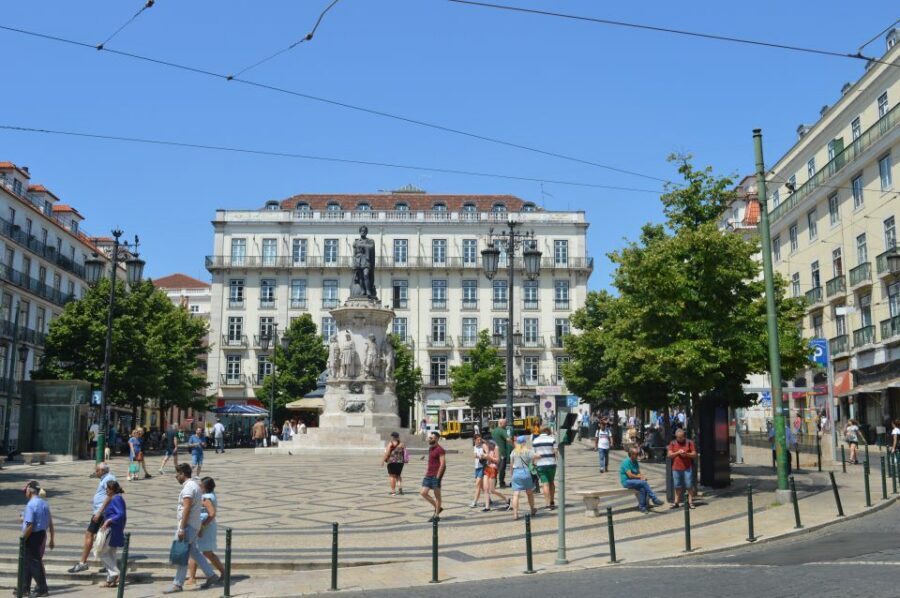
- Praça Luís de Camões to Bairro Alto: from culture to crowds
- Miradouro de São Pedro de Alcântara: your planned break and the view
- Rua Augusta food tasting (short, not a meal)
- Alfama: narrow alleys, tiles, and the Tagus viewpoint payoff
- End at Arco de Rua Augusta in Praça do Comércio
- Price and value: does $47 work for you?
- Who this tour suits best (and who should skip it)
- What to bring so the day feels easy
- Should you book this Lisbon walking tour?
- FAQ
- How long is the Lisbon Walking Tour in the Center?
- Where do I meet the guide?
- What’s the group size for this walking tour?
- What language is the live tour guide?
- What’s included in the price?
- Is food included?
- Does the tour run in bad weather?
- Is this tour suitable for people with mobility impairments or wheelchair users?
- What should I bring, and what is not allowed?
Entering Lisbon’s center: Baixa to Alfama in 3.5 hours
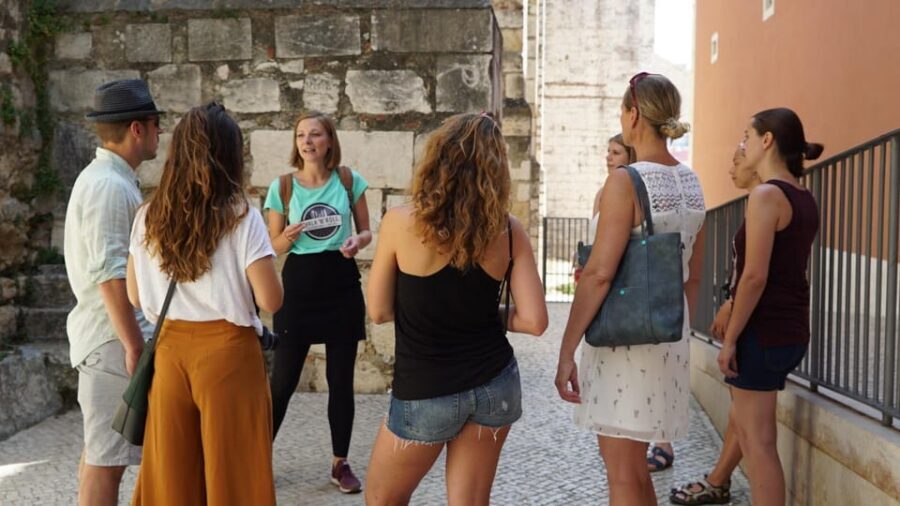
If you want Lisbon’s postcard moments without spending your whole first day guessing where everything is, this walking tour is a strong bet. You start in the heart of the lower town and move through Baixa, Chiado, Bairro Alto, and finally Alfama. The route is designed like a guided “how Lisbon works” lesson: streets, views, and neighborhoods all connect, even when the terrain doesn’t.
The pace is active. Expect a lot of walking and some hill climbing, because Lisbon doesn’t do flat like other European cities. For me, that’s part of the point: the up-and-down is why neighborhoods feel like distinct worlds instead of just blocks on a map.
Meeting at Rossio Square North Fountain (and what to look for)
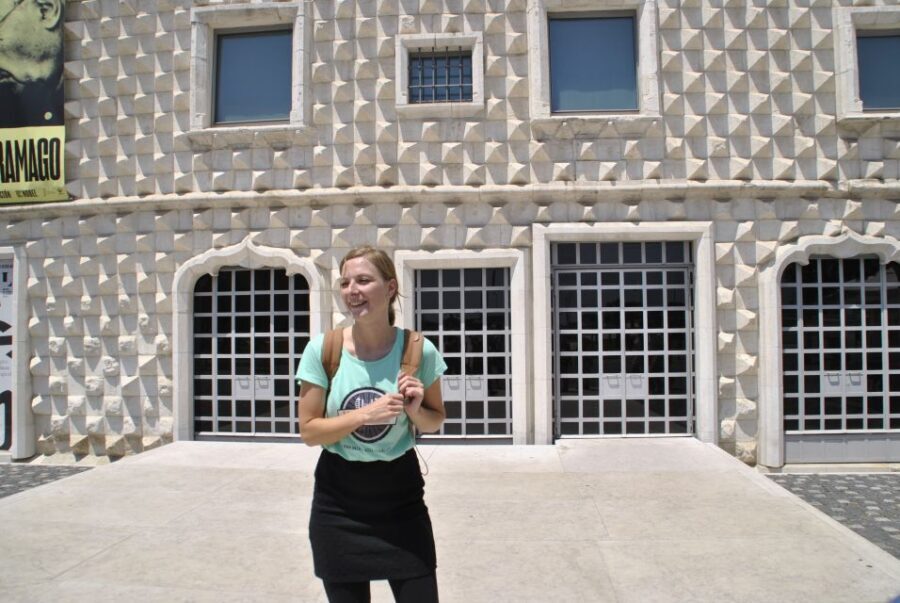
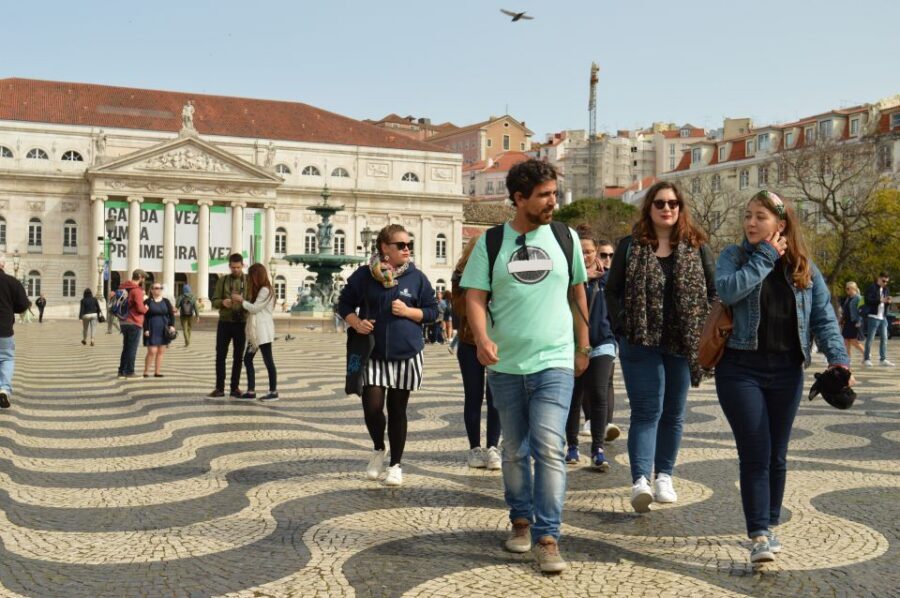
You meet at Rossio Square, at the north fountain area, between the National Theatre and the Royal Statue. This is helpful because Rossio is a major hub, so it’s easy to reach and easy to orient yourself from later.
Your guide is easy to spot, wearing a mint-colored WALK ’N’ ROLL t-shirt or carrying a mint-colored burlap bag. That kind of “look for the color” detail sounds small, but when you’re in a busy public square, it saves time and stress.
You can also read our reviews of more walking tours in Lisbon



Baixa de Lisboa: the calm, central start where the city makes sense
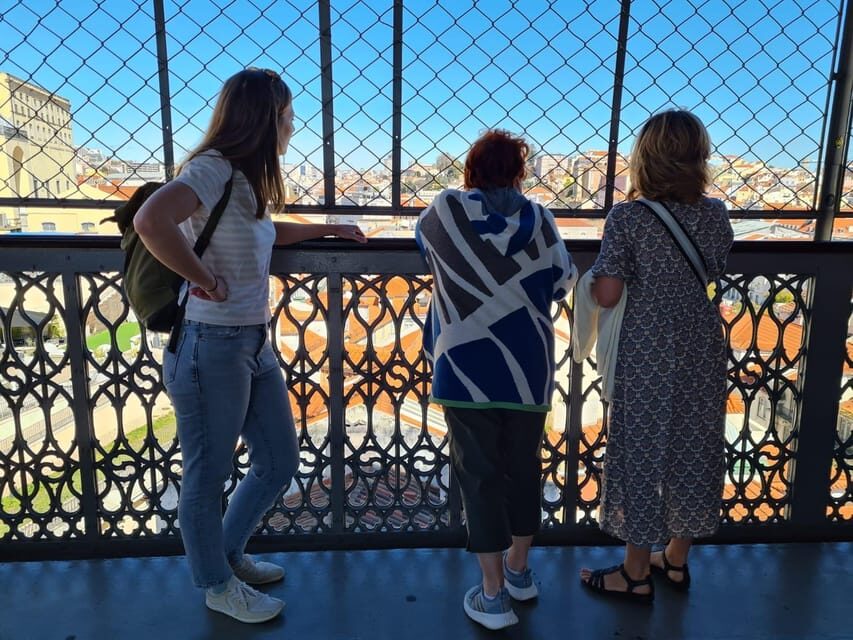
Your first leg is Baixa de Lisboa, Lisbon’s lower-town core. This is where you start getting bearings fast. The guide walk-through here matters because Baixa is the baseline for everything else you’ll see later. Once you understand the geometry of the center, the hills and switchbacks start to feel less random.
Baixa is also where Lisbon shows its ability to rebuild and reorganize. You’ll move through streets that are meant for walking, not traffic, and you’ll start seeing how the city’s identity is both architectural and social: squares, viewpoints, and connecting roads rather than one isolated monument.
Santa Justa Lift: a working landmark with a big viewpoint payoff
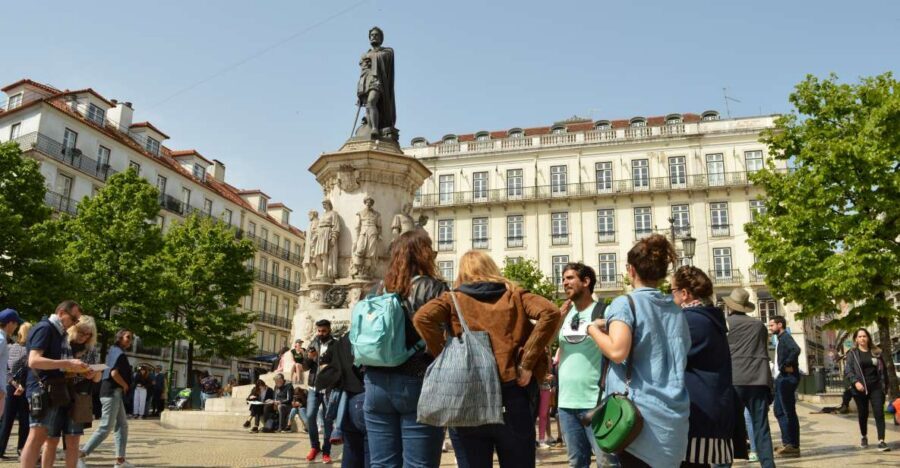
One of the early highlights is seeing the Elevador de Santa Justa. Even if you’re not taking the lift itself, just seeing it in place tells you something important: Lisbon loves vertical connection. The lift is not just a photo spot; it’s a reminder that residents solved steep terrain with clever design.
From a tour standpoint, Santa Justa works because it transitions you from the lower town toward the ruins and higher streets. It gives your feet a job to do, and it sets expectations for what comes next: more slope, more views, more “okay, so this is why Lisbon feels dramatic.”
Carmo Monastery ruins: history you can walk through
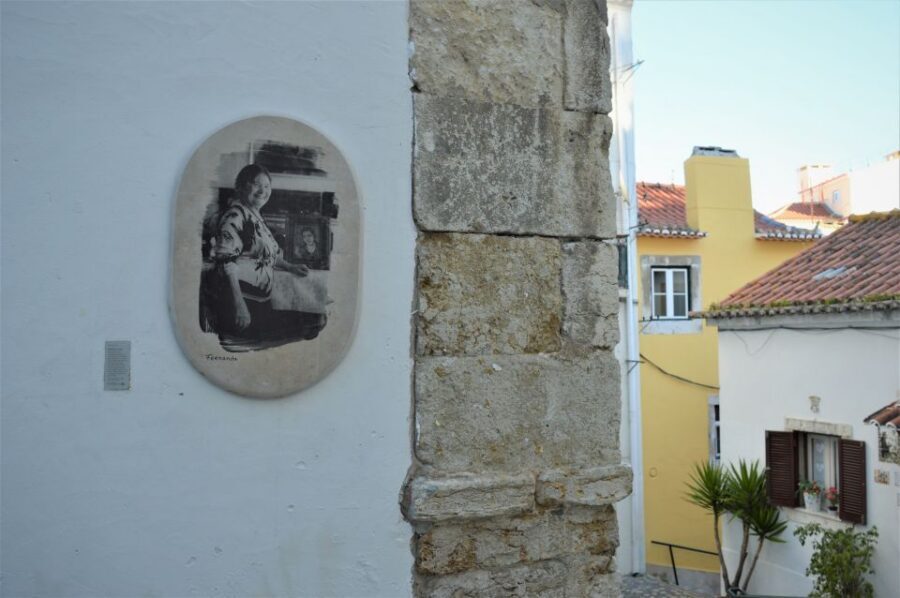
Next comes the Carmo Convent (Carmo Monastery) ruins. This stop is memorable because you’re not looking at a sealed museum building. You’re seeing a site where the structure still reads like a story. The ruins change the scale of the space around you, and that’s exactly what makes them worth your time.
If you care about how cities survive disasters and evolve, this is one of the strongest cultural stops on the route. It’s also practical: it’s a good pause-in-motion moment where you can slow down, look around, and understand why this corner of Lisbon is emotionally heavier than the cheerful facades nearby.
Chiado: poets’ quarter vibes with real street-level context
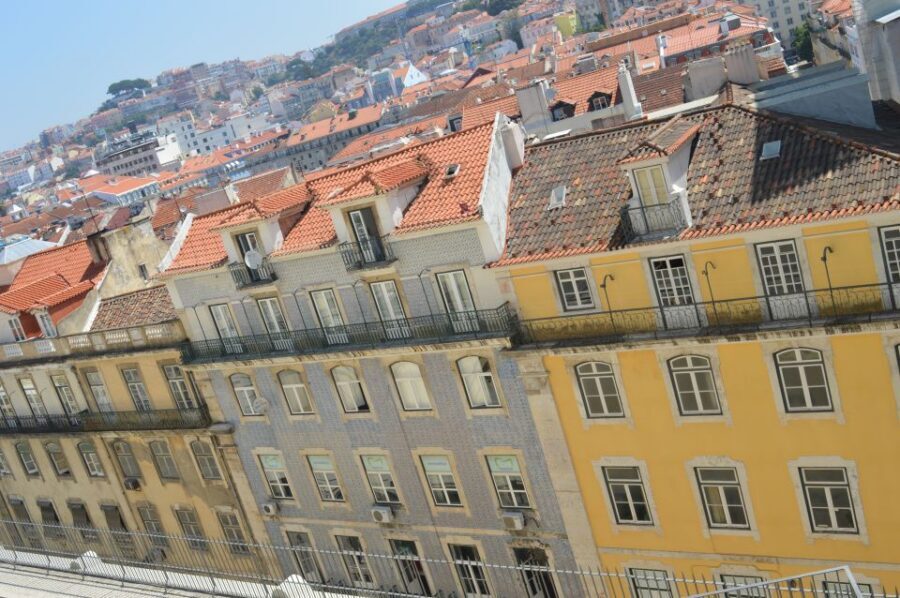
Then you head into Chiado, often described as Lisbon’s poets’ quarter. What makes Chiado work on this kind of tour is that it gives you cultural context without turning everything into a lecture. You’ll walk through the neighborhood’s character and learn how that identity shaped the city’s public life.
This is also where the tour helps you stop treating Lisbon like a list of attractions. You start noticing the difference between a place that simply has beauty and a place that has a social role. Chiado fits the second category.




Praça Luís de Camões to Bairro Alto: from culture to crowds
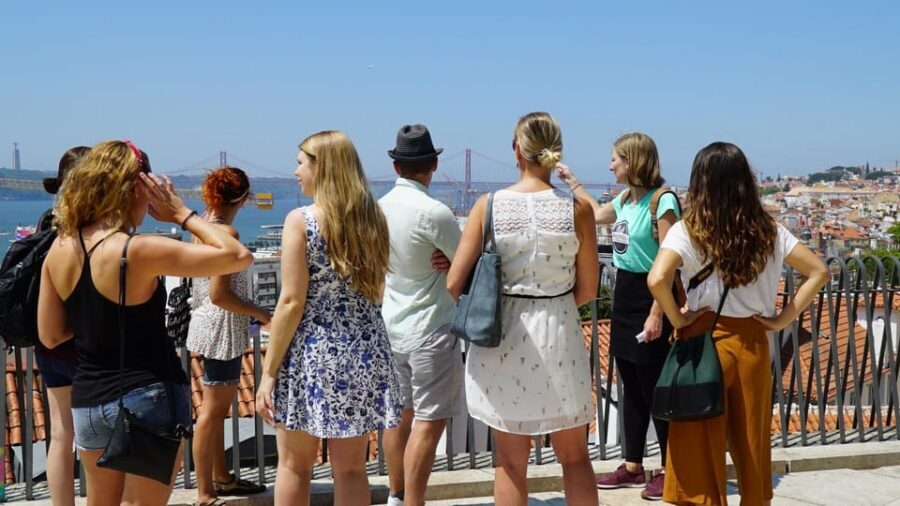
A quick stop at Praça Luís de Camões acts like a hinge between neighborhoods. From there you move into Bairro Alto, a residential-and-nightlife district. The vibe here is more people-centered than monument-centered: it’s about streets where life spills out, not just buildings you stand in front of.
One caution: Bairro Alto can be busy, and the streets are narrow. As the group passes through, you’ll appreciate having a guide manage the flow so you’re not constantly getting shoved around while trying to listen.
Miradouro de São Pedro de Alcântara: your planned break and the view
You get a break at the Miradouro de São Pedro de Alcântara. There’s also a guided moment here before the rest, and then you have 30 minutes to catch your breath. This is smart planning, because the tour isn’t only about ticking boxes. It gives you a human moment to reset.
If you’re watching the city spread out, miradouros are where Lisbon clicks. The city’s hills stop being an obstacle and start being the point. Even if you’ve seen plenty of photos, being at the viewpoint helps you understand distances and why certain angles make the Tagus look the way it does.
Rua Augusta food tasting (short, not a meal)
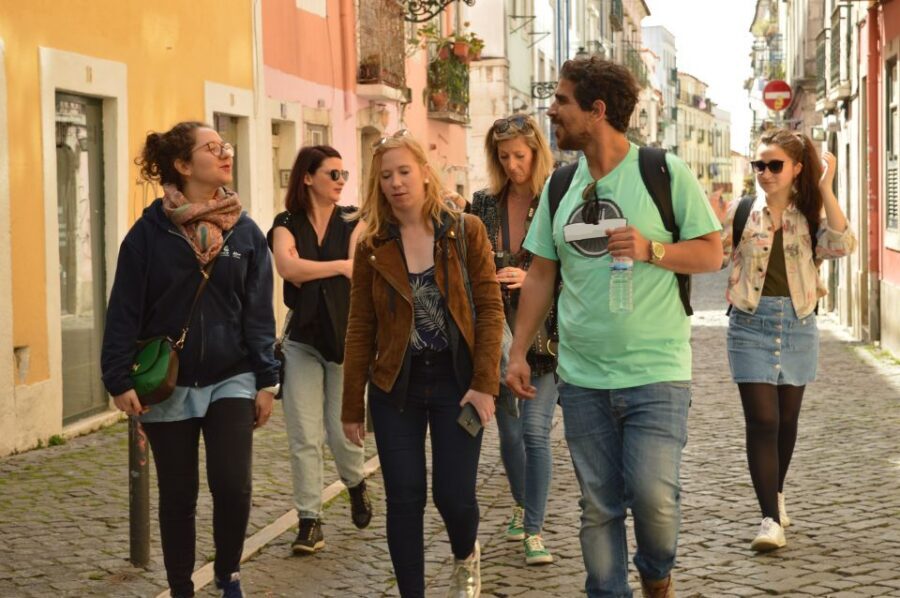
Back toward the shopping streets, you pass through Rua Augusta, including a quick food tasting portion listed as about 5 minutes. The important detail for planning is that food isn’t included beyond this small taste. You’ll likely want to think of this tour as culture-first, snack-light.
What I like about keeping the tasting short is that you don’t feel stuck eating your way through the walk. You get to try something small, then get back to the bigger picture: neighborhoods, views, and how Lisbon’s center is stitched together.
Alfama: narrow alleys, tiles, and the Tagus viewpoint payoff
Finally, you move into Alfama, the neighborhood with winding lanes and that “how did they fit all this here?” feeling. This is where the tour’s promise becomes visible: you get the iconic viewpoint overlooking the Tagus River, plus close-up moments where Lisbon tiles appear in the scene like background characters.
The tile details matter more than you might expect. Lisbon is famous for its azulejos, and on foot you see how they’re placed to frame doorways, decorate walls, and soften harsh urban lines. On a self-guided stroll you might notice tiles, but a guide helps you understand why they show up so often and what they contribute to street identity.
Alfama also tends to be where you slow down naturally. The streets force it. That’s good for you. It means you can look up, notice small architectural cues, and soak in the neighborhood feel without trying to sprint from one photo to another.
End at Arco de Rua Augusta in Praça do Comércio
The tour ends at Arco de Rua Augusta in Praça do Comércio, right on the banks of the Tagus. This finish is satisfying because it’s the opposite of Alfama’s tight lanes: you get open space and a grand, waterfront perspective.
It’s also a practical wrap-up. Praça do Comércio is a great launching pad for what you do next. Whether you’re heading for a riverside walk, dinner nearby, or another sightseeing loop, ending here puts you back in a major, easy-to-navigate zone.
Price and value: does $47 work for you?
At $47 per person for about 3.5 hours with max 12 participants, I’d call the value fair, especially if you like structure on day one. This isn’t just a “show up and walk” tour. You’re paying for a live guide who keeps the story coherent across multiple neighborhoods, plus you get a liquor tasting included.
Does the tour include everything? No. Food is not included, and you’ll still need to manage your own hydration and snacks. But you do get the key ingredients: guided context, iconic stops like Santa Justa and Carmo ruins, and viewpoint time so the walk feels like more than exercise.
A common small frustration with walking tours is feeling like you didn’t see enough. One rating noted the route felt a bit tight and could have used one or two extra sights. That’s a real consideration here. You get a lot of the center, but because it’s 3.5 hours, it’s still selective.
Who this tour suits best (and who should skip it)
This tour is a great match if you:
- want a first-time orientation to Lisbon’s central neighborhoods
- enjoy walking and don’t mind a few hills
- like learning why places feel the way they do, not just what they are called
- prefer smaller groups (this one tops out at 12)
It may not be ideal if you have mobility limitations. It’s listed as not suitable for people with mobility impairments and wheelchair users. The tour also says no baby strollers and no luggage or large bags, which matters if you’re traveling with bigger gear.
What to bring so the day feels easy
Plan for practical walking comfort:
- comfortable shoes
- water
- sunscreen
And remember: it runs rain or shine. Lisbon weather can change quickly, so being ready helps you stay focused on the tour instead of thinking about your next shelter.
Should you book this Lisbon walking tour?
I’d book it if your goal is to understand Lisbon’s layout and character quickly. The combination of Baixa, Chiado, Bairro Alto, and Alfama is exactly how the city teaches you itself, and the ending at Praça do Comércio by the Tagus gives you a confident finish.
Skip or look for another option if you want a low-walking experience, have mobility constraints, or you’re hoping for a long food-focused tour. For most visitors, though, this is a smart, concentrated way to see the center and get real context while you’re there.
FAQ
How long is the Lisbon Walking Tour in the Center?
The tour lasts about 3.5 hours.
Where do I meet the guide?
Meet at Rossio Square North Fountain, between the National Theater and the Royal Statue.
What’s the group size for this walking tour?
The group experience is capped at a maximum of 12 participants.
What language is the live tour guide?
The live guide is listed as German.
What’s included in the price?
The price includes a tour guide and a liquor tasting.
Is food included?
Food is not included. There is a short food tasting during the walk.
Does the tour run in bad weather?
Yes, it runs rain or shine.
Is this tour suitable for people with mobility impairments or wheelchair users?
No. It’s listed as not suitable for mobility impairments and wheelchair users.
What should I bring, and what is not allowed?
Bring comfortable shoes, sunscreen, and water. Baby strollers and luggage or large bags are not allowed.