Lisbon gets personal fast on this walk. You start in Mouraria and end with a Tagus ferry ride plus a proper riverside seafood lunch. I like how the pace stays leisurely while you still cover real neighborhoods, and I especially love the snack-and-drink stops that feel like Lisbon habits, not just check-the-box tourism. The one snag: dietary needs are limited, and this isn’t suitable for celiacs, vegans, or kosher/Halal diets.
This tour also works because it teaches you context while you’re moving. You’ll hear how Mouraria connects to Moorish settlement, get Fado stories tied to names like Maria Severa, and see Lisbon’s architecture without getting stuck in long lines. A guide like Maria or Carlos can turn tile-covered streets and old squares into something you can actually picture.
And yes, you get views. There’s a Carmo area viewpoint with a cold beer, plus a Tagus-side lunch that makes the whole day feel like a mini escape from the city center. Just note: you’ll see the Santa Justa Lift, but you won’t ride it as part of this experience.
In This Review
- Key things to know before you go
- Where Mouraria Turns a Walking Tour Into a Real Neighborhood Lesson
- From Martim Moniz to the Moorish Quarter: Lisbon Without the Usual Traffic Jams
- Coffee, Pastel de Nata, Rossio’s Neo-Manueline Façade, and the Rossio Square You’ll Actually Use
- Carmo Viewpoints and a Beer Break: Where the City Opens Up
- The Tagus Ferry to Cacilhas: Seafood Rice With a Side of Big Views
- Price and Value: What You’re Paying For (and What You’re Not)
- Food Notes and Dietary Limits: Plan Smart Before You Assume
- Who This Tour Best Fits (and Who Should Pick a Different Day)
- Should You Book This Lisbon Food-and-Ferry Walk?
- FAQ
- Where do I meet the guide?
- Where does the tour end?
- How long is the experience?
- What time does the tour start?
- What language is the tour offered in?
- How many people are in the group?
- What’s included in the price?
- Is Santa Justa Lift included?
- Can vegetarians or gluten-free travelers eat on this tour?
- Is the tour suitable for celiacs, vegans, or kosher/Halal diets?
Key things to know before you go
- Mouraria first, not afterthoughts: you walk where cars can’t go and where daily life still runs the show
- Fado comes with names: you’ll hear the story around Maria Severa, not just the genre label
- Old Lisbon, framed by food: pastel de nata and coffee, then beer, then seafood rice and green wine
- Tagus ferry is built in: the river crossing sets up the best scenery and the lunch setting
- Small group size: up to 14 people for easier conversation and more personal attention
- Dietary limits are real: vegetarian/gluten-free options may exist, but not guaranteed everywhere
Where Mouraria Turns a Walking Tour Into a Real Neighborhood Lesson

I like tours that teach you how to read a city, and this one does that early. You meet at Martim Moniz square in the historic Mouraria district, known for its narrow streets and multicultural feel. On weekends, Martim Moniz has a market vibe with biological products, shops, music, and shows. Even if you’re there on a weekday, the square sets the tone: this area has always been a meeting point.
From the start, you’re not just strolling. Your guide connects what you see to why it matters. Mouraria is tied to the traditional residential district of the Moors, so the walk becomes a living map of Lisbon’s layers—Arab-influenced roots, Portuguese identity, and the mix that grew from Portugal’s seafaring era.
This is also the kind of walk where a good guide can change the whole experience. In past groups, Maria and Franco were singled out for being friendly and high-energy, and you can feel the difference when your questions get answered on the spot.
If you want a Lisbon “orientation walk” that still feels authentic, Mouraria is a smart place to start. It teaches you the city’s texture before you even get to the big postcard squares.
You can also read our reviews of more walking tours in Lisbon


From Martim Moniz to the Moorish Quarter: Lisbon Without the Usual Traffic Jams
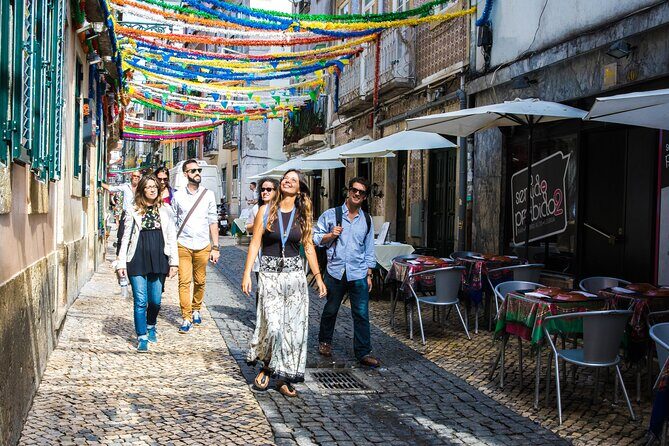
After the meet point, the tour pushes into the Moorish Quarter. This is where you’ll get a feel for Lisbon as locals experience it: tight streets, little churches, traditional shops, and the kind of corners that don’t show up on fast bus routes.
The best part is that the neighborhood explanation isn’t stuck in theory. As you walk, your guide points out what makes the area Moorish-influenced in the cultural sense—how the district functioned historically and why it’s part of Lisbon’s identity. You’re basically learning the “why” while your feet do the “how.”
You’ll also hear about Fado, and that’s a big plus if you’ve seen clips of fado singers but want the human story behind it. The tour’s Fado segment includes the background of Maria Severa, a key figure tied to the genre’s history. That turns Fado from music you admire into a story you can place.
One consideration: this part of the day is still walking, on real streets. Wear shoes you trust. You’ll be outside for roughly four hours total, with a moderate walking demand. It’s not a race, but it is not a sit-down tour either.
Coffee, Pastel de Nata, Rossio’s Neo-Manueline Façade, and the Rossio Square You’ll Actually Use

A big reason this tour feels worth it is the way it builds breaks into the route. First comes coffee and pastries, including a traditional pastel de nata in a bakery you’re unlikely to find by accident. The point isn’t just the pastry; it’s the atmosphere. You get a calmer, more local-feeling stop where history and everyday conversation blend.
Then the walk shifts toward Rossio. You’ll pass the Rossio train station and notice a neo-Manueline façade. That detail matters because Manueline style is a Portuguese signature—ornate and tied to the country’s maritime history. Seeing it while you’re walking makes it easier to remember later when you’re comparing buildings across Lisbon.
Rossio square (Praça de D. Pedro IV) is the next anchor. It’s one of the city’s main squares and has hosted revolts, celebrations, bullfights, and executions in the past. Today it’s a meeting place for locals and tourists. You’ll also hear about Portuguese cobblestones—the classic stone look under your feet—and why they came to be. That’s the kind of small fact that turns into practical street-sense when you keep walking after the tour ends.
There’s also a quick connection toward Chiado, a cultural and commercial district known for historic landmarks and theatres and museums. You’re not doing a formal museum detour here, but you’re getting a navigational clue: where to go next if you want the more artsy, lively side of central Lisbon.
Carmo Viewpoints and a Beer Break: Where the City Opens Up
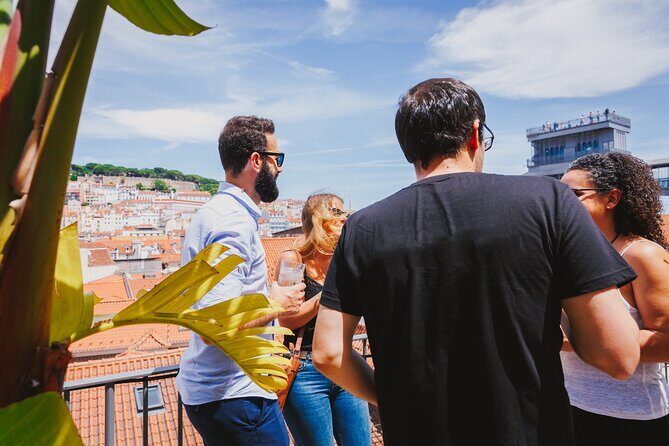
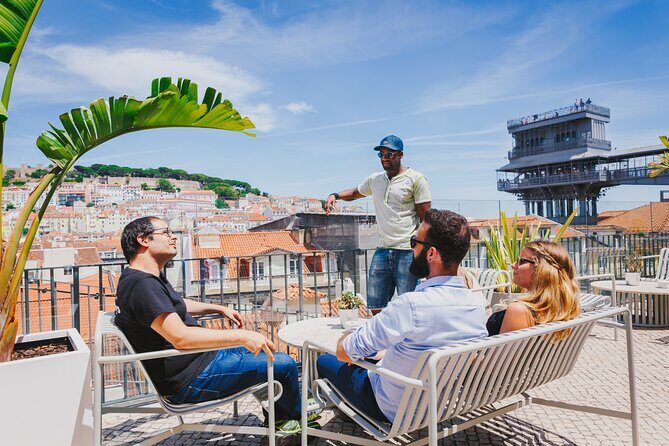
At some point, Lisbon rewards you for all that walking with a view. You’ll head to the Carmo Convent area for panoramic sights over Lisbon, with key landmarks visible in the distance. The tour specifically calls out views that include São Jorge Castle and the Santa Justa Lift—plus you’ll be drinking a refreshing Portuguese beer during the stop.
This is a good moment to pause and reset. You’ll get a higher perspective on the layout of the city, which helps later when you’re deciding where to wander. Seeing São Jorge Castle from above is especially helpful because it gives you a real sense of Lisbon’s slopes and layers.
A practical note: you’ll be able to see Santa Justa Lift, but this experience does not include a trip on it. That’s fine—views without the lift ride can still be satisfying—but it does mean you may want to plan your own ride separately if that’s a must for you.
Also, the beer stop is more than a drink break. It’s a social hinge in the day. People relax, the guide can answer questions, and the group stays together before you head toward the river.
The Tagus Ferry to Cacilhas: Seafood Rice With a Side of Big Views
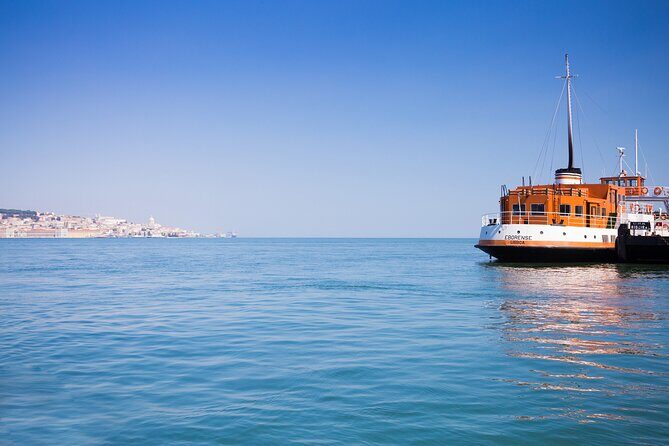
The best “okay, now we get to enjoy Lisbon” moment comes with the Tagus River crossing. After the city-center walking, you head to the Tagus area and board a ferry. The ride takes you to Cacilhas, which shifts the vibe from central streets to river scenery.
On the other side, you reach Pontal de Cacilhas, a small riverside area loaded with seafood restaurants. This is exactly the kind of setting that makes a food tour feel real: you’re not eating in a theme-restaurant. You’re eating where people actually go for the water’s catch.
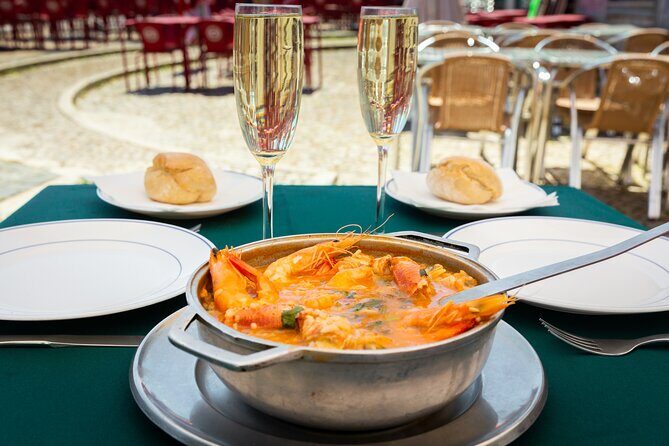
Lunch is included and is the highlight meal of the day: seafood rice, green wine, and bread, served in a riverside restaurant. Then you get the panoramic view time again, while you’re still full and happy and holding a fork.
If you’re wondering whether the ferry ride is worth it: yes, because it breaks up the day and adds a scenic “breather” that you can’t replicate just by walking between viewpoints. It also helps you understand Lisbon’s geography—the city’s relationship to the river—so you’ll later notice the water in the places you pass.
One more practical thought: you may want to bring a light layer. River wind can be a factor, especially if you’re out near the water for any length of time.
You can also read our reviews of more tours and experiences in Lisbon






Price and Value: What You’re Paying For (and What You’re Not)

At $48.39 per person for about four hours, this tour is aiming for a specific sweet spot: enough walking to learn neighborhoods, plus enough food and transport to make it feel like a full experience.
Here’s what you’re getting that supports the value:
- Coffee and pastries at the beginning
- A beer break during the viewpoints
- A full lunch across the river with seafood rice, green wine, and bread
- Ferry-boat ride between Lisbon and Cacilhas
- A local guide and a small group size (maximum 14)
What you’re not getting:
- No guided entry inside monuments
- No Santa Justa Lift ride
So this is not a “sit in a museum and take photos” day. It’s more like a guided route through Lisbon’s best talking points, with food stops that help the day stay fun instead of just educational.
Also, the guides in this experience often earn praise for friendliness and pace. When a guide like Carlos, Filipe, or Guilherme keeps everything flowing, it’s easier to relax and enjoy the stops rather than stress about timing.
Food Notes and Dietary Limits: Plan Smart Before You Assume

Food is the core of this tour, so you need to know the limits. Vegetarian and gluten-free options may be available, but they’re not guaranteed on all stops. That matters because the tour uses traditional local venues where substitutions might be difficult to arrange.
The tour is not suitable for:
- celiacs
- vegans
- kosher
- halal
If you’re gluten-free and you’re traveling with strict needs, don’t treat the word options as a guarantee. I’d go in with a plan: message your needs at booking, and be ready to accept that the bread/pastries component might not fully work for you.
Pregnant travelers are also mentioned as a group for whom alternatives might be difficult to find. This is less about comfort and more about the reality of traditional local spots and the ingredients they use.
If you’re flexible—like you can handle standard meals and just want something without meat or with fewer restrictions—this tour can be a great fit. The lunch setting is popular for seafood, and the coffee/pastry stops are part of the culture here, not just filler.
Who This Tour Best Fits (and Who Should Pick a Different Day)
This walking-and-food tour fits best if you want:
- a strong first-day orientation to Lisbon
- neighborhood context beyond the big squares
- a small group experience where you can ask questions
- a food-and-drink day that includes a ferry ride
It also fits people who enjoy history stories that connect to everyday places, not people who only want monument interiors.
You should consider a different option if:
- you require celiac-safe meals (this isn’t suitable)
- you need vegan/kosher/halal accommodations
- you want Santa Justa Lift as a must-do ride (this doesn’t include it)
For moderate fitness levels, it’s generally manageable because the pace is described as leisurely and timed around breaks. Still, you’ll want proper shoes and a relaxed mindset. A four-hour walk that includes stairs and uneven stones is normal Lisbon behavior.
Should You Book This Lisbon Food-and-Ferry Walk?
I think this is a solid booking for many visitors because it hits four key goals: neighborhood learning, Fado and Lisbon stories, classic Portuguese food breaks, and a Tagus ferry that makes the route feel like more than walking.
Book it if you’re okay with food being central and you don’t need strict dietary accommodations. It’s also ideal if you’re traveling early in your trip and want local recommendations you can use for the rest of your time.
Skip it if your diet is complicated (especially celiac, vegan, kosher, or Halal needs) or if you’re chasing a Santa Justa Lift ride as a top priority. Then you’ll likely feel frustrated rather than happy.
If it matches your needs, it’s a smart way to get your bearings fast, taste Lisbon, and see the city from both the street level and across the river.
FAQ
Where do I meet the guide?
You meet at Praça Martim Moniz 2, 1100-341 Lisboa, Portugal.
Where does the tour end?
The tour ends at Cais do Sodré, Lisboa.
How long is the experience?
It’s about 4 hours.
What time does the tour start?
The start time is 10:00 am.
What language is the tour offered in?
The tour is offered in English.
How many people are in the group?
The group is limited to a maximum of 14 travelers.
What’s included in the price?
Coffee and pastries, lunch (seafood rice, green wine and bread), a ferry-boat ride, beer, and a local guide.
Is Santa Justa Lift included?
No. You can see it, but the tour does not include a trip on Santa Just lift.
Can vegetarians or gluten-free travelers eat on this tour?
Vegetarian and gluten-free options are available but not guaranteed on all stops.
Is the tour suitable for celiacs, vegans, or kosher/Halal diets?
No. It is not suitable for celiacs, vegans, Kosher, or Halal.