REVIEW · LISBON
Lisbon Tram No. 28 Ride & Walking Tour
Book on GetYourGuide →Operated by Lisbon Spirit · Bookable on GetYourGuide
Lisbon runs on hills and legends. This tour pairs the famous Tram No. 28 ride with a smart walk beyond the rails, so you see the Old Town the way it actually works: tight streets, steep angles, and big views over the city and river. I love that you’re not stuck in a museum routine; you’re moving through real Lisbon.
I also really like the Alfama section, especially how you get the human side of the neighborhood and learn about Fado in tiny bars and cafés. It’s the kind of context that makes posters and performances later feel less like trivia and more like culture.
One consideration: expect uneven, steep walking and plan for the tram to be affected by traffic, since Tram 28 is a public line. On the upside, the guide usually keeps things moving even when the city throws curveballs.
In This Review
- Key highlights at a glance
- Tram 28 plus Alfama: why this combo makes sense
- Meeting at Praça Luís de Camões (and finding your guide fast)
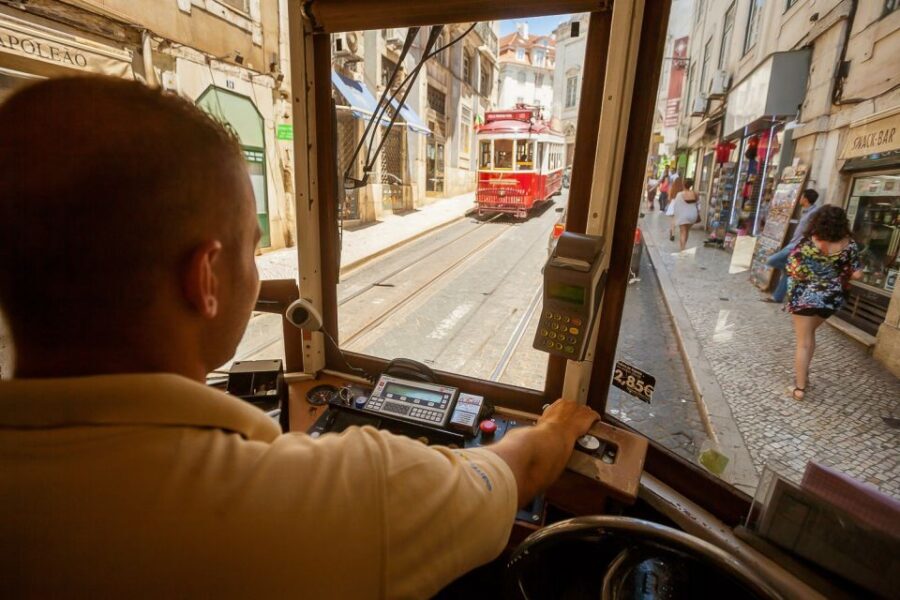
- Riding Tram 28: the views, the pace, and the reality of public transport
- What to watch for during the ride
- Tram 28 time can vary
- Alfama on foot: steep lanes, small squares, and why it feels different
- What you’ll do in Alfama
- Fado context that sticks
- Hilltop sights: Sé de Lisboa, São Vicente de Fora, and the Pantheon story
- Sé de Lisboa (Lisbon Cathedral)
- Mosteiro de São Vicente de Fora (Saint Vincent Monastery)
- Panteão Nacional (National Pantheon) and its dome legend
- Feira da Ladra timing: what changes on Tuesdays and Saturdays
- The guide matters: why the best tours feel personal
- Price and value: is $23 worth it?
- Comfort, pace, and practical tips that actually matter
- Who this tour suits best (and who might want a different plan)
- Should you book Tram 28 & Alfama with Lisbon Spirit?
- FAQ
- FAQ
- How long is the Lisbon Tram No. 28 Ride & Walking Tour?
- How much does it cost?
- What’s included in the tour?
- What isn’t included?
- Where do I meet the guide?
- What language is the tour guide?
- Is the group size small?
- Do I need comfortable shoes?
- Does the tram ride always follow the exact plan?
- Is there a flea market included?
- What’s the cancellation policy?
Key highlights at a glance
- Tram 28 as public transport: you get the classic experience, not a private recreation.
- Panoramic viewpoints from the hills: the ride is part sightseeing, part city geography.
- Alfama walking with Fado context: narrow streets, small squares, and local-life stories.
- Hilltop stops with centuries of layers: Sé de Lisboa, São Vicente de Fora, and the National Pantheon area.
- Feira da Ladra timing: on Tuesdays and Saturdays, the flea market can add serious atmosphere.
- Small group (up to 10): easier pace control and more questions for your guide.
Tram 28 plus Alfama: why this combo makes sense
Lisbon is a city of movement. Streets slope. Steps appear out of nowhere. And if you try to see everything from the flat side of your map, you’ll miss the point.
That’s why this tour works. You start on the one ride most people associate with Lisbon’s historic core—Tram 28—and then you continue on foot to cover what the tram can’t reach comfortably. The result is a first-pass “orientation tour” that still feels like more than just getting oriented.
Two things help here:
- You get the tram’s changing angles and big hilltop views while you’re actually on transit.
- You get the Alfama atmosphere after you’ve already learned where you are and how the neighborhoods connect.
It’s a good fit if it’s your first time in Lisbon, or if you want a guided route that doesn’t lock you into indoor sights all day.
You can also read our reviews of more walking tours in Lisbon



Meeting at Praça Luís de Camões (and finding your guide fast)

You meet at Praça Luís de Camões, near the statue. Look for your guide wearing a black backpack with the Lisbon Spirit logo. That detail matters more than it sounds—Lisbon is full of meeting points, and this one is easy to identify once you know what to look for.
Since there’s no pickup or drop-off included, you’ll want to arrive on your own from wherever you’re staying. If you’re using public transit or walking, give yourself a little buffer; hills and crowd density can slow you down.
Riding Tram 28: the views, the pace, and the reality of public transport
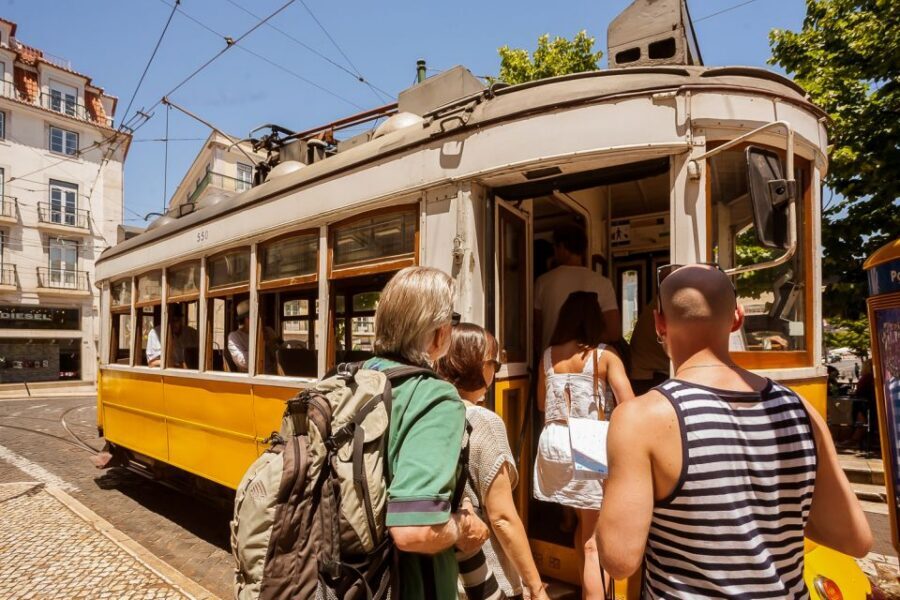
This is Tram 28, the name people remember and the ride they talk about. The practical twist is that it’s also a mode of public transport. That’s great for authenticity, but it also means:
- traffic and delays can happen,
- and the route can be affected by real-world conditions the provider can’t control.
What you’re paying for isn’t the novelty of a set itinerary that never changes. It’s the fact that you’re on the famous line with a guide who can point out what you’re seeing while the tram climbs.
What to watch for during the ride
Try to think of the tram as a moving viewpoint system:
- When the tram starts climbing, look for how buildings stack against the hillside.
- Watch the river and city edges open up as the line works its way through the Old Town.
Even if you’ve seen photos of Tram 28, the angle is different when you’re actually squeezed into the journey through Lisbon’s streets. The guide’s commentary helps turn what could be just a ride into a story about how the city grew.
Tram 28 time can vary
In a perfect world, a public tram follows a schedule. In Lisbon, that schedule can bend. So keep your expectations flexible. The tour timing is set for a total 3 hours, but the tram is subject to the city’s mood.




Alfama on foot: steep lanes, small squares, and why it feels different
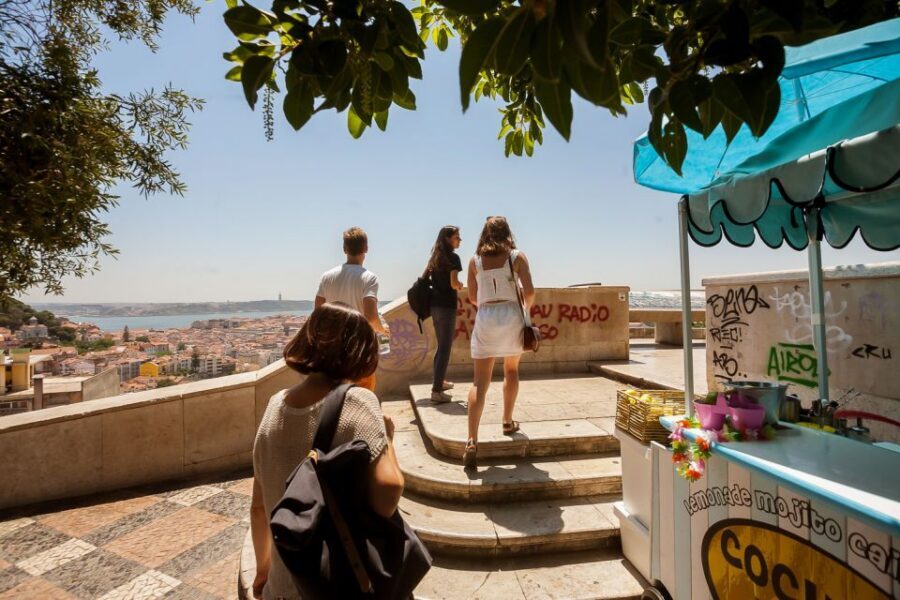
Once the tram part is done, you switch from wheels to walking. This is where the tour turns from sightseeing to neighborhood experience.
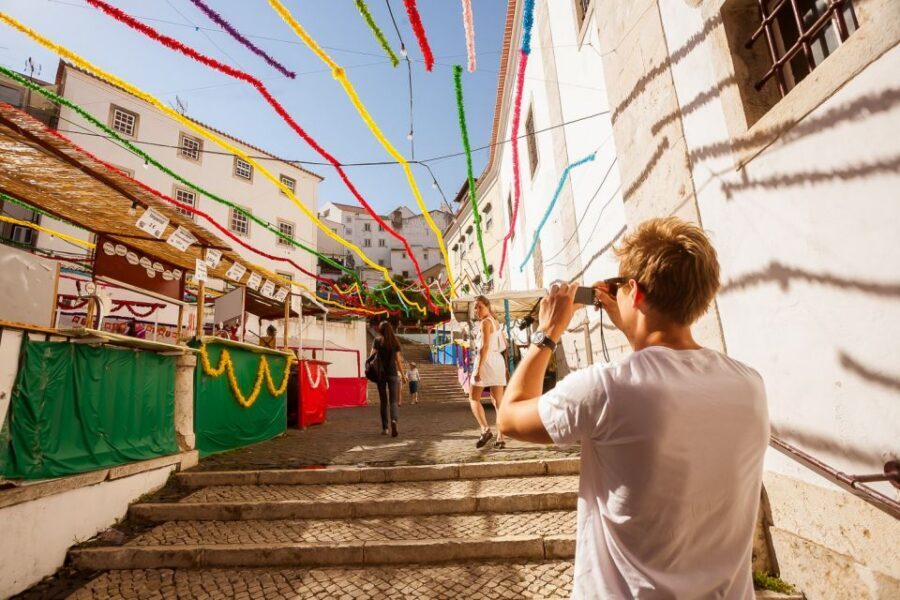
Alfama is the traditional heart you hear about before you arrive. The streets are narrow. The slopes can be sharp. And instead of big attractions lining up like shopping malls, you get small squares and “wait, where does that staircase go?” moments.
What you’ll do in Alfama
You’ll walk through the maze-like streets and see:
- the everyday scale of the neighborhood,
- historic buildings close-up,
- and the way the lanes funnel foot traffic into little pockets of local life.
Fado context that sticks
The best part is how the guide connects Fado to place. You’re not just told what Fado is. You learn why it belongs here, and you hear about the traditional Portuguese style in tiny bars and cafés.
That matters because Fado can sound like a “genre label” until you place it in the lived-in streets where it developed and continues to echo.
One practical tip: if you’re planning to catch a Fado show later, this tour is a strong setup. You’ll have better questions than just when does the performance start.
Hilltop sights: Sé de Lisboa, São Vicente de Fora, and the Pantheon story

After the tram and the Alfama lanes, the tour adds major anchors of Lisbon’s hillside identity. These stops are the reason a guided walk beats a DIY wander.
Here’s what you can expect to see and learn about:
Sé de Lisboa (Lisbon Cathedral)
You’ll visit Sé de Lisboa, the medieval cathedral. The highlight isn’t just the building. It’s what the guide can connect to almost 1,000 years of history—how walls can carry layers of different eras without needing a lecture hall.
Even if you only spend a short time there, it helps you understand why Lisbon’s Old Town feels so dense with meaning.
Mosteiro de São Vicente de Fora (Saint Vincent Monastery)
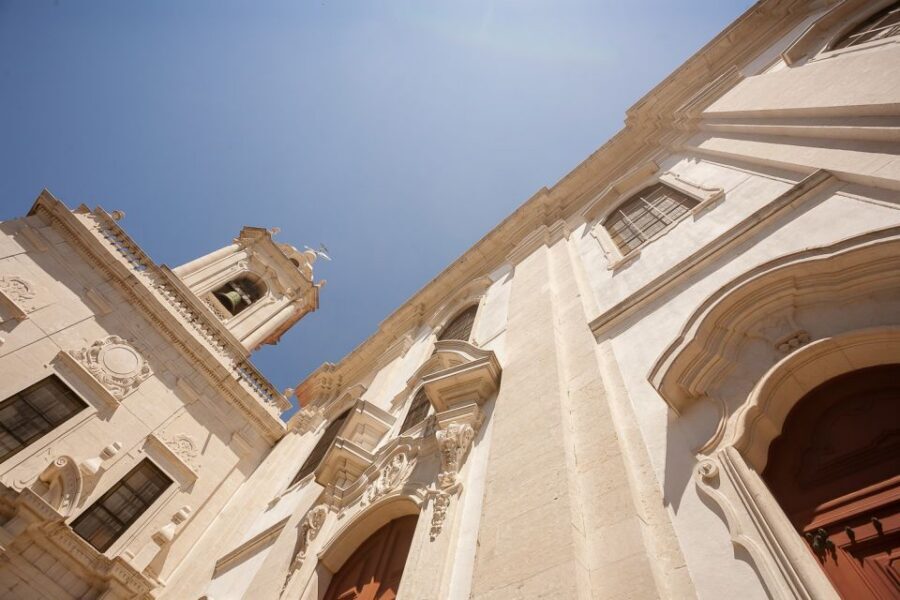
Next up is Mosteiro de São Vicente de Fora. This is one of those names you’ll remember because it’s both a mouthful and a signpost: the monastery sits in the hilltop story of Lisbon, linking religion, architecture, and the city’s political and cultural changes.
Panteão Nacional (National Pantheon) and its dome legend
You’ll also discover the legend tied to Panteão Nacional, especially the famous dome visible across the city skyline. Even if you’ve never noticed the dome before, you’ll likely start spotting it after this.
The value here is not only the sight. It’s the guide’s ability to connect “that big dome I saw in the distance” to an actual story you can repeat later.
Feira da Ladra timing: what changes on Tuesdays and Saturdays

If you’re in Lisbon on the right days, you get a bonus atmosphere.
On Tuesdays and Saturdays, the tour can include time around the Feira da Ladra, Lisbon’s well-known flea market. This is one of those places where the city’s everyday life becomes visible fast: goods, bargaining energy, and the sense that people have been doing this for a long time.
If your trip lines up with those days, it’s worth leaning in. Even if you don’t plan to buy anything, it’s a strong way to see Lisbon as a living city rather than just a postcard.
The guide matters: why the best tours feel personal
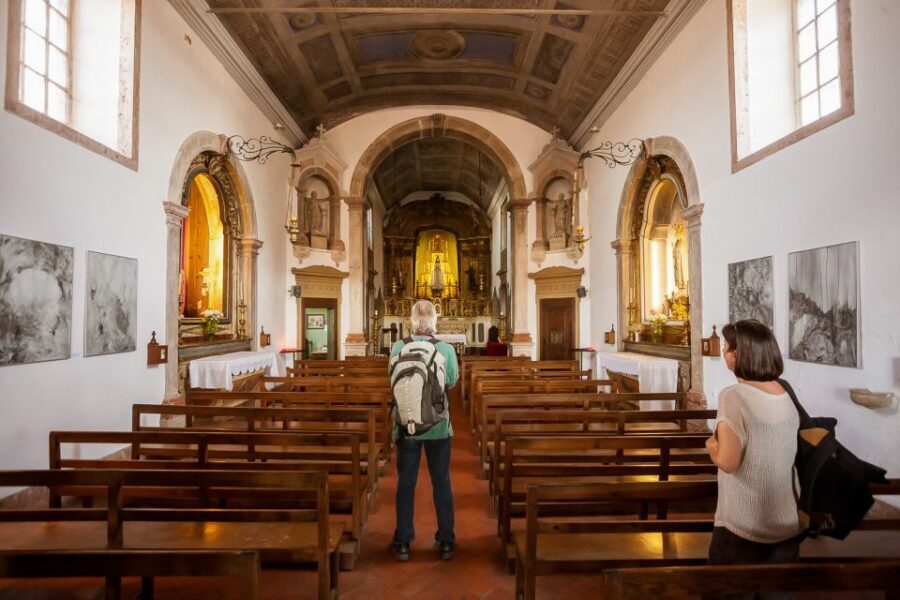
This is a small-group tour, limited to 10 participants, and the guide is the engine that turns logistics into meaning. Many comments point to guides who go beyond facts and give you stories that connect Lisbon’s past to its present.
Names you may see come up in guide experiences include Nuno / Nono. Guides with that kind of delivery tend to do a few things well:
- They keep the pace relaxed instead of rushing you from stop to stop.
- They explain the “why” behind what you’re seeing.
- They answer questions instead of treating them like interruptions.
Some guides even run a bit longer when the group is still engaged. That’s not something you should plan your schedule around, but it’s a good signal of how seriously they take the tour.
Price and value: is $23 worth it?
At $23 per person for about 3 hours, this tour isn’t trying to be a premium private guide experience. It’s built for value: tram ride plus a guided walk with major historical context.
What makes it feel like good value is the pairing:
- You pay for a guided Tram 28 ride that doubles as orientation and viewpoint time.
- You pay for a guided walk where the guide can explain Alfama and point out key sites you could easily miss alone.
If you’re the type who likes to understand a place rather than just check boxes, the price feels more than fair. If you only want photo stops with minimal talking, you might feel the history and storytelling take more time than you expected—but even then, the views and pacing help.
Comfort, pace, and practical tips that actually matter

This tour includes walking through steep, narrow streets and spending time on uneven surfaces. So the advice is simple: bring comfortable shoes.
Also remember:
- You’re using a real tram line, so expect the day to have small interruptions.
- You’re seeing hillside sights, so plan for more uphill effort than you’d expect from a “short walking tour.”
The good news: the group size stays small, and the pace is usually relaxed enough for a range of visitors. But the terrain is still Lisbon. Light packing and smart shoes beat stubborn pride every time.
Who this tour suits best (and who might want a different plan)
This tour is especially good for:
- First-time visitors who want a guided sense of where Lisbon’s neighborhoods connect.
- People who want Fado context without committing to a show right away.
- Travelers who like history but also want real streets, not just monuments.
It may be less ideal if:
- You dislike any walking on steep streets.
- You’re hoping for a strictly controlled, guaranteed tram timing experience (since it’s public transport).
If you’re unsure, think of it like this: this isn’t only about seeing Tram 28. It’s about understanding why Lisbon looks the way it does once you’ve walked its hills and listened to the stories along the way.
Should you book Tram 28 & Alfama with Lisbon Spirit?
If you want a smart intro to Lisbon’s Old Town, I’d book it. The mix of Tram 28, Alfama walking, and hilltop landmarks is a strong use of a single half day. And the small group size helps you get real answers, not generic talking points.
I’d particularly book if:
- You’re visiting for the first time and want an efficient route.
- You’re curious about Fado beyond the performance itself.
- You enjoy guides who connect buildings and streets to the bigger story of Portugal.
If you already know exactly how you’ll get around and you don’t care about history, you could DIY. But for most people, $23 buys more than a ride—it buys context, route design, and a smoother way to tackle Lisbon’s hills without guessing.
FAQ
FAQ
How long is the Lisbon Tram No. 28 Ride & Walking Tour?
The tour runs for about 3 hours.
How much does it cost?
The price is $23 per person.
What’s included in the tour?
It includes a ride on Tram 28 and a walking tour through Alfama.
What isn’t included?
Pickup or drop-off isn’t included.
Where do I meet the guide?
Meet at Praça Luís de Camões near the statue. The guide wears a black backpack with the Lisbon Spirit logo.
What language is the tour guide?
The live tour guide speaks English.
Is the group size small?
Yes. The tour is limited to 10 participants.
Do I need comfortable shoes?
Yes. Comfortable shoes are recommended because the route includes walking on uneven, steep streets.
Does the tram ride always follow the exact plan?
Tram 28 is public transport, so it can be affected by traffic and other unpredictable situations outside the provider’s control.
Is there a flea market included?
On Tuesdays and Saturdays, you can enjoy the flea market atmosphere of Feira da Ladra as part of the experience.
What’s the cancellation policy?
Free cancellation is available up to 24 hours in advance for a full refund.