REVIEW · LISBON
Lisbon Off The Beaten Track and Main Sights Private Walking Tour
Book on Viator →Operated by Lisbon Art & Soul · Bookable on Viator
Lisbon has a way of rewarding slow walking. This private off-the-beaten mix is built to help you get your bearings fast and then keep going where the guide’s city knowledge matters.
I like two things right away. First, you get a private guide who explains what you’re seeing, not just where it is. Second, the stops are chosen so you see big Lisbon themes in one circuit: river life, ceramic art, post-1755 rebuilding, and layered religion/history.
One consideration: it is a walk, and Lisbon’s viewpoints and old streets mean stairs and slopes. If you’re sensitive to hills or long stone sidewalks, wear supportive shoes and plan to move at a steady pace.
In This Review
- Key highlights worth circling
- Starting at Portas do Sol, where Lisbon looks like a story
- Santa Luzia’s azulejos: art you can read without a museum ticket
- Igreja de Santiago and the Camino connection
- Beco do Recolhimento inside the Castle’s residential edge
- Teatro Romano: Rome didn’t quit, it got buried
- Lisbon Cathedral: Romanesque bones with fortress instincts
- Church of St Anthony and the question everyone smiles about
- Roman tombstones at Lapides das Pedras Negras
- Praca do Comercio: Lisbon’s riverfront rebuilt like theater
- Igreja de Nossa Senhora da Conceicao Velha: late Gothic with royal symbolism
- How the private guide experience actually feels on the ground
- Price and what you get for about $48
- Who this tour suits best
- Quick booking decision: should you take it?
- FAQ
- FAQ
- How long is the Lisbon Off The Beaten Track and Main Sights private walking tour?
- How much does the tour cost per person?
- Where does the tour start?
- Is it a private tour or a group tour?
- What language is the tour offered in?
- Are tickets or admission fees included for the stops?
- What’s included in the price?
- Is food or drinks included?
- Do I need hotel pickup or transportation to the sights?
- What’s the cancellation policy?
Key highlights worth circling
- Miradouros first: start at Portas do Sol with Tagus and Old Town views
- Azulejo storytelling: Santa Luzia’s different-tile styles read like Lisbon in miniature
- 1755 reconstruction theme: several stops quietly show how the city rebuilt itself
- Real Roman history in the middle of town: Teatro Romano reopened in 2015 after being buried for ages
- Cathedral with fortress vibes: Lisbon Cathedral is half church, half defensive structure
- Free-entry stops: each listed attraction is marked free, so you can spend on coffee later
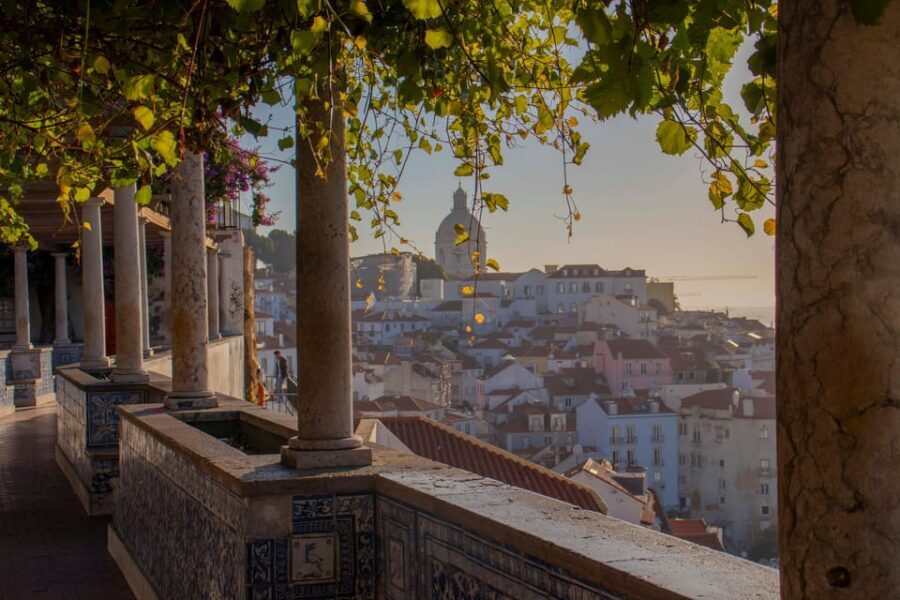
Starting at Portas do Sol, where Lisbon looks like a story
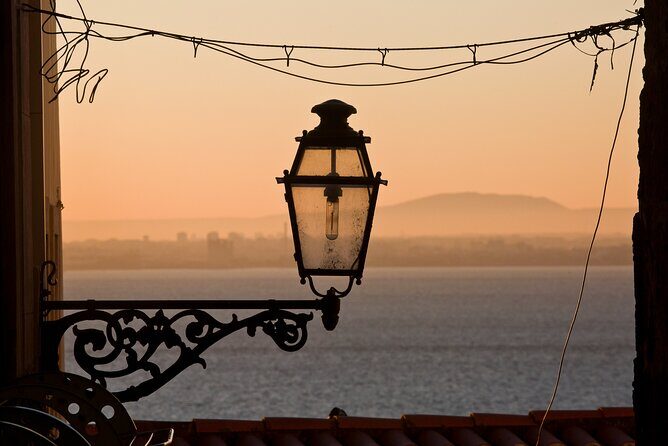
Your walking loop begins at Largo Portas do Sol, a classic starting point because it does what great city intros should do: it gives you scale. From here you can see the Castle Hill area and the Old Town spread out below, with the Tagus river acting like Lisbon’s big stage curtain. It’s hard to feel lost when you can literally locate the city in your field of view.
This is also a smart move for first-timers. The guide can set the timeline while you take in the scenery: how Lisbon’s relationship with the river shaped everything from trade to neighborhoods. And because the visit time is short, you get a quick taste instead of a long stop that slows the day down.
Tip for this part: bring your phone or camera, but also look without it for a minute. Miradouros are for training your eye, not just collecting angles.
You can also read our reviews of more walking tours in Lisbon


Santa Luzia’s azulejos: art you can read without a museum ticket
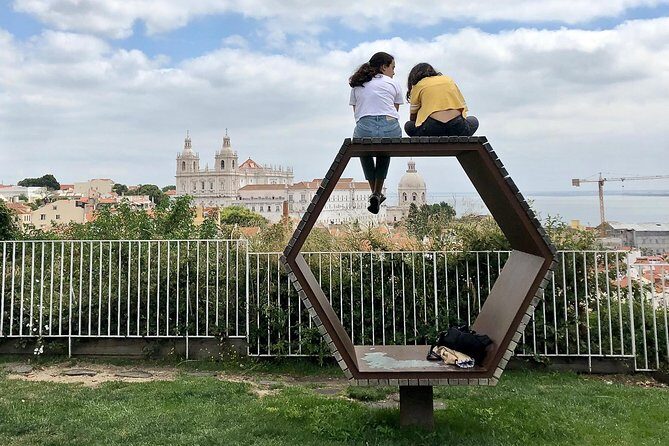
Next is Miradouro de Santa Luzia, where the balcony platforms are decorated with azulejos from different ages and styles. The effect is more than pretty tiles. It’s a visual metaphor for Lisbon itself: layers from different periods sitting side by side, coexisting instead of pretending they were born at the same time.
I love how this stop teaches you to slow down. You’re not just admiring a viewpoint. You’re noticing details: how the tiles change in style, color, and mood as you move across the surfaces. It makes the city feel older and more personal, like you’re looking at a living collection rather than a single landmark.
Possible drawback: if you’re expecting sweeping panoramic views like Portas do Sol, Santa Luzia is more intimate. Still great, just a different flavor of view.
Igreja de Santiago and the Camino connection
Then you’re at Igreja de Santiago, a Baroque St James church. The guide’s explanation matters here, because the symbolism links Lisbon to a much wider spiritual map. St James is associated with the Portuguese Camino to Compostela, and the church’s connection helps you understand why Lisbon’s religious landmarks aren’t isolated objects. They’re nodes in a bigger network.
There’s also a quieter historical thread at Largo do Contador, where you can look at residential houses that existed before the 1755 tsunami. This is one of those stops where you’ll understand something even if you don’t read every plaque. The city’s tragedies and rebuilds are written into the streets.
A practical note: churches often have moments when you’re inside briefly. Dress respectfully and keep your pace. It’s a walking tour, so you’re not there for a long sit-down.
Beco do Recolhimento inside the Castle’s residential edge
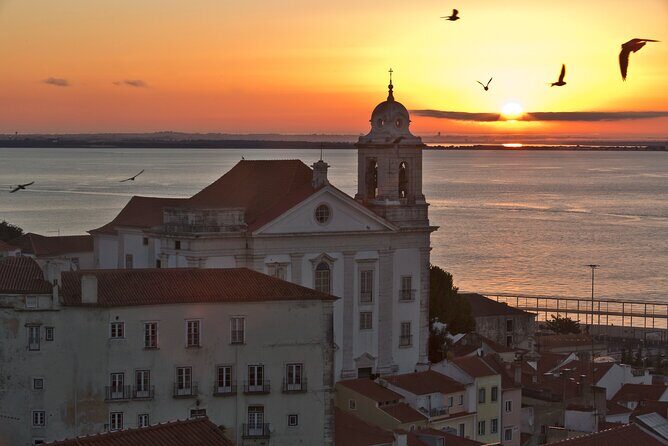
Beco do Recolhimento takes you into the residential half of the Castle of St. George area. This is a clever shift because many visitors focus only on the viewpoints and the big castle image. Here, you see the neighborhood side—where living and history overlap.
You’ll also hear about the Recolhimento garden and belvedere, described as a newer open space on the east side of town. Even without a long explanation, it’s a relief to find a garden moment during a tour filled with churches and streets. It breaks up the walking rhythm and gives you a place to reset.
If you want a mental check: try to imagine this part as the city’s everyday backdrop, not just its postcards. That mindset makes the rest of the afternoon click.
Teatro Romano: Rome didn’t quit, it got buried
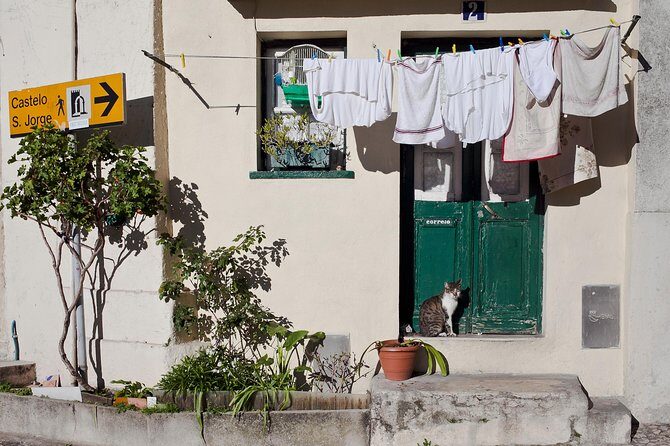
After the medieval and Baroque layers, the tour switches gears to ancient Lisbon with Museu de Lisboa – Teatro Romano. This is the kind of stop that makes Lisbon feel surprising in a good way.
Here’s what you’re looking at: ruins of a monument built under Caesar Augustus rule at the end of the first century BC, expanded in AD 57 and dedicated in Nero. Then—this is the part you’ll likely remember—the site was buried and forgotten, only reopened to the public in 2015.
That reopening detail adds a real-world feeling. You’re seeing something that’s not just a static ruin. It’s been rediscovered recently, and the city still has active work happening in its historical core.
One consideration: since this is a shorter visit time, don’t expect a deep museum-style experience. The value is in the quick, well-timed context from your guide, so you understand what you’re seeing before you move on.
You can also read our reviews of more private tours in Lisbon





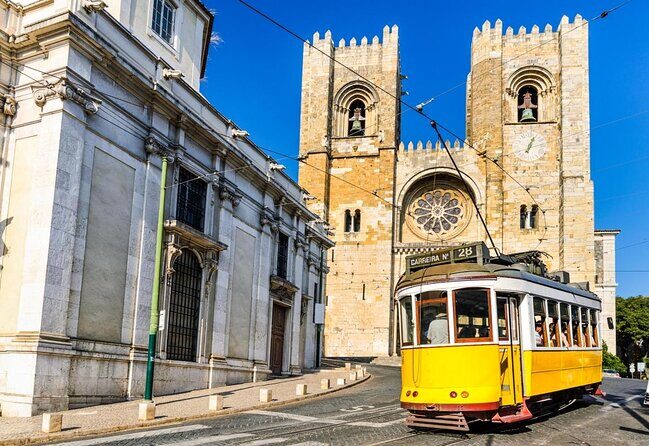
Lisbon Cathedral: Romanesque bones with fortress instincts
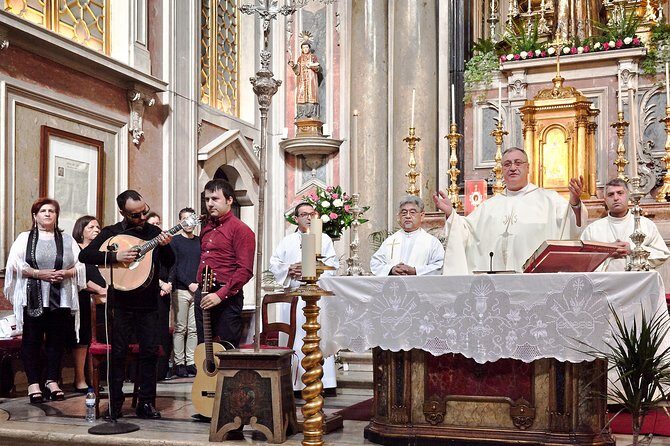
Next is Lisbon Cathedral, described as the first and only remaining Romanesque monument in town. That already sets expectations, because it means you’re seeing a style that didn’t survive widely in other places.
The tour frames it as half church, half fortress. That idea is more than trivia. It makes you look at the building as a structure designed for protection as much as worship. The explanation also covers a major rebuild in the 1930s of the 20th century, which helps explain why the cathedral feels both old and reorganized.
This stop is great for architecture lovers, but it also works if you just want meaning. The guide’s talk turns the building into a timeline you can walk around.
Practical tip: take a moment to notice thick edges and defensive-feeling angles. It’s a good exercise in learning to read architecture like a clue.
Church of St Anthony and the question everyone smiles about
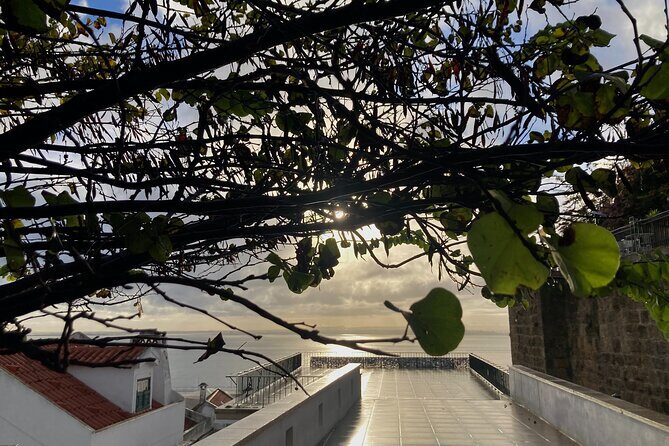
Church of St. Anthony is where tradition gets very specific. The tour connects it to the idea that the church was built on the room where St Anthony was born. That original room is now the crypt, and the crypt was rebuilt after the 1755 tsunami.
This stop is popular for a reason. Crypts and birth-room traditions make a saint feel less like a painting and more like a story rooted in real space. It also gives you a chance to see how Lisbon absorbed and rebuilt its sacred sites after disaster.
The tour includes a fun comparison: St Anthony or St Vincent—who’s Lisbon’s favorite saint. It’s a small moment, but it breaks the seriousness of the historical topics and reminds you Lisbon is still a living culture, not just a timeline.
If you’re visiting with kids, this is a good stop because it’s story-driven.
Roman tombstones at Lapides das Pedras Negras

Lapides das Pedras Negras is short, but memorable for the way it changes what you think you’ll see. You’re looking at amazing Roman tombstones embedded on the walls of an 18th-century residential building.
This is where the walking tour concept really pays off. You’re not waiting in line for a ticketed museum. You’re spotting layers of history embedded into ordinary city life. It feels like archaeology meeting daily routine.
Don’t rush this one. Spend a minute looking for inscriptions or the shape of the stones. The value here is in noticing.
Praca do Comercio: Lisbon’s riverfront rebuilt like theater
Then the tour opens out at Praca do Comercio, also known as Terreiro do Paco. This is Lisbon’s finest square by the river, and it has a big personality. The tour highlights how it was completely rebuilt after the 1755 tsunami, like a theatrical setting facing the Tagus and the sea.
The details matter: you’ll see the Column Pier, the King José statue, and the monumental arch. That combination makes the square feel designed, not accidental. It’s one of those places where you can understand city power and planning at a glance.
This stop is also useful for practical orientation. After lots of narrow streets and church interiors, the riverfront square helps you recalibrate. You’ll likely find it easier to navigate the rest of your day afterward.
If you’re visiting near events, you may catch activity on the square, since it hosts events throughout the year.
Igreja de Nossa Senhora da Conceicao Velha: late Gothic with royal symbolism
The final stop is Igreja de Nossa Senhora da Conceicao Velha, noted for a late Portuguese Gothic facade loaded with royal symbols, grotesques, and esoteric suggestions.
This is a good finishing point because it brings you back to details. You’ll likely spend more time looking up here than you expected, trying to connect the symbols the guide explains to what’s carved into the facade.
The practical upside: you don’t need a long visit. A focused look at a facade can be satisfying, especially after churches and viewpoints earlier in the walk.
If you want to take photos, do it carefully. Facades often have angles that look great in one spot and turn awkward in the next, so use the guide’s position as your reference.
How the private guide experience actually feels on the ground
The tour is private, and your group size is kept small, with a maximum of 15 people per booking. That matters because Lisbon’s old streets can be slow going. A small group keeps the conversation moving and the route flexible.
I also like that the tour includes a local professional guide and is described as offered in English. In one of the best examples from guide experiences, people highlighted Luis as considerate and very informative, and they also mentioned he was prepared for questions. That’s exactly what you want from a guide on a walking tour: answers that make you see patterns, not just facts you forget.
A common theme in real-world experiences is timing flexibility. One tour experience ran close to four hours, which suggests the guide doesn’t rush you if you’re asking questions. That can be a plus if you like to understand what you’re walking past, not just pass it.
Price and what you get for about $48
At $48.06 per person for about three hours, this is priced in the range you’d typically expect for a guided walking tour in a major European city. The value shows up in the mix:
- You get a private guide (not just a group audio tour).
- The itinerary includes multiple stops marked with free admission, so you’re not paying repeatedly to enter sights.
- The route is built to cover major Lisbon themes without a lot of backtracking.
What you need to budget separately is straightforward: food and drinks, and any transportation on your own. There’s also no hotel pickup, so you’ll start at the meeting point in the old center and make your own way there.
In other words, this tour is a good choice if you want structure and context while keeping your costs controlled.
Who this tour suits best
This is especially good for you if you want:
- A first-time Lisbon orientation that still leaves room for Lisbon’s smaller, quieter details
- A walking experience with history and culture explained in plain language
- Church-and-architecture curiosity, plus some Roman and post-1755 context
It may be less ideal if you:
- Want lots of sitting or long indoor museum time
- Have limited mobility and find stairs and uneven streets hard (you might still be able to participate, but you’ll want to choose comfortable pace and supportive shoes)
Quick booking decision: should you take it?
I’d book this tour if your goal is to understand Lisbon’s layers fast: river viewpoints, azulejos, Roman remnants, and the way 1755 shaped what you see. The free-entry stops also help you keep the day affordable.
I wouldn’t book it as your only activity if you hate walking. It’s about moving through neighborhoods, looking up at facades, and letting the guide connect the dots. If that sounds like your kind of day, you’ll probably enjoy how the pieces fit together.
If your schedule allows morning or afternoon options, pick the time when you’ll have the most energy for slopes and stairs.
FAQ
FAQ
How long is the Lisbon Off The Beaten Track and Main Sights private walking tour?
It’s approximately 3 hours.
How much does the tour cost per person?
The price is $48.06 per person.
Where does the tour start?
The tour starts at Largo Portas do Sol, 1100-411 Lisboa, Portugal.
Is it a private tour or a group tour?
It’s a private tour. Only your group will participate, with a minimum of 2 people and a maximum of 15 people per booking.
What language is the tour offered in?
The tour is offered in English.
Are tickets or admission fees included for the stops?
Each stop in the described route is marked as free admission, so you shouldn’t need to pay admission at these locations.
What’s included in the price?
Included are a professional local guide and a private tour/activity with a local guide. A mobile ticket is also included.
Is food or drinks included?
No, food and drinks are not included.
Do I need hotel pickup or transportation to the sights?
Hotel pickup and drop-off are not included, and transportation to/from attractions is not included.
What’s the cancellation policy?
You can cancel for a full refund up to 24 hours in advance. If you cancel less than 24 hours before the experience starts, the amount paid is not refunded.