REVIEW · LISBON
Lisbon´s Private Walking Sightseeing Tour
Book on Viator →Operated by TakingUThere · Bookable on Viator
Lisbon makes sense on foot. This private walk threads together Baixa, Alfama, and the best viewpoints so you get a real sense of how the city grew—earthquake rebuilding, Moorish roots, and Christian landmarks all in one loop. I like that your private guide can tailor the pace and priorities, and I really like the built-in shortcut approach for São Jorge Castle (the ticket is separate). One possible drawback: you’re dealing with hills, steps, and uneven cobblestones, so comfy shoes are not optional.
You start in the downtown core near the Arco da Rua Augusta and end at Miradouro de São Pedro de Alcântara, which is a smart way to end the day: you’re not walking the whole city back in reverse. The tour is offered in English, and it sticks to the historic center (not Belém), so you’ll be focused instead of bouncing across town.
If you want a practical way to understand Lisbon fast, this is a strong pick—especially if you enjoy history told through streets, not just plaques. Still, because monument entrances are not included, you’ll want to decide ahead of time which sites are worth paying for.
In This Review
- Key takeaways
- A private walking tour that actually fits Lisbon’s layout
- Starting at Arco da Rua Augusta: orientation and the big “wow” portal
- Baixa, Rossio, and Restauradores: built after 1755, felt today
- Terreiro do Paço: Lisbon’s front door to the river and the world
- Lisbon Cathedral and the Holy Door: religion shaped by conquest
- Roman Teatro in Lisbon: Olisipo under your feet
- São Jorge Castle: views plus the smart fast-track approach
- Miradouro de Santa Luzia: Alfama’s view comes with a viewpoint story
- Alfama: the oldest neighborhood, and why it feels different
- Bairro Alto and Largo do Carmo: viewpoints and the Convento do Carmo ruins
- Elevador de Santa Justa: the lift for your best Lisbon photos
- Praca Dom Pedro IV: the heavy side of Lisbon before you end
- Price, time, and what makes it good value
- Who should book this Lisbon walk
- Should you book this tour?
- FAQ
- How long is the Lisbon Private Walking Sightseeing Tour?
- Where does the tour start and end?
- Is this a private tour?
- What language is the tour offered in?
- Are entrance fees included?
- Will we skip long lines at São Jorge Castle?
- What happens if the weather is bad?
Key takeaways
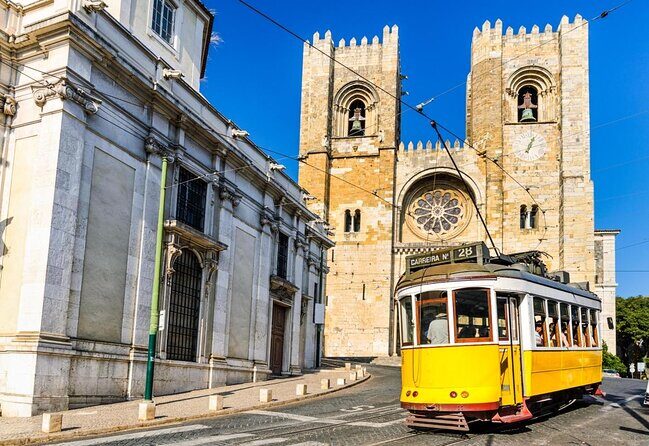
- Private, walkable focus: You and your guide only, moving through Lisbon’s historic core.
- Customize the day: Your route and pacing can shift to match what you care about most.
- São Jorge Castle fast-track help: Long lines are reduced, but entrance tickets aren’t included.
- Street-level storytelling: Earthquake rebuilding, Moor-to-Christian transitions, and Roman Lisbon connections are explained as you walk.
- Viewpoints built in: Santa Luzia, plus a photo moment from Elevador de Santa Justa.
- Expect hills: Moderate fitness helps for the steps and slopes around Alfama and viewpoints.
A private walking tour that actually fits Lisbon’s layout
Lisbon is famously hilly, and it’s also a city where “getting oriented” is half the fun. This is a private walking sightseeing tour built for that reality. You’re not just staring at buildings from a distance—you’re moving through neighborhoods that feel different block to block.
The duration is about 4 hours, and the route concentrates on the old town: Baixa down below, Alfama on the rise, and the in-between viewpoints. That makes it ideal if you’re short on time, but still want more than a surface overview.
Because it’s private, you can slow down for photos, pause for a question, or spend more time at one stop that clicks with you. The flip side is that the walk is still a walk. Lisbon’s sidewalks can be uneven, and parts of the day are definitely stairs-plus-slope. If you’re traveling with mobility limits, plan carefully and ask your guide to adjust where you can.
You can also read our reviews of more walking tours in Lisbon
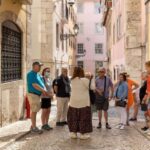


Starting at Arco da Rua Augusta: orientation and the big “wow” portal
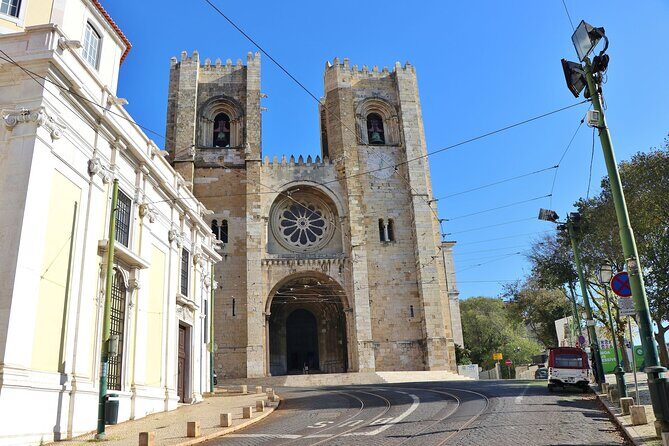
Your meeting point is right at Arco da Rua Augusta on Rua Augusta. From the start, you’re in the Baixa Pombalina area—the downtown zone Lisbon rebuilt after the 1755 earthquake. This matters because the architecture you see here is not random. It’s the city’s answer to disaster, built with a clear plan of squares and straight avenues.
Then you move from that wide, rebuilt downtown into the idea of a city entry “portal.” Passing under the Rua Augusta arch is more than a dramatic photo moment. It’s a reminder that Lisbon has always been both practical and theatrical about how it presents itself to the world.
What to watch for here:
- The straight avenues and interconnected squares, which feel surprisingly orderly compared with the older neighborhoods later
- The way the guide frames the earthquake rebuilding as a turning point, not just a date on a wall
Baixa, Rossio, and Restauradores: built after 1755, felt today
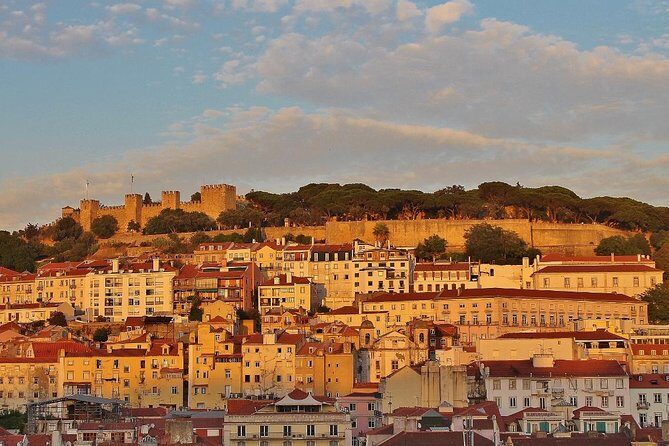
You spend time in Baixa, Rossio & Restauradores, the center of Lisbon after the 1755 earthquake. The tour description emphasizes the scale: roughly 255 hectares of reconstructed downtown. That’s your clue that this isn’t a tiny “old town corner.” It’s a whole city center reset.
This is a good stop for first timers because it gives your brain a grid. Later, when streets twist and slopes climb, you’ll understand what changed and why.
A small consideration: Baixa can feel busy simply because it’s the hub. A private guide helps you dodge the worst congestion by choosing when and where to pause, rather than you getting stuck in the busiest flow.
Terreiro do Paço: Lisbon’s front door to the river and the world
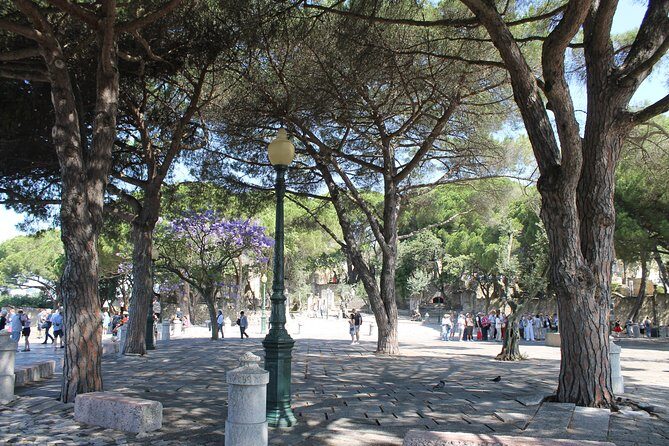
Next is Terreiro do Paço, where the tour connects Rua Augusta with Lisbon’s outward-facing story. The arch is described as moving from darkness and ignorance to light and wisdom—basically Lisbon telling you it’s a city of learning and direction.
Practical value: this is a great spot to do a quick “weather check” for your day. It’s open and you can gauge sun, wind, and visibility. That matters later when you’re heading to viewpoints like Santa Luzia.
Even if you don’t love speeches about symbolism, you’ll still get something useful: your guide sets context so the next religious and historic sites make more sense.
Lisbon Cathedral and the Holy Door: religion shaped by conquest
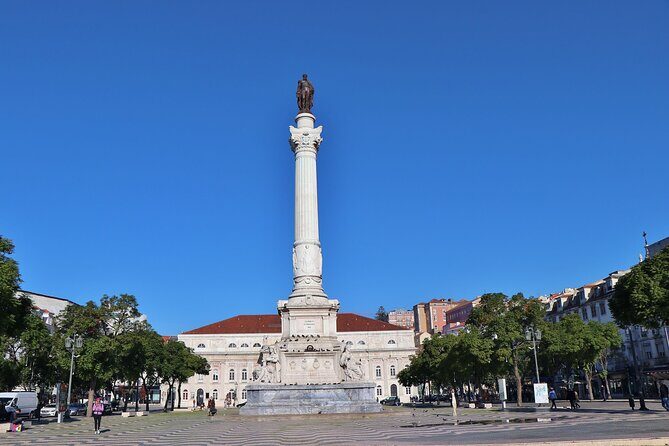
At Lisbon Cathedral, the focus is on the site’s layered identity. The tour explains that this area was once a mosque after Lisbon was conquered by Christians in the period following the Moorish era. The cathedral was built where the mosque stood, creating a physical marker of religious and political change.
One of the standout details here is the Holy Door. The tour notes it’s the only church in Portugal with a Holy Door, and one of the few in the Christian world. That’s the kind of detail that turns a regular cathedral stop into a specific, memorable Lisbon item.
How to use this stop:
- If you’re the type who likes to understand what you’re looking at, take the full explanation inside.
- If you’re more into quiet observation, you still get the architecture and the story once; then you can step back and absorb.
Also, since admission tickets aren’t included, you may need to decide on the spot whether you’ll pay to enter any paid areas.
You can also read our reviews of more private tours in Lisbon





Roman Teatro in Lisbon: Olisipo under your feet
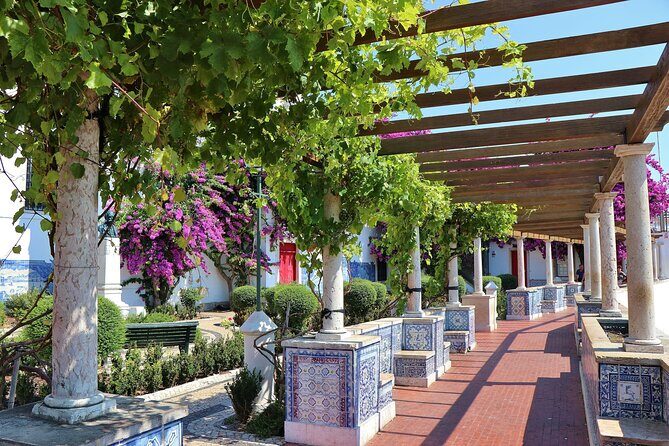
Then you’re off to Museu de Lisboa – Teatro Romano, focused on a Roman theater built in the first century under Emperor Augustus. The tour connects this site to the Roman city name Felicitas Iulia Olisipo, and it adds context about Lisbon’s importance after the peace across the empire, including commercial links and economic strength tied to the area’s sea-based wealth.
This is a great stop if you like Lisbon beyond postcard layers. It’s also a reminder that Lisbon isn’t just “Portuguese Lisbon.” It has Roman bones, and the earthquake story comes back again: the theater was abandoned in the fourth century, then discovered in 1798 after the 1755 earthquake-era rebuilding.
A practical note: this is a quick stop in the overall route (about 15 minutes). That means it works best if you treat it like a targeted “hit” rather than a long museum session. If you want more time, you’d likely build that separately.
São Jorge Castle: views plus the smart fast-track approach
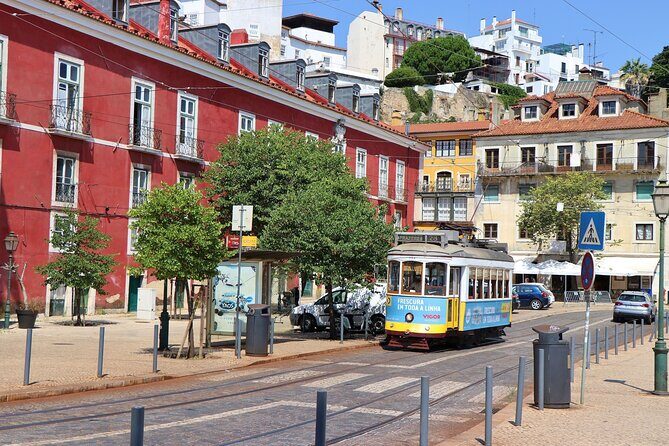
The highlight for many people is Castelo de São Jorge. Here, the tour ties the castle to the old medieval citadel, including Moorish fortifications and the Christian conquest under D. Afonso Henriques in 1147 after a siege.
The biggest practical advantage is the skip-the-long-lines idea for entering the castle area. The tour description is clear: tickets are not included, but your guide can arrange fast-track handling for the castle itself to reduce waiting.
What I’d do with this info:
- If you know you want to go inside, plan to purchase the ticket quickly (the guide may be able to help with fast-track). The goal is less standing around and more time enjoying the views.
- If you decide to skip paying, you can still enjoy the surrounding castle viewpoint moments, but you’ll lose the inside experience.
One more reality check: castle grounds are often the steepest part of the walking day. You’ll feel it even with a private guide working with your pace.
Miradouro de Santa Luzia: Alfama’s view comes with a viewpoint story
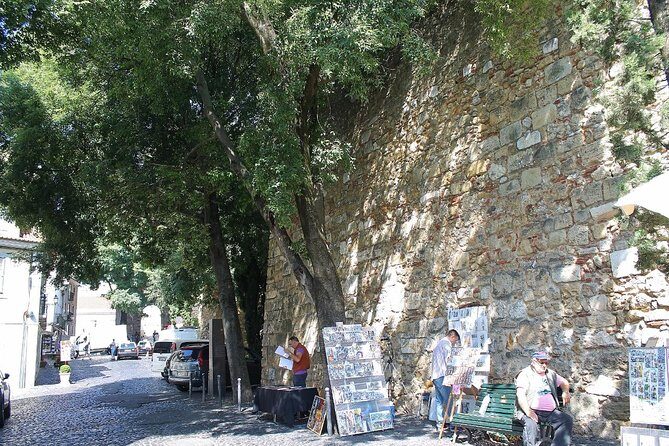
From São Jorge, the tour shifts to Miradouro de Santa Luzia. This viewpoint is described as one of the nicest in Lisbon, and it’s positioned so you can see Alfama, Lisbon’s oldest neighborhood.
The guide also adds a horizon detail: on good days you can see the Arrabida Natural Reserve, about 50 kilometers south. Whether you catch that depends on weather and visibility, but even without the distant view, the viewpoint angle gives you a real sense of Alfama’s tight streets and layered housing.
This is an ideal photo stop because it also anchors the day. Once you’ve seen Alfama from above, walking into it feels like stepping into a story you already understood.
Alfama: the oldest neighborhood, and why it feels different
Then comes Alfama, where the tour leans into the neighborhood’s older identity. The name is traced to Moorish roots (al-hamma, meaning baths or fountains). The streets here are the point: you’ll climb and descend, absorbing the neighborhood’s texture rather than rushing through a checklist.
This part is where you start to feel the contrast with Baixa. Baixa is planned and open. Alfama is tight, steep, and lived-in. A private guide helps you avoid turning it into just a stair workout. They can steer you toward the streets that best match your interests—views, architecture, or simply the vibe.
A key consideration: this is where the steps and cobblestones can feel most intense. If you’re traveling with anyone who tires easily, ask your guide to pause often. The tour is adjustable.
Bairro Alto and Largo do Carmo: viewpoints and the Convento do Carmo ruins
Next is Bairro Alto, a “climb” that helps you understand what you can do for the rest of your trip. It’s a short stop (about 15 minutes), but it gives you a sense of Lisbon’s westward energy and elevation.
Then you move to Largo do Carmo, surrounded by the Chiado area. The square is known for historical jacaranda trees, and the big draw is what remains of the Convento do Carmo. The tour points out the ruins and notes that the Archaeology Museum and the Carmo Museum are currently installed there.
This stop works well if you like Lisbon’s in-between layers: not fully restored, not erased—just marked by time. If you’re short on energy, spend more time observing and less time walking inside paid museum spaces since entrances aren’t included.
Elevador de Santa Justa: the lift for your best Lisbon photos
The tour then calls in Elevador de Santa Justa, a neo-Gothic structure built in 1902. The story here includes the engineer Raoul Mesnier du Ponsard and also the tour’s note that the popular Eiffel connection is more myth than fact.
Even if you’re not obsessed with engineering, this stop pays off visually. It’s a quick way to get a different angle over Lisbon and Rossio Square.
Practical advice:
- Wear shoes you trust. Moving through areas around lifts can be slippery or crowded.
- If you’re taking photos, plan for quick in-and-out timing so you don’t lose the rest of the day.
Again, entrance to attractions can involve paid tickets, since the tour doesn’t include monument fees.
Praca Dom Pedro IV: the heavy side of Lisbon before you end
Finally, you reach Praca Dom Pedro IV, where the tour doesn’t sugarcoat the past. It describes the square as the center of the Holy Inquisition in Portugal, with public punishments, tortures, and killings. It’s a reminder that Lisbon’s biggest historic moments aren’t always pleasant ones.
This “darker” stop is also a smart way to close the loop. You’ve moved from Lisbon’s rebirth (post-1755), through conquests and religious shifts, through Roman prosperity, and finally into the political-religious power structures that left marks in public places.
The tour ends at Miradouro de São Pedro de Alcântara, which is a strong final note. You get views after heavier context, which keeps the day from feeling like only one mood.
Price, time, and what makes it good value
At $60.01 per person, this tour sits in a pretty reasonable lane for a private, English-guided route that focuses on multiple major historic areas. The value comes from a few specifics:
- You’re getting a professional guide for about four hours, and you’re not paying for a large bus-group experience.
- The route covers a lot of ground across Lisbon’s most recognizable layers: Baixa, cathedral, Roman theater, castle, Alfama, viewpoints.
- The castle has fast-track help to reduce waiting (though the ticket itself is not included).
If you’re comparing to buying tickets and trying to self-tour, the guide’s job is to connect the dots. You’ll spend less time figuring out what matters and more time understanding what you’re looking at.
What can affect final cost: entrance fees vary by season, and since nothing is bundled, you’ll likely pay for whichever paid areas you choose to enter. If you’re trying to keep expenses tight, you can still enjoy many viewpoints and exterior areas, but you’ll have to accept that some “inside” parts require extra money.
Who should book this Lisbon walk
This is especially good for:
- First-time visitors who want their bearings fast, then use the rest of the trip to go deeper on what they liked
- People who enjoy history tied to places, not just general facts
- Couples and small groups who want flexibility and a guide who can adjust pacing
It’s less ideal for:
- Anyone who can’t handle hills and steps
- Travelers who want a museum-heavy day with long inside time (this walk is more about transitions and street-level context)
Language note, based on the experience quality you provided: the tour is offered in English, and some guides have clearly strong communication. Still, at least one past experience noted English could be harder to follow in a back-and-forth moment. If English precision matters a lot to you, I’d ask the operator what languages the guide will speak before you commit.
Should you book this tour?
Yes, if you want a high-signal introduction to Lisbon’s old town in a private format. The mix of Baixa rebuilding, Roman remnants, castle conquest stories, and Alfama’s lived street character is a smart way to understand Lisbon without needing to plan every turn.
Book it if you also like structure but not rigidity. The tour can adjust to your preferences, and that flexibility makes a huge difference on a hill city like Lisbon.
Skip or modify your expectations if you’re hoping for a purely “no-cost” day of free attractions. Since entrance tickets aren’t included, you’ll want to decide in advance what you’ll pay to enter—especially around São Jorge Castle and other monument areas.
If you tell me your travel dates and whether you care more about castles, churches, museums, or viewpoints, I can suggest a tight “what to prioritize” plan for this 4-hour window.
FAQ
How long is the Lisbon Private Walking Sightseeing Tour?
It runs for about 4 hours (approx.).
Where does the tour start and end?
It starts at Arco da Rua Augusta (R. Augusta 2, 1100-053 Lisboa) and ends at Miradouro de São Pedro de Alcântara (R. de São Pedro de Alcântara, 1250-238 Lisboa).
Is this a private tour?
Yes. It’s a private tour/activity, so only your group participates.
What language is the tour offered in?
It’s offered in English.
Are entrance fees included?
No. Entrance tickets to monuments and parks are not included, and fees vary by tourism season.
Will we skip long lines at São Jorge Castle?
The tour description says you’ll get guaranteed skip-the-long-lines fast-pass access for São Jorge Castle, but the ticket is not included.
What happens if the weather is bad?
The tour requires good weather. If it’s canceled due to poor weather, you’ll be offered a different date or a full refund.