REVIEW · LISBON
Lisbon Essential – Private Walking Tour
Book on Viator →Operated by Lisboa Autêntica · Bookable on Viator
Lisbon can feel like a giant set of hills and shortcuts, but this private walking tour helps you make sense of it fast. You cover classic areas like Bairro Alto, Alfama, and Lisbon Cathedral, plus you get real context on how the city changed after big events.
I especially like the mix of scenes: a couple of major miradouros for views, then interior stops where Lisbon’s art and architecture show their personality. The second win is the pacing—this is private, so your guide can slow down for the stairs and hills without turning it into a race.
One thing to consider: this route includes noticeable uphill and downhill walking, so good shoes matter. And if you’re set on going up Santa Justa’s elevator, budget extra since it isn’t included.
In This Review
- Key highlights worth your attention
- Lisbon in Three Hours: the value of a private, do-the-essentials route
- Bairro Alto: where Lisbon’s hill life gets explained fast
- Miradouro São Pedro de Alcântara: garden stroll, city panorama
- Igreja de São Roque: where the outside is plain and the inside does the talking
- Igreja do Carmo and the 1974 Carnation Revolution connection
- Santa Justa elevator: a best-viewpoint moment, minus the cost
- Baixa café break: coffee and pastry included, and you’ll need it
- Praca da Figueira and the tram ride up to Portas do Sol
- Alfama at Portas do Sol: fado streets, saint festivals, and slow moments
- Lisbon Cathedral: ending at 1150 and watching styles change
- Who should book this private walking tour, and who should skip it
- Should you book Lisbon Essential – Private Walking Tour?
- FAQ
- How long is the Lisbon Essential private walking tour?
- What does the tour cost?
- Is this tour private?
- What’s included in the price?
- What is not included?
- Are there any free admissions on the route?
- What language is the tour offered in?
- Is it suitable for most people?
- Is Santa Justa included?
- Can I cancel for a full refund?
Key highlights worth your attention
- Private guide attention with a flexible pace for your group
- Bairro Alto + viewpoints that help you orient in a few hours
- Jesuit and Gothic stops like São Roque and Carmo, with more than just photos
- Tram time included, including an iconic ride linked to Tram 28 routes
- Café break with coffee and pastry in Baixa
- Finale at Lisbon Cathedral, built in 1150 and altered over time
Lisbon in Three Hours: the value of a private, do-the-essentials route
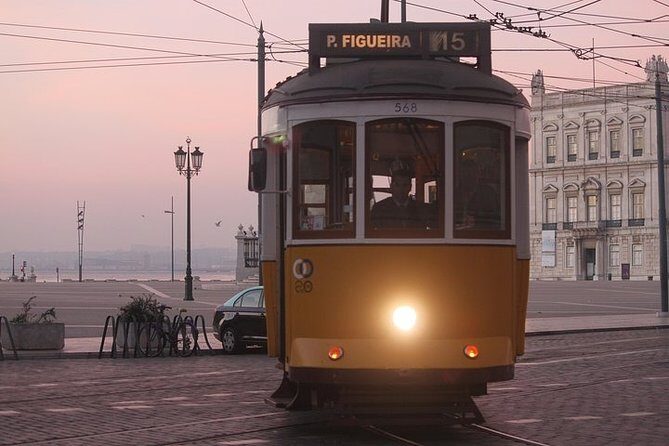
If you’ve got limited time, Lisbon can be a lot. This tour is built for the first-timer or short-stay visitor who wants the famous stops without wandering in circles. You’re out for about 3 hours, and you’ll move through several neighborhoods that feel like different versions of the city.
The private format is where the value really shows. You’re not squeezing into a big group rhythm. Your guide can adjust to your questions, and you can take breaks without feeling like you’re holding everyone up. One review mentioned a guide named Beatrice, and it’s easy to see why that kind of personal attention matters when you’re walking up and down Lisbon’s slopes.
Price-wise, it’s $66.09 per person. That number has a twist: there’s a minimum of 2 people per booking, and if you go alone the value is the same as for two. So the tour is best when you can pair up with a friend, family member, or travel buddy—or when private attention is your top priority and you’re okay paying for it.
You also get practical inclusions that reduce decision fatigue:
- A coffee and cake/pastry break
- A tram ride (with the tour aligning with Tram 28 routes in at least one version)
- Entry is free for multiple major church/museum stops on the route
- Liability and personal accident insurance (always a comforting checkbox)
You can also read our reviews of more walking tours in Lisbon


Bairro Alto: where Lisbon’s hill life gets explained fast

You start in Bairro Alto, one of Lisbon’s most photogenic hill areas. This is the part of the city that makes you understand why Lisbon postcards always show rooftops, staircases, and angles that look slightly impossible in real life. You’ll learn how the neighborhood evolved, including the way the space was shaped after the 1755 earthquake.
Why this first stop works: it gives you a story before you start collecting sights. You’re not just ticking off names. You’re building a mental map of how people moved, rebuilt, and reorganized life in the city’s ups and downs.
What you’ll actually experience:
- A walk through an area that’s tied to Lisbon’s changing history
- Panoramic thinking right from the start, since Bairro Alto is all about elevation and perspective
A small practical note: even if you’re fit, you’ll feel those Lisbon streets. The upside is that this is also where your legs get warmed up—so later viewpoints don’t feel like surprise workouts.
Miradouro São Pedro de Alcântara: garden stroll, city panorama
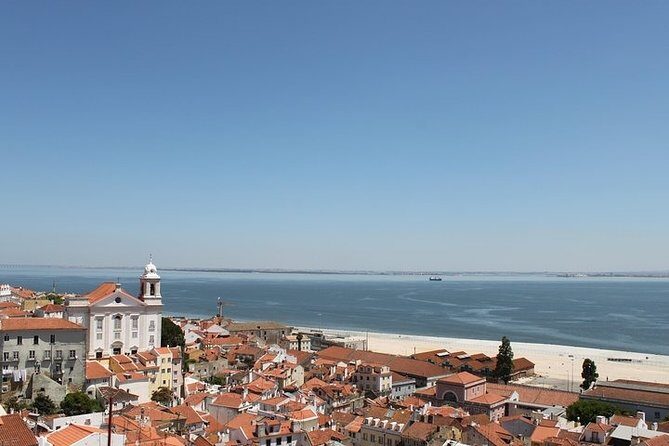
From Bairro Alto, the route nudges you toward Miradouro São Pedro de Alcântara. You’ll pass through the garden there and take in views over Baixa and the south bank of the Tagus.
This stop is valuable because it resets your perspective. Lisbon is layered. From a miradouro, the city stops feeling like separate neighborhoods and starts looking like a system—hills, river, and districts stacked together.
The main drawback? Miradouros can get busy, especially late morning and into the afternoon. You’ll still get your moment, but if you’re the type who hates crowds, plan to linger just long enough to take photos and then move on with your group.
Igreja de São Roque: where the outside is plain and the inside does the talking

Next comes Igreja de São Roque, a Jesuit church and museum stop that changes the mood of the tour. From street level, the façade can look austere. Then you’re inside, and the tone shifts to the kind of visual richness you usually hear about in art books—gilding, tiles, and paintings—all tied to Mannerist and Baroque styles.
Why I like this stop for a short tour: you’re not just seeing architecture. You’re seeing Lisbon’s taste in materials and detail. It also helps break up the “viewpoint-to-viewpoint” rhythm so you don’t feel like you’re only collecting screenshots.
Time on this stop is about 20 minutes, so it’s long enough to feel what’s going on, but not so long you get museum fatigue.
Igreja do Carmo and the 1974 Carnation Revolution connection
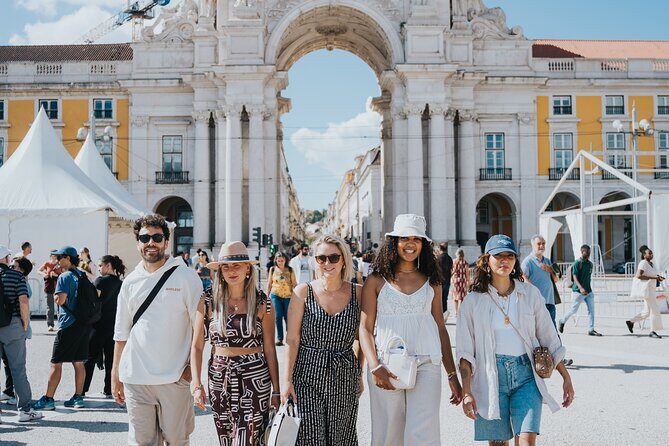
Heading downhill, you’ll reach the Igreja do Carmo and convent area. This is where the city’s stonework matters for more than aesthetics. The church is tied to Gothic architecture, and the site also connects to modern Portuguese history: the Carnation Revolution began here in 1974, ending nearly five decades of dictatorship.
This is one of those stops where your guide’s explanations really change the experience. You’ll walk through the space with context instead of treating it like a quick checkmark.
A practical consideration: because it’s on the slope, you’ll likely feel the transition from viewpoint walking to stair/downhill steps. The upside is you keep moving, and the energy stays up.
You can also read our reviews of more private tours in Lisbon





Santa Justa elevator: a best-viewpoint moment, minus the cost

After Carmo, you arrive at Elevador de Santa Justa. It’s described as a Gothic Revival-style monument, and it’s known for offering some of the best viewpoints in Lisbon.
Important detail: the elevator admission is not included. So you’re looking at two different experiences depending on what you want:
- If you want the viewpoint without extra ticketing, you can still enjoy the stop as a landmark moment.
- If you want the elevator ride and the payoff of height, you’ll need to pay separately.
This is a good place to ask your guide what’s worth it for your timing. For some people, the views are the whole point. For others, you’ll have already gotten great panoramas at miradouros.
Baixa café break: coffee and pastry included, and you’ll need it

Then comes a very Lisbon reset in Baixa de Lisboa: a coffee and pastry stop in a local café. This part is included, so you don’t have to figure out where to eat while your legs are already plotting revenge.
Why this matters: Lisbon walking turns your appetite on. A break like this also gives you a chance to refuel without losing tour momentum.
If you’re sensitive to midday queues, go easy on impulse ordering. Your time is planned, and the tour gives you a focused pause instead of leaving you to guess.
Praca da Figueira and the tram ride up to Portas do Sol

From Baixa, you’ll visit Praca da Figueira and take a short break. Then the tour includes a tram ride going up from the castle area toward Portas do Sol.
This is a big deal for two reasons:
- It turns a tough slope into a ride, saving your energy for Alfama.
- It adds that unmistakably Lisbon transportation vibe—especially when the route lines up with Tram 28 as described in one of the experiences.
Expect this section to feel like moving from “city tour” into “Lisbon by the senses.” You’ll be seeing the city as the streets curve and rise.
Alfama at Portas do Sol: fado streets, saint festivals, and slow moments
At Portas do Sol, the tour sets you up for Alfama. You’ll be in the right place to spot major landmarks like the Monastery of São Vicente de Fora and the National Pantheon, and then you’ll get oriented in Alfama, a neighborhood of narrow streets and classic Lisbon atmosphere.
Alfama is known for fado houses and for saint festivals, especially St. Anthony. Even if you’re not there during festival week, the neighborhood’s traditions shape how it feels.
This stop is about 20 minutes. That’s enough time to appreciate the vibe and get your bearings, without pretending you can master Alfama’s winding maze in one go.
One practical tip: Alfama’s streets can be slippery after rain and uneven underfoot. Go slow on corners, and let your guide lead you rather than cutting across narrow lanes on your own.
Lisbon Cathedral: ending at 1150 and watching styles change
The tour ends at Lisbon Cathedral. Built in 1150, it was constructed about three years after Lisbon was taken back from the Moors. Over time, the building was changed and updated, resulting in a mix of architectural styles.
This ending makes sense because you finish where Lisbon’s layers are easy to see in stone. You started with neighborhood evolution in Bairro Alto, and you end with a site that literally shows you centuries of change.
Admission is listed as free, so you’re not adding another fee at the last stop. The cathedral setting also gives you a natural place to wrap the tour, then branch out for your next plan.
Who should book this private walking tour, and who should skip it
Book this if:
- You want a short, efficient introduction to Lisbon’s top areas
- You care about context, not just “Here’s a building” sightseeing
- You like tours where the guide can manage pacing, especially with hills
You might skip it if:
- You hate walking on slopes and stairs. This route includes uphill and downhill, and while the pace can be held to you, you’ll still be moving a lot in three hours.
- You want a very deep history-only tour. You’ll get meaningful context, but the goal here is essentials plus atmosphere.
This is also a strong fit for couples or small groups because it’s private, and the guide’s attention stays with your group. If you’re traveling with kids, it may work depending on their stamina, since multiple stops are on a hill route.
Should you book Lisbon Essential – Private Walking Tour?
If your goal is get your bearings fast and still feel like you saw Lisbon’s real personality, I think this is a great buy. The mix of hills, churches, viewpoints, and one included café break is practical, and the private format makes the whole thing feel less like a checklist and more like a guided walk with a local storyteller.
I’d book it if you want value without overplanning: most admissions on the route are free, the tram portion and coffee/pastry are included, and you end somewhere useful for continuing your day.
Just do two things before you go: wear comfortable shoes, and decide in advance whether you want to pay extra for Santa Justa’s elevator. If you’re on the fence, ask your guide at that stop what’s most worth it for your priorities and timing.
FAQ
How long is the Lisbon Essential private walking tour?
It’s about 3 hours.
What does the tour cost?
The price is $66.09 per person.
Is this tour private?
Yes. It’s a private tour/activity, so only your group participates.
What’s included in the price?
You get a professional guide, a coffee and pastry break, a tram trip, and liability and personal accident insurance.
What is not included?
Your ticket for Elevador de Santa Justa is not included, and other food and beverages are not included. Transfers to and from the meeting point are also not included.
Are there any free admissions on the route?
Yes. Several stops list admission ticket free, including Bairro Alto areas, São Pedro de Alcântara viewpoints, Igreja de São Roque, Igreja do Carmo, many Alfama-related sights, and Lisbon Cathedral.
What language is the tour offered in?
The tour is offered in English for this listing, and there are multiple language options available when you book.
Is it suitable for most people?
Most travelers can participate, but be ready for walking with uphill and downhill.
Is Santa Justa included?
No. The stop at Elevador de Santa Justa is included as a visit/viewpoint moment, but the elevator ticket is not included.
Can I cancel for a full refund?
Yes. You can cancel up to 24 hours in advance for a full refund. If you cancel less than 24 hours before, the amount paid is not refunded.