REVIEW · LISBON
Lisbon: Belem Walking Tour with Jeronimos Monastery Entry
Book on GetYourGuide →Operated by LP FASSI SIMARDI VIAGENS E TURISMO ME · Bookable on GetYourGuide
Belém has a way of turning Lisbon history into something you can see—and this tour is built to help you make sense of it fast. You start at Mosteiro dos Jerónimos, go inside with an English-speaking guide, then walk the short route through the Belém landmarks tied to Portugal’s Age of Discoveries. I like that the visit isn’t just sightseeing; it’s timed so you get into the Jeronimos Monastery area early, when the lines are at their worst later in the day.
What I especially like is the pairing: real Pastéis de Belém at the end of the monastery portion, and a guide who points out the meaning behind the architecture and tombs. One consideration: the Belém Tower is under restoration and can’t be visited, so you’ll get sightseeing and context, but not full tower access.
In This Review
- Quick take: the best parts of the tour
- Skip the long queue at Jerónimos Monastery (and get more out of it)
- The Upper Cloister views: where the architecture is the lesson
- Lower Cloister rooms and Fernando Pessoa’s tomb
- Santa Maria de Belém Church: Manueline architecture, plus the famous names
- The walking link through Belém: small legs, big context
- Pastéis de Belém stop: why this tart matters
- Belém Tower area: what you’ll see with restoration limits
- Timing, group style, and what to bring for a smooth morning
- Value for $70: what you’re really paying for
- Who this tour fits best
- Should you book this Lisbon Belém walking tour with Jerónimos entry?
- FAQ
- How long is the Jerónimos Monastery and Belém walking tour?
- What’s included in the price?
- Where do we meet for the tour?
- Is Jerónimos Monastery entry included, and do we skip the line?
- Can we visit the Belém Tower during the tour?
- Does the tour run in bad weather?
- Is this tour suitable for people with mobility impairments?
- Can I cancel or change my plans?
Quick take: the best parts of the tour
- Skip-the-line Jerónimos Monastery entry with tickets already purchased, so you spend less time stuck outdoors
- Upper and lower cloisters explained with clear links to Portugal’s 15th and 16th century voyages
- Manueline architecture and major tombs made understandable, including Vasco da Gama and Luís Vaz de Camões
- Pastéis de Belém stop included, with the classic custard tart from the historic shop
- Belém landmarks on foot in one compact morning: Empire Square Garden, Monument to the Discoveries, and Torre de Belém area
- Guides with strong performance—names you may hear include Luis, Leonardo, Leo, Federico, and Daniel
Skip the long queue at Jerónimos Monastery (and get more out of it)
The biggest practical win here is simple: your guide meets you at Mosteiro dos Jerónimos while queues form at the entrance, and your entry tickets are already handled. That means you’re not spending the first chunk of your morning scanning wristbands and ticket desks while the best part of the building stays on pause. One review specifically called out how the separate entrance saved serious time.
You’ll head in around 9:30 a.m., which is smart. This is when light, energy, and crowd levels tend to work in your favor. Also, there’s a pacing benefit: when you arrive early, the guide can give context before you’re staring at carvings and trying to guess what you’re looking at.
Inside, the tour’s structure matters. It starts with the cloister, then moves down into the key rooms and tomb areas, and only then heads to the church. If you’ve ever visited a major monument with minimal signage, you already know the problem: you can admire it, but you might miss what the details are actually saying. With this tour, the guide gives you the story in the right order so your eyes know where to land.
You can also read our reviews of more walking tours in Lisbon


The Upper Cloister views: where the architecture is the lesson
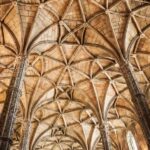
Your visit begins at the Upper Cloister. This is one of those spaces where you’re not just looking at a courtyard—you’re seeing a design system. The guide explains the meanings behind the complex construction and why it mattered for society at the time.
Here’s why this part is worth doing with a guide: the Jerónimos complex is tied to the height of Portuguese maritime power in the 15th and 16th centuries. When you hear that Great Portuguese Navigations context out loud before you’re standing there, the building stops feeling like random “old stone” and starts feeling like messaging—religion, empire, and identity built into architecture.
And yes, you’ll get spectacular views. The cloister is a natural “reset” moment too: you catch your breath, orient yourself, and then the tour moves into the spaces that feel more intimate and specific.
Lower Cloister rooms and Fernando Pessoa’s tomb
After the Upper Cloister, the tour heads into the lower cloister section, where several key spaces are included in the visit: the Chapter Room, the old Refectory, and the tomb area connected to Fernando Pessoa.
One detail that helps you understand the layers of the building: Pessoa’s tomb location was moved to this space only in the 20th century. That’s a strong reminder that Jerónimos isn’t just a 1500s monument frozen in time. It continues to gather meaning as Portugal changes.
Also, the guide’s job here is to make the rooms feel connected, not like separate stops. When you hear what these spaces were used for—especially in relation to the religious community—your tour feels tighter and more coherent.
Santa Maria de Belém Church: Manueline architecture, plus the famous names
Next comes the church: Santa Maria de Belém Church. This is where the tour becomes more than “a pretty place.” It’s a peak example of Manueline architecture, a style that blends late Gothic forms with Renaissance elements and developed in Portugal around the early 16th century.
The guide ties it to the height of Portugal’s power—especially the navigations era—so the ornamentation doesn’t feel decorative only. You’re getting the logic behind the look.
You’ll also learn about prominent burials inside the church area, including members of the Avis dynasty such as King D. Manuel I and João III, plus key figures linked to the navigation era: Vasco da Gama and Luís Vaz de Camões. This is the part where names turn into place. Without a guide, it’s easy to miss how meaningful those names are to Portugal’s story and how they relate to the building’s purpose.
The walking link through Belém: small legs, big context
After the monastery portion, the tour shifts gears into “on-your-feet” Belém.
You’ll walk about 15 minutes to Empire Square Garden. This stretch helps you breathe between major interiors. It also gives you a mental reset so the next monument stops don’t feel like a blur of stone.
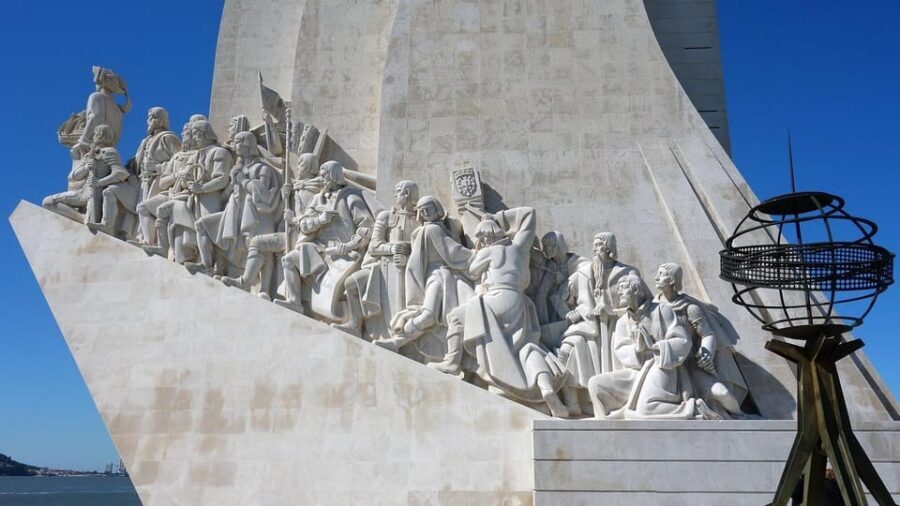
Then you get a guided stop at the Monument to the Discoveries. The monument was erected in 1960 to commemorate the 500th anniversary of Infante D. Henrique’s death—the central figure often associated with Portuguese navigations. You’ll see other figures from the navigation era represented there too, and the guide connects them back to what you saw earlier in the cloisters and church.
This is the value of the tour’s rhythm: it doesn’t just list facts. It repeats themes. Maritime ambition and national identity show up in the monastery, then again outside in the monument built centuries later to remember that legacy.



Pastéis de Belém stop: why this tart matters
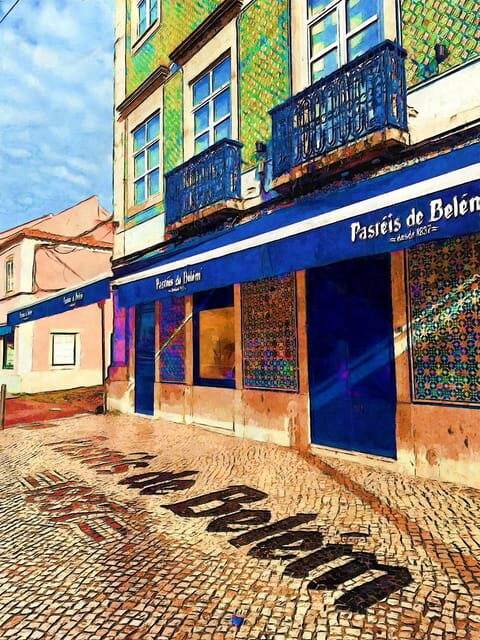
Before you finish the rest of the circuit, you make a stop at Pastéis de Belém. This is included, and you get to try the original Lisbon custard tart—Pastel de Belém—made using an ancient recipe created by monks connected to the Jerónimos Monastery.
The shop stop lasts about 30 minutes, which is enough time to eat without turning the tour into a food crawl. It’s also a smart moment to break the history loop. After seeing names like Vasco da Gama and Luís Vaz de Camões, it’s satisfying to hit something you can actually taste and take with you.
If you care about authenticity, this stop is the right kind of included experience. It’s not a random pastry detour. It’s anchored to the monastery story you just spent time learning.
Belém Tower area: what you’ll see with restoration limits
You then reach the famous Belém Tower area with about a 15-minute guided sightseeing stop. Here’s the key reality check: the tower is under restoration work and cannot be visited during this tour.
So what do you get? You still go there, you still get the architectural and historical framing, and you can still appreciate the site from outside. Reviews echo that the guide provided plenty of context even when the tower itself wasn’t accessible.
This matters because the tower and Jerónimos together form a UNESCO World Heritage Site designation. The guide explains the defensive purpose of the tower—meant to protect against invaders reaching Lisbon—and ties it back to the era when Portugal’s wealth and attention shifted outward toward overseas routes.
It’s worth mentally planning for the idea that you’re completing the “Belém picture,” not necessarily checking every “inside access” box.
Timing, group style, and what to bring for a smooth morning
This tour runs about 3 to 3.5 hours. That’s a sweet spot for Belém: long enough to do Jerónimos properly, short enough that you’re not stuck committing your whole day to one neighborhood.
You’ll also want to be ready for changing weather. The tour takes place rain or shine. Bring sunscreen, a sun hat, and something for rain. Comfortable shoes are non-negotiable; you’re doing interiors and walking segments.
Arrival timing matters too. The tour specifically asks you not to be late, because the schedule affects everyone else in the group. One reviewer noted a near-miss caused by travel delays before the tour—so leave buffer time if you’re getting there by rideshare or public transit.
Also, it’s not set up for wheelchair users or people with mobility impairments. That’s important because cloisters, church areas, and uneven ground can limit access.
Value for $70: what you’re really paying for
At $70 per person, you’re paying for three things that are hard to replicate alone:
- Monastery entry handled in advance, plus skip-the-line timing through a separate entrance
- Guided interpretation, including details you’d likely miss in a building with limited signage
- An included Pastéis de Belém tasting, not just a suggestion to stop nearby
If you tried to do Jerónimos on your own, you’d likely face the line issue first, then you’d have to translate the architecture and tomb significance yourself. The guide is the multiplier. And the pastry inclusion makes the experience feel like a complete loop: learn first, taste after.
This is also why the early start matters. If you’re paying for time savings and a guided sequence, losing that morning cushion cuts the value.
Who this tour fits best
This is ideal if you want Belém’s top sights without slowing down to figure everything out on the fly.
You’ll be happiest if you:
- like architecture plus context, not just photos
- want history explained clearly in English
- prefer a structured walk where stops build on each other
- care about authenticity, especially with Pastéis de Belém as an included taste
If you want minimal walking, or you’re only interested in tower views and nothing else, the restoration limitation may affect your satisfaction. But if you’re there for Jerónimos and the whole Belém story, this tour is a strong way to spend half a morning.
Should you book this Lisbon Belém walking tour with Jerónimos entry?
Yes, if your priority is Jerónimos Monastery and you want it to make sense. The skip-the-line entry, the guided explanation of Upper and lower cloisters, and the focus on Manueline architecture plus major tomb names are the heart of the experience. Add the included Pastéis de Belém, and you get a tour that ends with something you can genuinely enjoy rather than just move on.
I would book with extra realism if the Belém Tower is high on your list as an “inside visit.” Since it’s undergoing restoration and can’t be entered here, you’re planning for exterior sightseeing.
If you match the tour style—history, architecture, and a tight morning—this is one of the better ways to experience Belém without wasting hours.
FAQ
How long is the Jerónimos Monastery and Belém walking tour?
The tour lasts about 3 to 3.5 hours.
What’s included in the price?
Your ticket includes entrance to Jerónimos Monastery, an original Pastel de Belém (custard tart), and an English-speaking tour guide.
Where do we meet for the tour?
Meet your guide in front of the entrance to Jerónimos Monastery, where queues form, near the south entrance to the church. The meeting place is identified by a specific photo.
Is Jerónimos Monastery entry included, and do we skip the line?
Yes. Entrance tickets are included, and the tour uses a separate entrance to help you avoid the main line.
Can we visit the Belém Tower during the tour?
No. The Belém Tower is undergoing restoration work and cannot be visited, but you’ll still do sightseeing around the area.
Does the tour run in bad weather?
Yes. The tour happens rain or shine.
Is this tour suitable for people with mobility impairments?
No. It is not suitable for people with mobility impairments or wheelchair users.
Can I cancel or change my plans?
There is free cancellation up to 24 hours in advance for a full refund, and you can reserve now and pay later.