REVIEW · LISBON
Alfama Walking Tour Lisbon
Book on Viator →Operated by Discover Lisbon · Bookable on Viator
Lisbon’s hills start working fast. This 2.5-hour Alfama walk strings together major Lisbon landmarks and tight alley energy, with a stop at Miradouro Portas do Sol that gives you the view that makes the whole neighborhood click. It’s not a long trek with random detours; it’s a guided route with enough time at each place to actually look.
I especially like the way the guide weaves storytelling into the route, including earthquake and destruction history that explains why Lisbon looks the way it does. Second, I like the small-group feel: the tour caps at 100 people, and it includes a mobile ticket so you’re not hunting for paper.
One thing to plan for is the pace and the physical side. You’re walking uphill in parts, and it can get hot, so I’d show up ready with sunscreen and a hat, plus a calm expectation that guides may talk quickly.
In This Review
- Key things that make this Alfama walk worth your time
- Price and logistics you should actually understand
- Where you start and how the route flows through Alfama
- Stop 1: Praça Dom Pedro IV and the Miradouro Portas do Sol moment
- Stop 2: Teatro Nacional Dona Maria II from the outside
- Stop 3: Igreja de S Domingos—going inside for history and facts
- Stop 4: Castelo de São Jorge—time on the hill with big timeline context
- The earthquake stories that connect the whole route
- Guide quality: why names like Natalia, Belen, Guilherme, Ana, Vivian, and Valérie show up
- Pacing, heat, and comfort tips that keep the walk enjoyable
- Extras you might like: viewpoints and the food-and-drink pull
- Who this tour fits best (and who should choose a different format)
- Should you book the Alfama Walking Tour with Discover Lisbon?
- FAQ
- How long is the Alfama Walking Tour?
- Where does the tour start and end?
- What language is the tour offered in?
- What does the tour cost?
- What’s included in the tour price?
- What is not included?
- Do I need to print anything for entry?
- Is there a limit on group size?
- Is the tour dependent on weather?
- What are the key cancellation rules?
Key things that make this Alfama walk worth your time
- Rossio start, Lisbon Cathedral finish: you build momentum across the center and end in a meaningful spot
- Portas do Sol viewpoint time: the best payoff for the uphill section
- Outside views plus one real church interior: you get variety without turning it into museum duty
- Earthquake stories and legends: the route has context, not just facts on a sign
- Guide quality shows up in real reviews: people highlight names like Natalia, Belen, Guilherme, Ana, Vivian, and Valérie
- Free-entry stops on the itinerary: most of what you see is ticket-free for this walk
Price and logistics you should actually understand

At around $0.35 per person, this is priced like a bargain—and that’s exactly why it can feel great if you go in with the right expectations. You’re paying for an expert local guide and a structured walk, not for transport or a food-and-drink festival.
Also note what’s not included. There’s no transport ticket, and wine/ginjinha tasting isn’t included. Still, some guides may find ways to work in small tastings or drink breaks during the walk, based on what people reported—so it can be a plus, but don’t treat it as guaranteed.
Timing-wise, it’s roughly 2 hours 30 minutes. Some stops are short—think around 10 to 15 minutes—so you’ll want comfortable shoes and a willingness to move. If you prefer slow, lingering visits with lots of quiet time, this format might feel a little “on the go.”
You can also read our reviews of more walking tours in Lisbon


Where you start and how the route flows through Alfama
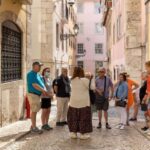
The meeting point is Praça Dom Pedro IV (1100 Lisboa, Portugal). The walk ends at Lisbon Cathedral (Largo da Sé 1, 1100-585 Lisboa, Portugal). That end point matters: it’s a strong “final frame” for your photos and for the story the guide has been building.
The route is designed so you’re not just stuck in one patch of old streets. You start near major central streets, then angle toward the heart of Alfama, and along the way you hit key cultural landmarks plus a classic viewpoint. By the time you finish at the cathedral area, you’ve got both the vibe and the context.
The good news: it’s near public transportation. That helps if you want to start the day with one thing and then connect to this on foot. It’s also offered in English, and most people can participate—though “most” still means you should expect uphill walking.
Stop 1: Praça Dom Pedro IV and the Miradouro Portas do Sol moment
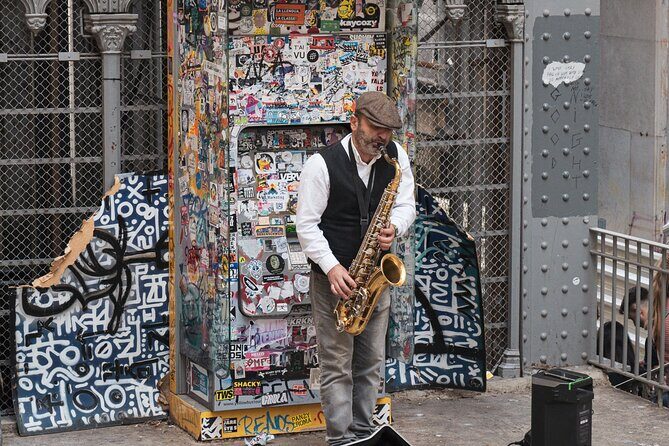
You begin at Praça Dom Pedro IV, and from there the guide leads you through the city before steering you toward Alfama. The route includes a stop at Miradouro Portas do Sol, which is one of those places you understand instantly once you see it.
This is the part of the tour where the hills start to pay off. You’ll get a viewpoint break built into the walking plan, so you’re not saving the best views for the end while you’re tired. It’s also a smart pacing choice: you’re still fresh enough to enjoy the scene and take photos without rushing.
One practical consideration: if it’s a bright day, that open viewpoint can be exposed. Reviews specifically call out heat—so sunscreen and a hat are not optional-sounding advice; they’re the difference between enjoying the view and just enduring it.
Stop 2: Teatro Nacional Dona Maria II from the outside
Next up is the Teatro Nacional Dona Maria II, and you mostly experience it from the outside. The value here is the explanation—why this theatre matters and what to notice when you look at the building.
This stop works well because it gives you a change of pace from churches and viewpoints. You’re getting a cultural anchor, but without adding the time cost of an inside visit. For first-time Lisbon visitors, it also helps you connect names you’ve heard (even if you’ve never been) to what you’re seeing on the street.
If you’re sensitive to pacing, this is also a good “reset” moment. About 10 minutes is enough time for photos and context, and it keeps the tour from dragging.
Stop 3: Igreja de S Domingos—going inside for history and facts
The tour then includes an interior visit at Igreja de S Domingos. This is one of the more rewarding stops because it’s not only about looking from the sidewalk. You’ll go inside and get the story and history behind the church, plus “amazing facts” in plain language.
This stop is valuable because it gives your walk emotional and historical weight. The outside sights are fun, but churches often help you understand the cultural layers of a place. It’s also where the guide’s personality matters: several people praised guides by name for making the information stick without turning it into a lecture.
A real-world note: churches can have services. One experience in the feedback described a mismatch with religious timing on a holiday, which led to a poor moment. You can’t control the calendar, but you can prepare your attitude: expect respect rules, keep voices down, and don’t be surprised if a guide needs to adjust how you enter or where you pause.




Stop 4: Castelo de São Jorge—time on the hill with big timeline context
Then you reach Castelo de São Jorge. The itinerary flags it as free admission for this part of the route, and it’s also one of the most important Lisbon “high points” you can hit on foot.
What the guide is likely to emphasize is the scale of time. The castle hill has evidence of human occupation dating back to at least the 8th century BC, and the first fortifications trace back to around the 1st century BC. That kind of timeline makes a viewpoint feel more grounded. You’re not just looking out; you’re looking at a site with layers.
This stop also explains why the walk has that uphill feel. Castelo de São Jorge isn’t just a random stop; it’s a reason the tour needs good footwear. Even if you’re used to walking, take the hill seriously.
If you’re watching your energy, treat this as your “big pause.” Spend your time looking, ask questions, and don’t try to sprint ahead for photos. The tour timing here is short—about 10 minutes—so how you use that time matters.
The earthquake stories that connect the whole route
One of the most consistent value points is the guide’s storytelling about earthquakes and destruction in the past. That theme isn’t just trivia. It gives you a lens for understanding why certain areas feel rebuilt, reshaped, or layered.
When a guide connects those stories to what you see around you, Lisbon changes from a photo stop into a place with causes. Instead of thinking Alfama is simply “old and pretty,” you start noticing how people adapted and rebuilt. It makes the route feel purposeful, not just scenic.
I also like that the tour pairs these heavier topics with legends. It keeps you mentally engaged, especially during indoor moments. If a guide moves fast, it helps that the story arc stays memorable.
Guide quality: why names like Natalia, Belen, Guilherme, Ana, Vivian, and Valérie show up
This tour lives or dies by the guide. And in the feedback, people repeatedly praise guides for being friendly, funny, and able to explain history without killing the energy.
Specific guide names came up often:
- Natalia: praised for being friendly and informative, and for working through a hot day with breaks and highlights
- Belen: noted for keeping historical information interesting and for managing multiple stops well
- Guilherme: mentioned for customizing the tour to the group and answering questions clearly
- Ana: called out for making everything fun and enjoyable without making time feel long
- Vivian: praised for passion and for adapting to different paces, including a 12-year-old
- Valérie: highlighted for excellent guiding and a smooth 2h30 experience
That’s a practical clue for you. If you care about explanations (not just “see this, move on”), this is the kind of walk where guide skill is part of the product.
Still, one piece of constructive feedback mentioned a guide talking too fast. If you’re the type who likes to process slowly, you can fix that in real time: ask a question early. A good guide will slow down or reframe.
Pacing, heat, and comfort tips that keep the walk enjoyable
This is a walking tour in a hilly neighborhood, so your success depends on your comfort. Reviews mention the hike up hills is classic Lisbon and that it can get hot. So plan for sun, not just sightseeing.
Here’s what I’d do before you go:
- Wear comfortable shoes with grip. The slope is real.
- Bring sunscreen and a hat. People called out heat preparation for a reason.
- If you get easily thirsty, bring your own water. The walk may include drink breaks, but it’s not listed as a formal inclusion, so I don’t like relying on it.
Also, the stops are short by design. That’s good for many people, but if you want to linger at one place, you’ll need to accept that the guide will move you along. Use the time you’re given well: photos first, then look slowly for details.
Extras you might like: viewpoints and the food-and-drink pull
The itinerary itself focuses on landmarks and churches, but the experience can pick up little “Lisbon moments” depending on the guide’s style and your timing. People mention highlights like ginja (including a shot style) and pastel de nata as enjoyable stops during the walk.
Remember, alcohol and ginjinha tasting is listed as not included. So if you do try ginja, treat it as a bonus expense, not part of the base price.
This is also where the tour can feel like a local friend showing you what’s worth trying, not a scripted checklist. If you’re curious, ask your guide where they recommend tasting nearby—within the walk’s remaining time.
Who this tour fits best (and who should choose a different format)
This tour is a strong match if you:
- Want a guided overview of Alfama and the surrounding key sights
- Like short stops with context instead of long museum sessions
- Are okay with uphill walking and want a viewpoint payoff
- Appreciate stories about Lisbon’s past, including earthquake impacts
It’s less ideal if you:
- Struggle with steep walking and need a slower, flatter route
- Need lots of silent time inside buildings
- Get frustrated when explanations move quickly (you may need to ask questions to slow things down)
If you’re traveling with kids, it can work well when the guide adapts. One feedback example mentioned a 12-year-old staying interested, which says this tour can be kid-friendly in the hands of the right guide.
Should you book the Alfama Walking Tour with Discover Lisbon?
I’d book it if you want value plus real storytelling in under three hours. The pricing is unusually low, the route includes a major viewpoint at Portas do Sol, and the key stops are either free to enter or experienced without added ticket complexity. You also get the benefit of a named local guide, and people repeatedly mention that guides are funny, friendly, and able to keep history moving.
I’d also book it with a few practical expectations. You’ll walk hills. Some church time can involve service timing. The tour uses short stops, so if you want long wandering, you may need to add extra time on your own after the tour ends at Lisbon Cathedral.
If you want a quick way to get your bearings in Lisbon and understand why this part of the city feels the way it does, this is a smart pick.
FAQ
How long is the Alfama Walking Tour?
It’s approximately 2 hours 30 minutes.
Where does the tour start and end?
It starts at Praça Dom Pedro IV, 1100 Lisboa, Portugal, and ends at Lisbon Cathedral, Largo da Sé 1, 1100-585 Lisboa, Portugal.
What language is the tour offered in?
The tour is offered in English.
What does the tour cost?
The price is listed as $0.35 per person.
What’s included in the tour price?
Included are an expert local guide, a walking tour of about 2.5 hours, intriguing stories and legends, and a focus on the history of earthquake and destructions. There are also discounts for other tours during the day and nights.
What is not included?
Not included are alcoholic beverages (including wine/ginjinha tasting) and any transport ticket.
Do I need to print anything for entry?
No. You’ll receive a mobile ticket.
Is there a limit on group size?
Yes. The tour has a maximum of 100 travelers.
Is the tour dependent on weather?
Yes. It requires good weather. If canceled due to poor weather, you’ll be offered a different date or a full refund.
What are the key cancellation rules?
You can cancel up to 24 hours in advance for a full refund. If you cancel less than 24 hours before the experience, the amount you paid will not be refunded.