REVIEW · LISBON
Highlights and Secrets of Lisbon Private Walking Tour
Book on Viator →Operated by Local CoolTour · Bookable on Viator
Lisbon tells stories best on foot. This private 3-hour walk threads together pastéis de nata tastings and big-city highlights, plus the kind of local details you’d miss on your own. You’ll also hit major landmarks like Lisbon Cathedral and Carmo Convent, then cap it with sweeping views from Miradouro de Santo Estevão.
I really like that the tour mixes food and architecture in a way that feels practical, not random. Two stops in particular stand out: the café stop on Rua do Loreto for pastéis de nata + coffee, and the viewpoint stop for ginjinha.
One heads-up: a couple of the biggest ticket items on the route (the Elevador de Santa Justa and the Fado Museum) are not included, so you may pay extra if you want to go in those. Also, it’s still a walking tour, so wear shoes made for Lisbon’s uneven sidewalks and steps.
In This Review
- Key highlights you’ll care about
- Lisbon’s mix of tastings and old stones in a single 3-hour walk
- Starting at Praça Luís de Camões, then Rua do Loreto for pastel de nata
- Church of Saint Roch and Trindade: gold wood, azulejos, and brewery palace vibes
- Carmo Convent ruins and the Carmo Archaeological Museum stop
- Santa Justa, Rua Garrett, and the Baixa streets that lead to the Praça do Comércio
- Praça do Comércio and the churches that survived 1755
- Casa dos Bicos to Lisbon Cathedral, plus Santo Estêvão viewpoint and ginjinha
- Price and what you’re really getting for $79.52
- Who this Lisbon private walking tour fits best
- Should you book this Lisbon private walking tour?
- FAQ
- How long is the Lisbon private walking tour?
- Is this tour private?
- What tastings are included during the tour?
- Are attraction tickets included?
- Where do you start and where does the tour end?
- How precise are the departure times?
- What’s the cancellation policy?
Key highlights you’ll care about
- Private guide for your group, so you can ask questions as you walk
- Pastéis de nata + coffee on a traditional café stop early in the route
- Carmo Convent and Carmo Archaeological Museum after a skip-the-line ticket
- Santa Justa viewpoint (ticket not included) plus the classic Baixa streets afterward
- Praça do Comércio and its rebuilt-by-1755-earthquake feel, with masonic symbols
- Santo Estevão viewpoint + ginjinha from ladies of Alfama, not a souvenir bottle
Lisbon’s mix of tastings and old stones in a single 3-hour walk
If Lisbon is your trip’s “greatest hits,” this tour helps you connect the dots fast. You’re not just ticking off landmarks. You’re walking through Lisbon’s story in layers: medieval and religious sites, the earthquake-era rebuild, and even hints of 20th-century political change.
I like that the pacing works for a first visit. You start in central Lisbon, eat early, and then spend the middle of the walk on the big architectural moments—churches, ruins, viewpoints—before finishing in Alfama’s older, steeper vibe.
And because it’s private, you get guidance that goes beyond facts. Your guide is positioned to tell you where to grab your next bite, how to move efficiently, and what’s worth extra time once this 3-hour window ends.
You can also read our reviews of more walking tours in Lisbon


Starting at Praça Luís de Camões, then Rua do Loreto for pastel de nata
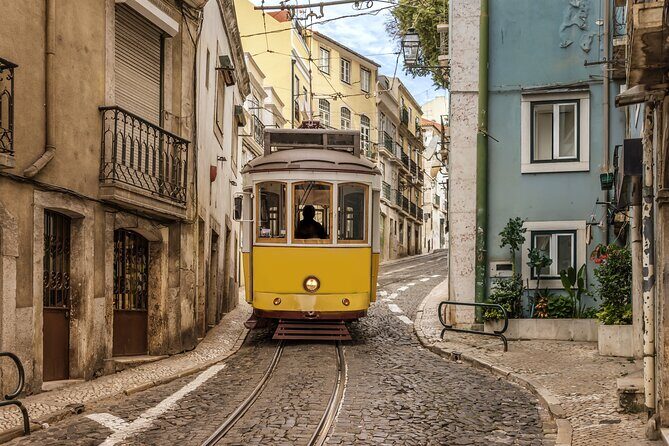
You meet at Praça Luís de Camoes (Largo Luís de Camões, 1200-243 Lisboa). This is a smart starting point because it’s a cultural center and it puts you in the middle of Lisbon’s “thinking in neighborhoods” layout.
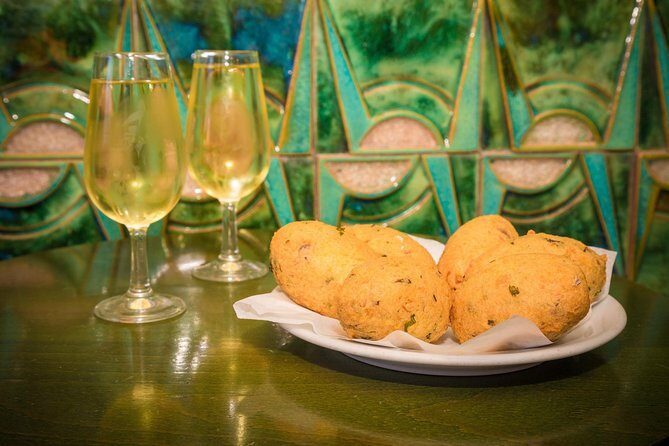
From there, you head toward Rua do Loreto 4 for one of the most Lisbon-on-foot experiences: pastéis de nata and coffee in a traditional café setting. This isn’t just a snack stop. It’s your first taste of how Lisbon ties daily life to history. The custard tart is simple, warm, and instantly gives you a baseline for later comparisons—if you try more later, you’ll know what you’re looking for.
Practical tip: plan to go slow for the first 10–20 minutes. A quick coffee and tart can help you power through churches and viewpoints, but rushing right after eating can make the walking feel harder than it needs to.
Church of Saint Roch and Trindade: gold wood, azulejos, and brewery palace vibes
Next up is Igreja de São Roque—listed here as the Church of Saint Roch. This church is described as one of Lisbon’s most important religious temples and the place linked to the Brotherhood of Misericordia. The big draw is the interior work: precious wood and gold pieces tied to the brotherhood’s power.
Even if you’re not a deep church person, it’s an ideal stop in a walking tour. It gives you contrast right after the food. Instead of street energy, you get concentrated art and symbolism.
Then you shift to Trindade, where the tour focuses on a palace brewery and the famous azulejos decorated with masonic symbology. This is one of those Lisbon details that’s easy to walk past without noticing. Here, a guide helps you see what you’re looking at and why it’s there.
If you care about Lisbon’s symbols—who had power, who funded art, and how ideas got written into tile—this is the kind of stop that rewards attention.
Carmo Convent ruins and the Carmo Archaeological Museum stop

This is the emotional center of the route. You walk through Convento do Carmo, which matters for both ancient history and contemporary history. It’s tied to the 1755 earthquake ruins, and the ruins also work as a symbol connected to the Carnation Revolution.
After that walk-through, you reach the Carmo Archaeological Museum. The ticket here is described as skip the line and included, which matters on a walking tour. When you only have about 3 hours total, saving time at the door can make the difference between enjoying a site and just passing through it.
The ruins themselves are the point. A gothic temple in damaged form turns the earthquake from a fact you read into something you can stand next to. And because the route frames it with both historical periods, you get a stronger sense of why people keep returning to the site.
Small consideration: if you’re traveling with anyone who dislikes ruined spaces or overcast shadows, this might feel a bit heavy. The emotional impact is real; it’s also one of the stops that makes Lisbon feel like more than postcards.
Santa Justa, Rua Garrett, and the Baixa streets that lead to the Praça do Comércio
From the Carmo area, the route pivots toward big-city engineering and then into Lisbon’s classic downtown flow.
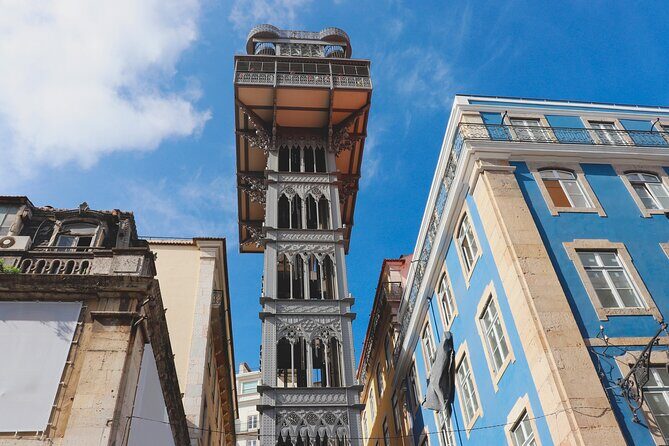
At Elevador de Santa Justa, you get a look at early-1900s engineering. You also get one of Lisbon’s best “from street level to city view” moments, overlooking Baixa Pombalina, the hill of Alfama, and the Castle of São Jorge. The elevator itself is listed as an admission ticket not included, so think of this as a scenic stop where you can decide if you want to pay for the ride or just take in the view.
Then you continue along Rua Garrett, finish through Baixa Pombalina, stroll Rua Augusta, and reach the monumental arch area. This stretch is ideal for walking because the streets are designed for movement, and the buildings keep the city feeling “put together,” even when you know the earthquake shaped a lot of what you see today.
You can also read our reviews of more private tours in Lisbon





Praça do Comércio and the churches that survived 1755
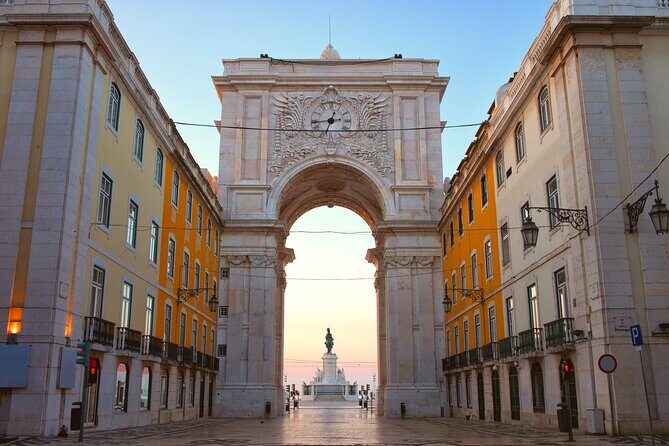
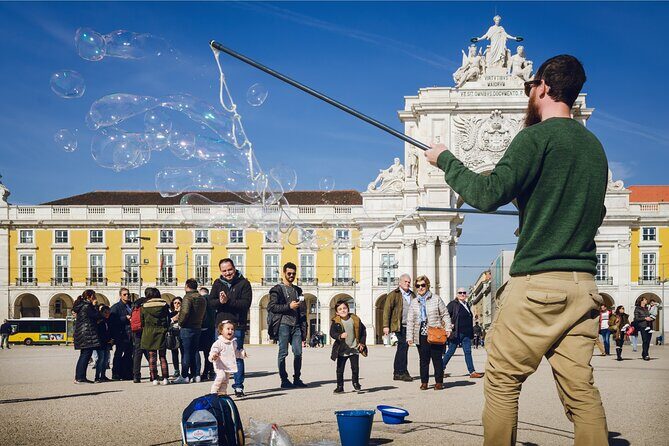
Next is Praça do Comércio. This stop is framed as Lisbon’s elegant entrance gate, rebuilt after the devastating 1755 earthquake. That detail matters, because when you stand here, you can sense the intentional re-planning—this wasn’t just rebuilding. It was redesign.
The plaza is also described as having masonic symbols. You’ll notice the symbolism more easily when you’ve already seen it earlier at Trindade’s azulejos. It creates a theme across the day: Lisbon’s public art and private power don’t sit in separate boxes.
You’ll also see Cais das Colunas, where the marble walkway served to welcome kings, queens, and presidents. Even if that’s not a “wow” fact for everyone, it’s useful context. It explains why the waterfront area feels ceremonial.
Then you visit Church Nossa Senhora da Conceição Velha, described as a curious church that survived the earthquake. The facade is in Manuelino style (Portuguese baroque), and the tour highlights its fascinating history related to women. If you like churches that explain social roles—who got to matter, and how—this is worth the quick stop.
Casa dos Bicos to Lisbon Cathedral, plus Santo Estêvão viewpoint and ginjinha
Now you move into a stretch where Lisbon changes tone again: from the more open downtown spaces into older neighborhoods and cathedral-level significance.
At Museu de Lisboa – Casa dos Bicos, the focus is on a palace that belonged to the first governor of the Indies. It’s also home to a foundation dedicated to José Saramago, the only Portuguese Nobel Prize winner tied to literature. This stop is quick, but it gives you a sense of how Lisbon’s global connections played out in buildings you can still touch.
Then comes Lisbon Cathedral, and the description gives you a key visual guide before you even arrive. The facade is Romanesque, while inside you see Gothic and neo-Gothic styles. The tour frames the cathedral as built from a former mosque, so you get a layered story: cultures building on top of each other over time.
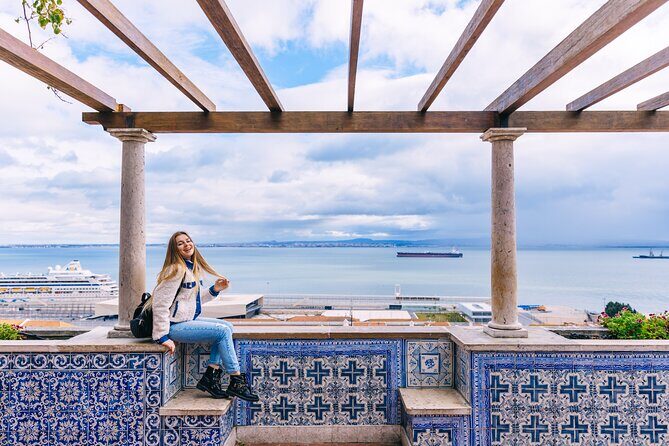
Finally, you end with Miradouro de Santo Estevão. This is the classic “stop and breathe” moment. The tour pairs it with tasting ginjinha, described as made by the ladies of Alfama. It’s a good way to close because it connects food, neighborhood identity, and the view all in one.
The finish is in Alfama near the Fado Museum area. The museum itself is listed as not included, but the tour’s route sets you up to make your own call after the walk.
Price and what you’re really getting for $79.52
At $79.52 per person, you’re paying for a private guide and a route that actively mixes paid and included elements into one walk.
Here’s where the value comes from:
- Food tastings: pastéis de nata and local coffee are built into the route, plus ginjinha at the viewpoint.
- Major sites with an included ticket: the Carmo Archaeological Museum admission is included, and you get a skip-the-line ticket.
- Engineering and iconic viewpoints: you’ll see the Santa Justa elevator and city views even if you don’t choose to ride it.
What could affect your final spend:
- Elevador de Santa Justa ticket is not included.
- Fado Museum ticket is not included.
So if you know you want both, budget a bit more. If you’re happy with the views and the walk ends at a good location for later exploration, the base price feels more comfortable.
Also note: the tour is listed as being booked about 80 days in advance on average. That’s a hint that popular departure times can fill up, especially for private schedules.
Who this Lisbon private walking tour fits best
This is a good fit if you:
- Want an organized way to see downtown plus Alfama without getting lost
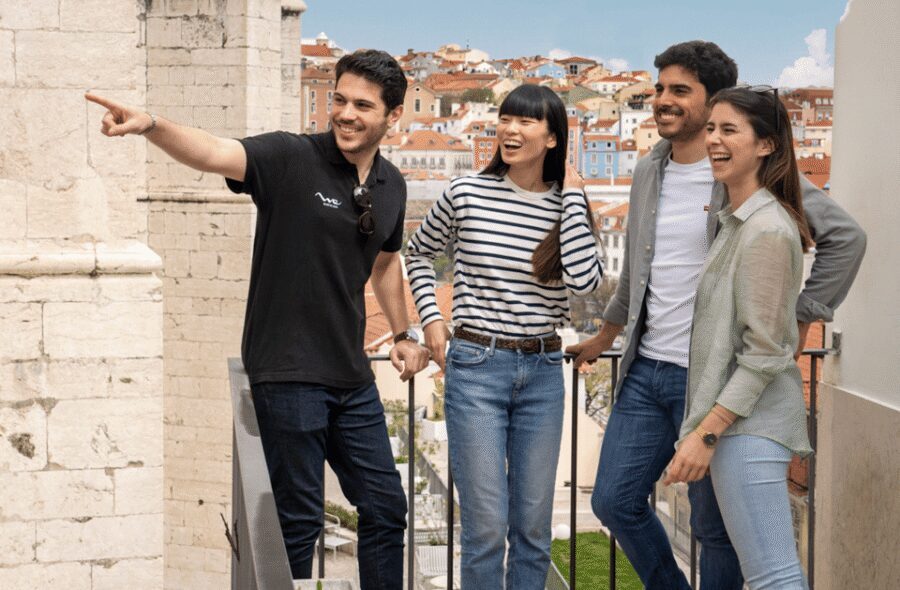
- Prefer learning from a guide in real time as you look at buildings, not just reading signage
- Like food stops that are tied to place—custard tart, coffee, and ginjinha—rather than random tourist snacking
- Want to hit major anchors like Lisbon Cathedral and Carmo Convent in a short window
It may be less ideal if:
- Your group hates walking or won’t handle churches, steps, and uneven sidewalks
- You expect everything on the route to be fully ticketed with no extra costs (two items are not included)
Should you book this Lisbon private walking tour?
I’d book it if you want a fast, thoughtful Lisbon intro where the guide helps you connect architecture, symbols, and neighborhood identity. The combination of Carmo ruins + cathedral styles + viewpoint ginjinha is a strong mix for first-timers, and the included skip-the-line Carmo museum ticket is the kind of time-saver you feel immediately in a short tour.
I’d think twice if you’re trying to keep sightseeing spend minimal, since Santa Justa and the Fado Museum aren’t included. In that case, you can still enjoy the view and the walk, but you’ll want to plan which add-ons you actually want.
If you do book, a smart move is to arrive at the meeting spot early and double-check you’re there on time. Private tours live and die by the meeting point.
FAQ
How long is the Lisbon private walking tour?
It lasts about 3 hours.
Is this tour private?
Yes. It’s a private tour/activity, meaning only your group participates.
What tastings are included during the tour?
You’ll try pastéis de nata, local coffee, and ginjinha liqueur.
Are attraction tickets included?
The Carmo Archaeological Museum ticket is included (with skip-the-line). The Elevador de Santa Justa and the Fado Museum are listed as not included.
Where do you start and where does the tour end?
It starts at Praça Luís de Camões (Largo Luís de Camões) and ends near the Fado Museum in Alfama (Largo do Chafariz de Dentro 1).
How precise are the departure times?
Departure times are available online and are listed as exact to within half an hour.
What’s the cancellation policy?
You can cancel for a full refund if you cancel at least 24 hours before the experience’s start time. Free cancellation is available, with refunds not guaranteed for cancellations made within 24 hours.