REVIEW · LISBON
Small-Group Alfama Walking Tour
Book on Viator →Operated by My Lisbon Tours · Bookable on Viator
Lisbon is best seen on foot, and Alfama is the proof. This small-group walking tour knits together sweeping views from Miradouro da Graça and the Miradouro at Nossa Senhora do Monte, then drops you into the day-to-day lanes of the Alfama neighborhood. You also get history that feels local, not museum-still.
I especially like the way the route mixes viewpoints, churches, and street-level life, so the walking never feels like one long “sight list.” I also like the value angle: it’s $39.50 for about three hours with a local guide, and most stops are free.
One consideration: it is not for people with trouble walking. Expect hills and steps, even if parts are downhill once you get moving.
In This Review
- Key moments you’ll remember
- Starting with Miradouro da Graça: your Lisbon orientation
- Igreja & Convento da Graca: where the neighborhood’s older layers show up
- The “little street” moment in Alfama: flowers, terraces, and the human scale
- Trade union activism stop: a side of Lisbon that isn’t on the brochure
- Igreja de São Vicente de Fora: Lisbon’s patron-saint connection
- Feira da Ladra (Thieves Market): the market stop that turns into atmosphere
- National Pantheon: exterior impressions with big scale
- Alfama itself: the neighborhood walk that feels like real Lisbon
- Miradouro de Santo Estevao: the best viewpoint feel for this route
- Fado connection: how music links to place
- Igreja de São Miguel: a church that survived 1755
- Lisbon Cathedral: the optional-scope stop that may require a plan
- Church of St. Anthony: an ending tied to birthplace significance
- The guide factor: why this tour feels personal in practice
- Price and value: what $39.50 buys you in Lisbon
- Getting around and what to pack
- Good weather requirement: when to think twice
- Who should book this Alfama small-group walk
- Should you book this tour?
- FAQ
- FAQ
- How long is the Small-Group Alfama Walking Tour?
- What does it cost?
- How many people are in the group?
- Is the tour offered in English?
- Where does the tour start and end?
- Do I get a mobile ticket?
- Are admission fees included for the stops?
- When is Feira da Ladra included?
- Is it suitable if I have difficulty walking?
- Can I cancel if plans change or the weather is bad?
Key moments you’ll remember
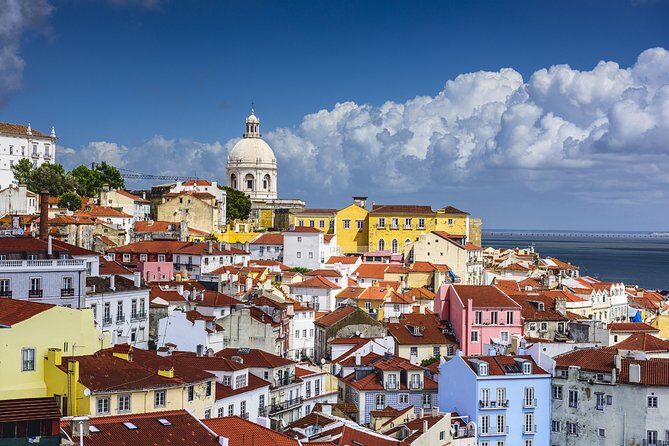
- Miradouro da Graça + Nossa Senhora do Monte views: big-time Lisbon panoramas early, so you get your bearings fast
- Old churches and convents: Igreja & Convento da Graca and São Vicente de Fora add serious age and atmosphere
- Feira da Ladra at the Thieves Market: a traditional flea-market stop on Tuesdays and Saturdays
- Alfama street life, not just postcards: everyday routines, narrow lanes, and quiet corners
- Fado connections and the earthquake-era survivor church: you’ll connect music and 1755 history through the places you see
Starting with Miradouro da Graça: your Lisbon orientation
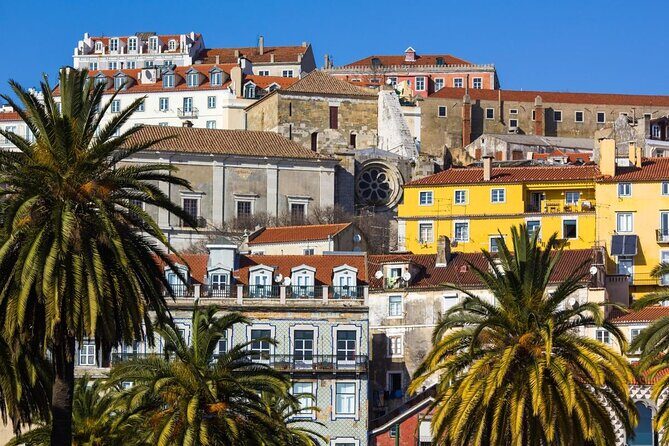
The tour kicks off at Miradouro da Graça on Calçada da Graça. This is a smart first stop because the view does two jobs at once: you see Lisbon’s center stretching out below, and you spot key landmarks that you’ll hear about as you go.
From up here, the scene is built for understanding: you can look toward Castelo de Saint George, the older district of Mouraria, and the Tagus river. That one panorama makes the rest of the walk easier, because you’re constantly matching what you’re seeing with what the guide explains.
This is also the point where the small group matters. With a maximum of 8 travelers, you’re not stuck listening through a crowd. You can ask questions, get clarification, and keep your eyes on what’s in front of you.
Practical tip: wear shoes you trust. Even before you start the main walk, the slopes and cobbles around viewpoints can be slick in wet weather.
You can also read our reviews of more walking tours in Lisbon


Igreja & Convento da Graca: where the neighborhood’s older layers show up
Next you head to Igreja & Convento da Graca, one of Lisbon’s oldest church and convent complexes. The key idea here is continuity: this wasn’t just a pretty stop, it was part of religious life long before modern Lisbon took shape.
You’ll learn that the Augustinian monks were based here until 1834. That detail helps you understand why the buildings feel so rooted and why the area keeps showing up in stories about Lisbon’s past.
Time is short at each stop (about 10 minutes here), so you’re not looking at everything like an all-day ticket. Instead, the guide uses the time to connect architecture, religion, and neighborhood identity. If you like history that moves through real streets, this style is a good fit.
What you might miss if you rush: if you’re the type who loves spending 30 minutes inside, you’ll want to plan separate time for churches you particularly like after the tour ends.
The “little street” moment in Alfama: flowers, terraces, and the human scale
After the churches, the tour shifts into something Lisbon does exceptionally well: tight streets with texture. You’ll visit a charming little street lined with houses that have large terraces, decorated with buganvilia and other flowers.
This isn’t just a photo break. It shows you how Alfama’s homes are shaped by the city’s steep hills and narrow streets. Those terraces aren’t random decoration—they’re a practical way to get light, air, and outdoor life when space is tight.
This is also one of the best parts for slowing down. You get a breather between heavier history stops, and your eyes start noticing the small details that you’d otherwise skip.
Trade union activism stop: a side of Lisbon that isn’t on the brochure
One stop covers the history of trade union activism in Lisbon. That might sound niche, but it’s one of the reasons this tour feels different from a pure “cathedral and viewpoint” route.
Here’s the value: you start seeing Lisbon as a place where ordinary people organized, argued, worked, and pushed for change—not only a city of kings, monuments, and photographs.
If you like understanding the modern city through its social story, you’ll appreciate this detour. If your goal is purely scenic wandering, it may feel more like a lecture moment. Either way, it gives depth to what you’re walking through.
Igreja de São Vicente de Fora: Lisbon’s patron-saint connection
Then comes Igreja de São Vicente de Fora, with a focus on its historical significance. The big takeaway is that it is dedicated to Lisbon’s patron saint, Saint Vincent the Deacon.
For me, this kind of stop works best when you treat it as context, not a checkbox. The short time helps you absorb the meaning: why the church matters, how it ties to the city’s identity, and why Alfama and nearby areas often become the stage for Lisbon’s major cultural stories.
Again, expect a brief visit—about 10 minutes—so go in ready to listen and look.




Feira da Ladra (Thieves Market): the market stop that turns into atmosphere
Next you hit Feira da Ladra, known as one of Lisbon’s oldest flea markets. If the timing works, this stop becomes the tour’s most lively-feeling segment.
The market is held on Tuesdays and Saturdays. The tour gives you about 15 minutes, which is enough time to take in the chaos (in a good way), see how the vendors set up, and understand why locals still treat it as a tradition rather than a tourist attraction.
One practical note: flea markets can be crowded with foot traffic, and it’s easy to get distracted. If you’re hoping to browse for bargains, plan a little extra time later on your own. During the tour, the goal is to understand the place, not finish your shopping list.
National Pantheon: exterior impressions with big scale
The National Pantheon stop is an exterior visit. You’ll get a quick look at the monumental scope of the building, and it’s described as a mausoleum for some of Portugal’s greatest men and women. Admission isn’t included for this part.
This works well because it keeps the walk moving while still giving you the “wow, that’s important” feeling. But it does mean you won’t get the inside details here. If the Pantheon interior matters to you, add a separate visit when you have time.
Alfama itself: the neighborhood walk that feels like real Lisbon
Now you get the core of the experience: Alfama. The tour gives you about 30 minutes to get acquainted with the neighborhood and the everyday life of its inhabitants.
This is where the small group design pays off. Narrow streets can be hard in big crowds. With fewer people, you can actually see the street rhythm—how doors open, how people move, how local life continues in a neighborhood that also carries history.
It’s not just pretty lanes. This is the part that helps you understand why Alfama is famous for more than scenery. You’ll also notice how viewpoints and churches connect like stepping-stones across the hills.
Photo tip: don’t only shoot from the viewpoint. Take a few shots looking back at the street details you pass, because the charm is in how everything stacks vertically.
Miradouro de Santo Estevao: the best viewpoint feel for this route
After Alfama’s street time, you reach Miradouro de Santo Estevao. This is one of the walk’s most scenic payoff moments, with tiny streets that match the historical character of the neighborhood.
You’ll have around 5 minutes here, so aim for the view first and then do quick photos. If you spend too long at one angle, you’ll feel rushed later in the rest of the route.
This stop also fits the tour’s overall pacing: quick and focused, not slow and vague.
Fado connection: how music links to place
There’s another short stop connected to Fado music, explained through an exterior look at a building and the neighborhood context. Even with limited time, the point is clear: Alfama isn’t just where you stroll; it’s where Lisbon’s sound and storytelling grew roots.
If you’re curious about fado but don’t want a full evening show first, this is a nice primer. It gives you “why” before you experience “what.”
Igreja de São Miguel: a church that survived 1755
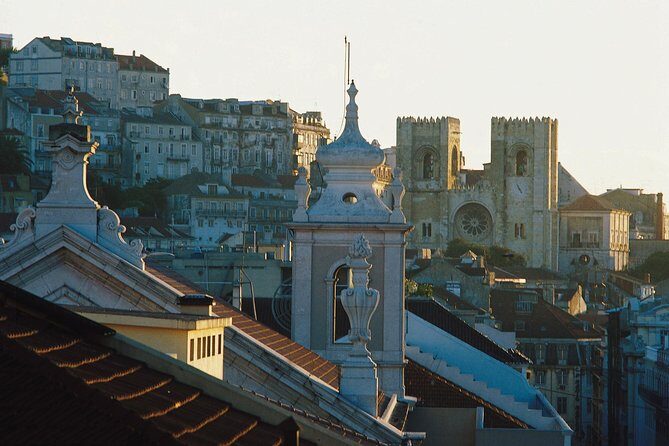
Then you’ll see Igreja de São Miguel (exterior), one of the churches that survived the earthquake of 1755.
This matters because it adds real historical weight to the street-level walk. Lisbon’s architecture tells you the timeline if you know how to read it, and this is one of those anchors.
You only get about 5 minutes, so the guide’s explanation is the main event. Listen for the way the earthquake reshaped the city—and how survivors became living evidence of what came before.
Lisbon Cathedral: the optional-scope stop that may require a plan
Next is Lisbon Cathedral. This part is described as a detailed tour of the interior, but it is marked as not included.
That means two things for you:
- You’ll likely see the Cathedral as a meaningful stop.
- If you want the interior experience, you should expect to handle entry separately.
If you love architecture and religious art, this is the spot to decide whether you want to commit time and money on the spot. If you’re tired from hills, you can use it as a viewpoint-and-exterior moment instead.
Church of St. Anthony: an ending tied to birthplace significance
The final named stop is the Church of St. Anthony, with a visit tied to the site where Saint Anthony was born. You’ll spend about 15 minutes here.
Why this makes a good close: it brings the walk full circle into Lisbon’s deep spiritual identity, then sets you up for the tour’s finish near the water.
After the church, the tour ends near Praça do Comércio, which is a great “reset” location after Alfama’s tight lanes.
The guide factor: why this tour feels personal in practice
Most of the high praise centers on the guide experience. Names that come up include Andriy/Andrey and Rui Fernandes (MyLisbonTours).
What I’d take from that pattern, as a practical traveler, is this: the guides here are not only reciting dates. They connect history to present-day Lisbon and to the specific streets you’re walking.
Also, English is a key selling point. It’s described as English offered, and the feedback highlights that the explanations are clear and in context for the whole group. With a maximum of 8 travelers, your questions are easier to fit in.
One small tip from real experiences: you may receive a message ahead of time with a guide photo and meeting details, and you might get a quick WhatsApp note right before starting. If that happens, it’s meant to help you find the meeting spot without stress.
Price and value: what $39.50 buys you in Lisbon
At $39.50 per person for about 3 hours, this is priced like a smart middle ground. You’re not paying for private chauffeuring or a food tour, but you are paying for:
- a local guide
- a small-group size (max 8 travelers)
- the focus on a neighborhood you’d struggle to interpret quickly on your own
Most stops are admission ticket free, so you’re mostly paying for guided time and context rather than entry fees stacked on top. The two notable not-included interior items are the National Pantheon (exterior only on the tour) and Lisbon Cathedral (interior tour listed as not included).
For value, this matters: you still get great sight payoff even if you skip optional paid interiors, and you can decide on the day what you want to fund.
Getting around and what to pack
This tour is near public transportation, and it starts at Miradouro da Graça and ends at Praça do Comércio. That end spot is useful because it gives you an easier jump to other central areas afterward.
What you should pack is mostly about comfort:
- good walking shoes
- water, especially if it’s warm
- a light layer for breezy viewpoint stops
And be honest about stairs and slopes. Even when parts are downhill, the route is hilly overall. If you have limited mobility, I would skip this one and choose a flatter option.
Good weather requirement: when to think twice
The experience requires good weather. That’s common in Lisbon, because viewpoints and walking routes get unpleasant in rain or strong wind.
If the forecast looks rough, keep an eye on notifications. If the tour is canceled due to poor weather, you’ll be offered a different date or a full refund.
Who should book this Alfama small-group walk
Book this tour if:
- you want a first-time feel for Alfama without getting lost in a sea of narrow lanes
- you like churches, viewpoints, and neighborhood history in a single outing
- you prefer small-group attention over a big bus-style crowd
- you’re interested in culture threads like fado and Lisbon’s social history, not only royal-era landmarks
Skip it if:
- walking uphill and over steps is hard for you
- you want a long, slow museum-style visit at multiple interiors
- you dislike markets in any form (because the flea market stop is part of the experience on Tuesdays and Saturdays)
Should you book this tour?
If your goal is a memorable first sweep through Alfama with real context, I’d say yes. The combination of two major viewpoints, short but meaningful church stops, and a flea market that brings atmosphere makes it feel like a full Lisbon story in one go.
At $39.50, it’s also a solid value for guided time, especially with a max of 8 travelers. Just be sure you’re comfortable with hills and steps, and consider planning extra time for the places marked as not included if interiors are a must for you.
FAQ
FAQ
How long is the Small-Group Alfama Walking Tour?
It runs for about 3 hours.
What does it cost?
The price is $39.50 per person.
How many people are in the group?
The tour has a maximum of 8 travelers.
Is the tour offered in English?
Yes, it’s offered in English.
Where does the tour start and end?
It starts at Miradouro da Graça (Calçada da Graça, 1100-265 Lisboa) and ends at Praça do Comércio.
Do I get a mobile ticket?
Yes, it includes a mobile ticket.
Are admission fees included for the stops?
Many stops are admission ticket free. The National Pantheon exterior visit is included but Pantheon admission is not included. Lisbon Cathedral interior is also marked as not included.
When is Feira da Ladra included?
Feira da Ladra (the Thieves Market) is included on Tuesdays and Saturdays.
Is it suitable if I have difficulty walking?
It’s not recommended if you have difficulty walking. The route includes hills and steps.
Can I cancel if plans change or the weather is bad?
You can cancel for a full refund up to 24 hours in advance. The experience requires good weather, and if it’s canceled due to poor weather you’ll be offered a different date or a full refund.