REVIEW · LISBON
Lisbon Private 5-Hour Eco Tuk-Tuk Tour with Local Tastings
Book on Viator →Operated by Eco Tuk Tours Lisboa · Bookable on Viator
Lisbon clicks into place fast. This private eco tuk-tuk loop is built for getting your bearings, with a real local narrator and stops timed so you can actually look, not just ride past. I especially like hotel pickup in the city center and the way the tuk-tuk stays usable in rain. The one drawback: the ride is a bit bumpy, so it’s not the smoothest way to travel if you’re sensitive to motion.
You’ll cover a lot of ground in five hours—Alfama’s maze, Graça viewpoints, then on to Belem’s big monuments—while still getting little pockets of time to wander and take photos. And yes, the tastings help too: you don’t just hear about Lisbon; you snack along the way.
In This Review
- Key highlights (quick hits before you go)
- Why a private eco tuk-tuk works for first-time Lisbon
- Price and logistics: hotel pickup, where you meet, and what you actually pay for
- Ride comfort tips for the eco tuk-tuk (and why bumpy can be a good sign)
- Local tastings: what you’ll snack on and why it fits Lisbon
- Stop-by-stop: Lisbon’s big districts, viewpoints, and the Belem monument zone
- Praça do Comércio: the door to Lisbon
- Alfama: the oldest streets (and where fado lives)
- Moorish Quarter: multicultural Lisbon with a ceramic-shop moment
- Graça: hilltop viewpoints near São Jorge
- Miradouro da Senhora do Monte: the big vista on Lisbon’s high hill
- Chiado: burnt-and-rebuilt Lisbon with café energy
- Largo do Carmo: the 1974 revolution square
- Miradouro São Pedro de Alcântara: easy panoramas and a calmer pause
- Estrela: a quieter district and a garden break
- Belem: the Age of Discoveries zone
- Jerónimos Monastery: Manueline architecture, viewed from outside
- Torre de Belém: the iconic fortress from the outside
- Padrão dos Descobrimentos: a three-sailed ship tribute
- Who this tour suits best (and who might be happier walking)
- Should you book this Lisbon private 5-hour eco tuk-tuk tour?
- FAQ
- What’s included in the tastings?
- Is hotel pickup included?
- Do I need to pay for monument entry fees?
- How many people are in each eco tuk-tuk?
- Is this tour private?
- Can the tour be rescheduled if the weather is bad?
Key highlights (quick hits before you go)
- Private, up-close sightseeing with a guide-driver who talks through what you’re seeing
- Big-city overview in a short day across multiple Lisbon hills and districts
- Weather-ready eco tuk-tuk with a transparent cover and provided blankets
- Tastings that feel local like Pastel de Nata, codfish cakes, and ginjinha
- Practical stop timing so you get viewpoints plus short walks, not long museum marathons
- You can customize on request for how you want to spend your time
Why a private eco tuk-tuk works for first-time Lisbon
Lisbon is famous for three things that can make a first day feel chaotic: hills, stairs, and neighborhoods that change character every few blocks. This tour is a smart fix. You move fast by tuk-tuk, but you still stop often enough to absorb each area.
The private part matters. With a group limited to a maximum of 6 per vehicle, you’re not stuck listening through a wall of chatter. You can ask questions, get quick context, and adjust your pacing on the fly. That’s a big deal in Lisbon, where the “right” viewpoint is often a few minutes away—and you only find it if someone tells you where to look.
The best guides here (I’ve seen names like Luis, Hugo, Bruno, Nani, Manuel, Claudio, Marta, Miguel, Arthur, Rafael Santos, and Amaro tied to tours) tend to do two things well: they connect the architecture to Portugal’s story, and they point out small details you’d never notice from a bus window. Expect a narration style that keeps you oriented as you climb and descend.
You can also read our reviews of more private tours in Lisbon



Price and logistics: hotel pickup, where you meet, and what you actually pay for
At $60.25 per person for about 5 hours, this is positioned as a practical “see the city, then choose your own adventures” tour. It’s not just a ride. You’re paying for transportation plus guided storytelling plus included local tastings, and that mix is what makes it feel fair.
Here’s what’s included that changes the value:
- Hotel pickup is available for accommodations in the city center (upon request).
- You get snacks and tastings (Pastel de Nata, codfish cakes, and ginjinha).
- You’re given blankets for cooler weather.
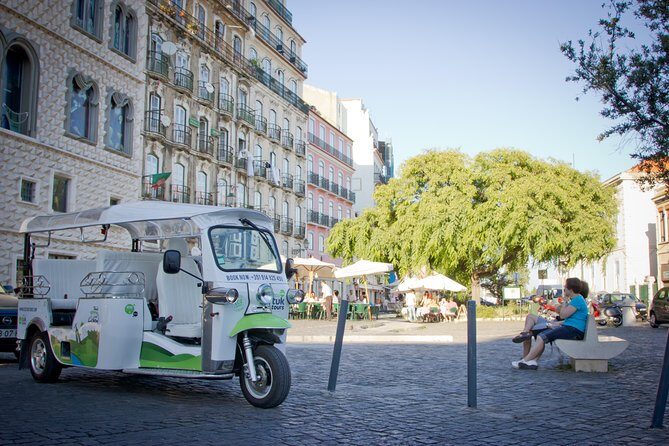
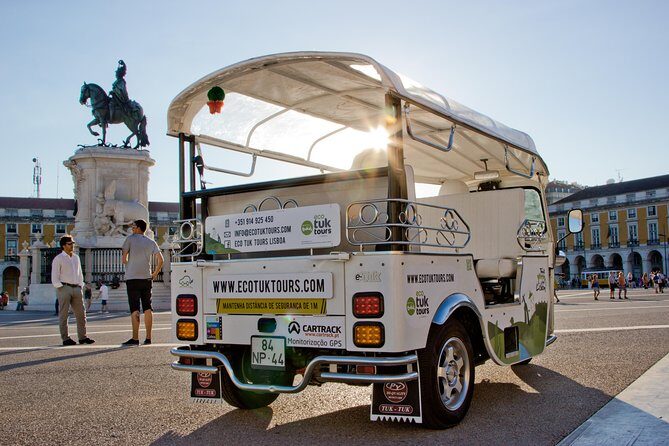
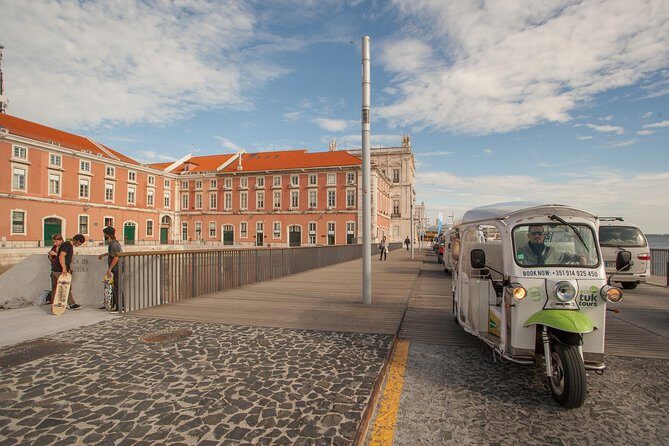
- You ride in an eco tuk-tuk with a transparent cover that can be closed in cold or rain.
- Insurance is included, and taxes are included.
What’s not included is also important:
- Entry fees aren’t included across the board. Some big sights are viewed from the outside only (more on that when we hit the Belem monuments).
Meeting points depend on where you’re staying. If you don’t preselect a pickup location, the default is the Hard Rock Cafe Lisboa on Avenida da Liberdade. If you’re near the cruise terminal, there’s a red kiosk right by the pedestrian crossing after you disembark (and a separate meeting option near Jardim do Tabaco).
One more practical note: the tour requires everyone to be ready about 10 minutes before the start. Lisbon runs on punctuality when it comes to tight routes, so don’t aim for “close enough.”
Ride comfort tips for the eco tuk-tuk (and why bumpy can be a good sign)
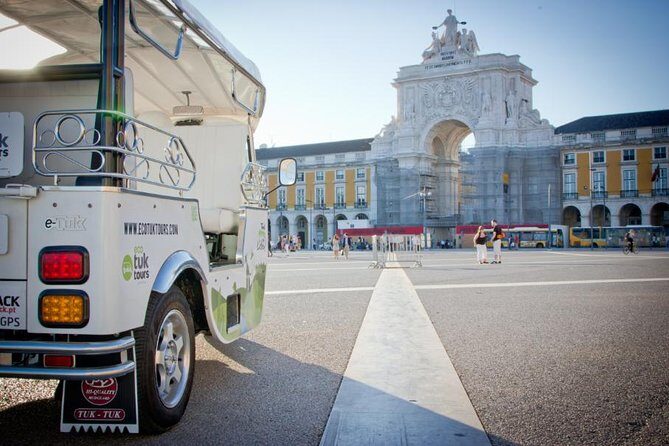
Let’s talk reality. A tuk-tuk isn’t a sedan. Reviews repeatedly mention the ride being bumpy, and one person even described it as a long day in a somewhat uncomfortable tuk-tuk—but said they’d do it again. That tells you what to expect: this is an efficient way to see Lisbon, not a luxury lounge.
The good news is the setup is built for comfort where it counts:
- The eco tuk-tuk has a transparent cover you can close in rain or cold.
- Blankets are provided, so you’re not stuck shivering mid-hill.
- The ride is open enough for you to see and photograph, while still being protected when weather turns.
If you’re prone to motion sensitivity, plan around it. Sit where you can stay stable (often toward the middle), keep your focus on the horizon, and use the stop times to stretch. Also, avoid bringing large luggage—no suitcases or strollers are allowed.
Safety rules are part of the deal here too:
- Pregnant people and intoxicated people can’t ride.
- People with prosthesis aren’t recommended.
- Kids 6 and under can’t legally ride. Kids 7–12 can ride with a booster seat if needed.
If your group includes anyone who might be uncomfortable in a jolty ride, I’d think carefully. For many people, it’s worth it for the access and time savings. For others, a walking-heavy tour might feel better than a bumpy vehicle for five hours.
Local tastings: what you’ll snack on and why it fits Lisbon
Lisbon food is built on comfort: pastries, frying, and the kind of simple ingredients that somehow taste like a celebration. This tour works because the tastings are folded into the route instead of being an awkward add-on at the end.
Included tastings are:
- Pastel de Nata (the iconic Portuguese custard tart)
- Codfish cakes
- Ginjinha (cherry liquor)
In Belem, you’ll get a sense of how Portugal celebrates maritime history with food. One of the common praise points is that these stops feel delicious and well placed—especially where people mention Belem’s pastries and codfish cakes.
If you care about food, do this tour early in your trip. You’ll learn what you like quickly, and then you can seek it out again later—at a slower pace and with better questions for locals.
Stop-by-stop: Lisbon’s big districts, viewpoints, and the Belem monument zone

This route is designed like a highlight reel, but it doesn’t leave you stranded. Each stop is short enough to keep the pace, and long enough for quick photos and a bit of wandering.



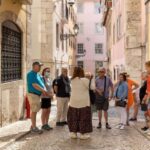

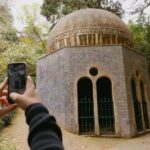
Praça do Comércio: the door to Lisbon
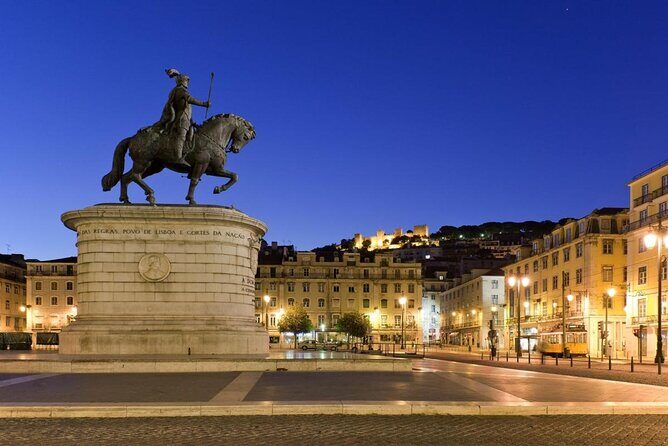
Your day starts at Praca do Comercio, Lisbon’s main square. This is where the city’s commercial life once centered, and it sits on the historical footprint associated with the royal presence before the 1755 earthquake reshaped the area.
Why it’s a good first stop: the views and the open space help you understand Lisbon’s layout. Even if you’re not going deep on history, this gives you a map in your head for the hills to come.
Alfama: the oldest streets (and where fado lives)
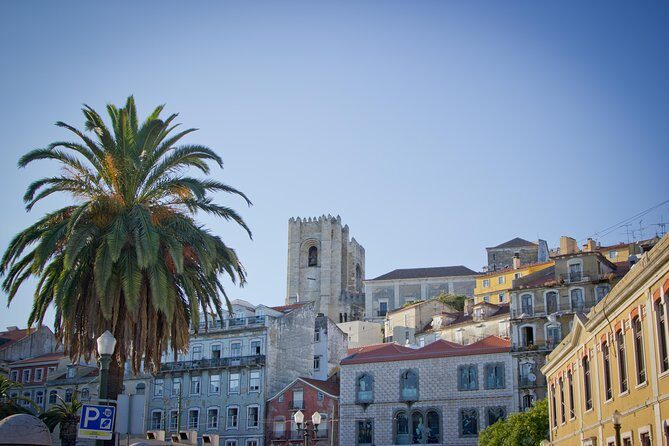
Next up is Alfama, Lisbon’s oldest neighborhood. Expect narrow lanes, classic tiles, and the kind of street texture you usually only see if you walk.
What you’ll likely do in your time here: look for tilework, pause for a couple photos, and soak up the “steps of the past” feeling—without committing to a long, stair-heavy exploration.
One consideration: Alfama streets can be uneven and tight, so quick exploring is the move. Don’t plan a slow stroll for a full hour here if you’re hoping to hit all viewpoints and Belem monuments later.
Moorish Quarter: multicultural Lisbon with a ceramic-shop moment
Then you head into the Moorish Quarter. This is where the city feels multi-layered—cuisine from different backgrounds and neighborhoods that tell Portugal’s story through everyday life.
A named highlight is the Viúva de Lamego ceramic shop, known for its stunning tiled façade. Even if you don’t go inside (and the tour doesn’t emphasize extended entry time here), the exterior is worth the stop.
This is also a good place to decide what you want more of. If you fall for tiles and street corners here, you’ll enjoy similar scenes in other districts later on foot.
Graça: hilltop viewpoints near São Jorge
Now you climb to Graça, one of Lisbon’s hills. The payoff is views and proximity to São Jorge Castle.
Your stop time is long enough for viewpoint photos and a quick orientation around the area. The main value of Graça in a tuk-tuk day is this: it breaks the “only big monuments” pattern. You get Lisbon as a city of angles and vantage points, not only as postcard landmarks.
Miradouro da Senhora do Monte: the big vista on Lisbon’s high hill
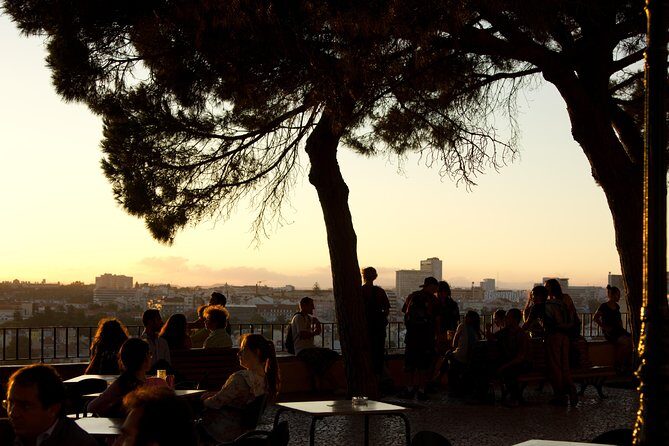
This is one of the standout viewpoints on the list: Miradouro da Senhora do Monte. You’ll get sweeping views over the city and the Tagus River.
The tour advice built into this stop is simple: if you can, time your photos for late day light, because it’s especially magical at sunset. Even if your tour doesn’t land perfectly at sunset, the height alone makes it worth it.
Chiado: burnt-and-rebuilt Lisbon with café energy
After the viewpoints, you move into Chiado—a district that was partially rebuilt after the August 25, 1988 fire. It’s now known for shops and cafés, with a more polished, shopping-and-theatre feel than some of the older neighborhoods.
This stop helps you balance the day. You get big history in older quarters, then a more modern Lisbon vibe that’s still very “Lisbon.”
Largo do Carmo: the 1974 revolution square
At Largo do Carmo, the story shifts to modern political history. This square connects to the 1974 Carnation Revolution, and it sits near the ruins of the Carmo Convent.
This is the kind of stop that makes you understand why Lisbon isn’t just old buildings. It also has a very real recent history you can feel in the way public spaces were used.
Miradouro São Pedro de Alcântara: easy panoramas and a calmer pause
Then it’s Miradouro São Pedro de Alcântara, another favored viewpoint with panoramas toward the Castle of Saint George and Lisbon’s historic center.
This is a “slow your breathing” stop. After the earlier hill viewpoint, it gives you a second perspective—often without needing more walking. Use it to rest your legs for a few minutes before the longer Belem stretch.
Estrela: a quieter district and a garden break
Next is Estrela, with two major anchors: the Royal Basilica of Estrela and the Estrela Garden. It’s a good contrast after the dense hill neighborhoods.
If your group likes a breather, Estrela does the job. It’s not about rushing inside a monument; it’s about taking a calm walk and resetting for the Belem final act.
Belem: the Age of Discoveries zone
Now the tour moves into Belem, Lisbon’s Age of Discoveries area. This is where the scale gets bigger—monuments, parks, gardens, and the Tagus as the backdrop.
You’ll spend time in Belem’s broader district and then hit the famous monument area. The route here is designed so you get the “wow factor” without losing hours to line-ups—especially since key monuments are viewed from outside on this tour.
Jerónimos Monastery: Manueline architecture, viewed from outside
Jerónimos Monastery is a UNESCO site and a major example of Portuguese Late Gothic Manueline architecture. On this tour, you’ll only view it from the outside. Tickets are not included, meaning it’s an extra cost if you want to go in.
Why that matters: you’ll get the façade and the sense of the monument’s scale, but you won’t have the interior experience unless you add it separately.
Torre de Belém: the iconic fortress from the outside
Torre de Belém is next, built between 1514 and 1520. Another UNESCO highlight, again viewed from outside only on this tour. Entry tickets are not included if you want the inside.
This is still one of Lisbon’s most recognizable “Age of Discoveries” icons. Even without entering, seeing it from the right angle is a strong payoff.
Padrão dos Descobrimentos: a three-sailed ship tribute
Finally, there’s Padrão dos Descobrimentos—shaped like a three-sailed ship and decorated with figures tied to Portugal’s maritime story, including King Manuel I, Vasco da Gama, and poet Camões. Like the other two big monuments, it’s outside-only here.
If you love symbolism, this stop is satisfying even without tickets. It’s a big, readable monument, the kind where photos explain the story faster than words.
Who this tour suits best (and who might be happier walking)
This is a smart fit if you:
- Are on a first trip and want an orientation tour that covers multiple neighborhoods
- Want viewpoints plus street scenes without spending your whole day on public stairs
- Like food tastings as part of a day out
- Have a small group and want a private format
It may be less ideal if you:
- Need smooth, low-motion transport (the ride can be bumpy)
- Expect to go inside multiple major monuments—this version keeps you outside at Jerónimos, Torre de Belém, and Padrão unless you add tickets separately
- Travel with bulky items (no large luggage allowed)
Should you book this Lisbon private 5-hour eco tuk-tuk tour?
I’d book it if your goal is simple: see the city’s shape in one day, pick up stories you can follow later, and snack on Lisbon classics while doing it. The value is strongest when you factor in hotel pickup in the center (if you can use it), the included tastings, and the fact that the day mixes hills, historic neighborhoods, and Belem’s monument zone without making you choose between “views” and “food.”
Skip it—or consider a different style of tour—if you only want monument interiors, or if bumpy rides will make your group miserable. Also think about timing: if your main focus is inside-the-church/inside-the-tower Lisbon, you’ll likely end up adding tickets elsewhere.
If you do book, here’s my practical advice: schedule this early, keep comfortable shoes in mind for short walks and viewpoints, and show up ready to ask questions. The best tours aren’t about collecting stops. They’re about understanding what you’re looking at—and this one sets you up to do that.
FAQ
What’s included in the tastings?
You’ll get culinary snacks and tastings including Pastel de Nata, codfish cakes, and ginjinha liquor.
Is hotel pickup included?
Pickup is offered for hotels located in the city center if you request it. If you’re not in the city-center pickup area, you’ll use an alternate meeting point such as Hard Rock Cafe Lisboa or a red kiosk near the cruise terminal area.
Do I need to pay for monument entry fees?
Entry fees are not included. Jerónimos Monastery, Torre de Belém, and Padrão dos Descobrimentos are visited from the outside only on this tour, and any inside visits would cost extra.
How many people are in each eco tuk-tuk?
A maximum of 6 people can ride per vehicle.
Is this tour private?
Yes. It’s a private tour/activity, meaning only your group participates.
Can the tour be rescheduled if the weather is bad?
The eco tuk-tuk has a transparent cover that can be closed for cold weather or rain, and blankets are provided, so the tour can still run in bad weather.