REVIEW · LISBON
Private Tour to Evora and Merida – World Heritage City of the Roman Empire
Book on Viator →Operated by Knight Riders Tourism · Bookable on Viator
Two countries, one Roman obsession.
This private 10-hour route strings together world-class Roman ruins with a truly Portuguese shock moment in Évora. I like that you see big-scale sites (the Roman circus and theatre areas) and also pause for smaller, human-scale details like mosaics, sculptures, and the story behind the aqueduct water. The main catch is simple: it’s a packed day, so expect a lot of walking and site-hopping with limited time at each stop.
What makes it feel practical is how it’s organized. I like the door-to-door pickup in the Lisbon region (including Cascais, Sintra, and Almada) and the comfort of an air-conditioned minivan. If you’re sensitive to long drives and constant movement, you’ll want to plan for a slower pace on the rest of your trip after this one.
In This Review
- Key highlights you’ll feel right away
- From Lisbon to Badajoz, Mérida, and Évora: how the day is paced
- Badajoz’s Ayuntamiento stop and the Arab Alcazaba fortress vibe
- Mérida’s museum start: Roman mosaics and art pulled from everyday life
- The Roman theatre moment: Marco Vipsanius Agrippa’s timing and why it matters
- Templo de Diana: Roman architecture that still feels confident
- The Roman circus of Mérida: scale, military founding, and legions
- Acueducto de los Milagros: the aqueduct ruins that explain the city
- Évora after Mérida: Roman roots, Moorish layers, and the bone chapel
- Guides, storytelling, and the value of a calm expert
- Price and logistics: is $423.25 per person worth it?
- What to expect on-site: time windows and smart priorities
- COVID-era hygiene: what the operator says it does
- Should you book this private Roman Empire day trip?
- FAQ
- How long is the tour?
- Where is pickup and drop-off offered?
- Is this tour private?
- What language is the tour offered in?
- Are admission tickets included?
- Is there free cancellation?
- What COVID safety measures are mentioned?
Key highlights you’ll feel right away
- Roman Mérida at “show-and-tell” scale: theatre, temple, circus, plus museum mosaics and sculpture
- The Diana story in the flesh: a Roman temple tied to the province capital of Lusitania
- Badajoz’s fortress-to-culture switch: the Arab Alcazaba area now hosts museums and events
- Évora’s bone chapel moment: a ghoulish, memorable stop that’s impossible to forget
- Private transport and pickup: you’re not crammed into a big group bus
From Lisbon to Badajoz, Mérida, and Évora: how the day is paced
This is a full-day cross-border outing built around three historical hits: Badajoz (Spain), Mérida (Spain), and Évora (Portugal). The route is long enough that the experience feels like a “big chapter” day—less about lingering, more about getting the story of Roman Lusitania and then snapping into Portugal’s layered past.
You’ll be riding in an air-conditioned minivan, and you’ll get hotel/port/apartment pickup and drop-off in the Lisbon area (Lisbon region, Cascais, Sintra, and Almada). That matters because travel days can steal your energy. Here, you’re not spending your morning figuring out transit links across several towns.
The day’s structure also suggests a smart pacing style: short, focused stops with breathing-room in between. That’s a good fit if you want variety without the fatigue of long museum marathons.
You can also read our reviews of more city tours in Lisbon


Badajoz’s Ayuntamiento stop and the Arab Alcazaba fortress vibe
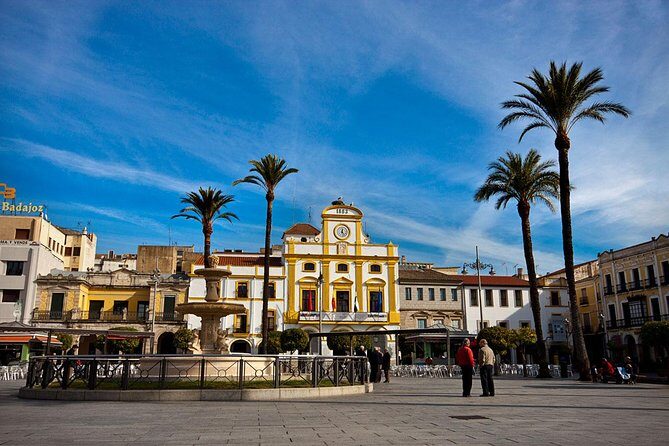
Your first historical landing is in Badajoz at the Ayuntamiento area, looking out over the Arab Alcazaba—an important fortress that helped define the defensive system of bastions and city walls. The cool part isn’t just that it’s old; it’s that parts of the fortified spaces have been restored and repurposed as places dedicated to culture.
This is the kind of stop that helps you frame what you’re going to see later. When you visit Roman sites in Mérida, it’s easy to think in straight-line “Roman then modern” terms. Badajoz pushes back on that idea by showing how a city can keep using its strategic high ground and then evolve its meaning over centuries.
The stop is also listed with free admission and a short time window, so it works as a warm-up. If you’re the type who likes to read ruins like a map, you’ll appreciate the context: walls, bastions, and fortified spaces weren’t just defensive—they became cultural stages once the threat passed. The area includes institutions like MEIAC, the Archaeological Museum, and a Carnival Museum, which gives you a sense of how locals keep history in active use.
Mérida’s museum start: Roman mosaics and art pulled from everyday life
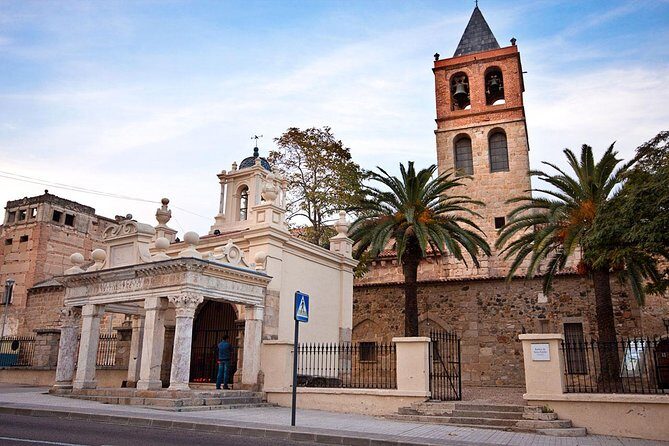
Then you jump into Mérida’s core Roman identity with the National Museum of Roman Art. This museum stop centers on Roman mosaics, sculptures, and artifacts associated with the nearby theatre and amphitheatre sites.
I like this approach because mosaics are a fast track into Roman life. Even if you don’t read every inscription, you can see craftsmanship and storytelling—figures, scenes, and patterns that look deliberate, not decorative filler. Plus, museum objects help you slow down for a minute after the earlier fortress context.
A big practical win: this stop is listed with free admission and around an hour. That’s enough time to get oriented, notice the variety in materials, and connect what you’ll see outdoors to what’s preserved indoors.
The Roman theatre moment: Marco Vipsanius Agrippa’s timing and why it matters
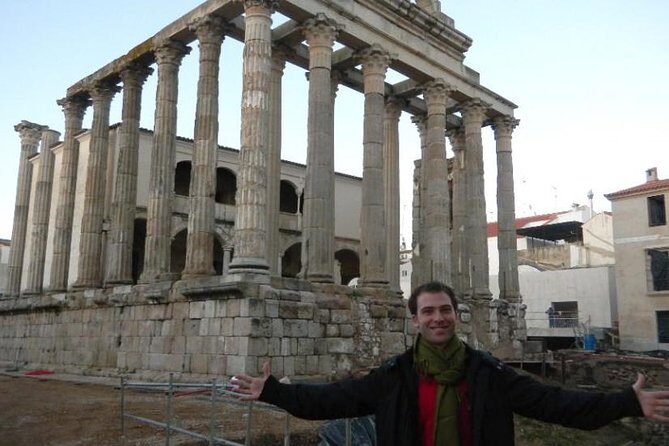
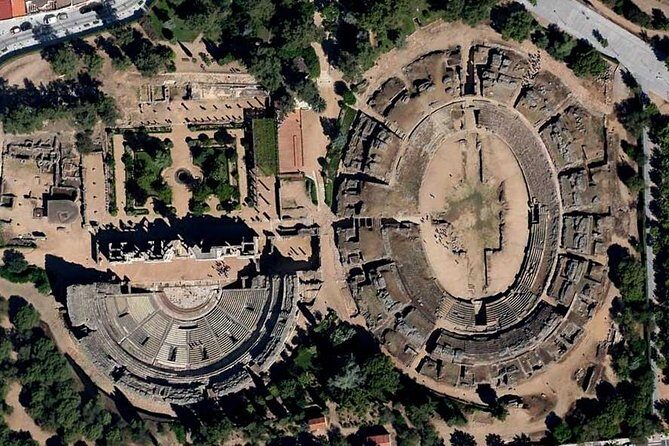
One of the standout Roman sites in Mérida is the Roman theatre area. It’s tied to the consul Marco Vipsanius Agrippa, with the building possibly opened between 16–15 AD.
What I find valuable here is the sense of time. You’re not just looking at “ancient ruins.” You’re looking at a place with named political power behind it—an official Roman figure connected to public building in a province that would later be the capital of Lusitania.
The stop is about an hour, and admission is listed as included. That means you get into the experience without having to stop and calculate ticket logistics on the fly. For a long day, that’s exactly what you want: fewer small interruptions, more uninterrupted sightseeing.
Templo de Diana: Roman architecture that still feels confident
Next comes the Templo de Diana—a Roman temple built up to the late 1st century BC at Emerita Augusta. You’re seeing a structure that connects directly to the city’s later role as the capital of the Roman province of Lusitania.
This temple stop is short (about 30 minutes) and listed as free admission, but it’s timed well. You’ll have museum context in your head, and you’ll be fresh enough to notice proportions and how the building sits in its setting.
Why this matters for your trip: Roman temples tend to feel “correct” in how they frame space. Even when you don’t know the details, you can feel the intention—this was designed for public presence. If you’re the kind of traveler who likes to take one or two anchor sights and build the rest around them, this is a strong anchor.
You can also read our reviews of more private tours in Lisbon





The Roman circus of Mérida: scale, military founding, and legions
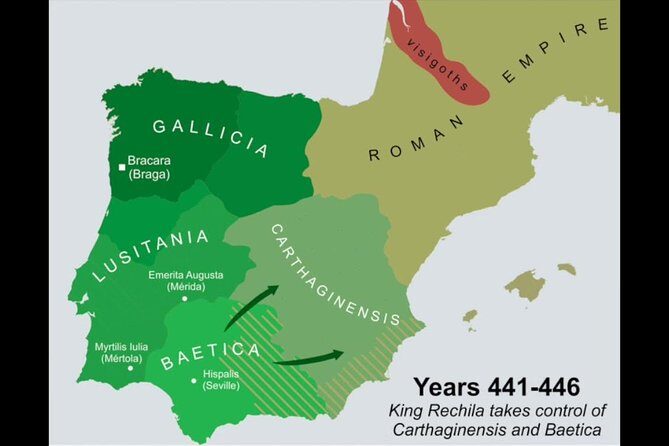
Then you hit one of the most dramatic Roman elements on the day: the Roman circus of Mérida. The story is big and specific, which is great for understanding what you’re looking at.
Emerita Augusta was founded in 25 BC by Augustus. The circus was built for licensed Roman army soldiers of two veteran legions involved in the Cantabrian Wars: Legio V Alaudae and Legio X Gemina. And the city served as the capital of Lusitania.
I love this detail because it changes how you picture the circus. You might assume ancient entertainment was only for civilians. Here, the founding purpose explicitly connects the circus to military life and prestige. That helps the place feel less like a random ruin and more like a functional part of the Roman machine.
This stop is listed as free admission and about 30 minutes. Don’t rush past it—if you can, take a moment to read the structure’s rhythm. Even in ruins, the geometry tells you how the space guided movement and spectacle.
Acueducto de los Milagros: the aqueduct ruins that explain the city
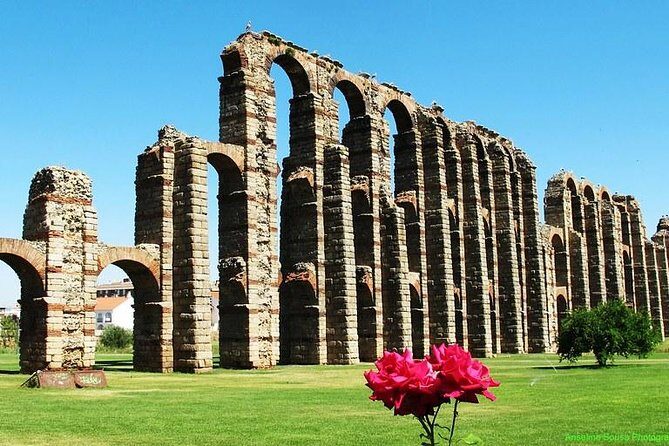
You finish the Mérida Roman run with the Acueducto de los Milagros, the ruins of a Roman aqueduct bridge that supplied water to the colony of Augusta Emerita.
Aqueducts are easy to overlook because they’re not as visually dramatic as temples or theatres. But they’re the reason the rest of the city could exist. If Romans could move water, they could build baths, fountains, and dense neighborhoods. In other words, aqueducts explain infrastructure—without them, the big public monuments wouldn’t mean much.
This stop is short (about 10 minutes), and that’s fine. It’s more about getting the image in your mind than absorbing every detail. If you’re curious, you’ll likely want to spend a little extra time here with your eyes—look for how the bridge structure holds up the water story.
Évora after Mérida: Roman roots, Moorish layers, and the bone chapel
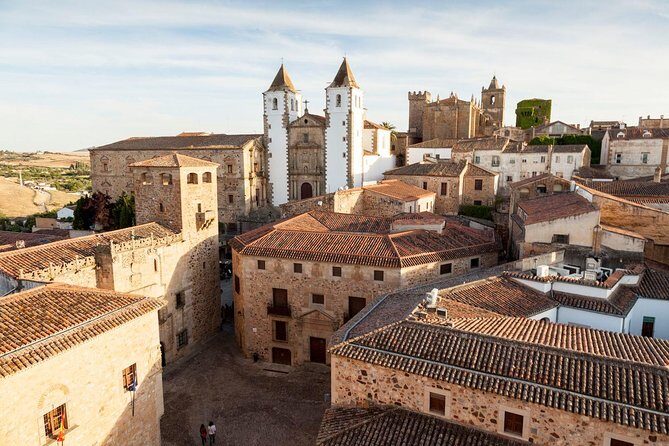
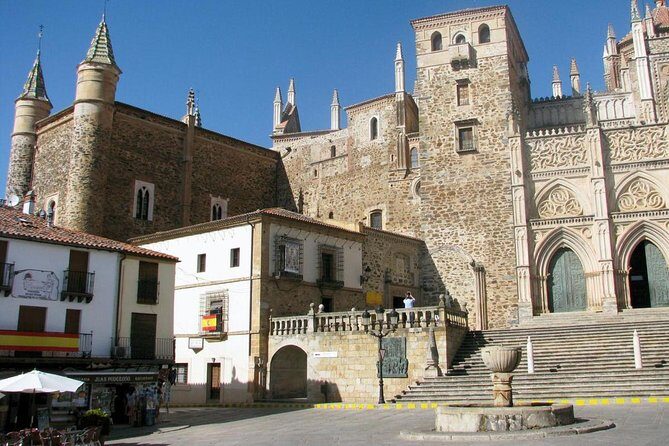
After Mérida’s Roman engine, Évora brings the emotional punch. This Portuguese town was originally founded by Romans, later fortified by the Moors, and it flourished during the 15th century. You can feel the layering in how the monuments sit next to each other and how different eras use the same ground.
Évora’s time on the schedule is about two hours, listed as free admission. That’s a good length for this kind of place because you’re not locked into only one attraction—you can connect multiple sights into a single walking loop.
Here are the key elements you’ll want to prioritize:
- Templo Romano de Diana (the preserved Roman Diana Temple)
- Evora castle (fortification memory from older eras)
- Praça do Giraldo with 16th-century Gothic architecture
- The bone chapel, one of Évora’s most memorable, ghoulish monuments, decorated with human remains
That bone chapel is the moment people remember later. It’s not just “gross for gross’ sake.” It’s a cultural expression that turns mortality into a visual experience. If you’re sensitive to unusual displays, this is your heads-up: it’s designed to hit you emotionally fast.
As for the rest of Évora, the combination is strong: Roman, fortified medieval influence, and then Gothic architecture around Praça do Giraldo. It’s a good reminder that Portugal’s historic identity isn’t one era—it’s a stack.
Guides, storytelling, and the value of a calm expert
This tour includes a driver/guide and operates as a private tour, meaning it’s only your group. That usually helps a lot with pacing, especially on a day that mixes ruins, museums, and one intense “attention grabber” like the bone chapel.
One guide name that shows up in the feedback is Hugo, praised for history explanations that make the sites click. That kind of guiding matters more than people expect. Roman ruins can feel like random stone fragments if you don’t have a mental timeline. A good storyteller ties the parts together—like why a circus might matter to military veterans, or why Lusitania’s capital role changes how you read the temple and theatre.
Price and logistics: is $423.25 per person worth it?
At $423.25 per person for about 10 hours, the price is easiest to judge by what you’re getting: private transport, pickup/drop-off, and a day built around major sights without you having to organize tickets or transit between multiple cities.
A few value points jump out from what’s included:
- Private tour (only your group)
- Air-conditioned minivan
- Hotel/port/apartment pickup and drop-off in the Lisbon region (plus Cascais, Sintra, Almada)
- Driver/guide support
- Taxes/fees/handling charges included
- Mobile ticket provided
- Group discounts available
- Many admissions are listed as free, with at least one key admission included (the Roman theatre stop)
Is it cheap? No. But for a cross-border day with multiple major sites, the private format can be cost-justified if you’re traveling with anyone who shares your pace (and your desire to see both Spain and Portugal in one day). If you’re a solo traveler, it’s still often fair because you’re buying convenience plus time saved.
Where you might feel the cost: if you prefer slow sightseeing and long breaks, this day’s packed nature may feel like you paid to move faster than you want. If your style is “hit the highlights and absorb the stories,” this setup is close to ideal.
What to expect on-site: time windows and smart priorities
This day is built with short windows at several outdoor ruins (often 10 to 30 minutes). That’s not a problem—it’s a format. It means you’ll experience each site in a concentrated way.
Here’s how I’d prioritize your mindset for the best payoff:
- For Mérida, aim to connect each stop into one “Roman Lusitania” picture: museum art → theatre → temple → circus → aqueduct infrastructure.
- For Évora, decide in advance whether you’ll take the bone chapel first or last. The emotional impact is real, so I’d place it where you can handle it best without rushing.
- In Badajoz, use the stop to understand fortified culture and modern reuse. It sets a helpful contrast before the Roman core.
And bring the usual day-trip kit: comfortable shoes, a layer (ruins can change the feel of temperature fast), and water. The tour covers multiple regions, and you’ll be standing and walking even when the stops are short.
COVID-era hygiene: what the operator says it does
The operator is listed as certified by Turismo de Portugal with the Clean & Safe hygiene stamp. The tour also mentions disinfecting and cleaning the vehicle after each tour, plus hand sanitizer and masks provided to customers. If you’re traveling during ongoing health caution, this kind of stated process is reassuring.
Should you book this private Roman Empire day trip?
Book it if you want a high-impact day that blends Roman scale with Portuguese character. This is best for you if you like ruins with context—sites where a guide can connect names, dates, and why these places mattered in Roman Lusitania—and if you’re curious enough to include Évora’s bone chapel in your “must-see” list.
Skip it (or at least think twice) if you hate long days with lots of moving from place to place. This tour is built for momentum. At the same time, the private pickup and air-conditioned minivan reduce the usual stress of a day like this.
If your idea of value is seeing major sites with minimal logistics headaches, this one fits the bill: you get a structured route, private comfort, and the kind of combination—Roman Mérida plus Évora’s signature monument—that’s hard to replicate on your own.
FAQ
How long is the tour?
The tour is listed as approximately 10 hours.
Where is pickup and drop-off offered?
Pickup and drop-off are offered in the Lisbon region, as well as in Cascais, Sintra, and Almada. You’ll be asked to provide your pickup and drop-off address.
Is this tour private?
Yes. It’s described as a private tour, and only your group participates.
What language is the tour offered in?
The tour is offered in English.
Are admission tickets included?
The tour lists free admission for several stops, and the Roman Theatre (Roman Theater of Mérida) admission is listed as included.
Is there free cancellation?
Yes. You can cancel up to 24 hours in advance for a full refund.
What COVID safety measures are mentioned?
The tour mentions a Clean & Safe certification, disinfecting and cleaning vehicles, and providing hand sanitizer and masks.