Lisbon can be many things in three hours.
This private route threads major Lisbon sights with Belém’s “Discoveries” story, while throwing in food stops and street-level color so it doesn’t feel like a checklist. You’ll get picked up, ride between areas, and then hop out for short, well-timed moments—photo time, history time, and snack time.
I especially liked two parts: the Pastéis de Belém stop (learn how they’re made, then taste), and the National Coach Museum with its royal carriages in the former Royal Picadeiro. Tata (my guide) kept the pace friendly and explained what to look for without turning everything into a lecture.
One possible drawback: some stops are intentionally quick and outdoors. If you’re hoping for long inside visits at every landmark, you’ll need to plan extra time on your own after this tour.
In This Review
- Key things to know before you go
- The 3-hour Discoveries route: how the pacing really works
- Calle Rosa de Lisboa: the pink street that looks better in daylight
- Time Out Market Lisboa: a historic market building reborn for modern hunger
- LX Factory: street art, design stores, and a rooftop view
- Ponte 25 de Abril: a photo stop with the right kind of context
- Museu Nacional dos Coches: the museum stop that earns its time
- Pastéis de Belém: learn the process, then taste the payoff
- Jerónimos Monastery from the outside: iconic silhouettes and big names
- Torre de Belém: the fortress look that explains the Tagus
- Padrão dos Descobrimentos: a monument plus a map you can actually read
- MAAT architecture: why end with something modern
- Price and practical logistics: what $355.21 gets you
- Who this tour is for (and who should skip it)
- Should you book this private Belém Discoveries route?
- FAQ
- How long is the private Discoveries route in Belém?
- What is the price for the tour?
- Is pickup included?
- Is the tour private?
- What language is the tour offered in?
- Are tickets included for all stops?
- Where does the tour end?
- Is there free cancellation?
- Are service animals allowed?
Key things to know before you go
- Pickup plus private group: up to 6 people, so you’re not squeezed into a big crowd plan.
- Big “Discoveries” theme, not a slow history march: monuments and views are woven together with food and city texture.
- Coach Museum is included: admission is part of the tour, so you’re not hunting tickets for the one paid stop.
- Pastéis de Belém is the star: you’ll see the making process and taste as part of the experience.
- Photo-friendly route: you get multiple chances for classic Lisbon angles—pink street umbrellas, bridges, river landmarks.
- You’ll see MAAT’s modern architecture: a sharp change of mood from the older Belém sights.
The 3-hour Discoveries route: how the pacing really works
This is a private tour designed for people who want the highlights without spending the whole day commuting and negotiating entry lines. With pickup offered, you start by letting someone else handle the “where do we go next?” part, which makes the route feel smoother.
The tour is about three hours on the clock, and the time is split between quick stops and a couple of longer moments. You’ll spend the most time where it matters—the Coach Museum and the Pastéis de Belém—then you’ll move on before the best light disappears.
Because it’s private, your guide can adjust the rhythm inside that structure. Still, keep expectations realistic: some sights are best seen from the outside, and you’re not here for a full museum day.
Calle Rosa de Lisboa: the pink street that looks better in daylight
The day starts with Calle Rosa de Lisboa in Cais do Sodré, the famous pink street that’s better known for nightlife. During the day, it’s still fun—ideal for a photo—especially with the rainbow umbrellas that add a cheeky pop of color.
What I like about this first stop is the way it sets the mood. You get instant Lisbon character right away, before the route turns into monuments and river history.
The tradeoff is time. You’re there for about five minutes, which is perfect for a quick photo and a reset, but not enough to linger. If you’re a slow photographer, plan on doing your “serious shots” at the later landmarks too.
Time Out Market Lisboa: a historic market building reborn for modern hunger
Next up is Time Out Market Lisboa, passed in front rather than fully toured. The backdrop matters here: market construction began in 1600, and the space has been revitalized into a food and shopping hub with more than 30 spaces.
Even without going deep inside, you still get something valuable: context. This is Lisbon’s way of keeping old bones and giving them a new job. You’ll also notice the variety—restaurants, bars, cafés, pastries, plus souvenirs, preserved products, and wine shops.
If you’re the type who likes to “scan for what you’ll eat later,” this stop helps. You get ideas for snacks and gifts without losing tour time. If you want to fully explore, you’ll likely want to come back after your tour.
LX Factory: street art, design stores, and a rooftop view
LX Factory is a creative zone with more than 50 stores, known for urban art and design energy. You’ll stop long enough to look around—about 20 minutes—and focus on the street art side, which is the best part for a quick walk.
One detail worth remembering: the complex has a rooftop with a view of the bridge. You may not have time for a long rooftop session during a tight route, but it’s nice to know where that view lives if you return later.
This stop is a good balance against the more formal sights. It turns the day from “look at history” into “look at how people live now.” It’s also a great place for a few photos that don’t look like every other Lisbon Instagram post.
Ponte 25 de Abril: a photo stop with the right kind of context
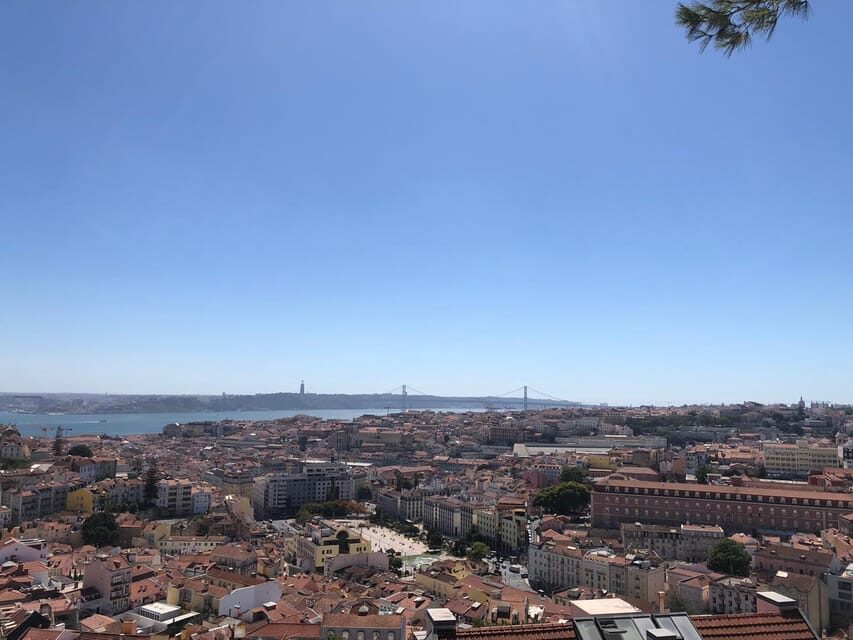
Then you’re at Ponte 25 de Abril, the bridge that connects Lisbon to Almada. It opened in 1966 and runs about 2,200 meters, carrying both car traffic and rail across the Tagus.
A key story here: it was originally called Ponte de Salazar, and the current name links it to the Carnation Revolution. In a single stop, you get a reminder that Portuguese history isn’t just overseas voyages—it’s also political change at home.
You’ll pass under the bridge for a photo with the structure in the background, about 15 minutes. This is one of those moments where the “quick” time works, because you get the classic angle and then you’re moving on before you overcook your patience.
Museu Nacional dos Coches: the museum stop that earns its time
The National Coach Museum (Museu Nacional dos Coches) is the big included-ticket moment of the day. Admission is covered, and the stop is about 30 minutes—enough time to feel like you actually did something, not just skimmed.
This museum sits in the former Royal Picadeiro, and it holds an exceptional collection of royal vehicles from the 17th century through the end of the 19th. If you like objects you can almost picture in motion, this stop delivers. Carriages aren’t just transportation here—they’re status, craft, and politics you can walk past.
What you’ll enjoy most is the setting. The refined environment makes the vehicles feel like artifacts from a world that had rules about everything, including who sat where and how the display worked. Even if you’re not a “museum person,” it’s still easy to understand why these pieces mattered.
One practical consideration: if you’re short on patience for indoor stops, you’ll still probably like this one. It’s visually strong and the time window is reasonable.
Pastéis de Belém: learn the process, then taste the payoff
If you came to Lisbon for pastries, this is the moment. Pastéis de Belém began production in 1837, and the story connects the recipe to the Jerónimos Monastery. The “same artisanal processes” idea is part of the appeal—these are not made like a generic factory sweet.
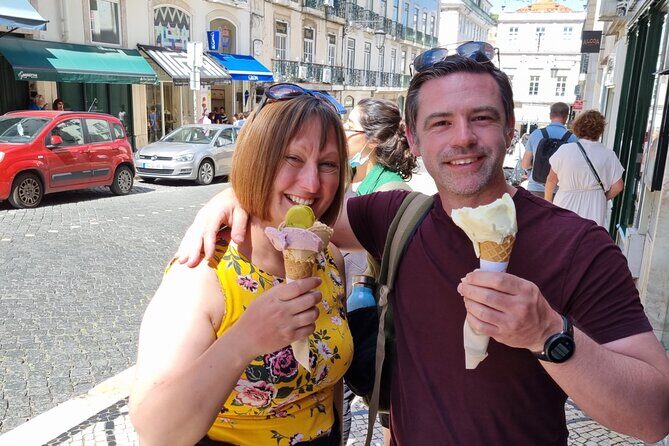
You’ll spend about 20 minutes here, including a chance to learn how the pastries are made and then taste them as you leave the factory. That makes it more than just a snack stop. You’re getting the origin story in real time, which also helps you understand why people line up and why the product has a loyal following.
This is also where I’d call out the strongest praise from the experience: the Pastéis de Belém stop is often the “I’m glad we did this” part of the day. It’s an easy win, especially because you don’t need extra planning on your own once you’re on the tour.
Jerónimos Monastery from the outside: iconic silhouettes and big names
After pastries, the route pivots to Jerónimos Monastery, one of the most famous monuments tied to Portuguese exploration. You’ll stop in front of it for about 15 minutes, which keeps things moving while still giving you time for photos and context.
The monastery was built at the end of the 15th century by King D. Manuel I, and it was handed over to the Order of Saint Jerónimo. In the church, you’ll find the tombs of Pedro Alvares Cabral and Vasco da Gama—two names that are basically the shortcut to the Portuguese “Discoveries” era.
Because the stop is mostly exterior, you’re not stuck if the complex is crowded. Still, be realistic: if you decide you want more than a look from the steps—especially inside areas—lines can happen. If that’s your plan, build in extra time beyond this tour.
Torre de Belém: the fortress look that explains the Tagus
Torre de Belém sits on the right bank of the Tagus and is one of Lisbon’s best-known river landmarks. It was originally surrounded by water on its perimeter, then later by beach areas, and now the monument is incorporated into dry land.
The style is tied to the reign of D. Manuel I. The tower combines the medieval keep-tower tradition with a more modern bastion concept, including artillery placement. So even though it looks like a postcard tower, it’s also a defensive structure with a clear purpose.
You’ll spend about 25 minutes here, and I like that timing. You get enough time to look close, then shift your angle for photos without feeling rushed. This is also a great stop to step back and connect the earlier “Discoveries” theme to the geography of the Tagus.
Padrão dos Descobrimentos: a monument plus a map you can actually read
Next is Padrão dos Descobrimentos, the Monument to the Discoveries. It was erected in 1940 for the Portuguese World Exhibition, and the current replica was inaugurated in 1960.
This stop is especially useful if you’re trying to picture what “discoveries” means in practical terms. You’ll also stop to see the map where Portugal passed for the first time in the 15th and 16th centuries. That turns vague ideas into something more concrete.
You’ll have about 20 minutes here. That’s enough time to absorb the scale and get a sense of the story without treating the monument like a math exam.
MAAT architecture: why end with something modern
The final stop is MAAT—Museu de Arte, Arquitetura e Tecnologia. It opened in October 2016, and it’s linked to the EDP Foundation’s cultural patronage policy.
MAAT is described as an international institution focused on critical discourse and creative practice with a view to raising new understandings about the historical present and responsible commitment to the future. Even if you’re not planning to do much inside, the building itself gives you a final mood shift from stone monuments to modern design.
You’ll stop to see the architecture for about 10 minutes. That short window works because it keeps the tour energy high while giving you one last visual contrast to carry with you.
Price and practical logistics: what $355.21 gets you
The price is $355.21 per group (up to 6 people) for about three hours. For a private tour, that’s often where the value shows up: you’re paying for control of the day—pickup, a set route, and included admission where it counts.
Here’s why the math can work in your favor. The National Coach Museum has admission included, so you’re saving on at least one paid entry. You also get the Pastéis process and tasting as part of the schedule. Many of the other stops are free to see from the outside, or you’re simply passing by.
You should think of it like this: you’re buying a guided path through “the big stuff” with fewer decisions. That’s especially helpful if it’s your first time in Lisbon or you only have a short window to cover Belém.
Timing also matters. The tour runs daily during the broad window listed, from 9:00 AM to 9:00 PM, so you can pick a time that fits your day. Late in the evening can be fun for photos near the river, but for comfort, daylight tends to make everything easier.
A simple tip: wear shoes that work for uneven sidewalks and quick stops. This isn’t a long, slow stroll, but you’re still on your feet often enough for it to matter.
Who this tour is for (and who should skip it)
This works best for you if you want a private, guided snapshot of Lisbon and Belém’s “Discoveries” landmarks plus one or two experiences you wouldn’t want to plan alone—especially the Pastéis de Belém and the coach museum.
It also suits groups who want a shared day with variety: a street-photo start, a market pass, a creative district interlude, then major monuments and a modern finale.
You might want something else if you’re the kind of person who needs deep museum time at every stop. The route is built for highlights. It’s not built for slow touring and long inside detours at each landmark.
Should you book this private Belém Discoveries route?
I’d book it if you like your Lisbon day with a strong mix: food that has a clear story, a museum that’s genuinely worth the door time, and monuments that fit together like a route through the city. The private group size up to 6 and the pickup option make the plan feel easy from the moment you step out.
I’d think twice if your main goal is maximum time inside places like major churches and museums. Since several stops are photo/outside moments and some parts are time-limited, you won’t be “settling in” for long.
If you’re on a time crunch and want the best shot at seeing Belém’s signature sites plus a taste of Lisbon’s neighborhoods, this is a smart way to do it—without turning your day into chaos.
FAQ
How long is the private Discoveries route in Belém?
It runs for about 3 hours.
What is the price for the tour?
The price is $355.21 per group, up to 6 people.
Is pickup included?
Yes. Pickup is offered outside the hotel, in vehicles identified with the company logo.
Is the tour private?
Yes. It’s a private tour, and only your group participates.
What language is the tour offered in?
It’s offered in English.
Are tickets included for all stops?
No. The National Coach Museum has admission included. The other listed stops are marked as free or involve viewing/pass-by moments.
Where does the tour end?
It ends back at the meeting point.
Is there free cancellation?
Yes. You can cancel up to 24 hours in advance for a full refund.
Are service animals allowed?
Yes, service animals are allowed.