REVIEW · LISBON
Lisbon: Electric Bike Tour by the River to Belém
Book on GetYourGuide →Operated by Boost Portugal · Bookable on GetYourGuide
This ride makes Belém feel reachable fast. You start in central Lisbon, roll along the Tagus on an electric bike, and line up the must-see landmarks tied to Portugal’s Age of Discovery—all without the usual walking grind.
I especially like two things: the route is built around the river’s changing scenery (so the trip stays interesting), and the stops are timed for photos and quick context—great if you like your history served with momentum. With guides such as Joao and Eduardo (people often mention how engaging they are), you’ll get clear explanations at each highlight.
One consideration: it’s not a stroll. You’ll be on the bike the whole time, and it has specific limits (like minimum height/weight rules and the fact that it’s not suitable for pregnant women or mobility impairments).
In This Review
- Key highlights at a glance
- From Commerce Square to the River: Why This E-Bike Start Works
- A quick note on the vibe
- The Tagus Corridor: Colunas, Alcântara Docks, and 25 de Abril Bridge Views
- Cobblestones and comfort
- Photo Time at Christ the King and the Bridge Underpass
- Monument to the Discoveries and MAAT: Old Maritime Power Meets Modern Lisbon
- When this section shines
- Jerónimos Monastery: Manueline Architecture in Real Life
- One drawback you should plan for
- Belém Tower and the Tagus Finale: Maritime Lisbon’s Strongest Image
- The Included Pastel de Nata and Coffee Stop
- How Much Time You’ll Actually Spend Riding
- Price and Value: Is $32 a Good Deal?
- Who gets the most value
- Guides, Group Flow, and the Small Details That Matter
- What to Bring (and What to Skip) for a Smooth Ride
- Should You Book This Lisbon River-to-Belém E-Bike Tour?
- FAQ
- How long is the Lisbon electric bike tour to Belém?
- Where does the tour start and end?
- What’s included in the price?
- Are entrance fees included?
- What languages is the guide available in?
- Is it family-friendly?
- Do I need to wear a helmet?
- What are the weight and height requirements?
- If weather is unsafe, what happens?
Key highlights at a glance
- Flat Tagus riding with an electric assist so you keep your eyes up, not your legs burning
- Commerce Square to Belém Tower with planned photo stops and short guided moments
- Manueline architecture stops like Jerónimos Monastery and Belém Tower, framed with context
- Old-meets-new contrast with MAAT (Museum of Art, Architecture and Technology)
- Included pastel de nata and coffee at a local café stop
- Guides who actively manage the group and traffic so the ride stays smooth
From Commerce Square to the River: Why This E-Bike Start Works
I like the way this tour begins at Commerce Square. It’s one of those Lisbon anchors: broad space, historic stonework, and a strong sense of arrival. The meeting point also sets you up to understand the “shape” of the city—how the Tagus cuts through it, and how neighborhoods connect.
Right away, you get your bike basics. There’s an electric bike rental and lesson, which matters more than it sounds. Even if you’re an experienced cyclist, an e-bike has its own feel: you learn when to rely on assist, how to control speed on turns, and how to stay relaxed while others are doing the same. You’re not thrown into chaos.
Then the group gets moving toward the river corridor. The early minutes include a quick guided orientation and a short photo stop at Commerce Square (timed for convenience). The payoff is that you’re already warmed up before the scenic stretches start.
You can also read our reviews of more cycling tours in Lisbon

A quick note on the vibe
This tour is designed to move steadily. You’ll stop often enough to look like a tourist (in a good way), but not so often that the day turns into one long wait. If you want to “see a lot without suffering,” this is the plan.
The Tagus Corridor: Colunas, Alcântara Docks, and 25 de Abril Bridge Views
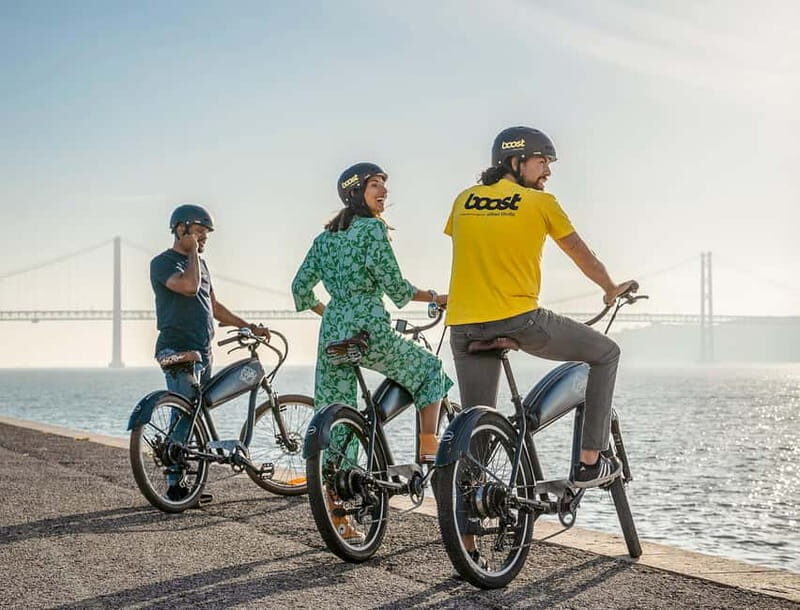
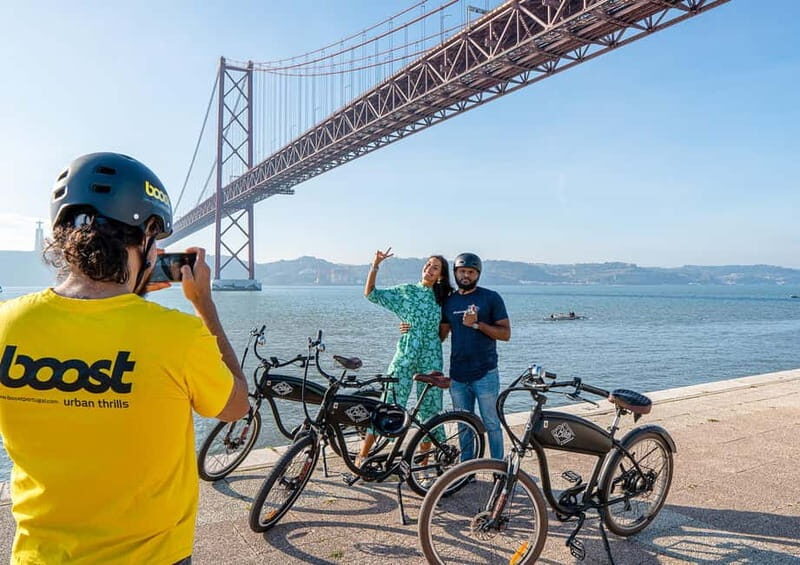
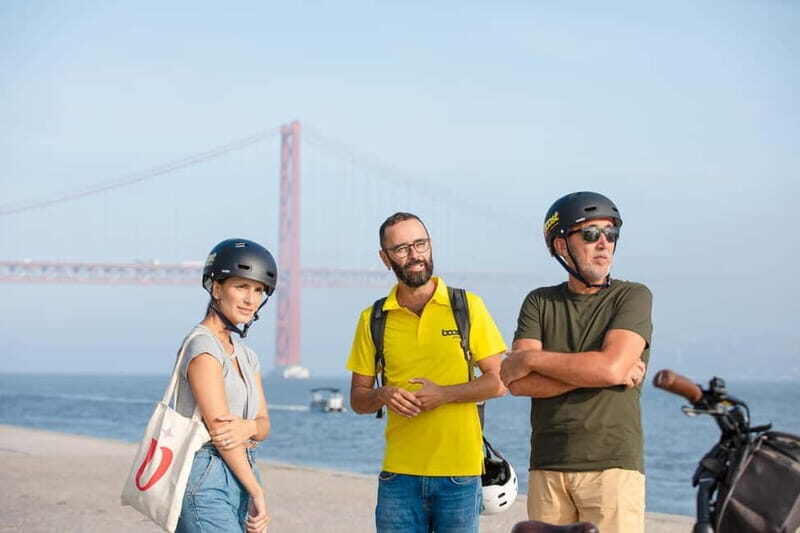
Once you’re on the riverside path, the whole experience gets easier to enjoy. You’re gliding along the Tagus, and the river works like a moving backdrop. One minute you’re looking at Lisbon’s waterfront history, the next you’re under a big modern structure that looks like it’s been engineered for dramatic photos.
A highlight you’ll likely stop for is Cais das Colunas—described as a noble entrance near Commerce Square. That’s useful because it helps you understand Lisbon’s “front door” logic: the city didn’t grow randomly; it grew around water access and trade routes.
Then comes the dock area by Alcântara, located below the 25th of April Bridge. This is the kind of detail that makes the ride feel more local than checklist-tour-ish. You see the practical river side, not only the postcard angles.
And yes, you’ll also pass under the 25th of April Bridge. There’s a photo stop built in (plus scenic time), and it’s not just for looks. That bridge helps you orient where Belém sits in relation to central Lisbon.
Cobblestones and comfort
Some riders mention the bike tires specifically—fat tires can make a difference when paths aren’t smooth. That matters on Lisbon’s mixed surfaces, especially as the route threads through older areas.
Photo Time at Christ the King and the Bridge Underpass
This tour isn’t only about the waterfront. After the river stretch, you’ll get a chance for city views from Christ the King. You’ll be able to grab a wide panorama—exactly the kind of visual anchor that makes the rest of your sightseeing snap into place.
Why it’s valuable: from street level, Lisbon can feel like hills stacked on hills. A viewpoint helps you connect where you are to where you want to go next. It also gives you a break from riding straight lines along the river.
Then you return to the main route logic and keep going toward the Belém-side highlights. The tour keeps a rhythm: ride, stop, listen, take a few photos, then keep rolling.
You can also read our reviews of more tours and experiences in Lisbon



Monument to the Discoveries and MAAT: Old Maritime Power Meets Modern Lisbon
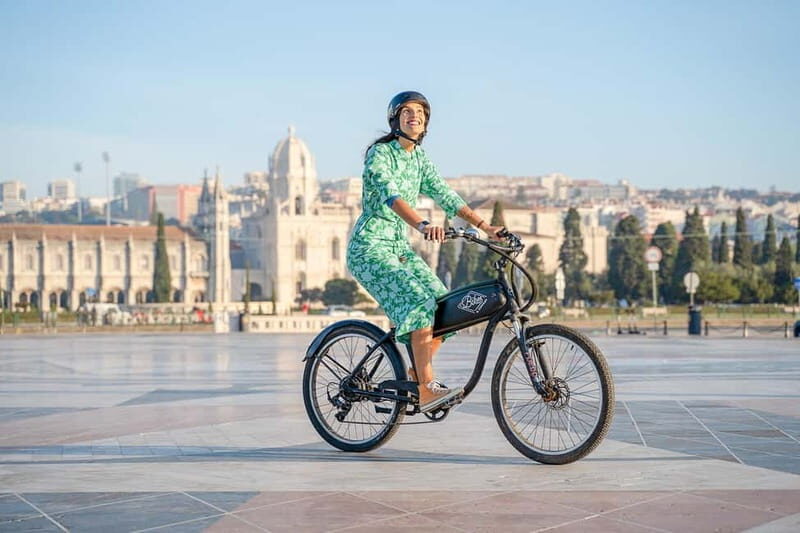
At some point, you’ll reach the Monument to the Discoveries. This is where the tour’s story focus becomes obvious. Portugal’s maritime past is not abstract here; it’s built into the landscape. The stop is brief but purposeful—enough time to take photos and get the basic context so you’re not just staring at a sculpture with no idea what it represents.
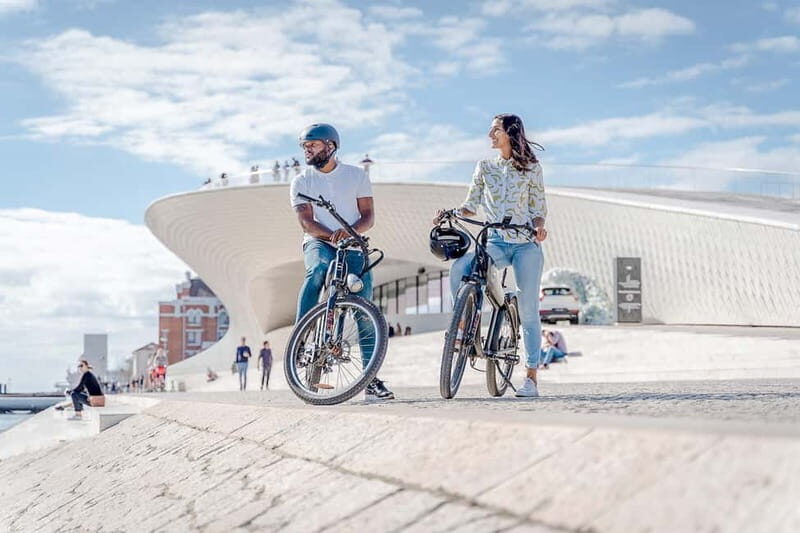
After that, you’ll pass by MAAT, the Museum of Art, Architecture and Technology. This stop works as a counterweight to the older landmarks. You get to see Lisbon’s shift from maritime dominance to modern cultural identity—same city, different chapter.
In practice, MAAT helps you avoid the common “everything is old, so I’m tired” problem. The ride keeps moving, and you get contrast without a long museum slog (entrance fees aren’t included, so you’re likely just admiring and passing unless you choose otherwise on your own).
When this section shines
If you like variety—river, architecture, viewpoint, then a modern cultural spot—this mid-tour segment is where it clicks.
Jerónimos Monastery: Manueline Architecture in Real Life
Now we slow down in the best way: by landing at Jerónimos Monastery, a UNESCO World Heritage site famous for its Portuguese Late Gothic Manueline style. This is one of those places where the building details are the main event. Up close, the stonework reads differently than in photos.
What you’ll do here is mostly about seeing and understanding. There’s a photo stop and guided sightseeing time (kept efficient). The goal isn’t to replace a long independent visit; it’s to give you enough orientation that when you return later (or when you look back at your pictures), you know what you’re seeing.
The practical benefit: after this stop, Belém Tower lands harder emotionally. You’ve just trained your eye on the architecture style, so the next fortress-like landmark doesn’t feel disconnected.
One drawback you should plan for
Stops around major sights can feel like short windows—quick photos, then moving on. If you love lingering in cloisters for an hour, this tour might feel slightly fast. But if your goal is to cover the “big Belém hits” efficiently, it’s a strong match.
Belém Tower and the Tagus Finale: Maritime Lisbon’s Strongest Image
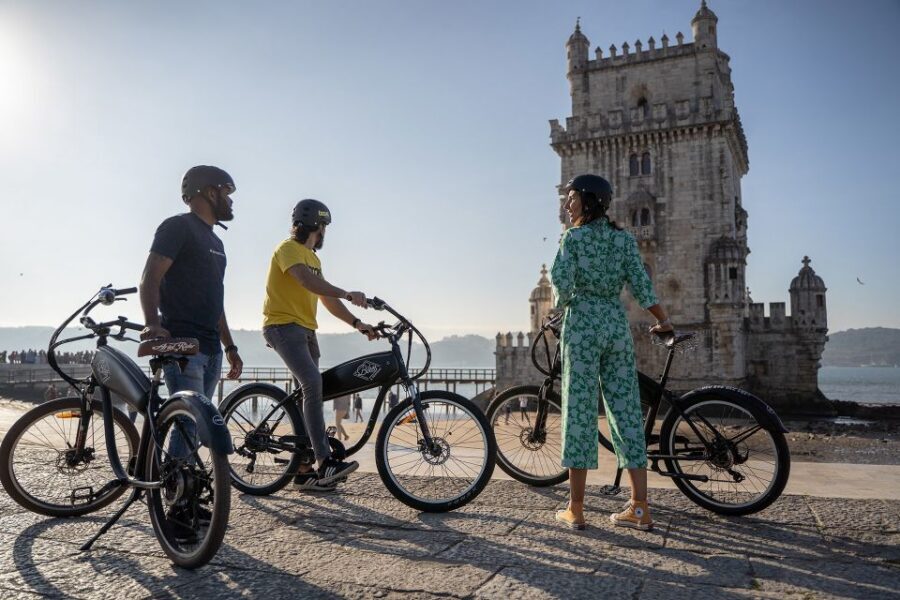
The tour ends at Belém Tower, built on the northern bank of the Tagus between 1514 and 1520. It’s a fortress, a symbol, and one of the most recognizable images of Portugal’s maritime heritage. The ride culminates here, so you arrive with your brain already primed.
The photo stop timing is set so you can get your best shots without rushing immediately into crowds. You’ll see how the tower relates to the river: it feels like it belongs to the water, not just sitting on it.
And this is where the earlier viewpoint at Christ the King pays off. If you’ve taken the panorama, you can better picture how Belém sits out along the Tagus from Lisbon’s center.
The Included Pastel de Nata and Coffee Stop
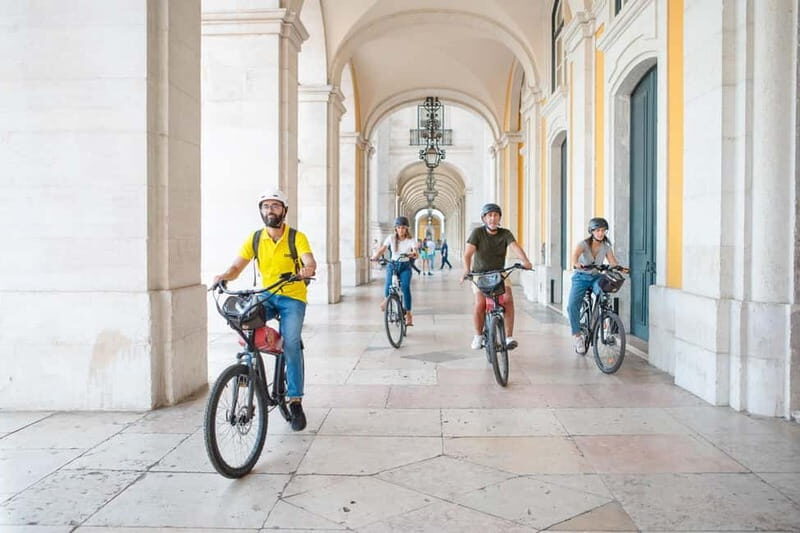
One of my favorite parts of this tour format is that it includes a food break that doesn’t derail the day. You’ll stop at a local café for a short snack time, and the tour includes pastel de nata plus coffee.
Why this matters: pastel de nata tastes better when you’ve earned it—after time outside, after riding, and after seeing the landmarks that relate to Portugal’s food-and-trade era. Also, this stop is built into the schedule, so you’re not hunting for a café while your legs are asking questions.
If your group includes kids (or you’re traveling with family), this is also a nice morale boost. The ride is active, but the day stays balanced with something familiar and sweet.
How Much Time You’ll Actually Spend Riding
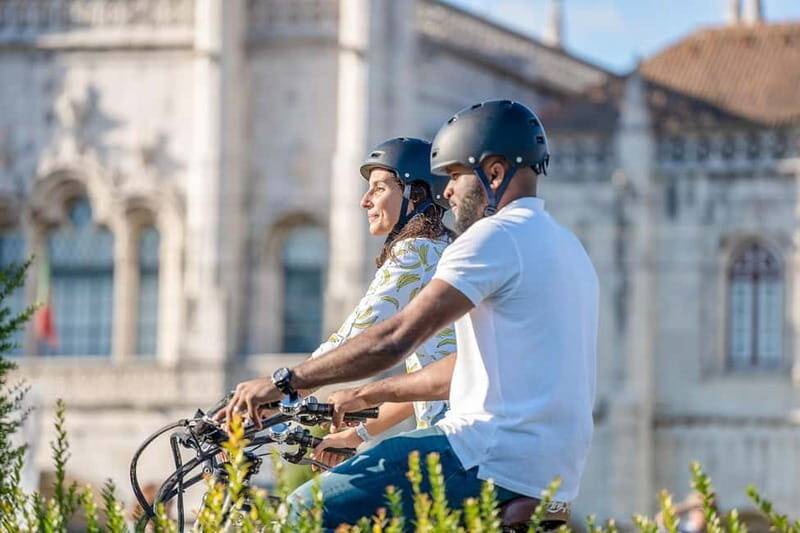
The total duration is 3 hours. That’s a sweet spot. Long enough to get real sightseeing value and short enough that you can still plan the rest of your day.
In that time, you’re moving through central Lisbon, riding along the river corridor, and reaching the Belém highlights. Stops like Commerce Square and the bridge photo moments are brief, while the bigger architectural sites get short guided attention.
If you’re the kind of traveler who hates wasting a whole afternoon commuting between neighborhoods, this tour’s structure is efficient.
Price and Value: Is $32 a Good Deal?
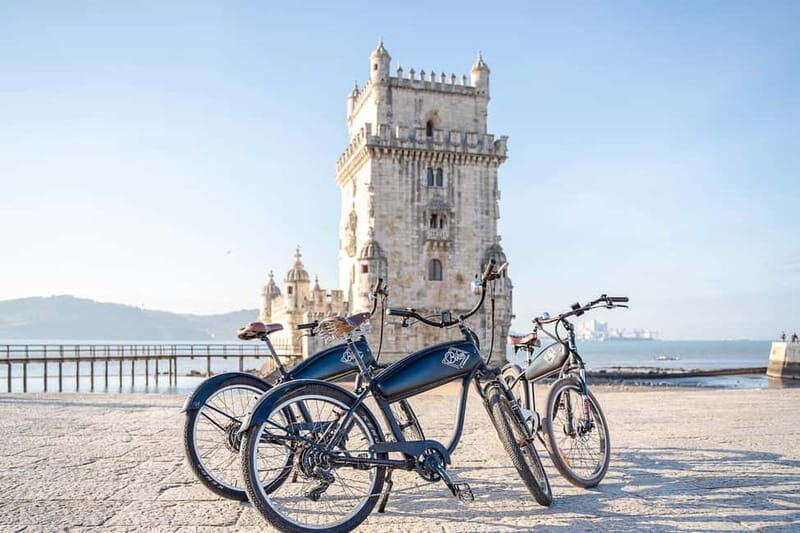
At $32 per person, I think this tour is strong value if you want the combo: electric bike + guided storytelling + multiple major landmarks + included pastry and coffee.
Here’s what you’re getting:
- Electric bike rental and lesson (you’re not borrowing a random bike and figuring it out yourself)
- Experienced local guide (key for understanding what you’re seeing)
- Pastel de nata and coffee included
- Liability and personal accident insurance
- Multiple landmark stops along the Tagus and in Belém
What’s not included: entrance fees. That’s common for this style of tour. So if you want to go inside Jerónimos Monastery or spend extra time in museums, plan on paying those separately later.
Who gets the most value
You’ll feel the value most if you:
- want a fast “Belém highlights” overview,
- like your history explained without long waits,
- enjoy scenic riding more than long indoor time.
If you want to park yourself for hours inside churches, plan a separate day with slower pacing.
Guides, Group Flow, and the Small Details That Matter
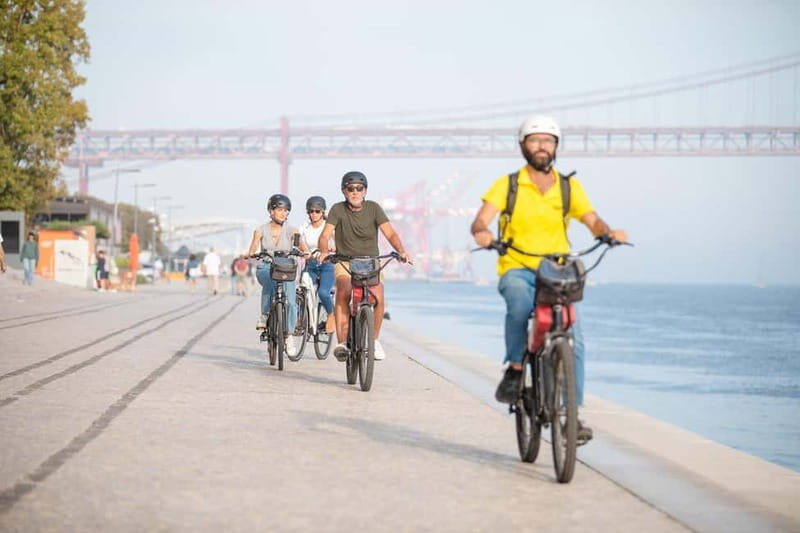
A standout theme in guide performance is attentiveness. People talk about guides like Joao and Eduardo as especially good at keeping the group together and managing the traffic so you can focus on the ride and the sights.
It also sounds like some guides bring extra materials—like illustration-style explanations—so you can visualize what you’re hearing. That’s useful at Jerónimos and the tower area, where architectural details are easy to miss if nobody points them out.
The other small detail: safety. A safety helmet is mandatory, and you’ll sign a waiver. It’s not optional, and it’s the right kind of “small hassle” for feeling secure.
What to Bring (and What to Skip) for a Smooth Ride
Plan light. The tour rules say:
- Bring passport or ID card
- No luggage or large bags
- No pets
- No intoxication
- Unaccompanied minors not allowed
Also, the physical requirements are specific:
- weight range: 45kg to 118kg
- minimum height: 1.5 meters
And fit matters in a different way:
- not suitable for pregnant women
- not suitable for people with mobility impairments
- not suitable for children under 11
So if you’re traveling with a mixed group, double-check ages and physical limits before you assume everyone can join.
Should You Book This Lisbon River-to-Belém E-Bike Tour?
I’d book it if you want a 3-hour, low-stress way to see Belém’s biggest landmarks without planning a complicated route yourself. It’s especially smart for first-timers who want river views, architectural context, and a pastry stop that feels like part of Lisbon rather than a random caffeine break.
Skip it (or consider another format) if you:
- need a tour that’s fully accessible for mobility needs,
- want long time inside major sites,
- don’t like riding for the full duration, even with electric assist.
For the right traveler, this is one of those Lisbon tours where the pacing makes sense: you start with orientation, get scenic momentum, and finish with Belém Tower as the big visual payoff.
FAQ
How long is the Lisbon electric bike tour to Belém?
It lasts about 3 hours. Starting times vary, so you’ll want to check the available start slots.
Where does the tour start and end?
The tour starts at a meeting point that may vary by the option you book (Boost Portugal – Urban Thrills), and it ends back at the meeting point.
What’s included in the price?
The tour includes pastel de nata, coffee, electric bike rental and a lesson, an experienced local guide, and liability and personal accident insurance.
Are entrance fees included?
No. Entrance fees are not included.
What languages is the guide available in?
The live tour guide is available in English, French, German, Spanish, and Dutch. Private group tours are also available.
Is it family-friendly?
It is not suitable for children under 11. Minors must be accompanied by an adult, and children up to 13 must have a Term of Responsibility signed.
Do I need to wear a helmet?
Yes. A safety helmet is mandatory for all participants.
What are the weight and height requirements?
All participants must weigh between 45 kg and 118 kg and be at least 1.5 meters tall.
If weather is unsafe, what happens?
If the tour is canceled due to unsafe weather, you may be able to reschedule for later the same day depending on availability. Ponchos are provided.