REVIEW · LISBON
Lisbon: Guided Tour of Historic Belém by Electric Bike
Book on GetYourGuide →Operated by LISBOA AUTÊNTICA LDA · Bookable on GetYourGuide
Belém looks best when you can move. This electric bike tour turns a big UNESCO area into a manageable, fun ride. You get swept along the Tagus waterfront toward the big-ticket monuments, plus lively neighborhood streets like Pink Street, without feeling like you’re doing a marathon.
Two things I especially like: you spend real time seeing sights such as Torre de Belém and the Jerónimos area, and the guide pacing helps you actually process the stories (not just snap photos and rush on). One consideration: this isn’t built for everyone, since parts of the route can involve busier city streets, and you’ll want comfortable shoes and a bike-fit that works for your body.
Guides matter here, and the reviews back that up. Names like Xavier, Jorge, Frederica, Daniel, Miguel, Ethan, Pedro, and Bruno show up again and again for clear explanations, good navigation, and a friendly, attentive style that helps first-timers feel steady on the bike.
In This Review
- Key Points at a Glance
- Why This Electric Bike Tour Works for Belém
- Starting at Largo Severa: Finding the Group Fast
- The Ribeira Market Area: Local Life Before the Landmarks
- Rua Nova de Carvalho: The Pink Street Contrast
- Cais do Sodré and the Ferries: Lisbon’s Maritime Thread
- Tagus Waterfront to Torre de Belém: Views You Can Feel
- 25 de Abril Bridge: Revolution Meets River Air
- Electricity Museum and Industrial Architecture: A Surprise Detour
- Monument of the Discoveries: Learning Without Feeling Like a Lecture
- Torre de Belém’s Fortification Context
- Coffee Break Away From the Crowds (and the Custard Tart Option)
- Jerónimos (Monastery of Saint Jerome): Manueline Style Up Close
- Who This Tour Suits Best (and Who Might Struggle)
- Price and Value: What $47 Really Includes
- Booking Advice: How to Get the Best Version of This Day
- Should You Book This Electric Bike Belém Tour?
- FAQ
- How long is the Lisbon: Guided Tour of Historic Belém by Electric Bike?
- What is the price per person?
- What’s included in the tour cost?
- Are Belém custard tartlets included?
- Where does the tour meet?
- Which languages are available for the live guide?
Key Points at a Glance

- Electric-assist makes Belém feel easy even if you’re not a strong cyclist
- Tagus waterfront routing gives you constant postcard views as you ride
- Pink Street Rua Nova de Carvalho adds character beyond the monuments
- Major Belém landmarks come in one efficient loop: Torre de Belém, Monument of the Discoveries, and Saint Jerome
- A planned coffee break plus a chance to try Belém custard tartlets (not included in price)
- Small groups help the guide keep an eye on everyone’s comfort and safety
Why This Electric Bike Tour Works for Belém

Belém is packed with landmark architecture tied to Portugal’s Age of Discoveries, plus layers of modern Lisbon energy. The problem with seeing it on your own is time: you end up zigzagging, waiting for transit, or backtracking because your feet get tired before your eyes are satisfied.
An electric bike fixes that. You can keep a steady tempo along the river, take in the views, and still stop for the small moments that make Belém feel real. One of the best design choices here is that the ride is long enough to feel like an experience, but not so long that you arrive fried. Several riders call out the fact that the route feels mostly flat and bikeable, with the electric assist taking the edge off.
And this tour doesn’t treat Belém like a museum. You start near local market life, pass through maritime areas, and ride through a street with a famous nightlife identity. That mix is what makes the day feel like Lisbon, not just a checklist.
You can also read our reviews of more cycling tours in Lisbon


Starting at Largo Severa: Finding the Group Fast

The meeting point is Largo Severa 7A, 1100-588 Lisboa. It’s a pedestrian area, which can make taxis and rideshares slightly annoying if you drop in the wrong spot.
If you’re coming by Uber or taxi, the most practical destination is Praça Martim Moniz. Largo da Severa is about a two-minute walk from there. If you’re using the metro or bus, plan to treat that final stretch on foot as part of the arrival.
Once you meet your guide, you’ll get a short briefing on how the e-bikes work. This matters because the electric assist is what makes the ride feel effortless—but you’ll want a quick, confident setup before rolling into traffic-adjacent areas. In the reviews, first-timers repeatedly mention that they got comfortable fast.
The Ribeira Market Area: Local Life Before the Landmarks
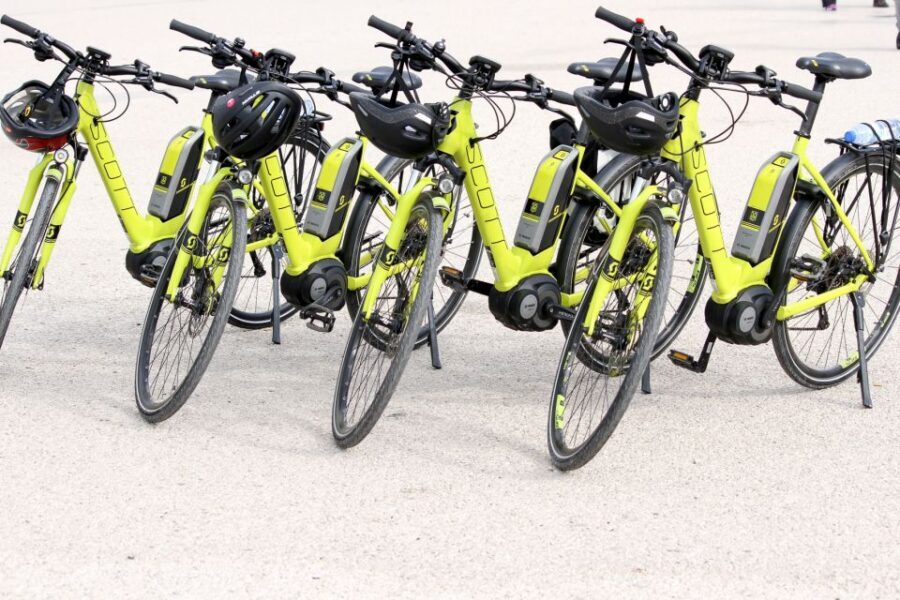
The tour begins with a stop around the renovated Ribeira Market area. This is where Belém gets human-scale. You get the chance to see stalls connected to daily rhythms—fish, fruit, vegetables, and flowers—so the whole day doesn’t start as a sprint from one monument to another.
It’s also a smart choice for photos. Markets have color, motion, and texture in a way that monument stones can’t always match. Even if you’re not buying anything, it helps you learn what kind of neighborhood Belém is: working and social, not just scenic.
There’s another useful element here. You also pass a cluster of restaurants (more than 30) recommended by highly regarded chefs. That’s a subtle reminder that Belém isn’t stuck in the past; it’s a place where Lisbon’s food scene still matters.
Rua Nova de Carvalho: The Pink Street Contrast
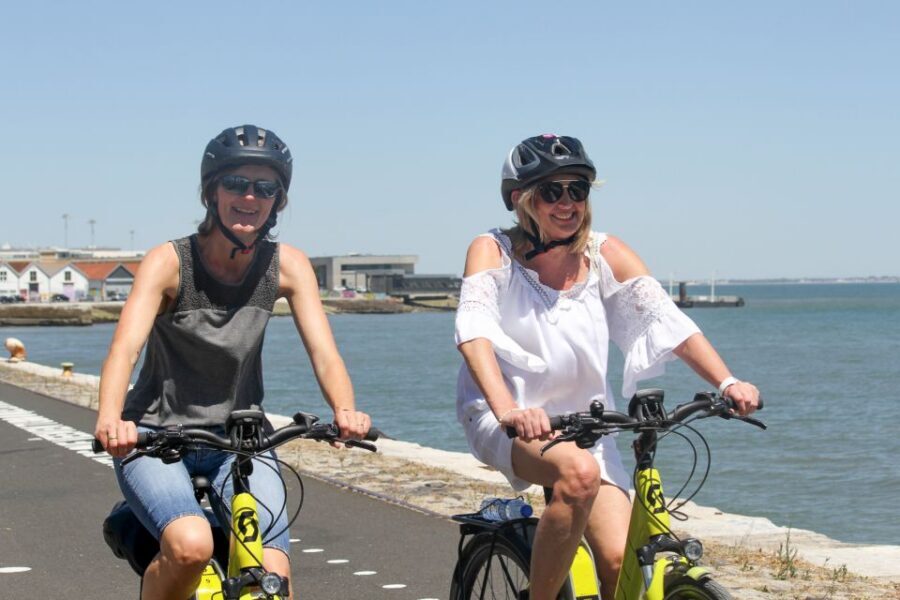
Then you hit one of the day’s most memorable mood shifts: Rua Nova de Carvalho, also known as Pink Street. It’s described as a famous nightlife street and also as a former red light district, with colorful buildings that look like they were designed for Instagram—only the story behind the paint gives it depth.
What I like about this part of the tour is contrast. If the monuments tell you about Portugal’s global era, Pink Street tells you about Lisbon’s local reality: the city has always had places where people gather, socialize, and reinvent themselves.
You ride past it in a way that doesn’t feel like wandering. The guide frames what you’re seeing so you don’t just think pink equals cute.
Cais do Sodré and the Ferries: Lisbon’s Maritime Thread
Next comes Cais do Sodré, a hub of maritime activity since the 15th century that now connects you to ferry life. The tour passes the area and brings you close to the ferry terminal for the cacilheiros boats that link Lisbon and Cacilhas.
You don’t have to ride the ferry to feel the connection. Seeing the terminal area and knowing what it does gives context to why the Tagus waterfront matters so much. Belém isn’t random waterfront beauty; it’s tied to boats, commerce, and movement.
If you love maritime history, this stretch is a nice bridge between the Age of Discoveries story and the practical geography of the city.
You can also read our reviews of more guided tours in Lisbon






Tagus Waterfront to Torre de Belém: Views You Can Feel
After that, the tour settles into one of the best parts for most people: riding along the Tagus River toward Torre de Belém. This is where the electric bike earns its keep.
You get a long, uninterrupted rhythm on bike paths and waterfront stretches. One rider notes the route is mostly on cycle paths and that even with heat, the coastal breeze helps. That’s the kind of detail that makes a difference on a vacation day.
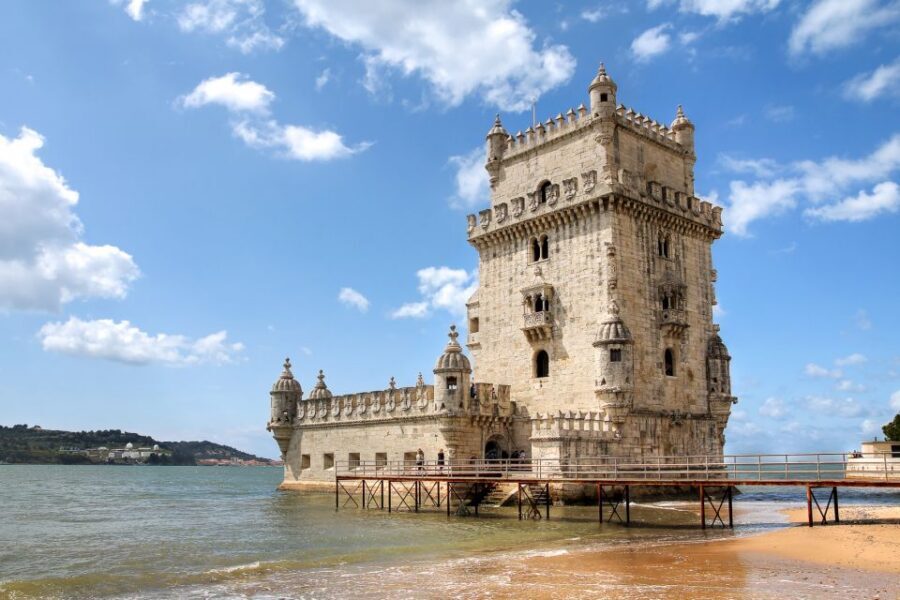
Torre de Belém is the reason the waterfront route exists. It’s part of the defensive system that protected Lisbon from pirates, and it looks even better when you can approach at a bike pace rather than from a single overcrowded viewpoint. When you’re moving, the angles change—and your photos end up feeling more like a story.
25 de Abril Bridge: Revolution Meets River Air
Then you get one of the city’s most iconic views: the 25 de Abril Bridge. The tour frames it as a symbol of the 25 de Abril Revolution, ending 41 years of dictatorship.
It’s not just a bridge stop. It’s a turning point in the day’s meaning. Earlier sights are about exploration and defense; now you’re seeing a modern political symbol tied to Lisbon’s 20th-century transformation.
If you like history that has physical structure you can see, this works well. A guide helps connect what you’re looking at with what it represents, and the pacing keeps the moment from turning into a quick photo-and-go.
Electricity Museum and Industrial Architecture: A Surprise Detour
One stop that adds variety is the former thermoelectric plant area, now home to the Electricity Museum. This is a different kind of Lisbon landmark: industrial architecture.
I like when tours include one or two stops that aren’t the obvious tourist triangle of churches and towers. Industrial buildings can be visually striking, but they also tell a different story about how Lisbon modernized—less about global voyages, more about power, infrastructure, and the city’s growth.
This part also gives your eyes a break from pure seafaring aesthetics. You’re changing gears visually, while still staying in the same broad Belém zone.
Monument of the Discoveries: Learning Without Feeling Like a Lecture
Next up is the Monument of the Discoveries. Built in 1940 for the Exhibition of the Portuguese World, it uses depictions connected to Portugal’s Age of Discoveries.
What makes this stop valuable is how it helps you read Belém as a coherent theme. Without some context, the monuments can feel like separate photo ops. With framing, they start to click: exploration, maritime power, defense, and national identity all show up in different materials and styles.
Because this tour is guided, you don’t just see carvings—you understand what they point to. Guides like Xavier and Jorge are praised for explaining history in a way that stays engaging, including personal perspective on Lisbon as more than a set of sites.
Torre de Belém’s Fortification Context
From there, the day brings you back into the defensive storyline around Torre de Belém. Belém’s fortifications protected Lisbon from pirates as part of a broader defensive system.
This is where having a guide helps. If you stand near the tower without context, it’s easy to admire the shape and miss the function. With the explanation, the monument feels purposeful, not just decorative.
Coffee Break Away From the Crowds (and the Custard Tart Option)
At some point, you’ll stop for a quiet coffee break away from tourist traps. This is a real quality-of-life moment. When you’re cycling through a famous area, you want one breathing space that isn’t just another line.
And yes, there’s a chance to taste Belém custard tartlets—though this matters for planning: custard tartlets are not included in the tour price. You’re basically being offered a food moment within the experience, not a mandatory included snack.
In the reviews, the tart gets called out as worth it, and one rider even makes it a highlight. If you’re a fan of Pastéis de Nata-style pastry, this is one of the few moments in Lisbon you can confidently treat yourself without feeling like you picked the wrong place.
Jerónimos (Monastery of Saint Jerome): Manueline Style Up Close
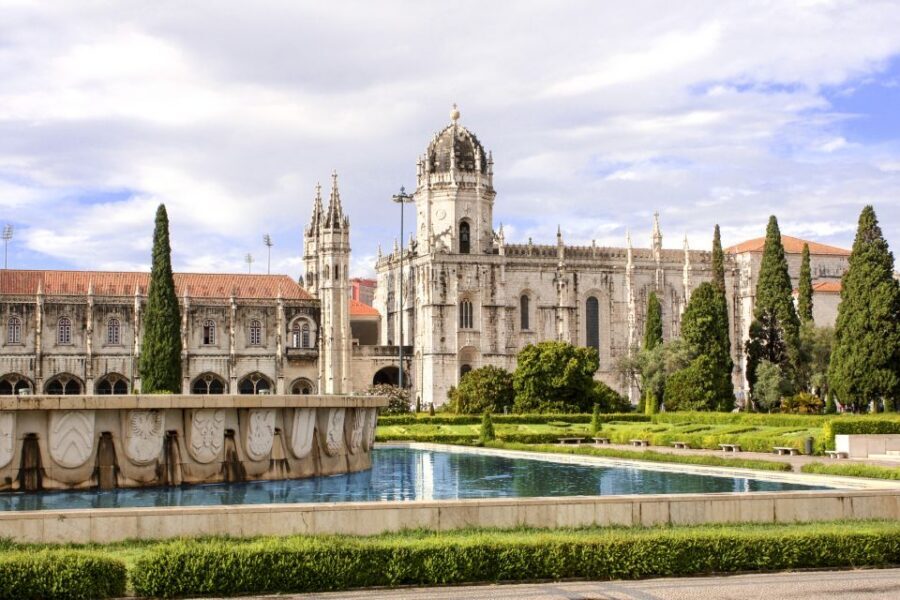
The final major monument stop is the Monastery of Saint Jerome. It’s a 16th-century site and one of Lisbon’s finest examples of Manueline-style architecture.
Manueline is one of those styles you can only truly appreciate when you’re close enough to see the details. A bike tour pace helps because you arrive ready to look. You’re not forced to sprint between stops, and you’re not stuck staring at the same spot for too long.
The day also includes a gardens moment where custard tartlets are available to taste. That pairing is smart: the architecture gets attention first, then you get a slower, relaxed food-and-views wind-down before heading back.
Who This Tour Suits Best (and Who Might Struggle)
This is a great choice if you want an efficient Belém sampler without giving up the fun of moving. It fits well for:
- First-time visitors who want the big monuments plus local neighborhood flavor
- Families with kids who can ride steadily; one review mentions younger teens keeping up easily
- Travelers who dislike long stair climbs but still want to see a lot
But it’s not a perfect fit for everyone. The tour is listed as not suitable for people with mobility impairments, and it’s not for anyone under 4 ft 8 in (145 cm). Also, while many riders say the ride is easy and mostly flat, one review notes that parts can include busy, bumpy city streets and that it might not feel relaxed for inexperienced riders.
One more small practical warning: one rider described it as not ideal for people who need frequent bathroom breaks. The schedule has set stops, so if you know you’ll need more frequent breaks than typical, plan accordingly.
Finally, e-bike comfort is personal. One review mentioned an uncomfortable saddle. If you’re sensitive to saddle feel, bring that mindset. A 3-hour ride plus sun and sightseeing can make minor discomfort feel bigger.
Price and Value: What $47 Really Includes
The price is $47 per person for about 3 hours. On paper, that’s not a cheap activity in Lisbon. In practice, it can be good value because you’re paying for a guided route through a dense area with high-demand sights.
Here’s what’s included:
- Guide
- E-bike and helmets
- One bottle of mineral water
- Liability and personal accident insurance
What’s not included:
- Transfers to and from the meeting point
- Refreshments
- Belém custard tartlets
So the math works like this: you’re not buying transportation or a guide separately, and you’re not renting bikes on your own. The water and helmet reduce the small costs and planning tasks. The only big “extra” that most people will likely want is the custard tartlet moment.
Given the number of major stops packed into a 3-hour loop, this pricing is competitive if you value time and a structured route.
Booking Advice: How to Get the Best Version of This Day
If you want this tour to feel smooth, do two things.
First, arrive ready for a bike day: comfortable shoes and clothes. You’ll want sunscreen too; the instructions specifically mention biodegradable sunscreen. Bring it so you’re not scrambling after a meeting briefing.
Second, match your expectations to the route. This isn’t a slow parade around one monument. It’s a ride with momentum, with key stops where the guide’s job is to explain what you’re seeing. If you love a good walking pace, you’ll likely love the tempo here. If you need lots of long breaks, plan to be selective with how you spend your free time after the tour.
Should You Book This Electric Bike Belém Tour?
I’d book it if you want an active but manageable way to see Belém’s UNESCO-area sights plus the Tagus waterfront. The biggest selling point is the combo: major landmarks in a tight loop, guided context that makes those landmarks click, and an electric-assist ride that helps you cover ground without draining yourself.
I’d skip it only if you know you’ll struggle with uneven or busy stretches, if e-bike saddle comfort is a hard requirement for you, or if you’re in the under-145-cm / mobility-limited category listed by the operator.
If your goal is a high-value Belém highlight day with photos, stories, and river air, this is a strong choice.
FAQ
How long is the Lisbon: Guided Tour of Historic Belém by Electric Bike?
The tour duration is 3 hours.
What is the price per person?
The price is $47 per person.
What’s included in the tour cost?
The tour includes a guide, an e-bike and helmet, one bottle of mineral water, and liability and personal accident insurance.
Are Belém custard tartlets included?
No. Refreshments and Belém custard tartlets are not included.
Where does the tour meet?
The meeting point is Largo Severa 7A, 1100-588 Lisboa. If you’re using Uber or taxi, Praça Martim Moniz is suggested as your destination, and Largo da Severa is about a 2-minute walk away.
Which languages are available for the live guide?
The live guide is available in French, Spanish, German, Portuguese, English, and Italian.