REVIEW · EVORA
Montemor-o-Novo or Évora: One-Day Tour of Megaliths
Book on GetYourGuide →Operated by Burriscas Adventure PT · Bookable on GetYourGuide
Stone circles and caves, in one long day. The magic here is how efficiently you hit major megalithic sites and then end with the Escoural Caves and their prehistoric markings, all with a local guide and round-trip transport.
I like that the route gives you both scale and close-up details. You get that huge-feeling moment at Almendres Cromlech, and you also get hands-on context at burial stones and dolmens where the guide explains purpose and construction. I also love the human break: lunch in Santiago do Escoural, followed by the interpretive centre and then the caves themselves.
One thing to consider: this is not a sit-and-stare tour. There’s a walk of about 950 metres along a rural path (roughly 1,900 metres round trip total), and the caves won’t suit claustrophobia.
In This Review
- Key highlights worth planning for
- How a one-day megalith loop makes Alentejo history feel real
- Pickup options and what 8 hours really feels like
- Almendres Cromlech: the big stone moment (and why it matters)
- The morning megalith stops: Portela, dolmens, and the “why these stones” lesson
- Great Dolmen of Zambujeiro: the one walk you should plan for
- Almendres Menhir and the supporting stone stops that fill in the map
- Lunch in Santiago do Escoural: a good break at the right time
- Escoural Caves: prehistoric paintings and engravings underground
- What the guides add (Pedro, Cristina, and the power of local context)
- Price and value: why $129 can work out well
- Who should book this tour, and who might skip it
- Should you book this one-day Megaliths tour?
- FAQ
- How long is the Montemor-o-Novo or Évora one-day megalith tour?
- How much does the tour cost?
- What’s included in the price?
- Do I need to walk during the tour?
- Is this tour suitable for people with mobility impairments or claustrophobia?
- What languages is the tour offered in?
- Is lunch included, and are drinks included?
Key highlights worth planning for
- Small group, capped at 8, so questions don’t get swallowed by the bus crowd
- Almendres Cromlech plus stops at other key dolmens and megalithic areas in one tight loop
- Lunch in Santiago do Escoural before you go underground to the Escoural Caves
- Escoural Caves with prehistoric paintings and engravings, with an interpretive centre stop to set the scene
- Zambujeiro walking segment is the main effort, so comfortable shoes matter
How a one-day megalith loop makes Alentejo history feel real
Alentejo’s prehistoric sites are spread out. That’s exactly why this kind of tour works so well. Instead of choosing between “this site today” or “that site tomorrow,” you get a full day that connects them into one story.
I like the way the tour doesn’t treat the stones like decoration. Your guide frames each stop in plain terms: what it might have been for, how it was built, and why these places mattered to people thousands of years ago. And since you’re in a small group, you can actually ask what you’re looking at.
You can also read our reviews of more tours and experiences in Evora.


Pickup options and what 8 hours really feels like
The tour runs about 8 hours, with round-trip transfer from either Montemor-o-Novo or Évora (two pickup options). That matters because several of these sites are awkward to reach by private car, and a local guide helps you avoid dead ends and wrong turns.
You’ll also notice the day is paced in blocks. Some stops are short (about 30 minutes), and one part of the program runs longer (about 1.5 hours), which is where the caves and the story around them tend to land. Translation: you’ll move steadily, but you’re not rushed through the entire experience.
Almendres Cromlech: the big stone moment (and why it matters)
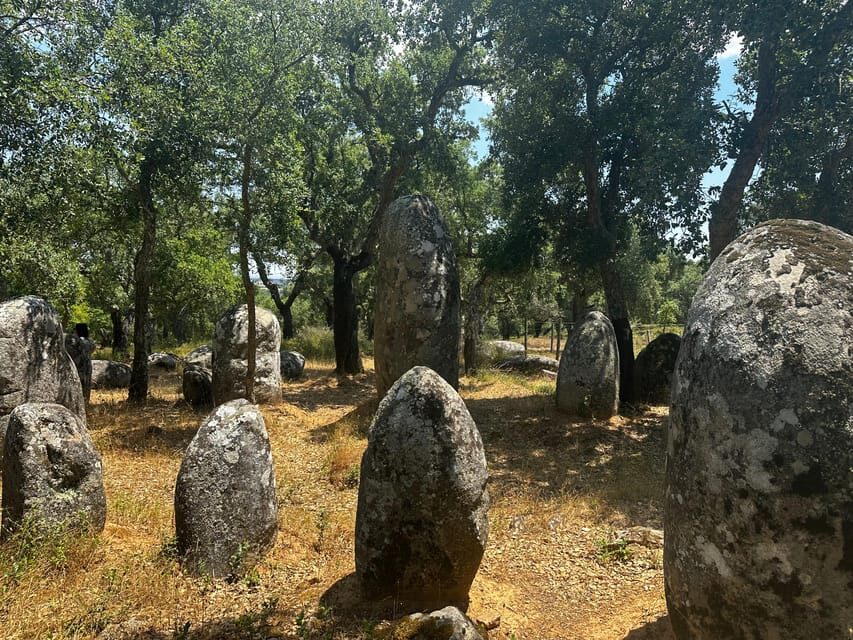
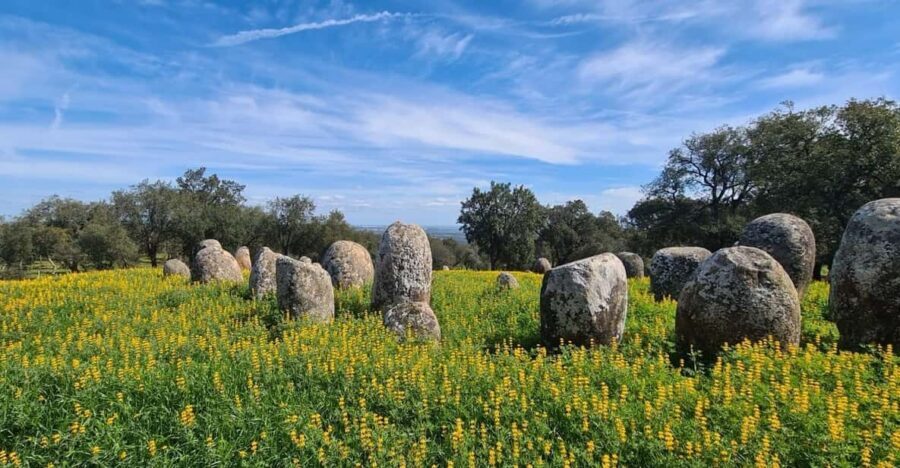
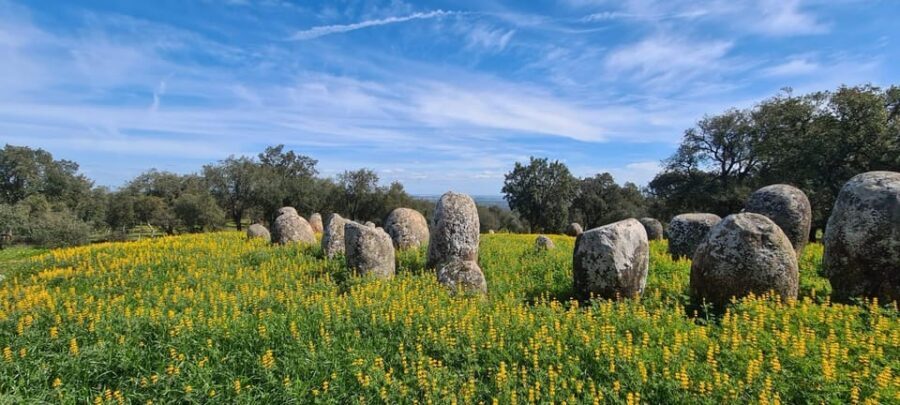
Almendres Cromlech is the anchor many people hope to see. It’s one of the largest and most important megalithic complexes in Europe, with more than 90 stones arranged in specific formations. Even if you’ve seen photos, being there changes the feel. The stones take on a physical presence.
Your guide’s job is to give you a way to look. At this stop, you get time—about 30 minutes—to understand how the arrangements work and why the site’s scale created such strong cultural meaning in the Alentejo prehistoric landscape.
If you like your landmarks with context (not just a viewpoint selfie), this stop is a win. It’s the kind of place where the explanation makes the shapes click.
The morning megalith stops: Portela, dolmens, and the “why these stones” lesson
Before lunch, the tour focuses on the stone monuments that define this part of Portugal’s prehistoric record. Expect a steady sequence of sites, including:
- Portela dos Mogos Cromlech (a set of standing stones explained for origins, purpose, and importance in Alentejo prehistory)
- Anta do Pinheiro Grande (a Neolithic dolmen tied to funerary traditions)
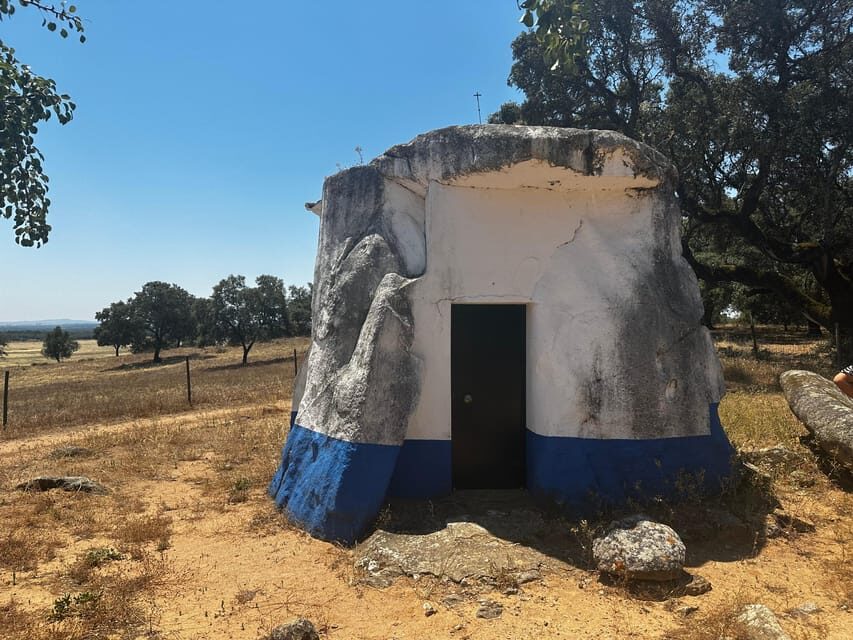
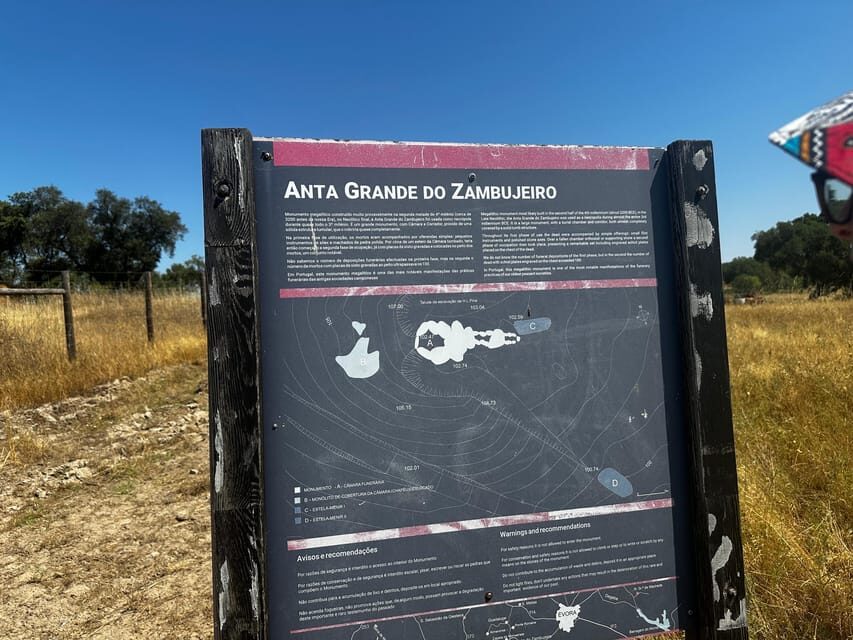
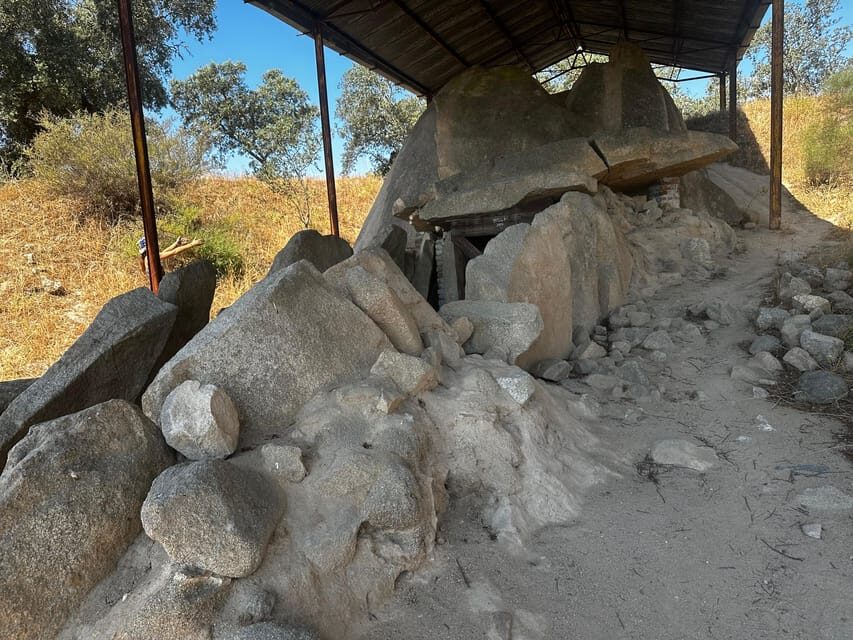
- Great Dolmen of Zambujeiro (one of the largest burial structures in the Iberian Peninsula)
- Anta-Capela de S. Brissos (another megalith stop that adds variety to the burial-stone story)
- Vale Rodrigo Megalithic Complex (included as part of the megalithic sweep)
The best part isn’t that you see a lot. It’s that you’re learning how different structures fit together—standing stones, dolmens, and burial sites—into one broader picture of how prehistoric communities used stone architecture.
One practical note: many of these monuments sit on rural paths. That’s where having a guide matters, because access can be tough for private cars, even when the sites are only a short distance away in “map terms.”
Great Dolmen of Zambujeiro: the one walk you should plan for
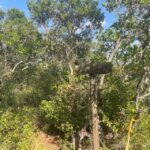
This is the stop that tests your shoes. To reach the Great Dolmen of Zambujeiro, you walk about 950 metres along a rural path. The round trip is roughly 1,900 metres on foot.
The upside is that the walk helps you feel the site’s location—this isn’t a monument you’re dropped next to. You’re moving through the real setting where these structures sit. The downside is simple: if your legs prefer paved surfaces, you’ll notice the difference.
Bring comfortable shoes and clothes that don’t mind walking on uneven ground. And if you’re traveling with knee issues, it’s worth thinking about whether this distance is manageable for you on a busy day.




Almendres Menhir and the supporting stone stops that fill in the map
Besides Almendres Cromlech, the included program also lists Almendres Menhir. Even when it’s not as visually “complete” as a full complex, a menhir stop helps you connect the dots between the bigger arrangement and the individual stone features.
You’re basically building a mental map: large complexes at one end, and single-stone or smaller structures that reinforce how prehistoric sites worked as a network. When you piece it together, the Alentejo megalith area stops feeling like random locations and starts feeling like a connected prehistoric landscape.
Lunch in Santiago do Escoural: a good break at the right time
Lunch lands in the village of Santiago do Escoural, at a traditional Portuguese restaurant. This matters because it’s not just a meal stop—it’s a reset before the caves.
The tour includes lunch, with drinks not included, so it helps to be ready to pay for beverages separately. Food timing is also smart: you eat before heading to the interpretive centre and then descending into the caves.
If you care about getting a real taste of Alentejo rather than grabbing something quick and moving on, this lunch stop is one of the easiest “value wins” in the whole day.
Escoural Caves: prehistoric paintings and engravings underground
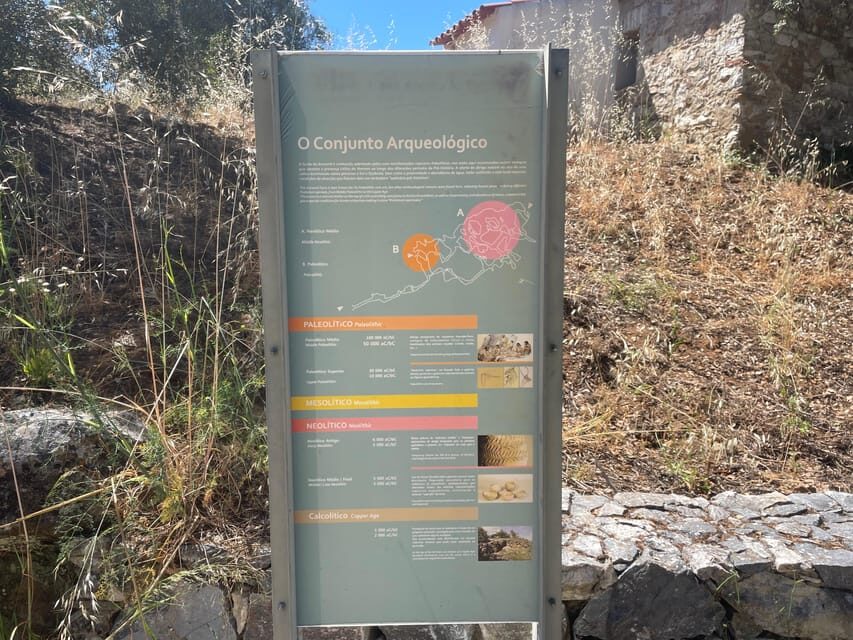
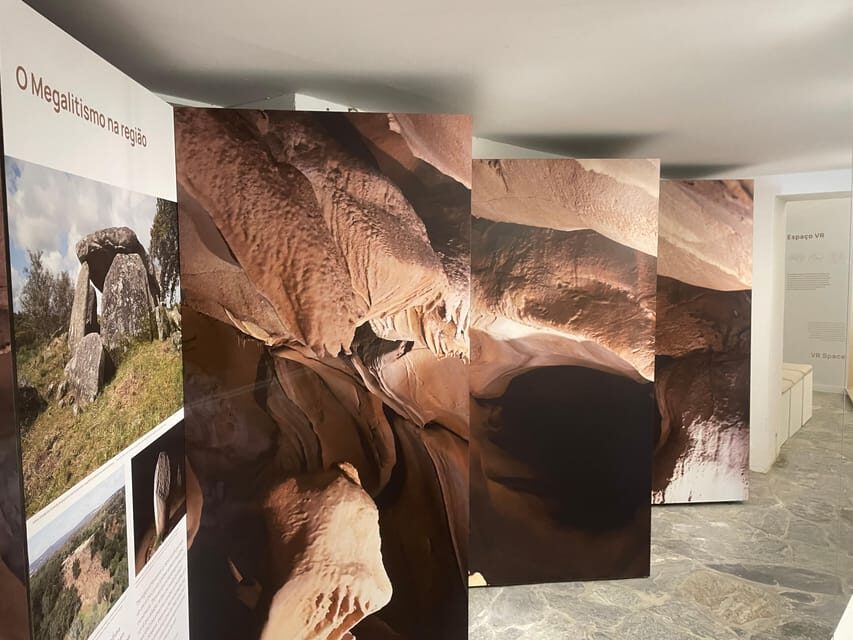
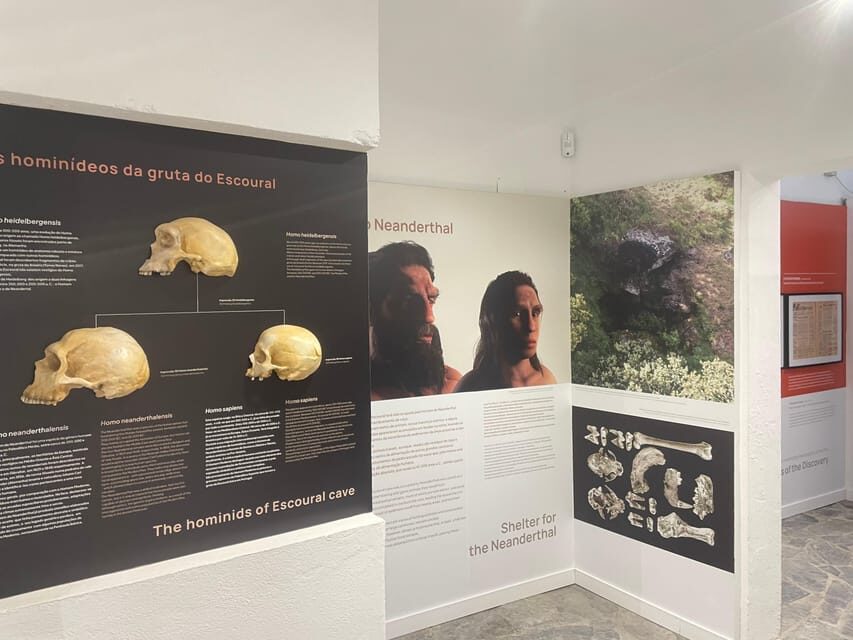
After lunch, you go to the Interpretative Center of the Escoural Caves. This step is genuinely useful because it gives you a way to look once you’re underground, instead of wondering what you’re seeing.
Then you visit the Escoural Caves, known for prehistoric paintings and engravings. The caves shift the experience from stone monuments you see in daylight to human marks left inside a natural setting. It’s a different kind of connection: less about scale above ground, more about the evidence of early human artistic expression.
This is also where the tour’s “don’t be claustrophobic” warning becomes real. If enclosed spaces make you uneasy, this stop can be stressful. The caves are the reason this tour feels special—so choose it only if you’re comfortable with underground visits.
What the guides add (Pedro, Cristina, and the power of local context)
The reviews make one thing clear: the guide’s presence changes the day. People get named because they’re remembered for how they explain and how they manage timing.
For example, guides such as Pedro are praised for passion and for making the history come alive. Cristina also stands out in feedback for going beyond the basics and showing Paleolithic and Neolithic sites in a way that feels clear, organized, and practical.
You’ll feel the difference most at the rural stops where access is tricky. A local guide doesn’t just know the route; they also know how to help you understand what you’re looking at once you get there.
And yes, sometimes you may get an extra look at Montemor-o-Novo beyond the drop-off rhythm—one guide added a castle element in the Montemor-o-Novo area when there was time. If your itinerary allows it, you might get a brief bonus view like that too.
Price and value: why $129 can work out well
At $129 per person for an 8-hour day, this isn’t a “cheap and cheerful” option. But it’s also not just a ticket for one site. You’re paying for a bundle:
- round-trip transport from either Évora or Montemor-o-Novo
- multiple megalithic visits (including major names like Almendres Cromlech)
- the Escoural Caves visit plus the interpretive centre
- lunch in Santiago do Escoural
- small-group pacing (up to 8 participants)
- skip-the-ticket-line (so you don’t waste time when you arrive)
When you total the time, transport, and included meals and entrances, the price becomes easier to justify—especially if you’d otherwise have to rent a car or spend a full extra day trying to visit sites out of order.
Who should book this tour, and who might skip it
This tour is a strong match if you want one day to connect a lot of prehistoric dots: stone circles, dolmens, burial stones, interpretive context, and then cave art.
It’s not a fit if you need full accessibility. The tour isn’t suitable for people with mobility impairments and it explicitly isn’t suitable for claustrophobia. Also plan for physical effort due to the Zambujeiro walking segment.
If you’re traveling with kids, it could work only if your group handles walking and finds the prehistoric explanations interesting. For many families, the guide’s storytelling style is what makes it click.
Should you book this one-day Megaliths tour?
If you want the best shot at a packed day without the headache of planning, I’d lean toward booking. The value comes from the combination: major sites, a proper lunch, and the Escoural Caves with interpretive context. It’s also the kind of day where a small-group guide makes the difference between seeing stones and actually understanding them.
If you’re sensitive to enclosed spaces, or if 950 metres of rural walking feels like too much, you should look for a different option. Otherwise, this is exactly the kind of Alentejo day trip that turns “photos on a map” into a real, coherent prehistoric experience.
FAQ
How long is the Montemor-o-Novo or Évora one-day megalith tour?
The tour lasts about 8 hours.
How much does the tour cost?
It costs $129 per person.
What’s included in the price?
Round-trip transfer, visits to multiple megalith sites, lunch in Santiago do Escoural, entry and visits to the interpretative centre and Escoural Caves, and specific site visits such as Almendres Cromlech and Almendres Menhir.
Do I need to walk during the tour?
Yes. To reach the Great Dolmen of Zambujeiro, you walk about 950 metres along a rural path, for a total of about 1,900 metres round trip.
Is this tour suitable for people with mobility impairments or claustrophobia?
No. It is not suitable for people with mobility impairments, and it is not suitable for people with claustrophobia due to the cave visit.
What languages is the tour offered in?
The tour is available in English, Portuguese, and French.
Is lunch included, and are drinks included?
Lunch in Santiago do Escoural is included. Drinks during lunch are not included.