REVIEW · LISBON
Lisbon Private Full Day Walking Tour
Book on Viator →Operated by Local CoolTour · Bookable on Viator
Lisbon feels like one long, walkable story. This private day strings together the city’s big landmarks with the smaller, smell-the-air moments that make Lisbon feel real. Skip-the-line access helps you spend less time waiting and more time moving, and the included Tram 28 ticket turns a famous ride into a practical part of the plan. The main drawback: it’s a full day on your feet, with lots of hills and stairs, so comfy shoes matter.
What I like most is how the guide links the sights to what happened here—earthquake damage, church tragedies, old districts like Alfama, and why the viewpoints matter. Guides named Tiago, Mariana, Miguel, Sofia, Beatriz, André, Pedro, and Paulo all show up in recent accounts as people who can keep the day lively without losing the thread. If you want a slower, sit-down-only sightseeing day, this may feel like too much motion.
In This Review
- Key things that make this tour a smart choice
- A private Lisbon day that actually follows a line
- Starting at Praça Dom Pedro IV: the square that sets the tone
- Church of Saint Dominic: the dark stories side of Lisbon
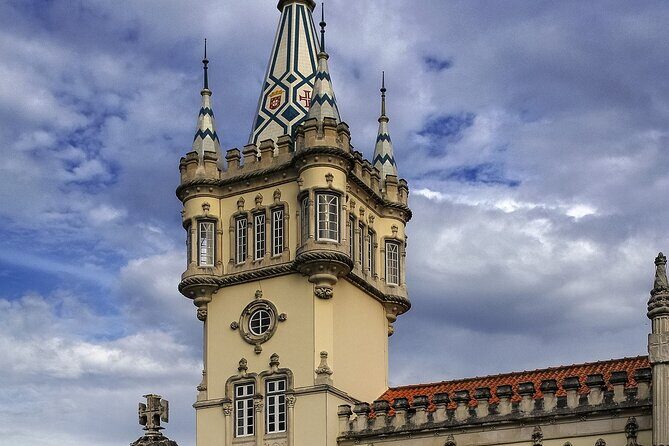
- Casa do Alentejo and the Neo-Moorish Art Nouveau twist
- Rossio and Estação do Rossio: beauty in a transit hub
- Convent of Carmo (Carmo Archaeological Museum): the earthquake you can still see
- Elevador de Santa Justa: the iron lift that keeps the day moving
- Rua Garrett, Pessoa corners, and the comfort of a literary street
- A Manteigaria coffee break: pastel de nata done the right way
- Praca Luis de Camoes and the poet’s square
- Rua Augusta and the monumental arch: Lisbon’s ceremonial street
- Praça do Comércio (Terreiro do Paço): the riverfront and the symbolism
- Largo dos Trigueiros 17: lunch that keeps the day realistic
- Escadinhas de Sao Cristovao: small bookstore and the Fado wall
- Lisbon Cathedral (Sé): built on an older mosque
- Church of St. Anthony: charm in a quieter pocket
- Alfama viewpoints: where Lisbon looks old on purpose
- Tram 28 in motion: the classic ride without the stress
- Miradouro da Graça and Caracol da Graça: two ways to look at the same city
- Ending at Praça Martim Moniz: where Tram 28 begins
- What you actually get with the included food and drink
- Price and value: what $183.83 buys you in Lisbon
- Who this tour suits best (and who should skip it)
- Should you book this private Lisbon walking tour?
- FAQ
- How long is the Lisbon Private Full Day Walking Tour?
- Where does the tour start and where does it end?
- Is this a private tour?
- What’s included in the price?
- Does the tour include Tram 28?
- What language is the tour offered in?
- Can I get a refund if I cancel?
- Is there a mobile ticket?
Key things that make this tour a smart choice
- Skip-the-line at Convent of Carmo (Carmo Archaeological Museum) so you get inside faster at a major 1755 quake site
- Tram 28 ticket included, turning the classic ride into a smooth, timed part of your route
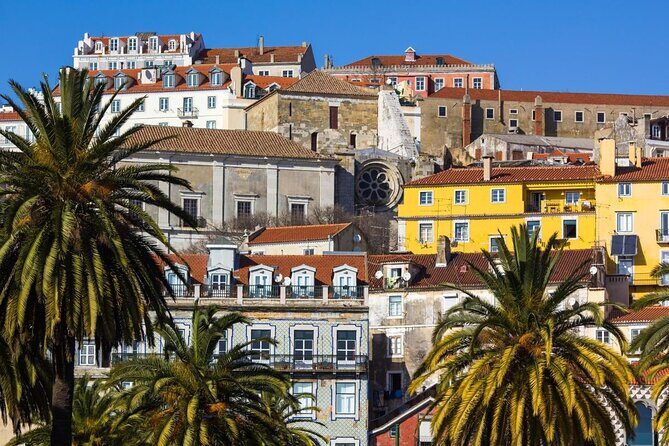
- Historic Lisbon in tight walking segments, from Praça Dom Pedro IV and Rossio to Baixa and Alfama viewpoints
- Portuguese food breaks built into the schedule, including lunch plus pastel de nata and coffee, then ginja
- Photo-ready stops, like Elevador de Santa Justa and Miradouro da Graça
A private Lisbon day that actually follows a line

This is the kind of Lisbon tour that makes sense for your first full day. You start at Praça Dom Pedro IV, then move through the city in a way that helps you build a mental map fast: central squares, grand streets, riverfront Baixa, and then the uphill neighborhoods where the views look like postcards because they were built for looking.
Because it’s private, you won’t be trapped in a slow shuffle with strangers. You also get room for questions—useful in Lisbon, where one corner can explain a whole century. And since there are several morning start times, you can match it to your arrival day or whatever else you’ve planned.
Just plan for a long walking block—6 to 7 hours—and remember Lisbon is Lisbon. Even when the route looks flat on a map, you’ll feel the slopes. Bring water, wear shoes you trust, and keep a light mindset.
You can also read our reviews of more walking tours in Lisbon


Starting at Praça Dom Pedro IV: the square that sets the tone
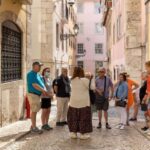
Your meeting point is Praça Dom Pedro IV (also known for the Rossio area). This is a good starting place because it’s central and easy to reach with public transport. It’s also a “social” square where Lisbon’s everyday rhythm is visible, so you’re not just marching into monuments—you’re getting grounded.
From here, you head toward a set of places that explain Lisbon’s layers. The first stretch is quick, around 15 minutes per stop, but the pace is intentional: you’re meant to learn while your legs are still fresh.
If you like tours that begin with context—how a city became itself—this start does that. You’ll hear stories tied to the naming of the square and the city’s political shift, then move into more emotional places before the day turns lighter.
Church of Saint Dominic: the dark stories side of Lisbon
The Church of Saint Dominic is one of those Lisbon stops that can feel heavy in the best way. You’ll hear the stories behind what people called a damned church of Lisbon, and you’ll connect that story to the square where tragic events occurred.
This isn’t “edgy for shock value.” It’s history as lived emotion: how religion, power, and public events collided in the city. Even if you’re not a church-architecture superfan, this stop gives you a reason to pay attention to the streets around it. You’ll start noticing that Lisbon’s landmarks aren’t only pretty—they’re also reminders.
Time here is brief (about 15 minutes), so you won’t get stuck. You’ll move on while the story is still fresh.
Casa do Alentejo and the Neo-Moorish Art Nouveau twist

Next up is Casa do Alentejo, a historic palace blending neo-Moorish and Art Nouveau elements. Ten minutes might sound short, but the goal here is orientation: you’re seeing a different side of Lisbon architecture before you hit the bigger “wow” moments.
This stop works especially well if you’re the type who enjoys visual contrasts—because Lisbon isn’t one style. It’s many eras layered on top of each other, and Casa do Alentejo gives you one more proof of that.
Rossio and Estação do Rossio: beauty in a transit hub

At Estação do Rossio, you’ll spend about 15 minutes at the station in Neo-Manueline style. This is one of those Lisbon locations where the transportation setting is part of the experience. You get the aesthetic payoff without needing extra plans or tickets.
Why it matters: stations are where cities show you their daily life. Lisbon’s grand styles don’t stay trapped in museums; you’ll see them in the spaces people actually use.
From here, you’re being led toward the ruins and earthquake story that sits at the heart of Lisbon’s modern identity.
You can also read our reviews of more private tours in Lisbon





Convent of Carmo (Carmo Archaeological Museum): the earthquake you can still see

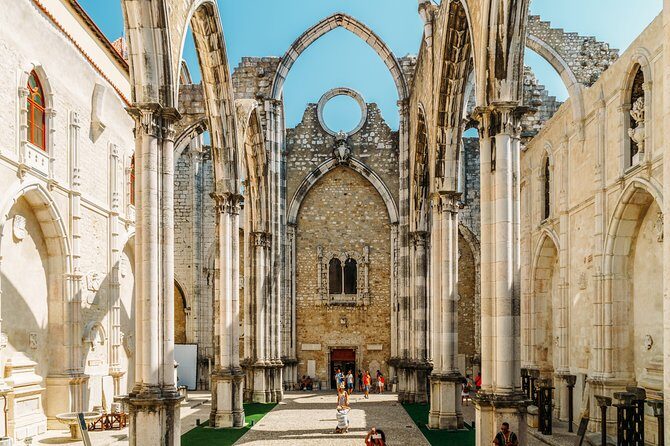
The highlight for many people is Carmo Archaeological Museum, the Gothic temple in ruins after the 1755 earthquake. You’ll get skip-the-line entry, and you’ll have about 40 minutes inside.
This stop is valuable because it turns a famous event into something physical. Lisbon’s rebuilding becomes real when you see what survived and what didn’t. Even if you only know the earthquake from a textbook, standing in a damaged church changes the way you understand the city’s resilience.
Practical tip: you’ll likely want a slower walk here. That’s okay. The time window gives you room to look, take photos, and read what’s on site without rushing.
Elevador de Santa Justa: the iron lift that keeps the day moving
Next is Elevador de Santa Justa, the famous 45-meter-high iron lift designed in 1902. You’ll pass through it in about 10 minutes, which makes it a “high impact, low hassle” moment.
The value isn’t only the ride—it’s how the lift connects neighborhoods. It’s part engineering, part viewpoint, and part Lisbon theater. You get a moment of height and perspective right in the middle of a walking day.
If you don’t love elevators, still go. This one is about Lisbon’s style and ambition in metal and architecture.
Rua Garrett, Pessoa corners, and the comfort of a literary street
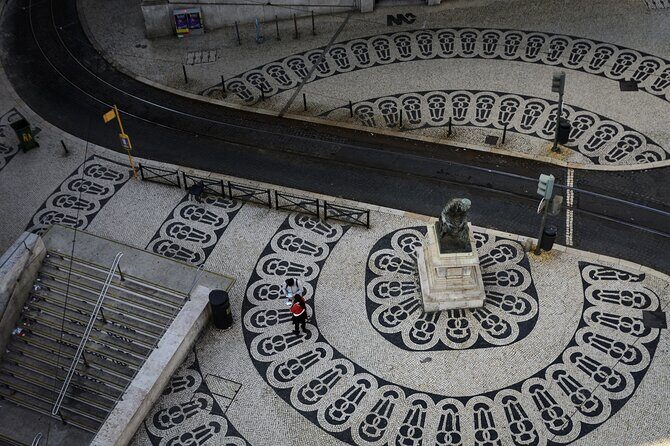
On Rua Garrett, you’ll stroll about 15 minutes through the elegant center of Lisbon. You’ll pass the oldest library in the world, hear the café angle tied to the literate tradition, and spot the statue of Fernando Pessoa.
This segment is a nice reset. You shift from quake ruins and big monuments to streets where ideas and daily life mingle. It also keeps your walking rhythm steady—good pacing before the next food break and squares.
A Manteigaria coffee break: pastel de nata done the right way
Rua do Loreto 2 is your coffee stop. You’ll have about 20 minutes at A Manteigaria to try typical pastel de nata and coffee.
This works well because the break is timed. You’re not stopping after a long stretch of fatigue—you’re stopping while you still want the reward. And the tour doesn’t treat dessert like an afterthought. Pastel de nata is a Lisbon signature for a reason, and having it as part of a planned cultural pause makes the day feel thoughtful rather than rushed.
If you’re sensitive to crowds, you’ll still want to be patient, but this is an efficient way to get the taste without trying to guess which café is best.
Praca Luis de Camoes and the poet’s square
You’ll walk toward Praça Luis de Camoes, about 15 minutes, passing through Chiado. This is another quick orientation stop. You’re tying the city to language and identity, which helps if you’re planning to read Lisbon’s history later in books or on plaques.
It’s also a good moment to stop and look around for a minute. Lisbon squares often have small details that don’t show up in photos.
Rua Augusta and the monumental arch: Lisbon’s ceremonial street
Rua Augusta is next, about 15 minutes, and it’s built for a sense of arrival. You’ll be impressed by the imposing monumental arch—one of those pieces of architecture that instantly turns your walk into a “moment.”
This is Baixa’s theater. The street gives you open space for photos, and the arch gives you a visual anchor for where you are relative to the river.
Then you move toward the waterfront square that crowns the view.
Praça do Comércio (Terreiro do Paço): the riverfront and the symbolism
At Praça do Comércio (Terreiro do Paço), you’ll spend about 15 minutes facing the Tejo River. You’ll also notice Masonic symbolism and see the Cais das colunas, described as the old footbridge for kings and presidents.
Why this stop is worth the time: it shows Lisbon as a trading city. Even without going into deep trade history, the river setting explains why the city grew where it did and how power liked to present itself.
This is a good place to catch your breath too. You’re moving into areas with more stairs and tighter streets soon.
Largo dos Trigueiros 17: lunch that keeps the day realistic
Lunch is built in at Largo dos Trigueiros 17, and you’ll have about 50 minutes. The included meal is flexible: meat, fish, or vegetarian, plus a side dish and drinks.
This is where value becomes obvious. Many tours skip the details and give you a snack. Here you get an actual sit-down meal, so you can keep walking afterward without feeling like you’re running on sugar alone.
If you have dietary restrictions, you should plan to ask when the group confirms preferences. The data only tells you the menu options broadly, not specific accommodations.
Escadinhas de Sao Cristovao: small bookstore and the Fado wall
Next is the walk into Mouraria’s feel-good chaos via Escadinhas de Sao Cristovao. You’ll spend about 15 minutes climbing the famous staircase, then check out the smallest bookstore in the world and a mural dedicated to Fado.
This is one of the best “character” stops of the day. It’s not a monument you can brag about; it’s a story you can feel in the street. The small bookstore detail adds a memorable twist, and the Fado mural grounds the neighborhood in its cultural identity.
If you like Lisbon because it’s not just marble and monuments, this is your kind of stop.
Lisbon Cathedral (Sé): built on an older mosque
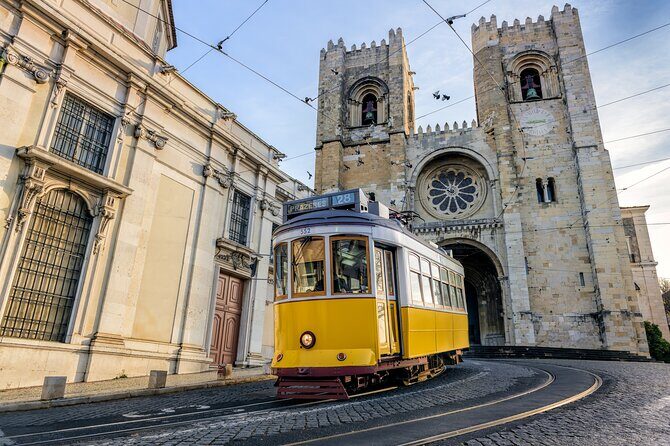
Lisbon Cathedral is about 40 minutes, and you get skip-the-line entry. You’ll see a 12th-century cathedral built on an ancient mosque, which instantly tells you how Lisbon’s religious and cultural layers evolved.
This stop is valuable even if you’re short on patience for reading stones. The construction story is the point. You’re not only looking at what’s there now; you’re seeing how the city reused space across time.
Practical note: cathedral interiors can be cool even in warm months. Dress in layers so you don’t feel stuck once the air changes.
Church of St. Anthony: charm in a quieter pocket
Church of St. Anthony comes next, around 20 minutes. The tour keeps it simple and focused on the church’s charm and the devotion tied to one of Christendom’s most devout saints.
This is a calmer stop after Sé. It’s a nice shift toward smaller-scale spirituality and street-level beauty.
Alfama viewpoints: where Lisbon looks old on purpose
Now you reach Alfama, where the tour slows slightly in effect even if the time per stop stays tight. You’ll get about 20 minutes to admire the old Arab/Medieval quarter from two viewpoints.
There’s also a food moment here: on the way, you can taste cherry liqueur made by old ladies. That’s the kind of local tradition that doesn’t need a long lecture to make sense—you’ll taste it and understand why people linger.
Alfama is not about efficiency. It’s about angles. Your eyes will want to keep scanning the rooftops and the stonework.
Tram 28 in motion: the classic ride without the stress
Then comes the iconic Lisbon Tram 28. You’ll spend about 15 minutes on the ride, and the tram ticket is included.
This is one of the smartest parts of the whole plan. Getting Tram 28 to fit your day can be tricky on your own. Here, it’s slotted in as a clean transition from viewpoints and old streets.
You’ll enjoy the ride as an actual ride, not a chaotic sprint. The route gives you that “Lisbon is alive” feeling where the city scrolls past your window.
Miradouro da Graça and Caracol da Graça: two ways to look at the same city
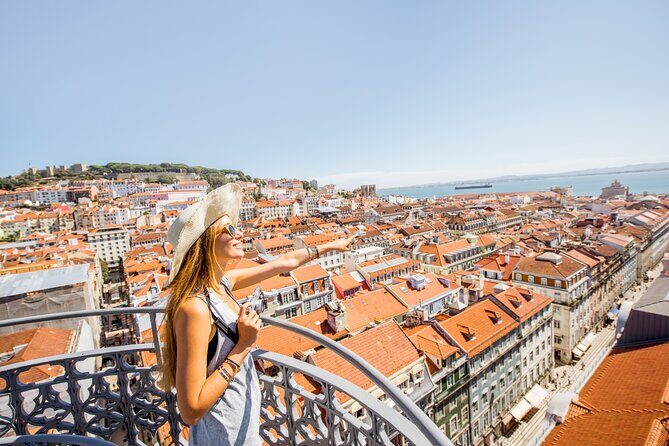
Miradouro da Graca (Sophia de Mello Breyner Andresen) is next, about 15 minutes. You’ll get some of the best views, with the old town and the castle of Sao Jorge in sight.
Then you’ll finish with Caracol da Graça, another 15-minute descent by staircase dedicated to street art in the historic Mouraria neighborhood.
This pair of viewpoints is a strong choice because it uses Lisbon’s geography as the curriculum. High point first, then street-level art on the way down. You’ll leave with both the big picture and the neighborhood feel.
Ending at Praça Martim Moniz: where Tram 28 begins
Your tour ends at Praça Martim Moniz, about 15 minutes. The stop ties back to Tram 28, since this square is where the mythical tram line is said to be born.
It’s a fitting close because you started near central Lisbon and ended in another Lisbon “hub” neighborhood. Now you’ve got landmarks in your head, and you can keep exploring without feeling lost.
What you actually get with the included food and drink
This day isn’t just sightseeing. It’s also a taste tour, without the gimmicks.
You get:
- Pastel de nata and Portuguese coffee during the coffee break
- A cup of ginja, the typical Lisbon cherry liquor
- Lunch in a typical Portuguese restaurant with meat, fish, or vegetarian, plus drinks
This matters for value. Food stops are part of Lisbon’s culture, and built-in breaks keep you from spending money on random snacks that don’t satisfy. You’ll also likely end the day happier because you’ve planned energy, not just walking time.
Price and value: what $183.83 buys you in Lisbon
At $183.83 per person for about 6–7 hours, this isn’t the cheapest option. It’s also not trying to be. The value comes from three things you’d otherwise piece together:
- Skip-the-line tickets for Carmo Archaeological Museum and Lisbon Cathedral
- Lunch plus coffee and pastel de nata, plus a ginja
- Tram tickets, including the Tram 28 experience
When you add admissions, food, and local transport costs, plus the fact that it’s private, the price starts to look more reasonable. You’re paying for a route that solves problems: timing, entry lines, and moving between neighborhoods efficiently on foot.
If you’re traveling with someone else, the private format can feel even better because you’re not paying for a big group process. If you’re solo, it’s still a solid pick when you want someone to keep you oriented and on track.
Who this tour suits best (and who should skip it)
This fits best if you:
- Want a first-day Lisbon foundation that mixes landmarks with neighborhood character
- Like historical stories you can connect to specific places—earthquakes, churches, and changing city identities
- Prefer a private group pace with a guide who can answer questions
It’s less ideal if you:
- Hate stairs or long walks
- Want lots of downtime sitting in cafés for hours
- Are allergic to a history-heavy day (even with food and viewpoint breaks)
Bring good shoes and plan your energy. Do that, and you’ll feel like Lisbon clicked into place.
Should you book this private Lisbon walking tour?
If you want a day that covers Lisbon’s essentials—Baixa squares, Carmo’s quake ruins, Chiado streets, Mouraria’s Fado connections, Alfama viewpoints, and Tram 28—this is a strong bet. The biggest reason to choose it is the balance: skip-the-line access plus real meals plus the right mix of monuments and street-level moments.
If you’re fit and up for a full walking day with some hills, book it and enjoy the ride. If you’re not, you might be happier with a shorter route or a plan with fewer stairs.
FAQ
How long is the Lisbon Private Full Day Walking Tour?
It runs about 6 to 7 hours.
Where does the tour start and where does it end?
It starts at Praça Dom Pedro IV, 1100 Lisboa, Portugal and ends at Praça Martim Moniz, Lisboa.
Is this a private tour?
Yes. It’s a private tour/activity, so only your group participates.
What’s included in the price?
Included are skip-the-line tickets to Convent of Carmo and Se Cathedral, lunch (meat, fish, or vegetarian plus side dish and drinks), Portuguese coffee and pastel de nata, a cup of ginja, and tram tickets.
Does the tour include Tram 28?
Yes. Tram tickets are included, and the route includes getting on Lisbon Tram 28.
What language is the tour offered in?
The tour is offered in English.
Can I get a refund if I cancel?
Yes. There is free cancellation, and you can cancel up to 24 hours in advance for a full refund.
Is there a mobile ticket?
Yes. A mobile ticket is included.