REVIEW · LISBON
Historical and Natural Arrábida: Private Tour from Lisbon
Book on Viator →Operated by TakingUThere · Bookable on Viator
Arrábida feels a world away from Lisbon, and that alone is the hook. This private day run packs mountain viewpoints, Franciscan-and-fort history, and real food stops along the Sado coast—without the hassle of planning. I like that you get a private guide tailored to your pace, not a herd.
Two standout parts: the Arrábida Natural Park viewpoints (the kind where you stop, stare, and then take one more photo), and the Setúbal experience at Mercado do Livramento with its tiled fish-market walls. One thing to consider: you’ll be in a car for much of the day, and if your guide’s style is very talk-heavy, you may want to ask for quieter moments at viewpoints.
In This Review
- Key things that make this tour worth your time
- Arrábida Day Trip: a smooth private route out of Lisbon
- Lisbon pickup and the first drive toward the Sado coast
- Arrábida Mountain Park: viewpoints, beaches in summer, and the nature-reserve feel
- Azeitão: wine and cheese flavors before you hit the park
- Convent history and coast outlooks: Convento da Arrábida and Lapa references
- Setúbal’s Mercado do Livramento: azulejos, seafood reality, and sardine facts
- Forte de São Filipe: star fort geometry and sea-facing views
- Moinho de Mare da Mourisca: tide mill engineering and wetland nature time
- Private guide pros: flexibility, pacing, and when you might ask for quieter time
- What the $114.15 price really buys you (and how to plan lunch)
- Who this Arrábida private tour suits best
- Should you book this Arrábida private tour from Lisbon?
- FAQ
- What time does the tour start?
- Is pickup from Lisbon hotels or AirBnBs included?
- Does the tour include entrance fees?
- Is lunch included?
- How long is the tour?
- Is this a private tour or a group tour?
- What kinds of places will we visit?
Key things that make this tour worth your time
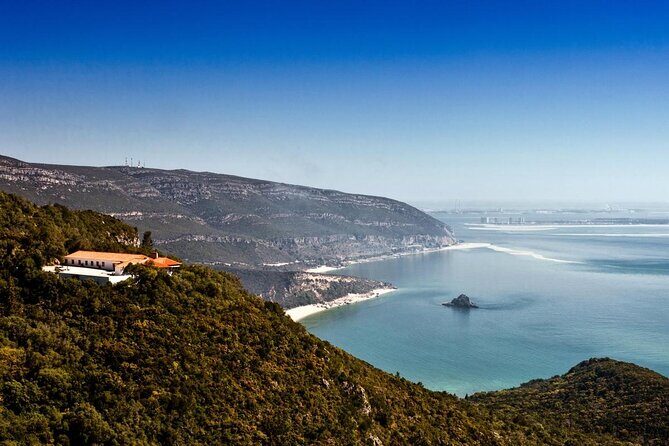
- Arrábida Mountain Park views and photo stops over the Sado estuary and Atlantic coastline
- Azeitão stop tied to local wines and cheeses (breakfast/tasting time may fit)
- Setúbal’s Mercado do Livramento with famous azulejo tile walls and a proper fish-market look
- Forte de São Filipe star-fort design plus big coastline views
- Moinho de Mare da Mourisca: a restored tide mill using tides for renewable power
- Private format means your guide can adjust timing, especially when weather changes
Arrábida Day Trip: a smooth private route out of Lisbon
This is a full 6-hour-style private sightseeing day built around one of Portugal’s most dramatic “edge of land meets sea” areas: Arrábida and the Sado coast. You start in central Lisbon, then work your way down toward Setúbal, hitting nature, food, and military history in a single loop.
What I like most is the balance. You don’t just do viewpoints and museums. You also get a real slice of local life—especially at the fish market—plus one industrial-history stop that most day tours skip.
Because it’s private, the day moves at human speed. You can linger at a scenic overlook, ask questions while walking, and get your bearings without feeling like you’re racing a schedule.
You can also read our reviews of more private tours in Lisbon



Lisbon pickup and the first drive toward the Sado coast
Your day begins around 9:00am, with pickup arranged at your hotel or AirBnB (or a convenient nearby meeting spot). This matters more than it sounds. Lisbon mornings can be a bit chaotic for navigation, and once you’re in the car with your guide, you just relax and watch the scenery change.
The route heads toward Arrábida, and the early part of the day sets the tone: big openings, coastline angles, and that sense you’re leaving the city for something wilder. At the start, you’re also given context on what you’re about to see—how the reserve fits into the region’s history and why this coastline has been strategically important for centuries.
This is a car tour, so if you hate being in vehicles, plan for breaks. If you’re fine reading your phone for short stretches and enjoying the scenery rolling by, you’re in good shape.
Arrábida Mountain Park: viewpoints, beaches in summer, and the nature-reserve feel
Once you’re in Arrábida, the day leans into what makes the area famous: steep hills, bright ocean angles, and the kind of views that make you stop without being told to.
You’ll spend time in the natural reserve area and take in stunning mountain views. The guide also shares how the region’s history connects to the landscape—though you’re not just hearing facts. You’re seeing the geography that those facts were built around.
During summer, the tour can include beach time. That’s worth knowing. If you’re traveling in the warm months, you’ll likely appreciate that small nature-to-sea switch. In cooler months, you’ll still get the park feel and viewpoints, just without a beach-focused agenda.
Practical note: bring sun protection even if it’s not blazing hot. Viewpoints tend to be bright and windy. And because this is private, you can ask the guide to park and pause where the views are best for your photos—not just where the bus can stop.
Azeitão: wine and cheese flavors before you hit the park
Azeitão is one of those places you hear about in food circles, and this tour gives it a quick, useful role. You pass through, and you have time that can work for breakfast and small tastings of local goods—especially wines and cheeses.
Even if you don’t go big on tastings, it’s a nice palate reset before the rest of the day. You’re headed into a nature-and-history stretch afterward, and having something local in your morning helps you enjoy the rest without feeling rushed toward lunch.
If you’re picky about timing (like, you want to eat at a specific moment), ask your guide how they plan to handle it based on the day’s pace and where your group wants to spend time.
Convent history and coast outlooks: Convento da Arrábida and Lapa references
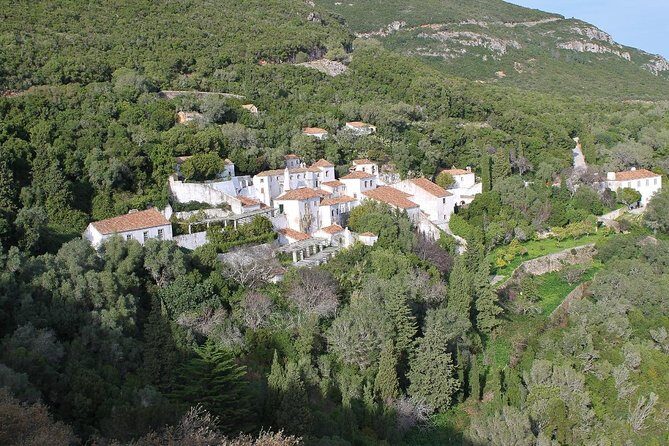
Part of what makes this tour feel more than just scenery is the way it ties sights together. You’ll stop from the outside at the Arrábida Convent area and also see Lapa de Santa Margarida viewpoints from outside before reaching Setúbal.
When you visit the Convento da Arrábida stop itself, the story gets more specific. The convent was founded in 1542 by Friar Martinho de Santa Maria, a Castilian Franciscan. He was granted the land by D. João de Lencastre (1501–1571), the first Duke of Aveiro.
That detail is useful because it helps you understand why the convent sits where it does: on a coastline shaped by routes, power, and defense—yet also by devotion and long-term settlement. Standing around the area, you can connect the geography to the human reasons people came and stayed.
If you like sites with a bit of “why is it here?” context, this stop is a strong one. You get explanation from your guide, and the time window is long enough to take photos without feeling like you’re being herded.
You can also read our reviews of more historical tours in Lisbon




Setúbal’s Mercado do Livramento: azulejos, seafood reality, and sardine facts

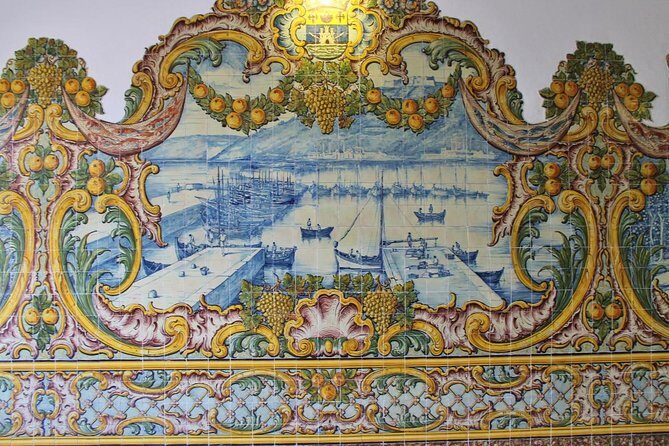
Arrábida takes care of the dramatic scenery, but Setúbal is where the day gets grounded. At Mercado do Livramento, you explore the market with time to look closely at fish and the tiled walls that decorate the space.
This market has a serious visual identity: azulejos tiles arranged across distinctive wall panels. The numbers are big enough to be worth remembering—about 5,700 decorative tile pieces, with wall panels measuring around 1,259 square feet and depicting scenes of everyday local activities like fishing and farming.
You also get a sense of how fish actually look in real life, not just on a plate. Sardines are a star, and there’s even a playful stat related to Portuguese consumption: in June, Portugal consumes about 13 sardines per second, according to the Portuguese National Tourist Office.
Also worth flagging: the market has been internationally recognized before—USA Today Travel once named it one of the 10 best fish markets of the world (back in 2015). That’s not just bragging. When you’re there, you see why it earned attention: it feels local, not staged for tourists, and the tile walls give it that unmistakable “this place has a personality” feeling.
Time here is about 1 hour. Use it like this: walk the perimeter first, then pick one counter for closer inspection, then step back for the tile-wall photos.
Forte de São Filipe: star fort geometry and sea-facing views
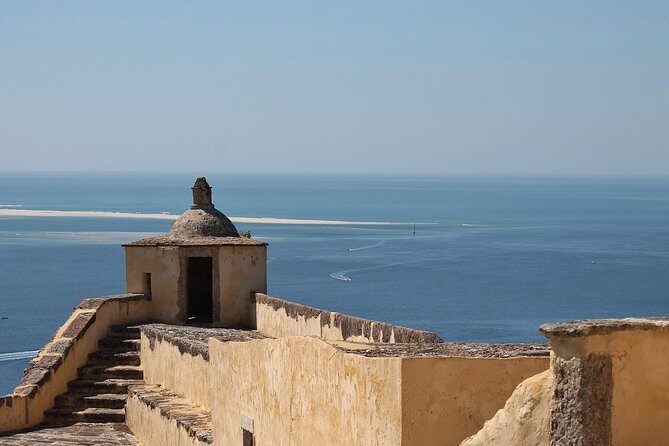
Next comes a military-history stop that pays off fast: Forte de São Filipe. This fortress is one of Portugal’s early star fortifications. Work started in 1590 and finished in 1600, and it was ordered to strengthen the coastline that protected Setúbal and guarded the entrance to the Sado river.
Why you’ll care once you’re inside (or near the key areas) is the geometry. Star forts were built so defenders could cover approaches from multiple angles. On a coastline like this, that logic becomes obvious even without a military background.
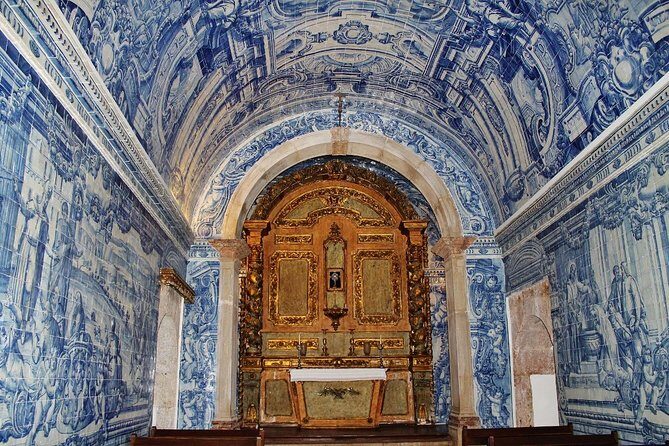
The fort’s interior originally included space for governors and military use, and there’s a small baroque chapel still preserved, dedicated to Our Lady and dated 1736. It’s the kind of detail that makes a fort feel lived-in, not just stone.
You’ll also get a great viewpoint over the surrounding area. This stop isn’t just about reading history plaques; it’s about matching that history to what you can see today: coastline, water access, and the strategic lines that made this spot valuable.
Moinho de Mare da Mourisca: tide mill engineering and wetland nature time
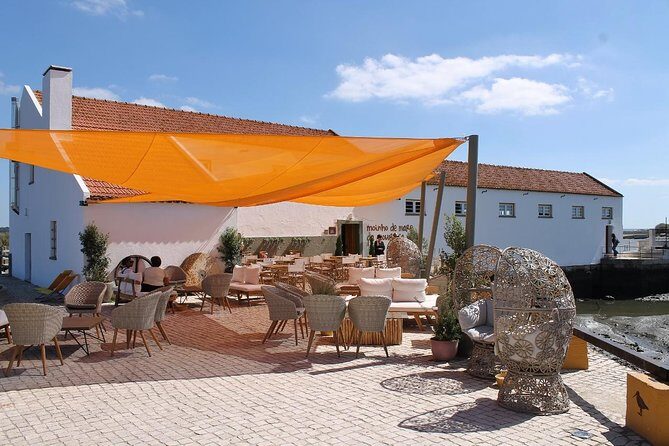
The final featured stop swings the day back toward nature and practical engineering: Moinho de Mare da Mourisca, a restored tide mill built in 1601. It’s rare to see a working-style explanation of older coastal technology, and this stop gives you exactly that.
The tour frames the mill as industrial archaeology, and the best part is the function: it still uses tides for power, described as renewable and non-polluting. Even if you don’t care about engineering, it’s fascinating to connect the idea of tidal energy to a real, local structure that’s been preserved.
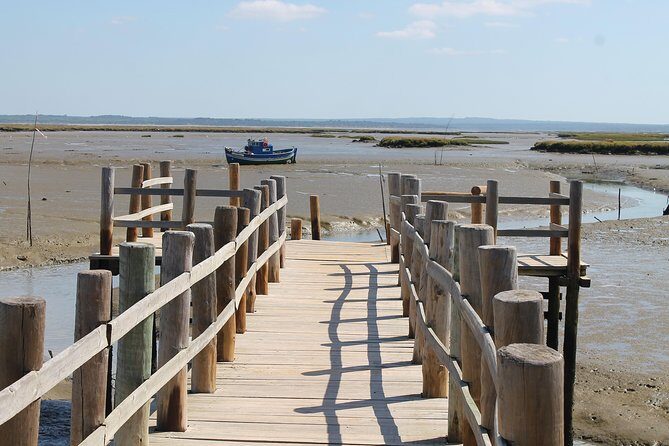
You’ll also have time to discover one of Portugal’s biggest wetlands. That combination works well after a fort and market. Your mind gets a break from “history mode” and shifts back to “nature mode,” with birds and water and a softer pace.
Private guide pros: flexibility, pacing, and when you might ask for quieter time
The private format is the real upgrade here. In past days like this, I’ve seen guides make the experience better in small ways: switching the order if weather turns, pointing out where you’ll get the clearest viewpoint, and keeping explanations clear while walking between stops.
This tour also comes with a guide who stays with you and accompanies you inside locations and monuments, so you’re not stuck reading labels alone. One guide name that comes up is Rod, who was praised for being friendly, knowledgeable, and a great driver. Another is Paulo, who handled the day well by adding flexibility when weather changed in the afternoon.
That flexibility is a big deal on this route. Coastal areas can shift fast—clouds, wind, and visibility affect how satisfying a viewpoint is. With a private guide, you’re not trapped by a fixed-group plan.
One possible drawback to keep in mind: if your guide talks non-stop, it can cut into the quiet you might want at scenic spots. If you prefer silence sometimes, just say it early in the day. Guides generally work with you when you’re clear: you want time to look, not just listen.
What the $114.15 price really buys you (and how to plan lunch)
At $114.15 per person for about 6 hours, this isn’t a budget “hop on a bus” deal. You’re paying for a private car, a professional guide, pickup and drop-off, and entrance fees. The tour also says it’s built to skip long lines, which can matter at popular sites.
So the value equation looks like this:
- You’re paying extra for private transportation and one-on-one guiding
- Entrance fees are included
- Lunch isn’t included, so you’ll want to budget time and money for food
That last part is where you should plan your day. You’ll have a short food chance around Azeitão (breakfast/tasting may fit), but you may still want a proper lunch later. A good strategy is to ask your guide early where they recommend eating based on what you’ve already seen and how the timing feels.
If you’re traveling with kids or older adults, private pacing can help a lot. If you’re solo and you’d rather not share a van with strangers, private is also usually a win.
One more small point: the tour uses a mobile ticket, so you won’t be juggling paperwork. And it runs in English.
Who this Arrábida private tour suits best
This is a great fit if you want:
- More time at fewer stops, with a guide who can explain as you go
- A mix of nature, food, and history in one day
- A calmer day than you’d get on a group tour
It’s also sensible if you like coastal towns and markets. Mercado do Livramento is the kind of stop that rewards curiosity. You’ll get to see the fish and the tile art up close, not just peek from a doorway.
It may feel less ideal if:
- You hate driving or prefer to be on foot most of the day
- You want a very relaxed schedule with no structured stops at all
- You can’t handle moderate walking between viewpoints and interiors (the tour notes moderate physical fitness)
Should you book this Arrábida private tour from Lisbon?
I’d book it if you want a no-stress day that connects Arrábida Mountain Park with Setúbal’s food culture and fort-and-mill history. The combination is the point: viewpoints for the senses, market time for local flavor, and a couple of history stops that make the region feel like more than a scenic detour.
I’d hesitate if you’re expecting free-form wandering with no guidance, or if you strongly prefer quiet time and don’t want any explanation. In that case, you should still consider it—just start the day telling your guide you want short explanations and more silence at the best viewpoints.
FAQ
What time does the tour start?
The tour start time is 9:00am.
Is pickup from Lisbon hotels or AirBnBs included?
Yes. Pickup and drop-off are offered from your hotel or AirBnB in Lisbon (or from the cruise port).
Does the tour include entrance fees?
Yes. Entrance fees are included, and the guide accompanies you inside the locations and monuments.
Is lunch included?
No. Lunch and anything not mentioned in the description is not included.
How long is the tour?
It’s listed as about 6 hours.
Is this a private tour or a group tour?
This is private. Only your group participates with your guide.
What kinds of places will we visit?
You’ll visit Arrábida Mountain Park and viewpoints, Azeitão (wines and cheeses), Convento da Arrábida, Setúbal’s Mercado do Livramento, Forte de São Filipe, and Moinho de Mare da Mourisca (tide mill and wetlands).