REVIEW · LISBON
Discover Ancient Lisbon of Tuk Tuk with a local guide
Book on Viator →Operated by Vibe On Tour · Bookable on Viator
Ancient Lisbon, but faster. This guided tuk tuk route strings together the kinds of stops you’d normally spread across a full day, yet it still feels calm because you’re not bouncing around on your own. You start at Lisbon’s big landmark church, then ride toward the miradouros and local neighborhoods that make Alfama and Graça so instantly recognizable.
I especially love how the tour blends three things in one loop: major sights (like Lisbon Cathedral), picture-perfect lookouts (Portas do Sol and Senhora do Monte), and “everyday Lisbon” streets where tiles do the talking. Second, the guide approach really matters here—this is the kind of tour where a well-timed explanation makes you notice details you’d otherwise miss.
One thing to consider: the timing is tight, so you’ll want to bring your best walking shoes and accept that each stop is brief. Also, the experience requires good weather, so plan for possible schedule changes if skies are rough.
In This Review
- Key points to know
- Why a tuk tuk route is ideal for Lisbon’s Old Town
- Pickup and route flow: where you start and where you can end
- Lisbon Cathedral: 1147 beginnings and the 1755 earthquake story
- Portas do Sol miradouro: Tagus River views and Alfama’s rooftops
- Bairro da Graça: tiles with meaning, not just decoration
- Igreja de São Vicente de Fora: a church outside the castle wall
- Miradouro da Senhora do Monte: 270° views and massive city coverage
- National Pantheon area: what’s included and what costs extra
- Bairro do Fado and Alfama streets: the part for nighttime vibes
- The guide factor: why the tour feels “complete”
- Value check: is $60.08 for 1–1.5 hours a fair trade?
- Weather and comfort tips so the tour goes smoothly
- Who this tuk tuk Lisbon route suits best
- Should you book Discover Ancient Lisbon of tuk tuk?
- FAQ
- How long is the tuk tuk tour?
- How much does it cost per person?
- Is pickup available?
- Where does the tour start?
- Where does the tour end?
- What language is the tour offered in?
- What ticket costs are included?
- Is the tour private?
- What are the operating hours?
- What if the weather is bad?
- Is service allowed?
Key points to know

- Tuk tuk pacing that keeps you moving without feeling rushed.
- Miradouros with real views: Portas do Sol and Senhora do Monte cover Tagus River + wide-city panoramas.
- Tile-spotting in Graça, where neighborhood color has meaning.
- Lisbon Cathedral’s big moments, including its connection to the city’s early roots and the 1755 earthquake.
- São Vicente de Fora’s unusual placement, as the first church built outside the castle wall.
- Only one major paid entrance isn’t included (the Pantheon), so budgeting is straightforward.
Why a tuk tuk route is ideal for Lisbon’s Old Town
Lisbon’s historic core is beautiful, but it’s also steep, twisty, and slow-going when you’re walking between viewpoints. A tuk tuk route fixes that. You still get the magic: narrow streets, tile facades, and those sudden “how is the view that good?” moments. But you’re not spending half your trip just climbing.
The other practical win is focus. In about 1 hour to 1 hour 30 minutes, you hit the kind of anchors that give you context fast: the Cathedral area, multiple miradouros, and neighborhoods like Alfama-adjacent streets and Graça. That makes the tour a great first-day move, or a “best-of Old Town” refresh when you’re already in the city.
Finally, the structure is friendly to people who don’t want to plan. You’re not piecing together bus lines, trams, and walking routes. A local guide handles the flow, and private-group format means you’re not stuck in a crowd moving at someone else’s pace.
You can also read our reviews of more guided tours in Lisbon



Pickup and route flow: where you start and where you can end
You’ll meet at Lisbon Cathedral, Largo da Sé 1. If you want the convenience, pickup is offered from your accommodation or from a central city location—so you’re not hauling yourself to the exact starting spot.
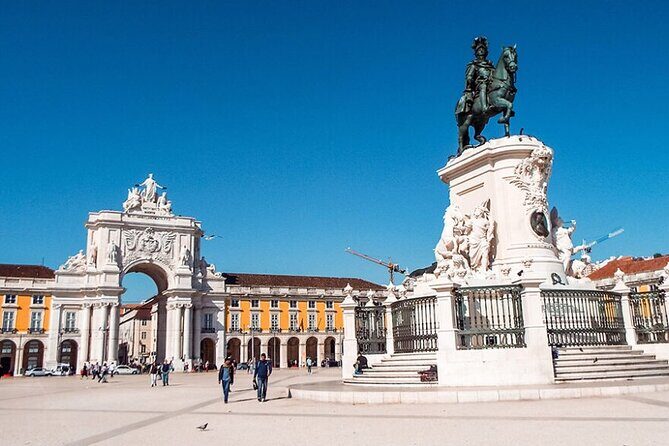
The tour ends in the Praça do Comércio area. One helpful detail: you can often choose a finishing point that works for your next step—either back toward your accommodation or toward a restaurant you want to try. That matters because Old Town day trips can leave you tired. Ending near the waterfront zone is a smart landing pad.
Also note the operating window: it runs daily from 9:00 AM to 9:00 PM. That flexibility helps if you’re timing around heat, crowds, or your dinner plans.
Lisbon Cathedral: 1147 beginnings and the 1755 earthquake story

Your first stop is Lisbon Cathedral, one of the city’s most important churches. What makes this stop click is that it’s not just about architecture—it’s about Lisbon becoming Lisbon. The discovery in this area dates back to 1147, so you’re stepping into the early story of the Portuguese capital.
Inside, you get a clear sense of how the Cathedral reflects the start of Lisbon under Portuguese rule. And it also carries a memory that shaped the city: the 1755 earthquake. That connection is valuable because it turns a “church stop” into a “how this city survived and rebuilt” moment.
Practical tip: Cathedral time is about 20 minutes, and there’s an included admission ticket. Plan to move at a comfortable pace—don’t try to read everything at once. Instead, let the guide point out the big features, then you’ll have enough time to look on your own without feeling behind.
Possible drawback? Cathedrals can be quieter but sometimes crowded. If you prefer deep solitude, this might feel a bit busier than your dream pace. Still, the guided framing makes it feel more worthwhile.
Portas do Sol miradouro: Tagus River views and Alfama’s rooftops
After the Cathedral, you head toward Miradouro das Portas do Sol. This viewpoint is famous for sunrise and sunset, but it works any time of day because the composition is strong. You’re looking out over the Tagus River and toward the tightly packed, typical houses of Alfama.
This stop is short—about 20 minutes—but it’s not wasted time if you use it correctly. I treat Portas do Sol like an orientation break. Take a good look, then try to mentally match what you see with what you’ve already walked past: where the hills rise, where the river curves, and how Alfama’s structure fans out.
The bonus here is cost: admission is free at the viewpoint. That makes it an easy win when you’re watching your sightseeing budget.
Quick consideration: bring sun protection. Miradouros can be exposed, and Lisbon light is bright. If you’re doing this in the middle of the day, you’ll feel it in your face and neck before you feel it in your feet.
Bairro da Graça: tiles with meaning, not just decoration
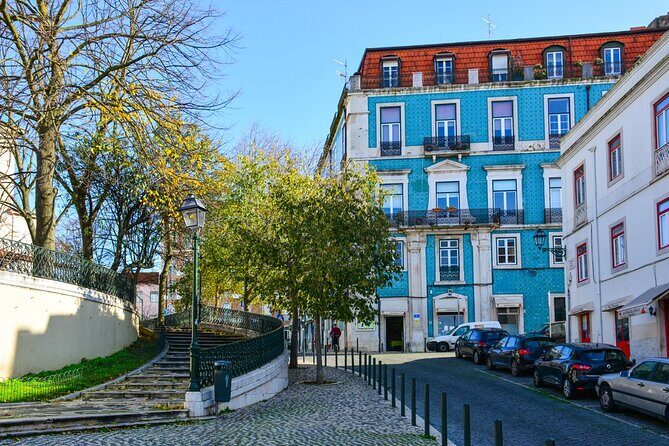
Bairro da Graça is where the tour turns from “viewpoints” to “how locals live.” The key theme here is tiles—and not the random kind. In Graça, tiles of different shapes and colors dominate the neighborhood, and the colors can carry important meaning.
This is a stop you’ll enjoy most if you slow down a touch. At a miradouro, you look out. In Graça, you look around. Notice the way the surfaces repeat across buildings. Notice how color becomes a map—an easy way to remember streets and corners, especially if you plan to come back later.
The schedule doesn’t give a specific minute block for Graça in the summary, so expect a flexible, guide-led walk-through. That’s actually ideal. If your guide finds interesting tile details, you’ll feel like the stop is tailored—not templated.
Who should love this? People who like street-level details, photographers, and anyone who wants more than a checklist of famous buildings.



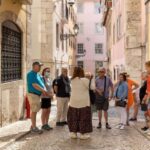

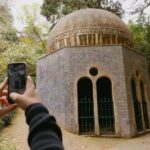
Igreja de São Vicente de Fora: a church outside the castle wall
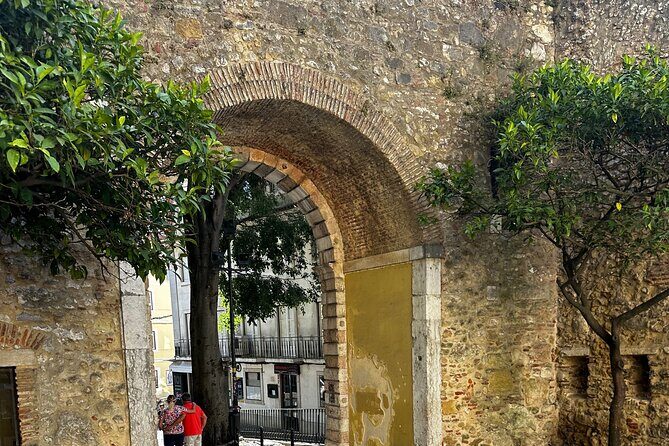
Next up is Igreja de São Vicente de Fora. The name is already memorable, and the reason is historical. This was the first church built outside the castle wall, which makes it a meaningful marker of how Lisbon’s space and boundaries evolved.
It’s also a great architectural contrast after Cathedral time. Instead of starting from the earliest foundational vibe, you get a church that reflects a different kind of Lisbon story—one that reaches outward from the fortified center.
Time is about 10 minutes, with admission ticket included. That short window is enough for structure, design highlights, and a few key photos—especially if the guide keeps you moving between “look here” moments.
Practical note: because it’s a quick stop, don’t save your careful reading for now. This is more about seeing the main features and letting the guide explain the why.
Miradouro da Senhora do Monte: 270° views and massive city coverage
If Portas do Sol is a classic “best of Alfama” panorama, Miradouro da Senhora do Monte is the “how big is Lisbon?” experience. This is considered one of Lisbon’s most beautiful viewpoints, and the summary gives a strong sense of why: you can see about 80% of the city from a viewpoint with 270° of visual range.
The sights are big and varied. You can look from São Jorge Castle toward the modern areas and even toward the airport. That’s a powerful mental frame because it connects the old fortress world with the modern city sprawl in one glance.
Time is again about 20 minutes, and the viewpoint admission is free. I’d treat this stop as your “final panorama” because it gives you the cleanest sense of geography. After Senhora do Monte, the rest of your day will feel easier—you’ll understand where things sit relative to each other.
One reality check: 270° views also mean lots of wind and lots of sky. If it’s cool or breezy, bring a layer. If it’s hot, start hydrating early—don’t wait until you’re standing in the open.
National Pantheon area: what’s included and what costs extra
You’ll finish up with the Panteão Nacional area. Here’s a helpful piece of context: it was originally built as the church of Santa Engrácia. The site is about 288 years old, and it houses 12 important people.
This stop is listed at about 10 minutes. The key budget detail is that admission is not included. That doesn’t make the stop bad—it just changes how you plan. If you want to go inside, be ready to pay the entrance ticket yourself. If you’re happy with the exterior and quick look, the time still works as a capstone to your historic route.
If you’re choosing between spending extra money or skipping an interior moment, decide based on your style. People who love funerary architecture and major monuments will likely want inside time. If your priority is city views and street texture, you might treat this more like a photo + quick context stop.
Bairro do Fado and Alfama streets: the part for nighttime vibes
The tour doesn’t end by pretending Lisbon is only monuments. It adds a final neighborhood flavor: Bairro do Fado and the charming streets associated with Alfama.
This is where Lisbon becomes social. There are fado restaurants in the area, and the guide can make suggestions depending on what you’re into. Even if you’re not booking a show this night, the walk helps you understand why fado is tied to these streets—narrow lanes, old walls, and a sense of local performance space.
This portion is “typical neighborhood” in the best way: it’s not trying to be a theme park. It helps you connect the earlier viewpoints to the real lived city below them.
Practical advice: if you’re planning dinner or fado later, watch where the restaurant clusters are during daylight. The streets feel different at night, and a little daylight scouting saves stress.
The guide factor: why the tour feels “complete”
The strongest repeated point from the experience feedback is the guide’s approach. The tour is designed so you get highlights, but what makes it land is how entertaining and thorough the guide is. When someone can explain why the Cathedral matters, what you’re seeing at Portas do Sol, and why São Vicente de Fora’s location is historically odd, your photos stop looking like random postcards.
I also like that the guide can make restaurant suggestions for the fado area. That’s not just small talk. It turns the tour into a planning tool for your actual evening, not a separate activity you forget the moment you leave.
Because it’s a private tour/activity, you’re only with your group. That usually makes it easier to ask questions, pause for a photo, or move at a pace that feels comfortable.
Value check: is $60.08 for 1–1.5 hours a fair trade?
Let’s talk money like adults. At $60.08 per person for roughly 1 to 1 hour 30 minutes, you’re paying for three things:
- Transportation help via tuk tuk, which matters a lot in steep Old Town terrain.
- A guided route that bundles multiple “high-impact” sights close together.
- Included admission tickets for key stops (Lisbon Cathedral and São Vicente de Fora), while other viewpoints are free.
In plain terms, it’s not just paying for time. You’re buying convenience and interpretation. If you tried to replicate this yourself, you’d spend more time figuring out routes and you’d likely miss the “why this matters” context the guide provides.
Where value can dip for some people: if you don’t care about viewpoints or you mainly want one or two indoor monuments, then the variety might feel like too many brief stops. But for most first-timers—or anyone who wants to maximize a short window—this is a pretty efficient way to see a lot without turning it into a full-day grind.
Weather and comfort tips so the tour goes smoothly
This experience depends on good weather. That’s not a small warning. Miradouros are exposed, and rainy or windy conditions can make views less pleasant and photo plans less reliable.
Here’s what I’d pack or plan around:
- Comfortable shoes for short walks and hillside angles.
- Water and sunscreen, especially if you’re doing midday.
- A light layer if it’s breezy at the viewpoints.
- A camera, but also a moment to just look. Lisbon’s best views are the ones you actually spend 20 seconds soaking in.
Also, the tour runs from morning through evening, so you can often choose a time that fits your energy level.
Who this tuk tuk Lisbon route suits best
You’ll likely enjoy this most if:
- You want a high-impact Old Town overview without spending hours in transit.
- You like viewpoints and street details—Portas do Sol, Senhora do Monte, and tile-focused walks.
- You appreciate guided explanations that connect landmarks to Lisbon’s story.
It may be less ideal if you:
- Want a deep, slow museum-like experience at one major site.
- Dislike brief stops or prefer lots of indoor time without walking between locations.
- Are traveling with plans that require long stays at each stop.
Should you book Discover Ancient Lisbon of tuk tuk?
I’d book it if you want a smart, guided way to connect Lisbon’s key historic landmarks with the viewpoints and neighborhoods that make the city feel real. The best part isn’t any single monument. It’s the way the route layers meaning—early Lisbon at the Cathedral, earthquake memory inside, river-and-rooftop views from miradouros, and tile-and-street texture in Graça and Alfama.
If you’re on a tight schedule, this is one of those tours that can save you from decision fatigue. You’ll know what to look for on the rest of your trip.
If you hate short stops, you might feel it’s too much in too little time. But if you’re flexible and you like panoramas, it’s an excellent value.
FAQ
How long is the tuk tuk tour?
It runs about 1 hour to 1 hour 30 minutes.
How much does it cost per person?
The price is $60.08 per person.
Is pickup available?
Yes. Pickup can be arranged from your accommodation or from a city centre location.
Where does the tour start?
The meeting point is Lisbon Cathedral, Largo da Sé 1, 1100-585 Lisboa.
Where does the tour end?
It ends near Praça do Comércio. You can choose a finish point for your accommodation or a restaurant you want to try.
What language is the tour offered in?
It is offered in English.
What ticket costs are included?
Admission tickets are included for Lisbon Cathedral and Igreja de São Vicente de Fora. Portas do Sol and Miradouro da Senhora do Monte are free. The Panteão Nacional admission is not included.
Is the tour private?
Yes. It’s private, and only your group participates.
What are the operating hours?
Daily operations run from 9:00 AM to 9:00 PM.
What if the weather is bad?
The experience requires good weather. If it’s canceled due to poor weather, you’ll be offered a different date or a full refund.
Is service allowed?
Service animals are allowed, and most travelers can participate.