REVIEW · LISBON
Alfama Photo Walk – Lisbon Photography Experience Led by a Local
Book on Viator →Operated by Photograph Lisbon · Bookable on Viator
Good photos start with good streets.
This Alfama Photo Walk is a focused 3-hour session that helps you photograph Lisbon where the action actually happens: narrow lanes, shifting light, trams in motion, and classic church squares. You’ll follow a set route through historic Alfama and nearby viewpoints, with your guide pairing camera help with local context.
What I like most is how practical the coaching feels. You get shooting positions and guidance that works with your gear and skill level, not generic advice. And the pacing is built for taking your time, including moments when your guide helps you spot the right framing and waits for the right scene.
One drawback to plan for: you need to bring your own camera/phone equipment, and you’ll be walking a hilly old-city route for several hours without snacks or hotel pickup.
In This Review
- Key moments you’ll actually remember
- Why Alfama is a street-photographer’s classroom
- Meeting at Chafariz das Moiras, ending at Lisbon Cathedral
- Stop-by-stop: where your camera finds the story
- Stop 1: Alfama (about 1 hour)
- Stop 2: Graça & São Vicente (about 30 minutes)
- Stop 3: Miradouro de Santo Estêvão (about 30 minutes)
- Stop 4: Igreja de São Miguel (about 30 minutes)
- Stop 5: Lisbon Cathedral (about 30 minutes)
- How the guide teaches you without taking over
- What to bring (and what to plan around)
- Price and value: does $112.82 make sense?
- Who this Alfama photo walk is best for
- Should you book this Alfama Photo Walk?
- FAQ
- How long is the Alfama Photo Walk?
- Where does the tour start and end?
- What group size should I expect?
- Is the tour offered in English?
- What’s included in the tour price?
- What is not included?
- Do the stops have admission tickets?
- Does this tour depend on weather?
- What is the cancellation and refund policy?
Key moments you’ll actually remember
- Small group size (max 5): more time for questions and quick corrections
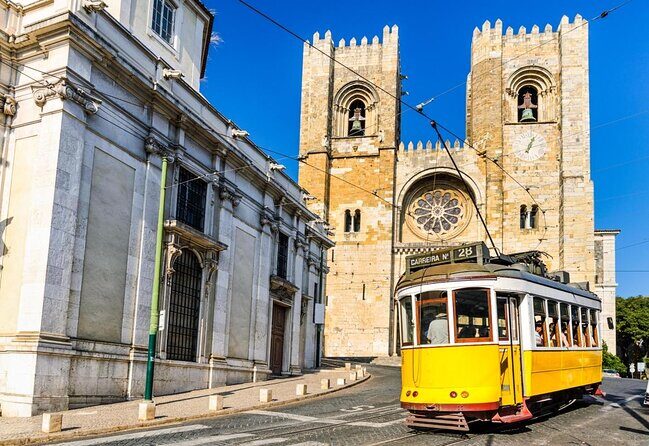
- Trams in motion: learn how to balance moving subjects with steady architecture
- Read the light: guidance for shooting across different lighting conditions in Alfama
- Wide views from Miradouro de Santo Estêvão: rooftop + Tagus framing
- Finish at Lisbon Cathedral: dramatic light and close-up architectural details
- English-led, mobile ticket: easy to follow and simple to access on the day
Why Alfama is a street-photographer’s classroom
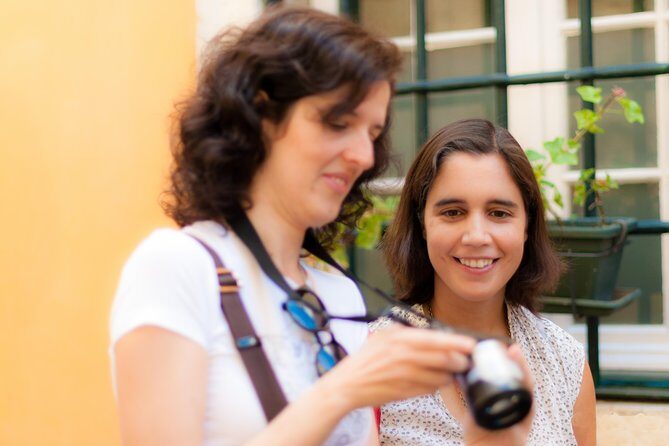
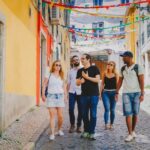
Alfama is built for photography. The streets are tight, so you naturally end up with layered compositions: walls, doors, balconies, laundry lines, and people moving through daily life. That clutter can look messy in real time, but it’s exactly what makes great street photos. With the right guidance, you learn how to turn that visual noise into clear storytelling.
The other big win is light. Alfama changes quickly as you move—shadows slide across stone, corners create bright pockets, and the same street can look totally different as you turn a bend. This tour is structured so your guide can coach you to read the light as you go, instead of treating it like a single “best time” for photos.
There’s also the Lisbon feel that doesn’t come from big viewpoints alone. You’re not just collecting postcard angles. You’re learning what to look for in the neighborhood’s everyday rhythm, and you’ll get local context along the way so your photos make more sense later.
You can also read our reviews of more walking tours in Lisbon


Meeting at Chafariz das Moiras, ending at Lisbon Cathedral
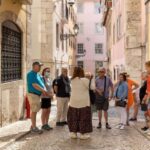
This walk starts at Chafariz das Moiras (Largo do Correio-Mor, 1100-179 Lisboa) and ends at Largo da Sé near the cathedral area (1100-401 Lisboa). That’s useful because it lets you plan your next step after the photo session—often you can keep exploring the historic center without backtracking.
It’s also a simple format: about 3 hours, on foot, with no hotel pickup or drop-off. You’ll want to factor in walking time to get to the meeting point, and you’ll likely get your steps in on the way. Alfama is famously hilly, so good walking shoes matter.
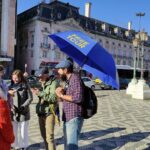
The group is kept small—a maximum of 5 travelers. That usually means less waiting, fewer photo bottlenecks, and more chance for your guide to adjust their advice to what you’re actually shooting with.
Stop-by-stop: where your camera finds the story
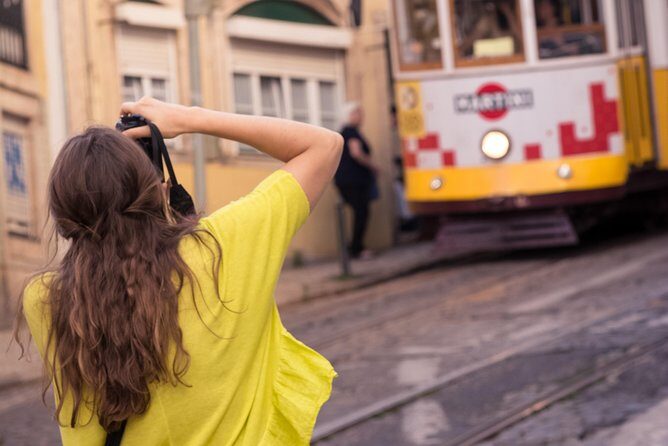
Stop 1: Alfama (about 1 hour)
This is your main shooting block. The route stays inside Alfama’s older streets where you’ll get the most variety in texture and daily-life scenes. Your guide helps you move to practical shooting positions, not just “stand here and hope.”
A smart part of this stop is that you’re taught to see how light behaves in real time. Different corners and narrow passages give you different exposure challenges and contrast levels. So instead of relying on luck, you learn a repeatable way to notice what’s happening and adjust your approach.
What to focus on here:
- Street scenes that show human scale (doors, steps, small moments)
- Details that feel Lisbon (stone, tiles, stairways, balconies)
- Compositions where the street shape leads your eye
Stop 2: Graça & São Vicente (about 30 minutes)
This part shifts gears to motion and architecture, and it’s a favorite combo for photographers because it forces you to think differently.
You’ll practice photographing trams in motion along Calçada de São Vicente. Moving subjects can turn your photos into blur—or into sharp “movement with intention.” Your guide’s job here is to show you how to balance the moving tram with stable structures around it, so your image reads clearly.
Then you’ll work on architectural angles at Igreja de São Vicente de Fora. Churches and older buildings can look great, but they also tempt people into shooting from the wrong spot. Expect guidance on framing so lines don’t collapse and the building doesn’t feel flat.
What you’ll practice in this stop:
- Keeping one part of the scene intentional while another part moves
- Using architecture as an anchor for a dynamic shot
- Learning how to align your framing with the street’s perspective
You can also read our reviews of more photography tours in Lisbon



Stop 3: Miradouro de Santo Estêvão (about 30 minutes)
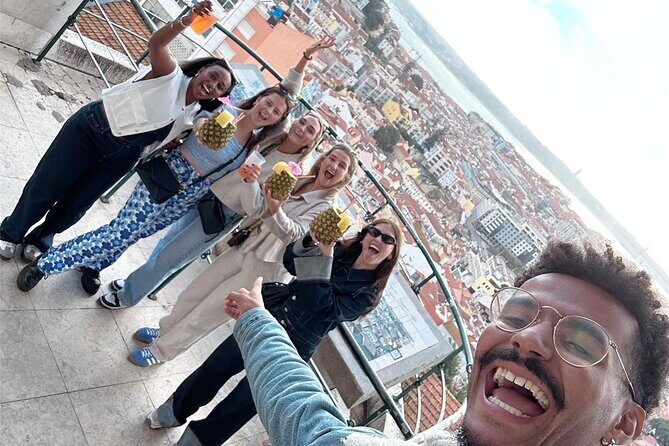
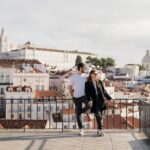
Now you get your reward: wide views over Alfama’s rooftops and the Tagus River. This is where you can step back from tight streets and plan larger compositions.
The guide’s help here is less about technical complexity and more about turning a view into a photo that feels composed. You’ll look at how rooftops stack, how layers recede, and where the eye naturally travels across the frame.
If you like landscape-style photos, this is the closest fit—but you’ll still be thinking in “composition blocks,” not just point-and-shoot.
Stop 4: Igreja de São Miguel (about 30 minutes)
This stop is all about charming neighborhood visuals. You’ll work around a square scene with classic Lisbon cues—small chapels, local activity, and framing opportunities that come from being slightly off to the side instead of centered.
Squares like this often produce better photos when you wait a moment. The tour’s pace and style give you time to notice how people enter the frame and how small gestures (walking past, pausing near a doorway) add scale.
For your shots, think:
- Frame-with-purpose: use corners, archways, and edges
- Include the “everyday” so it doesn’t become only architecture
- Capture small activity without turning the scene into chaos
Stop 5: Lisbon Cathedral (about 30 minutes)
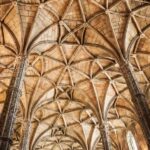
The walk ends at Lisbon Cathedral, Lisbon’s oldest church. This is a strong finale because cathedrals can handle dramatic light and architectural close-ups. You’ll also get urban layers—church stone paired with the city’s surrounding textures.
This is the moment to put all the skills together:
- Find strong angles fast
- Use light and shadow deliberately
- Shoot details and then pull back for context
If you’ve been focusing on street storytelling, the cathedral gives you a different flavor: clean geometry, older materials, and a sense of place that anchors your whole set of photos.
How the guide teaches you without taking over
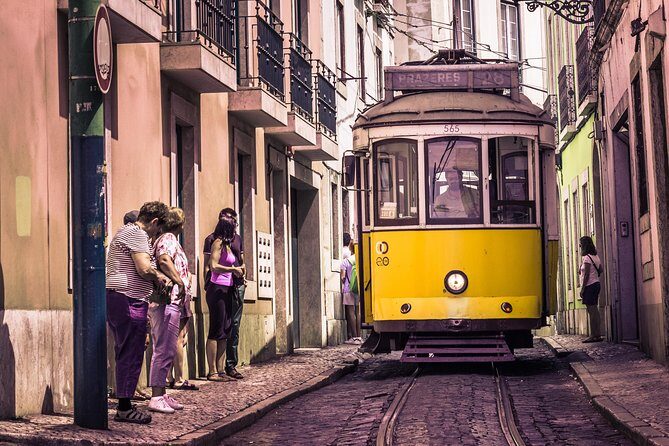
The style here is collaborative. You’ll get instruction adapted to your equipment and experience level, so beginners don’t feel lost and more experienced shooters don’t feel talked down to.
You’ll also get advice that sounds simple but changes your results:
- Where to stand so the scene actually works in your frame
- How to aim for the angle that makes a street look deeper or more intentional
- When to wait for the moment instead of snapping immediately
One thing I appreciate in a photo walk is whether the guide controls the whole show. This doesn’t feel that way. The coaching is generous, but you’re still allowed to experiment. That’s a big deal because street photography is partly instinct. If someone grabs the camera every time, you leave with photos—but you don’t leave with skill.
With a max 5 group, you can usually get quick feedback without the group becoming a line of people waiting for one spotlight moment.
What to bring (and what to plan around)
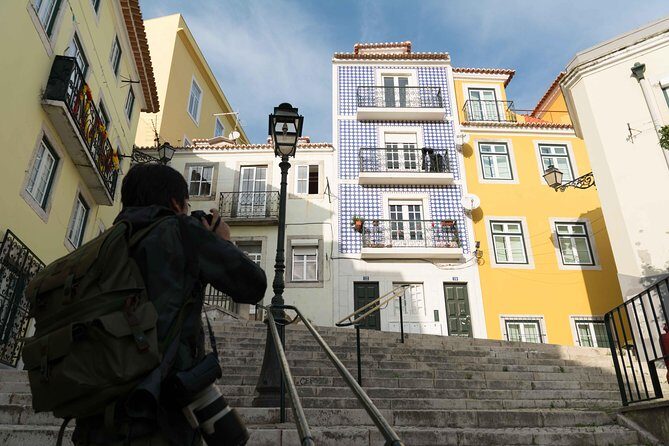
You need to bring your own photography equipment. The tour includes instruction, not gear rental. So bring whatever you’ll realistically use during the day—camera or phone—plus any basics you need to shoot comfortably.
I’d also bring:
- Walking shoes with grip (Alfama is hilly)
- A small water bottle (snacks and drinks aren’t included)
- A way to keep your phone/camera protected if weather turns
- If you have one: an easy lens or setting that helps with motion shots (for the trams)
Also plan around the reality that this experience requires good weather. If it’s canceled due to poor weather, you’re offered a different date or a full refund.
Price and value: does $112.82 make sense?
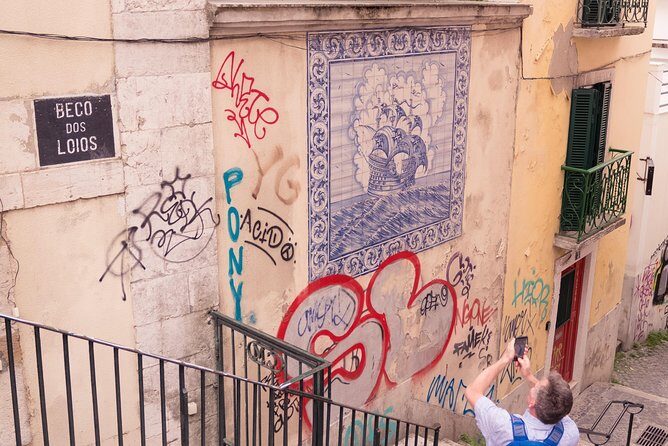
At $112.82 per person for about 3 hours, the price lands in the “you’re paying for focused instruction and time” category. You’re not buying entrance tickets or a guided museum visit. You’re buying someone to help you see and shoot the city better, in the exact streets where photos happen.
Here’s what you’re getting that adds real value:
- Professional photography instruction matched to your gear and skill level
- Local context tied to the exact spots you’re photographing
- A paced route that leaves time for composition and creativity
- Small group size (max 5), which typically means less waiting
And here’s what you’re not getting (so don’t expect it):
- No hotel pickup/drop-off
- No equipment provided
- No snacks, food, or beverages
So the value depends on your goals. If you want the kind of photos you normally struggle to get in a self-guided walk—especially tram motion and cathedral/architecture framing—then this price can feel fair. If you’re already perfectly confident shooting street scenes and you just want a scenic stroll, you might not feel the cost is justified.
Who this Alfama photo walk is best for
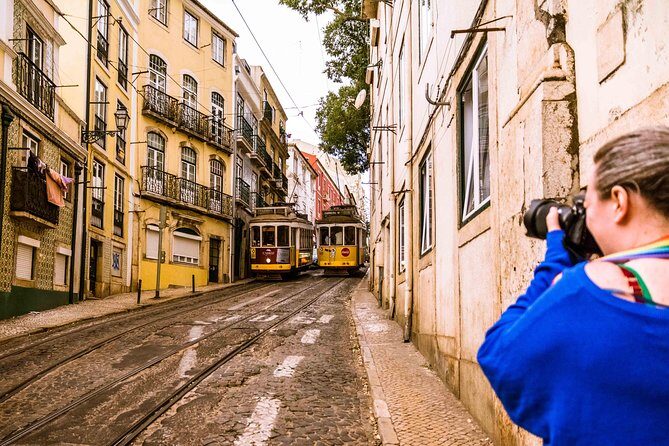
This tour fits best if you’re one of these types of traveler:
- You want street photography help but you still want to move at your own pace
- You’re a beginner who needs practical “where to stand and what to try next”
- You’re intermediate and want help with light, angles, and moving subjects like trams
- You want a first-day orientation to old Lisbon areas without doing a big group bus tour
- You like the quieter backstreet feel more than crowds and souvenir lanes
It’s also a good choice if you prefer a structured route. The walk has clear stops and time blocks, so you’re not wasting half the session wandering in circles or missing the key photo moments.
Should you book this Alfama Photo Walk?
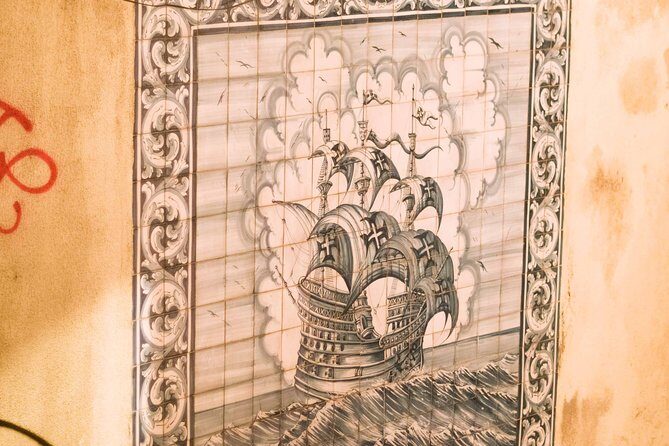
Yes—if you want help getting better photos in Lisbon’s most photogenic lived-in district, and you appreciate small-group, local-led guidance. The mix of Alfama streets, tram motion practice along Calçada de São Vicente, wide views from Miradouro de Santo Estêvão, and a finale at Lisbon Cathedral is a smart “photo skills tour,” not just a sightseeing walk.
Skip it only if you’re hoping for someone to provide equipment, or if long hilly walking is a dealbreaker. And if you need totally accessible, flat ground routes, you should think carefully because this is an on-foot historic neighborhood experience.
If you’re willing to bring your own camera/phone, wear comfortable shoes, and show up ready to shoot, this is the kind of tour that can upgrade your Lisbon photos fast.
FAQ
How long is the Alfama Photo Walk?
It runs for about 3 hours (approximately).
Where does the tour start and end?
It starts at Chafariz das Moiras (Largo do Correio-Mor, 1100-179 Lisboa) and ends at Largo da Sé (1100-401 Lisboa).
What group size should I expect?
The experience has a maximum of 5 travelers.
Is the tour offered in English?
Yes, it is offered in English.
What’s included in the tour price?
You get photography instruction adapted to your equipment and experience level, plus local insights about the areas visited. The stops are also paced to allow time for composition and creativity.
What is not included?
Hotel pickup and drop-off aren’t included. You also need to bring your own photography equipment, and snacks, food, and beverages are not included.
Do the stops have admission tickets?
The stops are marked as admission ticket free.
Does this tour depend on weather?
Yes. The experience requires good weather. If it’s canceled due to poor weather, you’ll be offered a different date or a full refund.
What is the cancellation and refund policy?
You can cancel for free up to 24 hours in advance of the experience for a full refund. Cut-off times are based on the experience’s local time.