REVIEW · LISBON
Tuk Tuk Old Lisbon Tour 1,5h
Book on GetYourGuide →Operated by My Tuk Life Tours · Bookable on GetYourGuide
Lisbon’s hills can wear you out fast. This private Tuk Tuk loop is built for the climb-and-see rhythm of the city, and I like that it pairs Miradouro da Senhora do Monte panoramas with real time in Alfama. It’s a smart way to get the big landmarks of Old Lisbon without turning your day into a stair marathon.
The setup is relaxed and photo-friendly, with guided stops and short walks. One catch: in a city this steep, you should be ready for some uneven cobblestones and steps, even though you spend most of the time riding.
In This Review
- Key things to know before you go
- Lisbon’s hills, fixed: why a private Tuk Tuk works
- How the 1.5-hour pace stays relaxed (and where it still takes effort)
- Sé Cathedral and the Lisbon story you can grasp fast
- Terraces and viewpoints: Santa Luzia, Portas do Sol, and Senhora do Monte
- Medieval Lisbon by Costa do Castelo and the São Jorge area
- São Vicente and the National Pantheon: guided context plus a smart photo stop
- Alfama at walking speed: Fado streets and local life
- Praça do Comércio and Lisbon’s 1755 comeback theme
- Value for $66: what you’re really paying for
- Who should book this Tuk Tuk Old Lisbon route (and who might skip it)
- Should you book this Tuk Tuk Old Lisbon Tour 1.5h?
- FAQ
- How long is the Tuk Tuk Old Lisbon tour?
- Is pickup included?
- Is this a private tour?
- What languages are available for the live guide?
- What’s included in the price?
- Are food, drinks, and tickets admissions included?
Key things to know before you go
- Private guide, live explanations in multiple languages (Portuguese, English, Italian, Spanish, French)
- Photo-heavy viewpoints like Miradouro da Senhora do Monte, plus terrace stops such as Santa Luzia and Portas do Sol
- Sé Cathedral as a key anchor so you understand what you’re seeing, not just passing it
- Alfama on foot for a real-neighborhood feel with Fado and local life in the conversation
- Comfort + eco-friendly transport that helps you cover more ground in less time than walking
Lisbon’s hills, fixed: why a private Tuk Tuk works
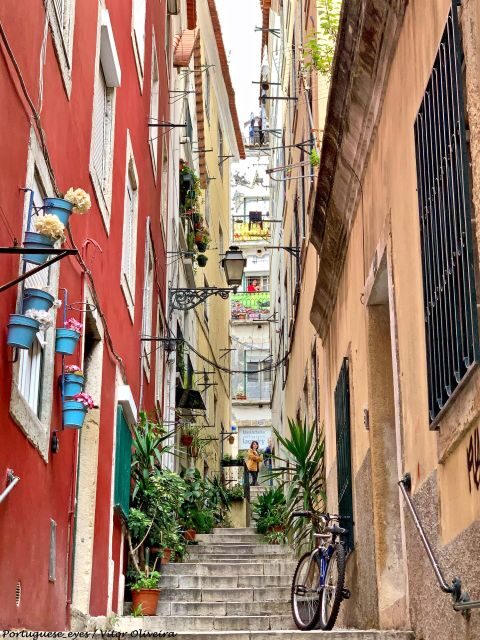
Lisbon is gorgeous, but the geography is not subtle. Streets rise, viewpoints sit high, and your legs do most of the negotiating. That’s exactly why I like this kind of private Tuk Tuk format: you get the energy-saving benefit of rolling transport while still stopping often enough to actually take in the city.
In this tour style, the guide acts like your translator for the maze. You don’t just park at a viewpoint and hope for the best angle. You’ll have a live guide along the way, and that matters because the “what” is easy to see, but the “why” can be harder. When the guide connects the dots between places like Sé Cathedral and Alfama, the route feels less like random sightseeing and more like a coherent Old Lisbon story.
It also helps that the group is private. You’re not forced into a slow, herd-like pace, and you can ask simple questions on the spot. Guides you may encounter on this kind of tour include people like John, Vanessa, and Pedro, who are specifically noted for arriving early and explaining things clearly.
And yes, the ride itself is fun. With all the ups and downs, it feels like Lisbon is actively in motion around you, not something you’re trudging through.
You can also read our reviews of more tours and experiences in Lisbon.



How the 1.5-hour pace stays relaxed (and where it still takes effort)
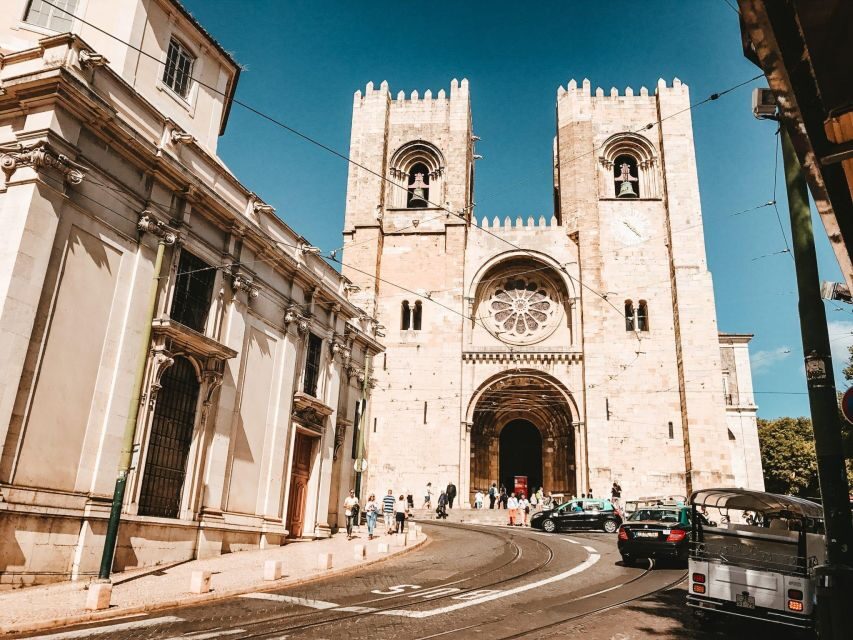
The time is listed as 1.5 hours, so this is a highlights tour, not a deep-dive day of museums. The structure is intentionally “short stop, look, photo, quick walking, then go again.” That’s a good thing for first-time visitors who want orientation and for anyone who just doesn’t want a full day of standing in lines.
Here’s the practical tradeoff: the duration is short, so you’ll only get brief moments at each stop. The benefit is momentum—you won’t waste your day commuting between far-apart neighborhoods on your own. The drawback is that you have less freedom to linger for long periods, especially if a site draws a crowd or you want extra time inside a landmark.
Plan for a light physical reality anyway. Even with a Tuk Tuk doing the heavy lifting, Old Lisbon still includes steps and cobblestones. If you have mobility concerns, consider it before booking. But if you can do short walks and you’re okay taking a breather when needed, this pacing can feel surprisingly comfortable.
Sé Cathedral and the Lisbon story you can grasp fast

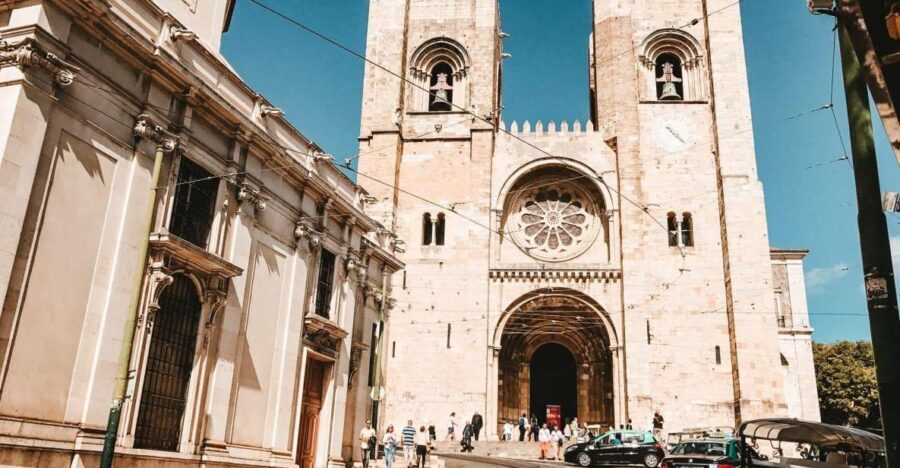
Sé Cathedral (Lisbon Cathedral) is one of the best “anchor points” in the city, because it ties Lisbon’s identity to its earliest roots. In this tour, you’ll have a guided visit here, which is huge for value. Left to your own devices, many people look at big churches and move on. With a guide, you’ll get the context for why this church matters and why it symbolizes Lisbon’s history and resilience.
This stop also sets up the rest of the route. Once you’ve seen Sé, the surrounding neighborhoods make more sense. You’ll understand that the city didn’t grow randomly outward; it developed with layers of meaning, faith, defense, and community life.
One practical tip: if you’re the type who likes to photograph architecture, this is a good early stop to do it before the day gets too busy and before you’re tired from transit time. You’ll also feel less pressure to “perform” the rest of the tour, because this is the place where the guide’s narration gives you a framework.
If you want a quick payoff—history you can actually hold in your head—Sé is your best bet on this route.
Terraces and viewpoints: Santa Luzia, Portas do Sol, and Senhora do Monte
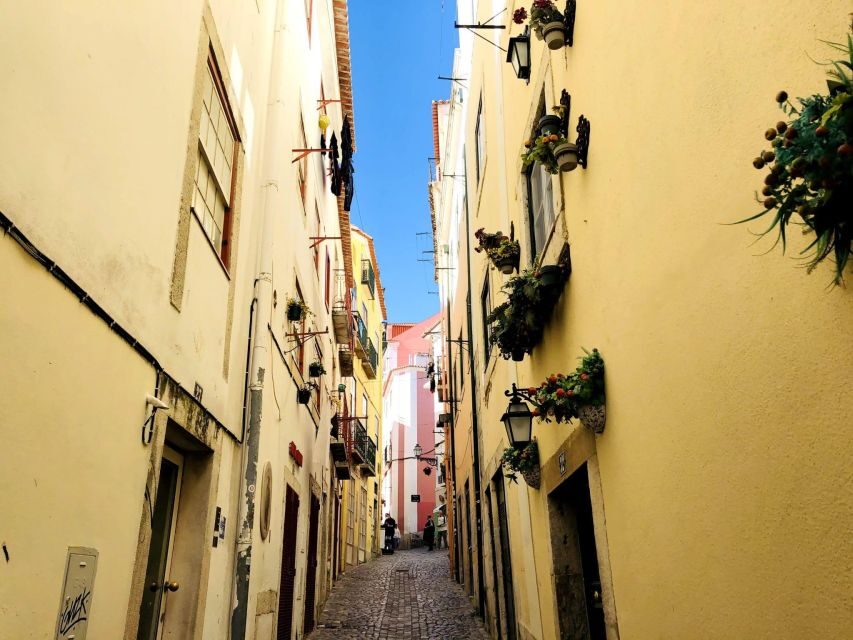
Lisbon viewpoints are not a bonus. They’re the whole point. This tour leans hard into that reality with multiple terrace and miradouro stops, including Miradouro da Senhora do Monte, one of the city’s highest viewpoints.
At Senhora do Monte, you can expect panoramic views over Lisbon, the river, and even São Jorge Castle in the same sightline. That kind of “three-layer” view is exactly what you want on a short tour: it helps you read the city’s geography at a glance. Your guide can also help you pick where to stand for the best angles, so you’re not just taking random photos from wherever you end up.
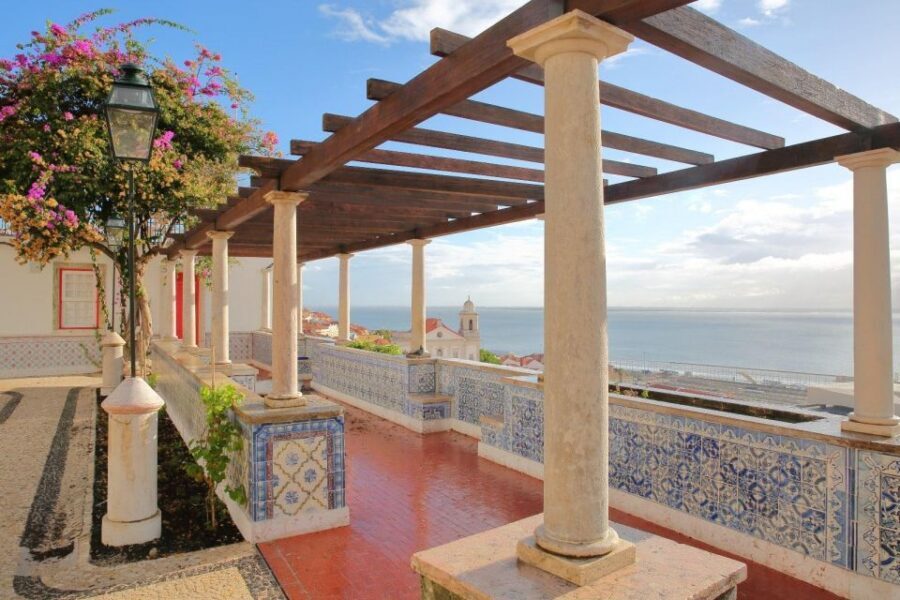
Santa Luzia and Portas do Sol are also part of the guided visit mix. These are terrace areas known for classic city views, and on a route like this you’ll likely get photo-friendly moments where you can stop, look around, and capture Lisbon’s rooftops and hillside drama. In other words: if you’re the person who enjoys photos more than museum facts, these stops will feel worth it.
A small, real-world note: terraces mean wind sometimes, and cameras might want a quick wipe from sea air. Bring a lens cloth if you’re serious about photos. Even if you’re not, it’s the kind of tiny thing that keeps your shots sharp.
Medieval Lisbon by Costa do Castelo and the São Jorge area
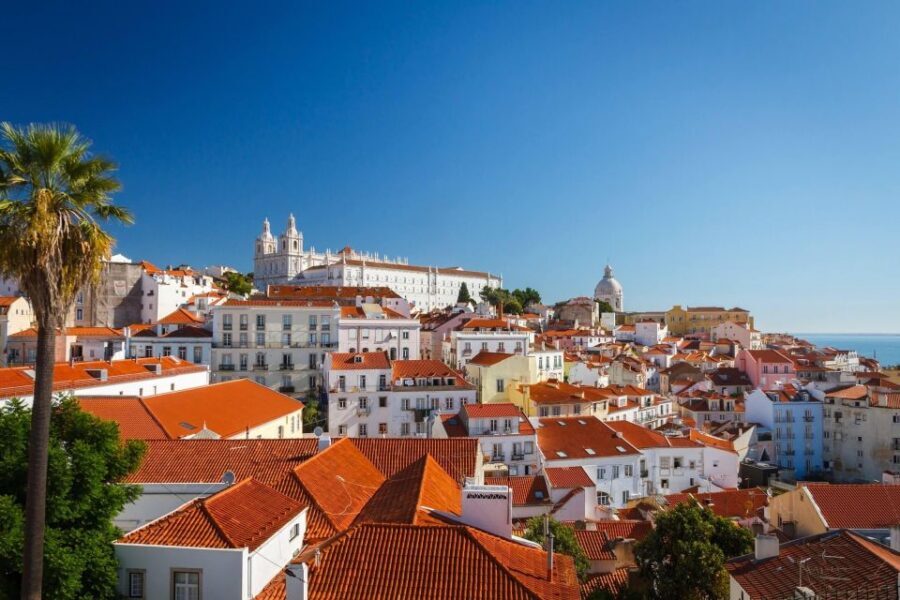
Once you’ve seen the cathedral and the viewpoints, the next useful step is getting into the medieval feel of the city. This part of the route focuses on the Costa do Castelo / São Jorge Castle area, described as Lisbon’s medieval heart with historic surroundings and stunning views.
Why does that matter? Because Lisbon’s hills can confuse your sense of direction. When you enter the São Jorge area, the city stops feeling like separate neighborhoods and starts feeling like one long story. Even if you only spend a short time there, the guide helps you connect what you see with how Lisbon used to function—defense, settlement patterns, and the way the city clings to the slope.
This stop is also one of your best chances to photograph the city’s “depth,” where streets twist away from you and buildings sit on different levels. It’s the kind of perspective that makes Lisbon look like a real place and not just a postcard.
If you’re short on time, this is also the part that saves you from making a common mistake: chasing viewpoints randomly. Here, the stops are linked, so you get the sense of a route, not a pile of snapshots.

São Vicente and the National Pantheon: guided context plus a smart photo stop
The São Vicente area is included with a guided visit. That’s useful because it helps you understand the neighborhood as more than a passing backdrop. You’ll get explanations that turn what could be just street views into a clearer picture of how Lisbon’s districts fit together.
Then comes the National Pantheon of Santa Engracia, which is listed as a photo stop with a guided component. A photo stop can sound limiting, but in a short 1.5-hour tour, it’s actually the right approach. You get the landmark moment without sacrificing too much time. You’ll also benefit from the guide’s interpretation, which often saves you from missing the most interesting bits.
Practical photo tip: at landmarks where you’ll stop briefly, it helps to take a wide shot first, then switch to details. Even if you don’t go inside (since admissions aren’t listed as included), you can still capture something that feels like Lisbon’s identity in a single frame.
Alfama at walking speed: Fado streets and local life
Alfama is the neighborhood people come for, but it’s also the neighborhood where you can get turned around if you’re on your own. This tour handles it in a way that’s more efficient and, frankly, more enjoyable: you’ll get a photo stop and then a guided visit where you can walk the narrow streets at a comfortable pace.
The big value here is the guide’s focus on tradition, Fado, and local life. Those aren’t just labels. When someone explains what to listen for, what to notice, and how Alfama’s vibe developed, the streets start to feel like they have meaning beyond their beauty.
Alfama is also where Lisbon slows down. Even within a short tour, you’ll likely feel it. The streets are narrow, the corners appear quickly, and the place has a human scale that’s hard to replicate from a vehicle window.
One thing to remember: because it’s an older neighborhood, surfaces can be uneven. Wear shoes you’d feel fine walking in for 20 to 30 minutes total, even if the actual walking portions are shorter.
Also, if you love food, this is a good area to plan for a small treat. One highlight from past experiences on this route is the chance to pick up a custard tart (pastel de nata) during a stop. Food isn’t included on the tour, but it’s easy to turn a viewpoint break into a quick local snack.
Praça do Comércio and Lisbon’s 1755 comeback theme

To balance the medieval and hillside feel, the route also includes a stop at Praça do Comércio. This is Lisbon’s grand riverside square and, importantly, it’s described as a symbol of the city’s rebirth after the 1755 earthquake.
That detail changes how you experience the space. Instead of just admiring a wide open square, you understand it as a marker of renewal and rebuilding. It’s the kind of context that makes a short stop more satisfying. You get a sense of Lisbon’s resilience story, which pairs nicely with what you learn at Sé Cathedral earlier.
This also works well for photos. Riverside squares give you a different “shape” of Lisbon than hill neighborhoods. You can reset your eyes after the tight streets of Alfama and take in the city from a broader perspective.
If your legs start to feel it, this is a good moment to regroup. Praça do Comércio is more open than many of the older lanes, so it can feel like a breather in the middle of the sightseeing.
Value for $66: what you’re really paying for

At $66 per person for a private guided Tuk Tuk tour, you’re paying for three things: transportation that handles Lisbon’s steep geography, a live guide who helps you understand the key landmarks, and a stop plan that prioritizes high-impact viewpoints.
What’s included is straightforward: Wi-Fi and all taxes and fees. What’s not included is food, drinks, and tickets admissions. That last part matters for budgeting. Some sites in the route are listed as guided visits, but admissions aren’t listed as included, so if you decide to enter any place where a ticket is required, you should expect to pay separately.
Still, the value is strong if you fit the tour’s purpose. This is ideal for:
- First-time visitors who want the highlights without figuring out routes and transit between hills
- People who prefer short walks and photo time over long museum hours
- Anyone who wants a guide to reduce confusion in neighborhoods like Alfama
It’s less ideal if you’re the type who wants extended time inside historic buildings, or if you can already move comfortably on your own and don’t need guiding context.
Who should book this Tuk Tuk Old Lisbon route (and who might skip it)
Book this if your goal is orientation plus iconic views. It’s also a great pick when your schedule is tight and you want to see Lisbon’s most recognizable old neighborhoods in one go: Sé Cathedral, Alfama, and the miradouro viewpoint moments.
Skip it if you want a slower pace with extended museum time. Also consider skipping if uneven streets and short walking portions would be a problem for you. Even though the Tuk Tuk does most of the work, Old Lisbon still has physical realities.
If you’re booking because you want photos, you’ll likely feel pleased. The route is built around viewpoints and terrace stops, including the standout Miradouro da Senhora do Monte panoramic vista. And if you’re booking because you want story, the guided components at Sé and around Alfama and the Santa Engracia area will give you something to remember besides images.
Should you book this Tuk Tuk Old Lisbon Tour 1.5h?
If you want a focused introduction to Old Lisbon with minimal hassle, I’d say yes. The strongest reason to book is the balance: guided landmarks (like Sé Cathedral), iconic viewpoints for photos, and neighborhood immersion in Alfama, all within a short 1.5-hour window.
Before you book, make sure the pace fits your style. If you can handle short walks on historic streets and you’re okay with brief stops, this is a good value buy at $66 per person for a private guided ride. If you’re looking for long visits, museum time, or fully accessible smooth walking, you might want a different format.
FAQ
How long is the Tuk Tuk Old Lisbon tour?
The duration is listed as 1.5 hours.
Is pickup included?
Yes. Pickup is included, and the tour guide will be at the meeting point 10 minutes before the tour starts.
Is this a private tour?
Yes, it’s a private group tour.
What languages are available for the live guide?
The live guide is available in Portuguese, English, Italian, Spanish, and French.
What’s included in the price?
Wi-Fi and all taxes and fees are included.
Are food, drinks, and tickets admissions included?
Food, drinks, and tickets admissions are not included.