
REVIEW · LISBON
The Surf Instructor in Costa da Caparica
Book on Viator →Operated by Go Surf Lisboa · Bookable on Viator
Surfing in Portugal starts with one simple pickup. This outing runs from central Lisbon to Costa da Caparica (Praia do Castelo), with all the surf gear and a 1-instructor-for-5 setup that keeps things hands-on. The only real drawback: the time on the water is about 2 hours, so you’ll spend some of the total 3.5 hours gearing up and riding back and forth.
You’re also not guessing how good this is. It comes with a very high track record (a 4.9 average score from 403 ratings), plus English-friendly instruction. And if you want proof you actually stood up, there’s a photographer with the group in the water—just note that photo service isn’t included.
In This Review
- Key things I’d plan around
- Costa da Caparica and Praia do Castelo: a great Lisbon-area surf fit
- Pickup in Lisbon: how the day starts (and why it’s worth it)
- How long is it really: the 2-hour lesson inside a 3.5-hour outing
- The lesson rhythm: warm-up, quick sand tips, then waves
- Small-group instruction with real feedback (João, Jorge, Leo, Johnny)
- Gear matters: wetsuit, surfboard types, and comfort in the water
- Safety, beach reading, and what you’re actually learning
- Photos on the water: optional, but commonly a highlight
- Weather, waves, and the lesson that adapts
- Families, teens, and solo surfers: who this works for
- Price and value: what you’re paying for at $60.49
- Practical tips before you go (so you don’t waste energy)
- Should you book this Lisbon surf lesson?
- FAQ
- How long is the surf lesson, and how long is the whole outing?
- What’s included in the price?
- Do I need to bring my own surf equipment?
- Is this lesson only for beginners?
- Where do we meet, and how do we get to the beach?
- Is the instruction offered in English?
- Is there a photographer?
- What if the weather is bad?
- What is the cancellation policy?
Key things I’d plan around
- Central Lisbon pickup keeps the day easy, then you’re driven to Praia do Castelo in Costa da Caparica
- 2 hours of surf time (lesson) inside an ~3.5-hour total outing
- Small-group coaching with a max 1 instructor for 5 students
- Gear included: wetsuit + surfboard (winter or summer wetsuit, and different board types)
- Photographer onboard for optional purchase later (Raquel is one name you may see)
Costa da Caparica and Praia do Castelo: a great Lisbon-area surf fit
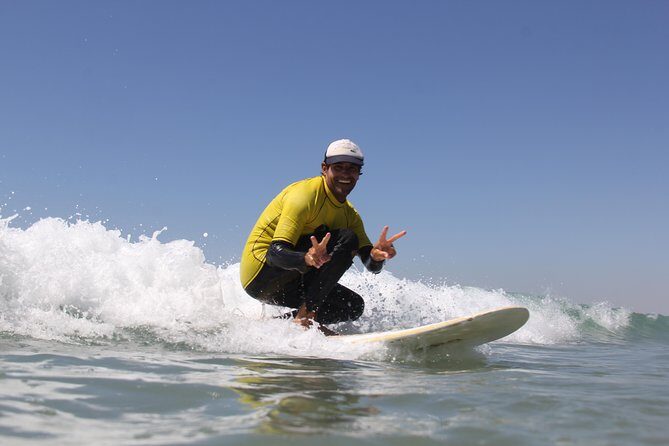
If your goal is to learn surfing without a complicated logistics puzzle, this Lisbon-to-Costa da Caparica setup makes sense. You’re based in the Lisbon region, but you get to practice on a real beach setting that’s known for being practical for learning.
Praia do Castelo sits in the Costa da Caparica area, and that matters because surf lessons depend on two things you can’t control: the waves and the spot. The instructor adapts to conditions and also to your stamina, so you’re not stuck doing the same activity regardless of what the ocean is doing.
This experience also makes a clear promise: from first-timers to more experienced surfers, the teaching approach stays structured. You’ll get techniques, beach analysis, and safety procedures—stuff you can use again later, not just a one-day magic trick.
You can also read our reviews of more tours and experiences in Lisbon.



Pickup in Lisbon: how the day starts (and why it’s worth it)
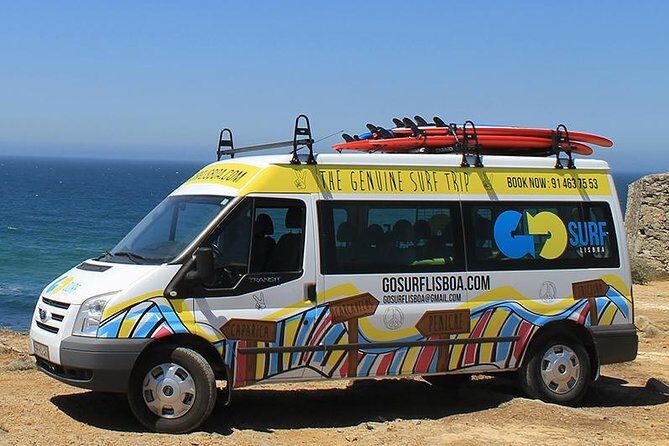
The day begins in central Lisbon. Your meeting point is R. da Cintura do Porto de Lisboa 3154, 1200-621 Lisboa, and you’ll meet up there before heading to the beach.
What I like about this format is that it removes the biggest beginner problem: figuring out transport with gear. You’re not trying to time buses or taxis with a wetsuit and a surfboard strapped to your plans. Instead, you get private transportation and a hassle-free transfer from a central waterfront spot.
One real-world consideration: the route can shift on busy days. In at least one case, heavier traffic led to a ferry crossing as part of the transport plan. If you’re someone who likes perfectly predictable timing, keep a little buffer in your head and don’t schedule another must-do activity right after.
How long is it really: the 2-hour lesson inside a 3.5-hour outing
The published duration is about 3 hours 30 minutes. The useful detail is that the surf instruction itself is about 2 hours.
Here’s how that “feels” in a practical way:
- You arrive, get fitted in a wetsuit, and grab a surfboard
- You do a warm-up and a short theory session on the sand
- You get coached into the water and spend roughly 2 hours surfing, depending on conditions and how you’re doing
- After, you drive back to Lisbon and end where you started
This pacing is good for most people. It’s long enough to learn real movement patterns and catch waves, but not so long that everyone burns out. Several people point out that it’s an active day, not a half-day where you only touch the water once.
If you’re the type who hates time spent getting ready, aim to arrive calm and on time. The group needs enough flow to get suited up efficiently, then get into the water quickly.
The lesson rhythm: warm-up, quick sand tips, then waves
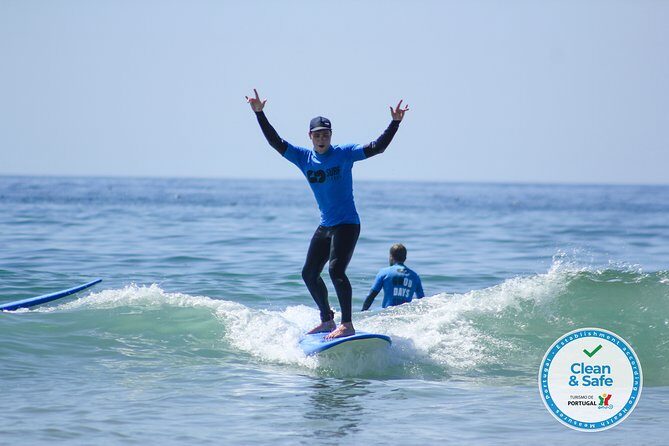
The instruction style is built around getting you into the surf fast. After suiting up with your wetsuit and board, the format goes like this:
1) Warm-up
You’ll start with a basic warm-up so you’re not cold-stiff when you first paddle out.
2) Short theory on the sand
You’ll get the essentials—techniques, safety procedures, and quick cues for reading the beach. The key point is that it’s not a long lecture. The instructor keeps it short so you’re back on the water soon.
3) Back to coaching in the surf
You’ll practice while the instructor monitors you. The ratio is kept small (max 5 students per instructor), so you’re not just watching a demonstration and hoping it sticks.
4) Surf time adjusts to conditions
How long you’re in the water depends on wave conditions and stamina. Some days give more consistent learning waves; other days require slightly different movement goals.
Even if the ocean isn’t cooperating perfectly for beginners, the teaching approach is meant to help you still progress. The goal isn’t pretending every session is identical—it’s learning how to respond when conditions change.
Small-group instruction with real feedback (João, Jorge, Leo, Johnny)
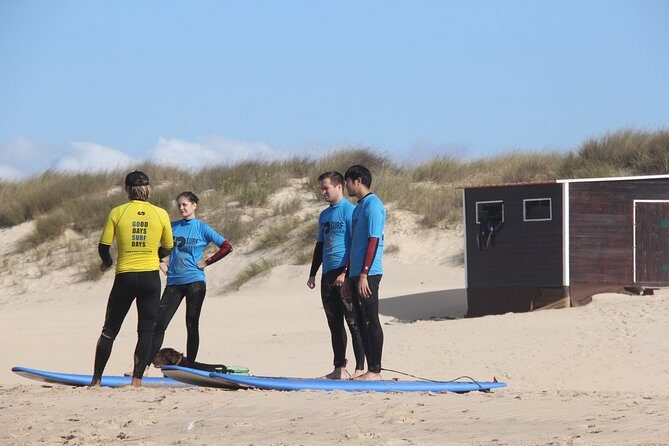
Surf lessons work or fail on one thing: attention. This one leans hard into that. The instructor-to-student ratio is max 1 instructor for 5 students.
That means you can get practical corrections, like:
- how to position your body before trying to stand
- what to watch for as waves form and break
- how to handle safety steps without getting overwhelmed
- how to practice paddling and timing so you’re not just chasing the board
It also helps that you’ll likely get a supportive, encouraging vibe. Names that come up in instruction include João (also seen as Joao/Johnny depending on the person writing), Jorge, Leo, George, and others. You may not get the exact instructor you want, but the consistent theme is patience—especially with first-timers and families.
If you’re already experienced, tell the instructor ahead of time. That way they can nudge you toward more advanced wave-reading and maneuver goals instead of only running the basic plan.



Gear matters: wetsuit, surfboard types, and comfort in the water
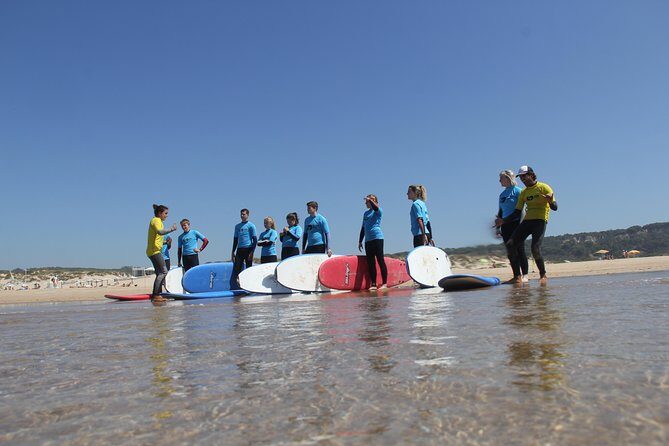
A lot of surf lessons say they provide equipment, but details matter. Here, you get a wetsuit and a surfboard, and the wetsuit is winter or summer depending on conditions. That matters because Costa da Caparica water can feel chilly at first.
You also get access to different surfboards. The setup mentions softboards and hard epoxy boards, which is a big deal for learning:
- Softer, beginner-friendly boards typically help you focus on standing and timing
- Hard boards can be used depending on skill level and conditions
You’ll also be asked to get properly suited up before the lesson starts. That’s not just for comfort—it’s for safety and warmth so you can focus on paddling, balance, and wave timing instead of shivering through the session.
One small practical note: you’ll carry and handle the board as part of the experience. One person mentions that carrying the surfboard can be tiring, even when surfing itself doesn’t feel overly demanding.
Safety, beach reading, and what you’re actually learning
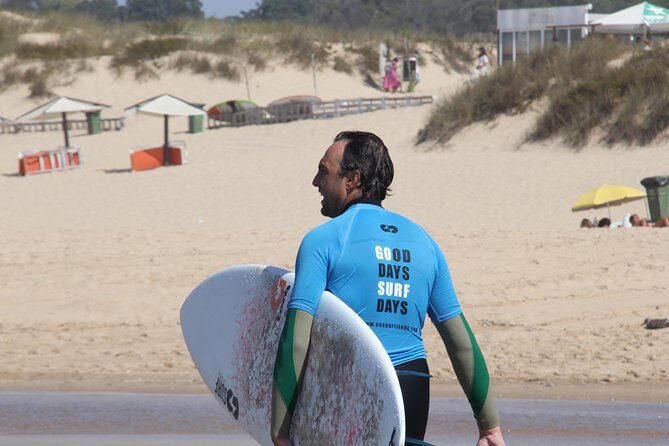
A good surf lesson teaches you more than how to stand. This one includes beach analysis and safety procedures as part of the core instruction.
In practical terms, that means you’ll learn:
- how to recognize what the water is doing near where you enter and exit
- why certain wave situations are safer for your level
- what to do during the learning process so you’re not improvising risky steps
This is one reason people like repeating the class later. The skills transfer. Even if you don’t become a world-class surfer immediately, you’re learning the logic behind wave choice and safe practice.
And yes, you’ll spend a real chunk of time in the water rather than mostly watching from shore. The lesson is structured so that practice is the main event.
Photos on the water: optional, but commonly a highlight
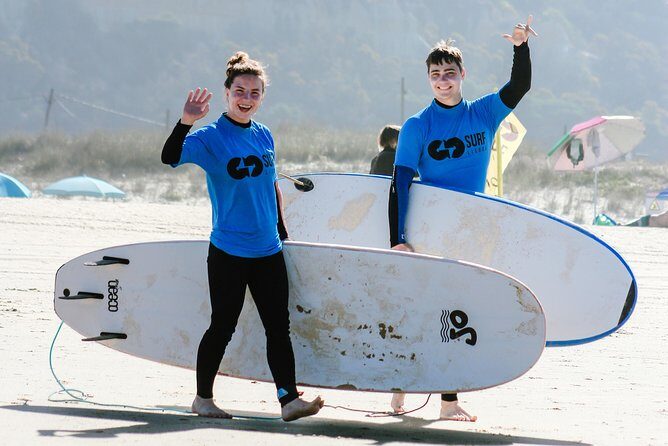
There’s a photographer with the group in the water to capture the best moments of your surf experience. The photo service is explicitly not included, so you’ll buy any images separately.
Still, the photo setup is a plus for two reasons:
- It helps you track progress. For beginners, seeing what happened during your best wave is motivating.
- It captures the reality of learning, not just posed vacation photos.
One name you may see connected to photography is Raquel, with several people saying the photos were outstanding. If you care about having real surf shots for your Lisbon trip, plan to budget extra for photo purchase.
Weather, waves, and the lesson that adapts
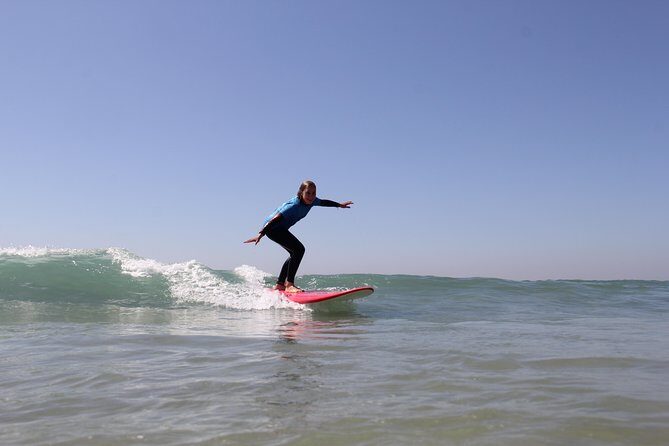
Surf is weather-dependent, and this experience is clear about that. The activity requires good weather, and if it’s canceled due to poor conditions, you’ll be offered a different date or a full refund.
Day-to-day surf also varies. Even on days with great teaching energy, waves can be less cooperative for beginners depending on swell and timing. That’s not a failure—it’s part of surf. The instructor’s job is to adjust what you try, based on the conditions and your stamina.
Families, teens, and solo surfers: who this works for
This is built for beginners and also for people who have surf experience. It’s a good fit for:
- First-timers who want structured coaching and enough time to actually try
- Families with teens who want an active, outdoorsy challenge that’s not a full-day hike
- Solo travelers who want a small group and direct feedback, not a crowded class
A strong theme from the experience is that people often manage to stand up and catch waves—even if they weren’t expecting it at the start. The small ratio helps a lot here, because instructors can coach individuals while the rest of the group waits their turn.
Age comes up often in the positive feedback: kids and teens can do this, especially if they’re reasonably comfortable in the ocean and can follow safety guidance. You should also have a moderate physical fitness level, mainly because carrying boards and repeated paddling take effort.
Price and value: what you’re paying for at $60.49
At $60.49 per person, the value comes from packing multiple costs into one package:
- Wetsuit and surfboard included
- private transportation from a central Lisbon meeting point
- a certified instructor
- insurance
- about 2 hours of actual instruction and practice
For a beginner, that’s what makes the price feel fair. You’re not paying separately for transport, equipment rental, and a guide. You’re paying for a complete, guided learning session with safety built in.
The only common add-on is the photographer service, which you can skip if you just want the experience and don’t care about buying photos.
If you’re traveling on a tighter budget, this is still one of the simpler ways to try surfing around Lisbon without turning your trip into an equipment-rental scavenger hunt.
Practical tips before you go (so you don’t waste energy)
A few small things can make a big difference on surf day:
- Wear clothes that are easy to change out of after the lesson.
- Bring water. The operator asks participants to bring their own water to avoid extra plastic waste, and there’s water available at the beach area if you ask.
- Arrive on time for the meeting point so the group can get suited up and into the water.
- If you tend to get motion-sick, keep that in mind during the drive (you’ll be on private transportation, but it’s still a ride).
- Expect carrying the surfboard to feel like work, even if you’re not surfing at full speed.
And emotionally: expect to feel awkward at first. That’s normal. The lesson is built to reduce panic with short coaching cues and plenty of attempts.
Should you book this Lisbon surf lesson?
If you want a beginner-friendly surf experience tied to Lisbon—with gear, transport, and a small-group instructor—this is a strong choice. The combination of a 1-to-5 coaching ratio, a structured 2-hour session in the water, and a proven reputation makes it a low-stress way to learn.
I’d pass or rethink if you:
- hate anything that involves cold water, even with a wetsuit
- want a longer beach hang time instead of a lesson-based schedule
- need perfectly predictable transportation timing during peak traffic
Otherwise, this is a smart bet for your Lisbon trip: you get a real ocean activity, clear coaching, and a reasonable total time commitment.
FAQ
How long is the surf lesson, and how long is the whole outing?
The surf instruction is about 2 hours. The full experience runs about 3 hours 30 minutes including transfers and time to get equipped.
What’s included in the price?
You get wetsuit and a surfboard (winter or summer wetsuit, plus surfboards suited to different levels), private transportation, 2 hours of lesson time, insurance, and a certified instructor.
Do I need to bring my own surf equipment?
No. Surf equipment is provided, including a wetsuit and surfboard.
Is this lesson only for beginners?
No. The format is for beginners through more advanced surfers. If you’re experienced, you should let the instructor know so you can be grouped accordingly.
Where do we meet, and how do we get to the beach?
You meet at R. da Cintura do Porto de Lisboa 3154, 1200-621 Lisboa, Portugal. You’ll be driven to Praia do Castelo in Costa da Caparica, then return to the same meeting point afterward.
Is the instruction offered in English?
Yes. The experience is offered in English.
Is there a photographer?
There is a photographer with the group in the water to capture surf moments, but the photographer service is not included.
What if the weather is bad?
The activity requires good weather. If it’s canceled due to poor weather, you’ll be offered a different date or a full refund.
What is the cancellation policy?
You can cancel for a full refund up to 24 hours before the experience’s start time. If you cancel less than 24 hours before, the paid amount isn’t refunded.