REVIEW · LISBON
Private Tour: Lisbon Sunset Walking Tour with Fado Show and Dinner
Book on Viator →Operated by Inside Lisbon · Bookable on Viator
Sunset turns Lisbon into a moving postcard. This private 4-hour evening links the city’s history, hilltop views, and the heart of Fado—then finishes with a 3-course dinner and a UNESCO-style music night. You don’t have to coordinate separate tickets or scramble for seats; everything is bundled.
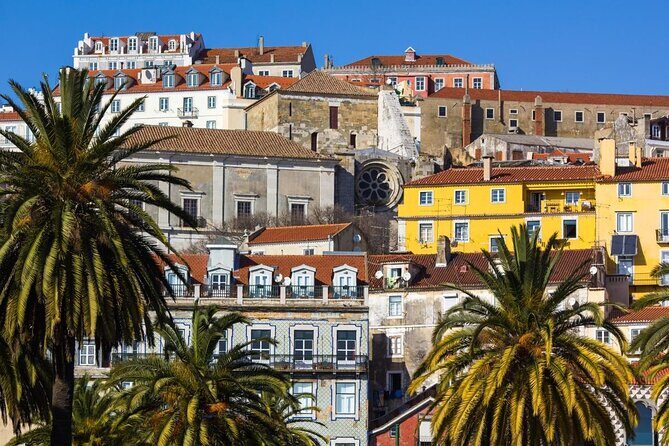
I like how the walk is built for first-time orientation without feeling like a box-checking circuit. You’ll hit classic viewpoints like Miradouro Chão do Loureiro and the Alfama streets that made Fado famous, with a guide who explains what you’re seeing as you go. The other big win for me is the included tasting and meal: ginjinha sour cherry liqueur, plus dinner with wine (or water) and coffee or tea.
One thing to consider: this is a moderate-fit walking tour. Expect hills and cobblestones as the evening heads into Alfama, where the streets get charming fast and walking gets more work.
In This Review
- Key things I’d bet on
- Price and what $255.30 actually buys you
- Meeting at Hotel Mundial and surviving the Lisbon walking part
- Praça Martim Moniz into Mouraria: starting in the city’s pulse
- Mouraria’s alleys and Berço do Fado: ginjinha with actual context
- Miradouro Chão do Loureiro: sunset views that connect multiple eras
- Ponte 25 de Abril and São Jorge: the city’s power symbols
- Miradouro das Portas do Sol and Alfama after dark
- Dinner plus Fado: what the show experience feels like
- Who this tour fits best
- Should you book this Lisbon sunset Fado walking tour?
- FAQ
- How long is the Lisbon sunset walking tour with Fado show and dinner?
- What time does the tour start?
- Is this a private tour?
- What’s included in the dinner and Fado portion?
- Do I get to try ginjinha?
- Where does the tour end?
Key things I’d bet on
- Everything in one ticket: walking tour, Fado show, and dinner are all included
- A guaranteed seat for an often sold-out show, since you’re prebooked
- Viewpoints built for sunset: Chão do Loureiro to see the Tagus, then Portas do Sol for Alfama’s eastern side
- Mouraria’s Fado roots + a tasting: go into the alleys and try Lisbon’s ginjinha
- History you can see: gates, palaces, and squares tied to Portugal’s big turning points
Price and what $255.30 actually buys you
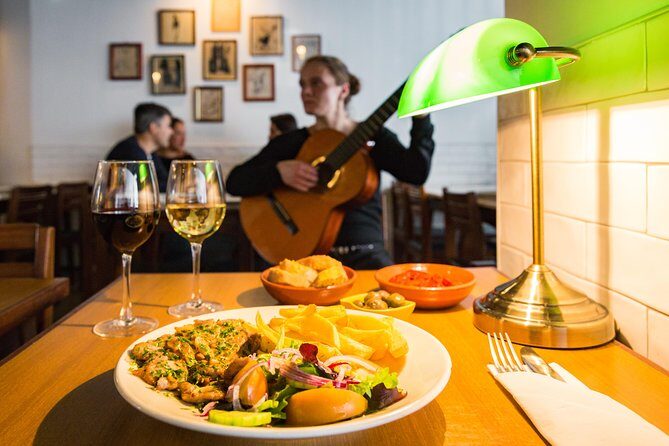
Let’s talk value in plain numbers. At $255.30 per person, you’re paying for a private, timed evening that would cost you more if you booked the pieces separately. Here’s what’s bundled: an expert guide, a ginjinha tasting, the Fado show, and a 3-course Portuguese dinner with wine or water plus coffee or tea.
That matters in Lisbon because the easiest mistake is spending your evening juggling reservations. This tour keeps the logistics simple. You also get the advantage of prebooking your Fado seat—helpful if the show is the kind of thing that can sell out. Finally, since it’s private, you’re not stuck with a one-size-fits-all pace or route. You can ask questions and you don’t feel like you’re being herded.
Could it be pricey for a solo traveler? Sure. But if you’re a couple, a small group, or you want a “see a lot, but not by sprinting” kind of night, this price starts to look fair.
You can also read our reviews of more walking tours in Lisbon


Meeting at Hotel Mundial and surviving the Lisbon walking part
You meet at Hotel Mundial, at Praça Martim Moniz 2, with the tour starting at 7:00 pm. This is helpful because it’s a central, easy-to-find launch point. From there, your guide sets the tempo: short stops for looking, then a steady walk through neighborhoods that feel different block to block.
Lisbon’s hills are real, and this evening includes some cobblestone stretches. The tour is listed as moderate physical fitness, and that’s accurate. Wear shoes you’d be happy to wear for a long dinner walk—no flip-flops, no brand-new sneakers that need a break-in.
The good news: this isn’t a marathon. You’ll have timed pauses (often 10–25 minutes) at viewpoints and lookouts, where the views do the heavy lifting and you can catch your breath.
Praça Martim Moniz into Mouraria: starting in the city’s pulse
The first stop is Praça Martim Moniz, right in front of Hotel Mundial. From here, the evening quickly shifts from “arrival square” energy to “Lisbon layers” energy.
One of the smarter things about this tour is that it doesn’t start with a formal lecture. You begin walking, and your guide connects details as you pass them. You get references like Restauradores Square (Praça dos Restauradores), which honors Portugal’s independence from Spain in 1640, and the story of Sant Antão—including the old Sant Antão gates that once protected the city. These are the kinds of facts that only make sense when you’re standing near the street or the square.
If you like “I get it now” moments, you’ll enjoy this opening. The streets act like a map, and the guide turns that map into a story.
Mouraria’s alleys and Berço do Fado: ginjinha with actual context
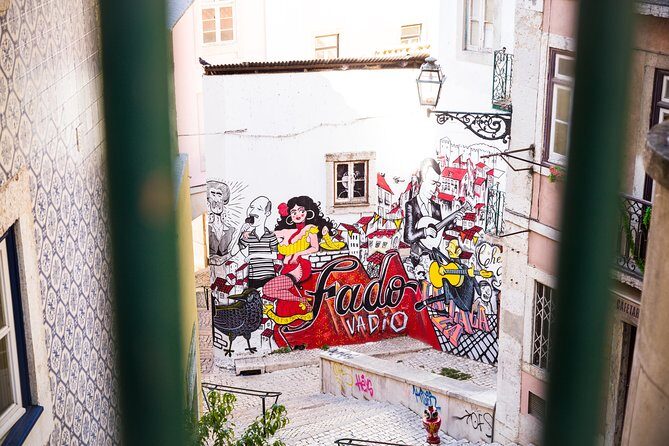
Stop 2 takes you into Mouraria, specifically the Monumento Mouraria Berço do Fado. This is where the tour goes beyond postcard Lisbon. Mouraria is described as the Fado crib, and walking its alleys at night (or near sunset) makes that claim feel real.
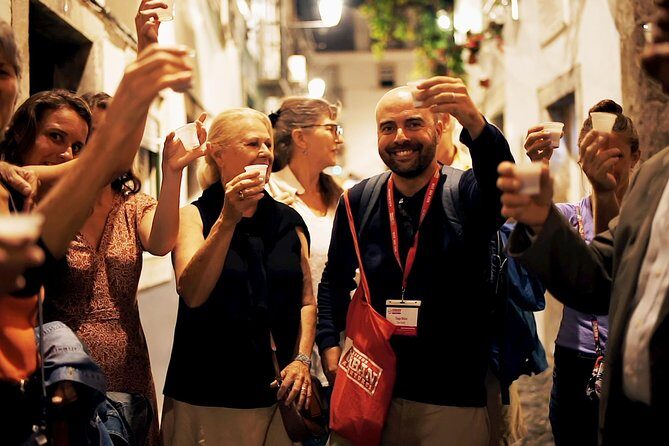
And yes, there’s a tasting. At a nearby bar, you’ll try ginjinha, the sour cherry liqueur Lisbon is famous for. This is the kind of small inclusion that makes the evening feel like Lisbon, not just like a timetable.
What I like here is the way the guide blends the cultural mix of the district with the music. Fado doesn’t show up as random entertainment. It’s treated like a sound that grew out of people, neighborhoods, and long memory. If you’re the type who loves hearing why something exists—not just that it exists—this part hits.
Miradouro Chão do Loureiro: sunset views that connect multiple eras
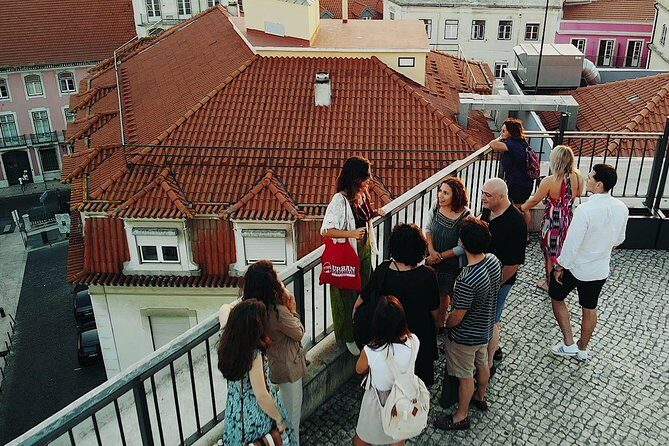
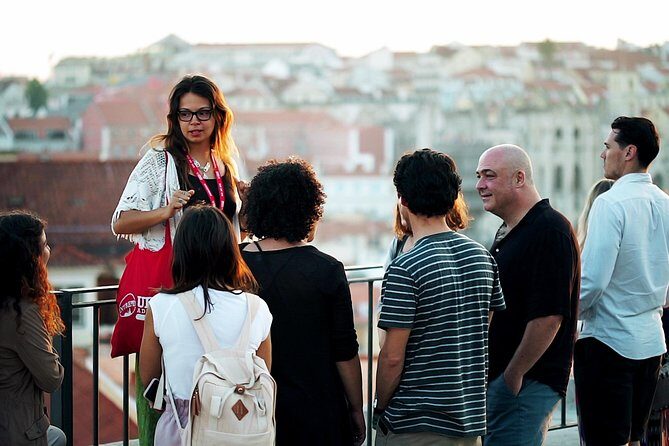
Stop 3 is Miradouro Chão do Loureiro, built for the sunset moment. You get 25 minutes here, which is long enough to actually watch the light change instead of doing a quick photo and running.
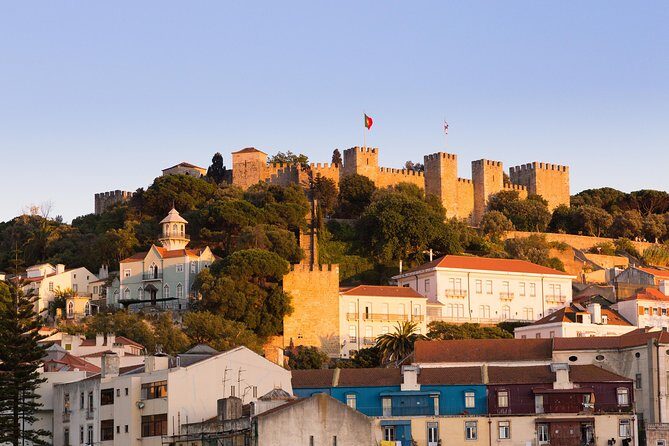
From this viewpoint, you focus across the city and the Tagus River, including the view toward the 25th of April Bridge (Ponte 25 de Abril). Then the guide has you pivot your head toward the commanding São Jorge Castle (Castelo de São Jorge). That sideways “bridge to castle” moment is one of the best ways to understand Lisbon’s geography quickly.
Here’s my practical advice: don’t just take one angle. Spend a minute looking where the guide points, then take 30 seconds to explore on your own. Lisbon rewards the second look.
You can also read our reviews of more private tours in Lisbon





Ponte 25 de Abril and São Jorge: the city’s power symbols
Stop 4 is a brief viewpoint moment at Ponte 25 de Abril (about 5 minutes). Stop 5 brings you to Castelo de São Jorge for 15 minutes.
You’re not doing a museum crawl here. The point is the panorama and the context—how the bridge and the castle read as symbols. The bridge gives you modern Lisbon’s scale. São Jorge brings the old-city authority. Seeing both in one evening makes Lisbon feel less like a list and more like a timeline you can walk through.
If you were hoping for lots of castle interior time, you’ll want to know what’s included and what isn’t. Museum and monument entries are not included, so your time at the castle is for viewpoints and orientation.
Miradouro das Portas do Sol and Alfama after dark
Stop 6 is Miradouro das Portas do Sol, another lookout where the guide frames what you’re seeing—especially the view over Alfama and the Tejo River. It’s also a practical stepping-stone. The viewpoint helps you understand where you are before you start winding through the oldest streets.
Stop 7 is Alfama, for about 30 minutes. This is where the evening turns into nighttime Lisbon walking. Alfama is famous as the birthplace of Fado, and the cobblestone lanes and Moorish influences make that connection feel more than symbolic.
You’ll likely notice how the streets tighten and steepen as you go. That’s normal. This is the part where the “moderate physical fitness” warning matters most. The good part is that Alfama at night has a vibe that doesn’t require you to rush. Let the guide’s history settle, then use the street walk to reset your senses before dinner.
Dinner plus Fado: what the show experience feels like
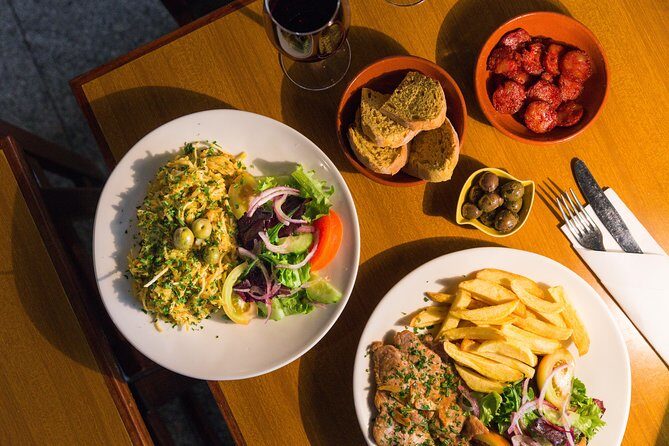
Then you head to the restaurant for your evening finale: a 3-course Portuguese dinner and a Fado show. Dinner includes wine or water, plus coffee or tea afterward. That’s a nice combo because it lets you do one seated “full experience” without losing time to transit.
Fado itself is described as UNESCO Intangible Cultural Heritage. The sound is traditionally melancholic but described as somber yet exciting, and that mix is part of why people get hooked. Since the mid-1800s, it’s delivered those soulful songs that can feel like emotion wearing a melody.
Now, a balanced note: this is Fado paired with dining, so the show can feel like a dinner event, not a tiny, purely local living-room setting. If you’re chasing raw authenticity over comfort and structure, you might prefer a smaller venue later in the trip. But if you want a night that’s easy, timed, and thoughtfully connected to Lisbon’s story, this format works.
And since this is private, you’re not stuck listening to a dozen conversations from other groups. You can focus, even if you’re only half fluent in Portuguese.
Who this tour fits best
This tour is ideal if you want:
- A guided introduction to Lisbon that includes viewpoints, not just streets
- The Fado show plus dinner in one clean plan
- Private pacing if hills and cobblestones are a concern
- A chance to taste ginjinha without turning it into a scavenger hunt
It also suits couples and small groups who want a meaningful “last-night Lisbon” activity. Several guides mentioned in real bookings—like Daniel, Dani, Joanna/Joana, Tiago, and Pedro—suggest that the guide quality can vary by person, but the consistent theme is clear: Lisbon stories with real care, not scripted fluff.
Who might want to skip it? If you strongly prefer self-guided exploring with no set timetable, or if you want lots of paid monument time inside museums and sites, this tour is probably not the right match. It’s about the walk and the performance, not a ticket-heavy sightseeing spree.
Should you book this Lisbon sunset Fado walking tour?
Yes, you should book it if you’re aiming for a smooth, high-impact evening: sunset viewpoints, Alfama walking, a prebooked Fado seat, and a sit-down 3-course dinner. The price stops feeling random when you factor in how much effort and uncertainty it removes.
Hold off if you dislike walking on uneven streets or if you want Fado in a smaller, less formal venue. In that case, you might still love the city, but you’d choose a different format.
If you do book, I’d plan your other activities earlier that day so you’re not rushed. This is the kind of evening where good shoes and a calm pace make the whole thing better.
FAQ
How long is the Lisbon sunset walking tour with Fado show and dinner?
It’s about 4 hours.
What time does the tour start?
The start time is 7:00 pm.
Is this a private tour?
Yes. It’s listed as a private tour/activity, and only your group participates.
What’s included in the dinner and Fado portion?
You get a 3-course Portuguese dinner, Fado show, wine or water, and tea or coffee.
Do I get to try ginjinha?
Yes. Ginjinha tasting is included as part of the tour.
Where does the tour end?
It ends at Largo do Chafariz de Dentro. It can also end in another location in Alfama, depending on where the dinner is.