REVIEW · LISBON
Private group Lisbon Roots, Food & Cultural Walk
Book on Viator →Operated by Taste of Lisboa Food Tours · Bookable on Viator
Lisbon tastes different when you walk with locals. This private half-day food and culture route threads through Mouraria’s Fado roots and central Lisbon, pairing landmark storytelling with hand-picked Portuguese bites and wine. I especially like the 10+ tastings plus wine setup, because you get to sample a lot without turning it into a buffet chaos.
I also like that it’s a private group walk, not a cattle-line tour. In past group experiences, guides such as Pedro, Daniella, Daniel, and Ricardo have mixed history, humor, and practical food know-how, so you leave with names, places, and a better sense of how Lisbon eats.
One thing to consider: the walk is rated medium with uphill cobblestones and some step-downs. Comfortable shoes matter, and you should pace yourself if stairs make you nervous.
In This Review
- Key highlights worth your attention
- Mouraria’s Fado streets set the tone for food
- How the tastings work (and why you should show up hungry)
- São Domingos Church and Rossio Square: Lisbon’s dramatic layers
- Elevador de Santa Justa: the view is real, the ticket is not
- Fado in stone: Mouraria’s marble guitar monument
- Praça da Figueira: where markets moved underground
- Martim Moniz Square and Tram 28: old Lisbon in motion
- Church details, theater portraits, and Rossio station architecture
- Chapel of Our Lady of Health and Largo de São Domingos
- The 1506 memorial: history with a heavy center
- Price and Logistics: what $325.60 buys you in practice
- Who should book the Lisbon Roots food walk
- Should you book it?
- FAQ
- How long is the Lisbon Roots Food & Cultural Walk?
- Is this a private tour?
- Where do we meet and where does it end?
- What does the tour cost?
- Is pickup included?
- How many tastings are included?
- Is admission included for the main sights?
- Are alcoholic beverages included?
- Can the tour accommodate dietary restrictions?
- What physical level should I expect?
- FAQ
- Can I cancel for a refund?
- What’s included in the tour?
- What’s not included?
- Do I need a mobile ticket?
Key highlights worth your attention

- Mouraria + Fado focus: You see why this neighborhood shaped the music and the food culture that came with it.
- 10+ tastings, wine, and snacks: You’re set up to eat your way through Lisbon staples, not just snack.
- Landmarks with real scars: Church damage from earthquakes and fires becomes part of the story.
- Elevador de Santa Justa views (ticket extra): Great panoramas, but plan for the ride cost separately.
- 1506 tolerance and Jewish-massacre memorials: The route connects what you taste with what Lisbon remembers.
Mouraria’s Fado streets set the tone for food
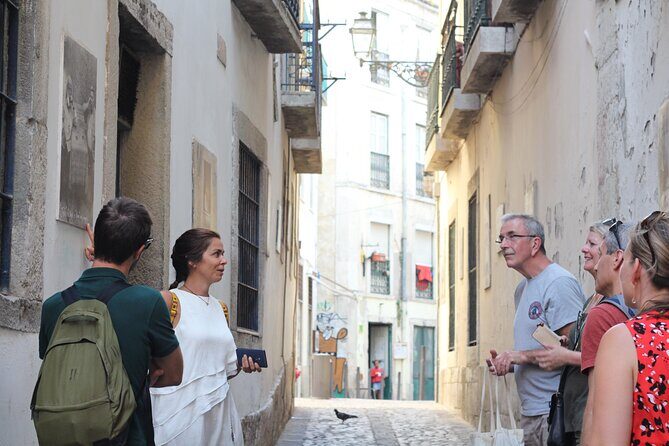
Your walk starts in and around Largo São Domingos, in the Mouraria area. This is where Lisbon’s music story is tied to everyday life: Fado has long roots here, and the neighborhood’s mixing of cultures shows up in the way people live, shop, and snack.
The guide’s approach matters. Instead of dumping dates, you’re taken from older Lisbon layers into the modern city, using the neighborhood as a “map” for how food and culture traveled and changed over time. That’s why this tour feels more like a guided stroll with context than a history lecture.
Also, don’t miss the theme of influence. Lisbon’s food culture in this area is framed through trade and sea travel connections, which helps you understand why Portuguese eating can feel both local and international at the same time.
You can also read our reviews of more walking tours in Lisbon


How the tastings work (and why you should show up hungry)
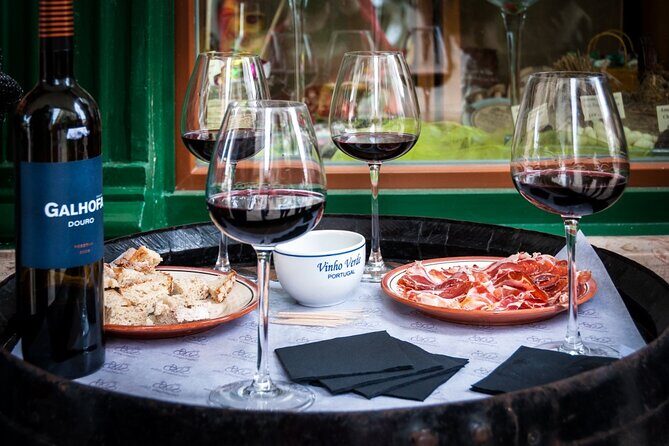
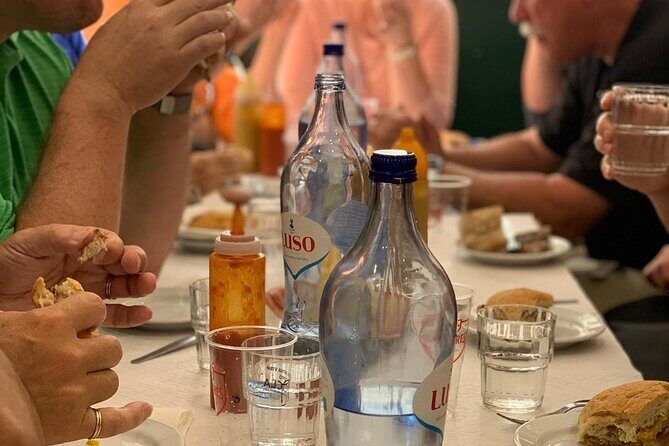
The biggest value is how much food you get without spending your whole day in lines. The tour includes more than 10 tastings across local places, plus wine tasting and alcoholic beverages, along with snacks and coffee or tea. Even if you don’t drink much, you’ll still get a lot of variety in the non-alcohol choices built into the stops.
You’ll also notice the stops are set up like Lisbon errands you’d actually do if you lived there: you try things from different corners of the neighborhood scene, rather than repeating the same style of snack three times. In one common pattern, guides bring you through multiple venues so the day feels like sampling across the city, not one long meal.
One practical note: the tour asks about dietary restrictions ahead of time, and it says they can’t adapt tastings on the day if you don’t inform them in the booking form. If you’re vegetarian, have allergies, or avoid certain foods, send that info during booking so the guide can plan.
São Domingos Church and Rossio Square: Lisbon’s dramatic layers
After Mouraria’s streets, the route moves toward central Lisbon. You’ll pass by the Igreja de São Domingos, originally from the 13th century, with a past shaped by earthquakes and a major fire. It reopened in the 1990s, and the interior restoration keeps a simple, almost spare feel that still echoes the ruined period.
This stop is short, but it gives you something important: you learn how Lisbon rebuilt itself again and again, and how faith spaces and public spaces carry those scars. If you like landmarks that have a story you can actually see, this church fits the bill.
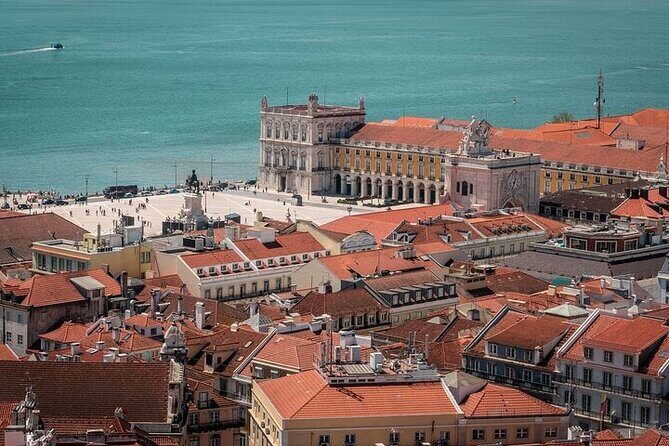
Then you arrive at Rossio, formally Praça de D. Pedro IV. This is one of the city’s classic squares, long used as a stage for celebrations and revolts, and it still functions like a meeting point for locals. Around the square you’ll see flower sellers and constant foot traffic, which is exactly the point: Lisbon isn’t frozen in postcard mode.
Elevador de Santa Justa: the view is real, the ticket is not
The Elevador de Santa Justa is one of those Lisbon icons you keep hearing about for a reason. Built in 1902 by Raoul de Mesnier du Ponsard, it’s a steel structure with ironwork similarities to the Eiffel Tower story. It originally ran on steam and rises about 45 meters, connecting downtown with Bairro Alto.
This stop is quick, but the payoff is the vista. From the top—accessed by a spiral staircase—you can look over Rossio Square, the castle, and toward the river.
The one catch is budget and timing: the elevator admission isn’t included. So if you want the ride (and the views), factor that extra cost into your day.
Fado in stone: Mouraria’s marble guitar monument
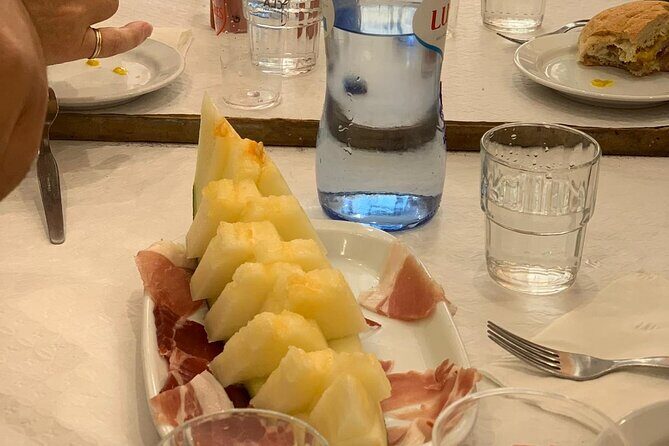
Mouraria’s story also shows up in public art. The Monumento Mouraria Berço do Fado is a marble block carved with the Portuguese guitar, dedicated to Fado’s origins in these alleys and to the people who sang it through difficult lives. It specifically references major figures such as Maria Severa in the 19th century and Fernando Mauricio in the 20th century, along with Amália, who is closely associated with the genre’s worldwide fame.
If you’ve heard Fado before, this stop gives you a concrete “anchor” to connect the music to place. If you haven’t, it still works, because the monument is explained as a tribute to singers both famous and unknown.
You can also read our reviews of more food & drink experiences in Lisbon




Praça da Figueira: where markets moved underground

Praça da Figueira is the kind of Lisbon square that rewards a little attention. Before the 1755 earthquake, this area was tied to the All-Saints Hospital, and later construction revealed foundations during the building of the underground car park. After the earthquake, the square became central to the city plan led by the Marquis of Pombal and served as a main food market.
Today, it’s less market and more everyday downtown—hotels, shops, and cafés occupy the four-story buildings around the square. You’ll also spot the bronze equestrian statue of D. João I, erected in 1971.
This stop is useful because it shows Lisbon’s food culture shifting across time—from market life to the commercial center you see now—without losing the square as a public gathering spot. It helps you understand why Portuguese eating feels both traditional and practical.
Martim Moniz Square and Tram 28: old Lisbon in motion
Martim Moniz Square is the starting point for tram 28, one of Lisbon’s most famous rides. Tourists often wait a long time just to board it, so your best move is to look at it as a cultural backdrop rather than a must-ride moment if the line is ugly.
What you’ll love here is the viewpoint: looking up toward Saint George castle, while absorbing a neighborhood vibe that feels like a mini mix of cultures. The square also functions like a “gate” toward Mouraria, which makes it a natural bridge between your first neighborhood theme and the deeper Mouraria stops that follow.
If you like urban texture—shops, streets that feel active, and the sense of layers—you’ll appreciate this brief stop.
Church details, theater portraits, and Rossio station architecture
The route weaves in smaller stops that add variety without stretching the walk into all-day sightseeing.
You’ll see an older church with a surviving rectangular chancel built in 1671 by the Brotherhood of the Blessed Sacrament, and it’s described as having rebuilt sections that resisted the Lisbon earthquake. Even if you only catch a glance, it’s a good reminder that Lisbon’s survival story is built into ordinary buildings.
There’s also a theater stop from the 19th century, once where culture was mostly for elites, now open to all. In the main hall, large portraits by Vhils of great actresses appear on the walls, and you’ll find guided tours, a bookstore, and a café or restaurant lounge.
Then you finish up near Rossio Train Station, a major gateway for rides toward Sintra and the line that also connects toward Queluz. The exterior leans into classic Manueline architecture, and the entry has horseshoe-shaped archways, with turrets and pinacols on the roof. It’s both a transit hub and a sightseeing stop, which is a great use of time if you’re staying in downtown.
Chapel of Our Lady of Health and Largo de São Domingos
Back in Mouraria, the walk hits the Chapel of Our Lady of Health. The chapel was built in 1505 by initiative of the Lisbon garrison artillerymen, and it had an earlier dedication to St. Sebastian, seen as a protector against evils like war, famine, and especially plague. Later, in 1569, it became dedicated to Our Lady of Health, and her image was welcomed in 1662.
The portal is attributed to João Antunes from the early 18th century, and there were works after the 1755 earthquake. It’s also tied to tradition: each year on the first Sunday of May there’s a thanksgiving procession linked to the Virgin’s protection, repeated since the 16th century.
From there, you reach Largo de São Domingos, a square popular with locals and the African community. In 2008, a monument mural opened with the message Lisbon, City of Tolerance in 34 languages, referencing the 1506 episode and honoring Jewish victims. You’ll also find the famous cherry brandy shop A Ginjinha nearby, which gives you an easy, famous flavor tie-in at the end of the walk’s most emotional part.
The 1506 memorial: history with a heavy center
One of the most meaningful stops is the memorial to the victims of the Judaic massacre of 1506. The story is tied to Easter period events: a Mass, drought, hunger, and plague, and then a “vision” interpreted in ways that led to violence. A New Christian tried to explain the miracle as light reflection, and the crowd wouldn’t accept it. After that, the aftermath included accusations that affected all Jews in the city.
The memorial also notes that later, those condemned by the Portuguese Inquisition were left waiting to be burned alive at Rossio. This stop doesn’t feel like an add-on. It gives weight to why the tolerance mural exists in this exact place, and it changes how you look at the square once you’ve heard the context.
If you prefer your food tour focused only on tastings and fun, this part might feel intense. If you like your culture honest, it’s exactly the point of doing a neighborhood-rooted walk.
Price and Logistics: what $325.60 buys you in practice
At $325.60 per person for about 3 hours 30 minutes, you’re paying for several things at once: a private guide, multiple food venues, and wine and tastings bundled into the price. This isn’t a “one sit-down meal” deal. You’re essentially renting time with a local who coordinates many small eats across the city.
Value depends on how you travel. If you like to compare tastes across Lisbon and you’d otherwise pay for separate tastings plus a guided experience, this format tends to make sense. If you only want a light snack and a couple photo stops, it’s probably too much food.
Logistics are also pretty straightforward but worth noting. The meeting point is St. Dominic’s Square (Largo São Domingos, 1150-114 Lisboa), and the walk ends at Confeitaria Nacional, Praça da Figueira 18B. Pickup is listed as offered, but hotel pickup and drop-off are listed as not included—so it’s smart to clarify what pickup means for your exact hotel. No transportation to or from attractions is listed as included, so plan to move on foot and by nearby public transit.
Who should book the Lisbon Roots food walk
I think this tour fits you best if you want three things at once: Portuguese food sampling, a neighborhood story you can actually walk through, and landmark stops that matter. It’s also a solid pick for people who don’t want to fight crowds, because it’s a private group experience.
It’s not the best match if you hate stair steps or steep cobblestones. The tour is rated medium physical level, and you should expect uphill walking plus some climbing down steps. If you’re traveling with anyone who has mobility limits, this is where you should do extra thinking before booking.
It can also be a nice choice for families, since the groups mentioned include children and still stay manageable in size. Just remember: the tour includes alcoholic beverages, so decide in advance how you want to handle that for your group.
Should you book it?
If you’re craving a Lisbon food tour that pairs tastings with real neighborhood context, this one is hard to beat. You get 10+ tastings, wine, multiple stops across Mouraria and downtown, and a guide who can connect Fado, markets, churches, and the 1506 memorial into one walkable story.
Book it if you enjoy walking, you like Portuguese food culture, and you’re willing to pay for coordination instead of building your own day from scratch. Skip it or reconsider if mobility is limited, or if you’d rather avoid heavier historical topics mixed into a food-and-culture route.
FAQ
How long is the Lisbon Roots Food & Cultural Walk?
It runs about 3 hours 30 minutes.
Is this a private tour?
Yes. Only your group participates.
Where do we meet and where does it end?
Meeting point: St. Dominic’s Square, Largo São Domingos, 1150-114 Lisboa. End point: Confeitaria Nacional, Praça da Figueira 18B, 1100-241 Lisboa.
What does the tour cost?
The price is $325.60 per person.
Is pickup included?
Pickup is listed as offered, but hotel pickup and drop-off are listed as not included. It’s best to confirm what’s provided for your exact accommodation.
How many tastings are included?
The route includes 6 stops and more than 10 tastings, plus wine tasting.
Is admission included for the main sights?
Admission tickets are free for several listed stops (such as São Domingos Church and the Chapel of Our Lady of Health), but the Elevador de Santa Justa admission is not included.
Are alcoholic beverages included?
Yes. Alcoholic beverages are included, along with snacks and coffee or tea.
Can the tour accommodate dietary restrictions?
You’ll be asked to list dietary restrictions when booking. The tour notes they won’t be able to adapt tastings on the day if restrictions weren’t provided in the booking form.
What physical level should I expect?
It’s rated medium, with uphill walking on cobblestones and climbing down steps typical of older Lisbon streets.
FAQ
Can I cancel for a refund?
Yes. Free cancellation is available up to 24 hours in advance for a full refund.
What’s included in the tour?
Included items are food tasting, a local guide, wine tasting, alcoholic beverages, coffee and/or tea, and snacks.
What’s not included?
Not included: hotel pickup and drop-off, and transportation to/from attractions.
Do I need a mobile ticket?
Yes. The tour includes a mobile ticket.