REVIEW · LISBON
Lisbon Walking Tour – Discover Belém and the Discoveries Age
Book on Viator →Operated by Hi Lisbon Walking Tours · Bookable on Viator
Belém can turn Lisbon history from fuzzy to clear. This guided walk connects the riverfront sights to the Portuguese Discoveries Age, so you see more than postcard views. I love how the tour keeps you moving through Belém while staying anchored in the Discoveries Age story.
Two things stand out for me. First, you get a smooth overview of major landmarks with a guide who explains what you’re looking at, like how the Torre de Belém fits the Manueline style. Second, it is a small group setup (up to 15), which makes the pacing feel relaxed and photo-friendly.
One thing to consider: this is a weather-dependent walking route. If conditions are poor, it can be rescheduled or refunded, so pack for wind off the river and have a backup plan for your day.
In This Review
- Key highlights to look for
- Belém and the Discoveries Age: fast context for your whole Lisbon trip
- Price and value: what a guided 2.5 hours really costs
- Where the tour starts and ends (and why that matters)
- Route snapshot: the riverfront walk that stays readable
- Praça Afonso de Albuquerque and the palace connection
- Belém Gardens and the Sala Thai Pagoda stop
- Pastéis de Belém: why the custard tart became a symbol
- Praça do Império: a square made for meaning
- Padrão dos Descobrimentos and Rosa dos Ventos: the empire explained visually
- Ponte 25 de Abril and Cristo Rei: Lisbon’s links to global icons
- Torre de Belém: what to notice before you visit
- Centro Cultural de Belém and the Jerónimos ending
- Pacing, group size, and the rain question
- Who should book this Belém walking tour
- Should you book this tour?
- FAQ
- What is the duration of the Lisbon Walking Tour – Discover Belém and the Discoveries Age?
- How much does the tour cost?
- What time does the tour start?
- Where do I meet the guide?
- Where does the tour end?
- What language is the tour offered in?
- Is admission included for the stops?
- How big is the group?
- What happens if weather is bad?
- Is free cancellation available?
Key highlights to look for
- Age of Discoveries context fast: monuments and map-style stops explain Portugal’s global reach in plain language
- Torre de Belém and Manueline details: you learn what to notice before you even decide what else to visit
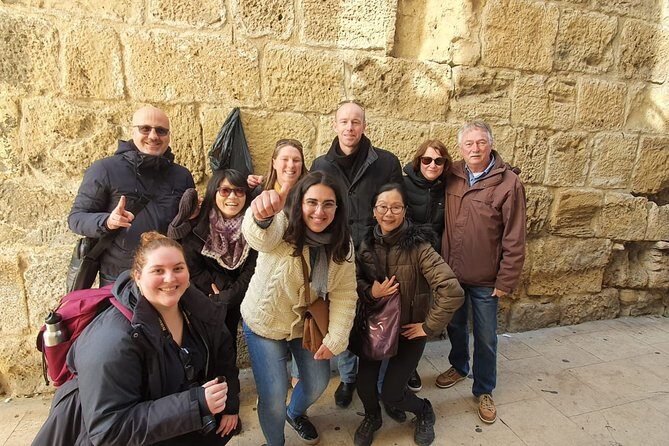
- Small group feel: max 15 people means less waiting and easier questions
- Photo stops with built-in time: each sight gets a short, focused window to look and shoot
- Ending near Jerónimos Monastery: a strong finale that ties the walk back to Lisbon’s most important landmark
Belém and the Discoveries Age: fast context for your whole Lisbon trip
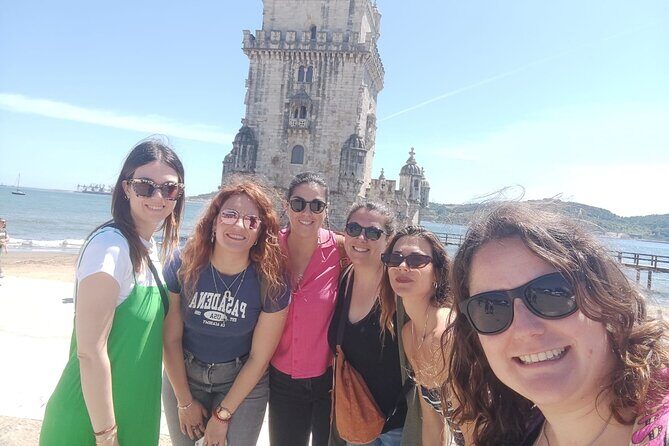
If Lisbon feels like a mix of hills, tiles, and viewpoints, Belém is where the story starts making sense. This walk is built to give you a guided spine for the Portuguese Discoveries era, one sight at a time.
What I like most is that it is not just “stand here, take a picture.” Each stop is paired with a specific idea. You learn why certain monuments exist, what the map-and-symbol elements are doing, and how the architecture around the river links back to a national project of exploration and empire.
You’ll also get an efficient rhythm: a series of short segments that keep your attention up. That matters in Belém, where some sights are spread out and it is easy to waste time wandering without a plan.
You can also read our reviews of more walking tours in Lisbon


Price and value: what a guided 2.5 hours really costs
The price listed is $3.60 per person, and that is the kind of figure that makes you double-check you read it right. Even if you treat it as a budget-friendly tour, the value comes from what you are paying for: a professional guide for about 2 hours 30 minutes.
At this price point, you are not paying for add-ons, you are paying for interpretation. You also get the tour in English, plus a mobile ticket. And because the planned stops are free to view in the itinerary, you are not likely to run into surprise ticket costs just to understand the area.
Is it a “do everything in Belém” ticket? No. It is an overview with guided stops, aimed at getting you oriented. For many first-timers, that is the best kind of deal: you leave with the map of your day in your head.
Where the tour starts and ends (and why that matters)
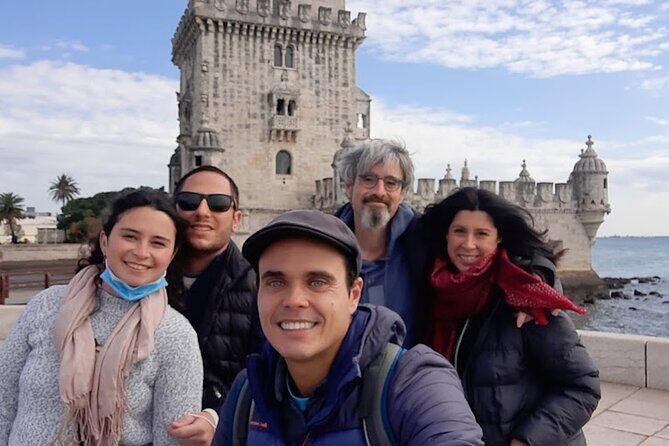
You meet at Praça Afonso de Albuquerque, at the Garden of Afonso de Albuquerque, starting at 11:00 am. The walking route is planned to end at Belém Tower, specifically in front of the tower area on Av. Brasília.
This matters because Belém Tower is a natural anchor for planning. If you want to continue on your own afterward, you are finishing right in the heart of the riverfront sight zone. It is also where the story you are learning peaks, since the Torre de Belém is one of Portugal’s most recognizable landmarks.
If you’re trying to build a Belém day, this tour gives you a strong “middle of the riverfront” starting point. You can slot other visits before or after without feeling like you’re crisscrossing the neighborhood.
Route snapshot: the riverfront walk that stays readable
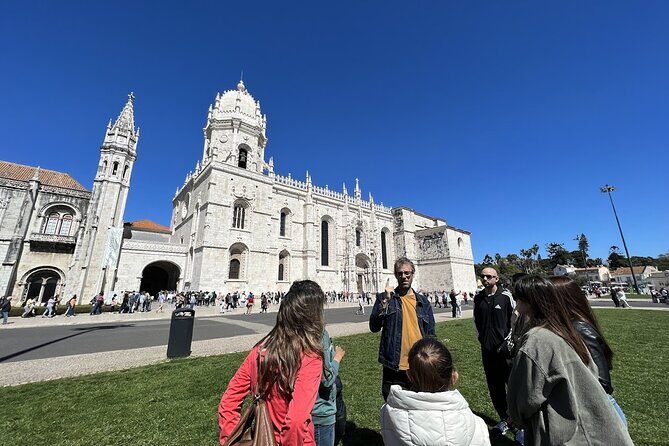
The tour follows a mostly straightforward walking line through Belém, designed for sightseeing rather than long-distance trekking. One practical plus is that the experience tends to be easier on your legs than many Lisbon city-walk routes. The goal is “look, learn, move on,” not “survive cobblestones uphill.”
The timing is also structured. You get frequent short stays—minutes rather than long blocks—so you can keep your energy up. That is helpful if your Lisbon trip is packed with other neighborhoods.
And since it is a small group with a maximum of 15 people, your guide can keep everyone together without slowdowns. It’s the difference between feeling like a commuter crowd and feeling like a guided stroll.
Praça Afonso de Albuquerque and the palace connection
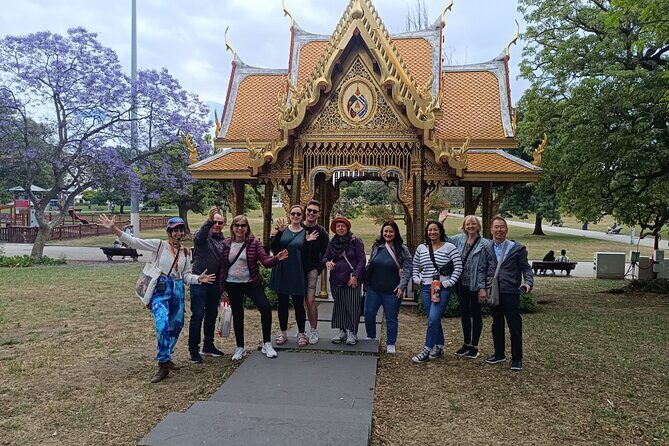
You begin at Praça Afonso de Albuquerque, a meeting point that immediately places you near the Belém riverfront atmosphere. From there, the early focus is on civic and symbolic power.
One of the first big landmarks on the route is the Palácio Nacional de Belém, where you’ll see the presidential palace. Even without going inside, the guide’s framing helps you understand why Belém is not only a tourist zone. It is tied to Portuguese identity and leadership in different eras.
This opening part is useful because it sets a tone. The tour does not treat Discoveries history like an isolated museum topic. It keeps reminding you that Portugal used architecture and public spaces to project meaning.




Belém Gardens and the Sala Thai Pagoda stop
Belém includes surprises, and this tour gives you a moment to notice one: the Sala Thai area and the Thai Pagoda in Belém.
The guide explains the origin of the pagoda, and that is a nice reset from purely Portuguese motifs. It also helps you understand Belém as a living district, not frozen in 1500s history. You get a cultural detour that still fits the walking-tour logic: short stop, good photos, clear explanation.
You’ll also pass the Belém Garden and get a quick look at the landscaped riverfront feel. These are the moments where you can breathe. Even if your day is tight, you’ll appreciate the breathing room before the more monumental stops start.
Pastéis de Belém: why the custard tart became a symbol
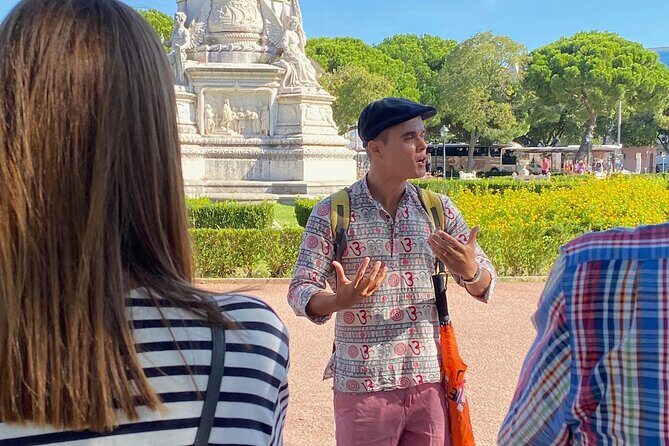
Then comes a stop that almost everyone can appreciate, even if you’re not a sweets person. You’ll be guided through Pastéis de Belém and learn why the pastries are so famous.
This is not only about food. It’s about identity. Portugal’s history shows up in objects you can taste: culinary traditions often carry stories of taste, craft, and local pride.
If you like a plan that includes a reward, this is the kind of stop you can build around. You’ll have time to absorb the story, and many people use the moment to grab a pastry for later. Either way, your takeaway is bigger than flavor—you’ll understand the “why” behind the fame.
Praça do Império: a square made for meaning
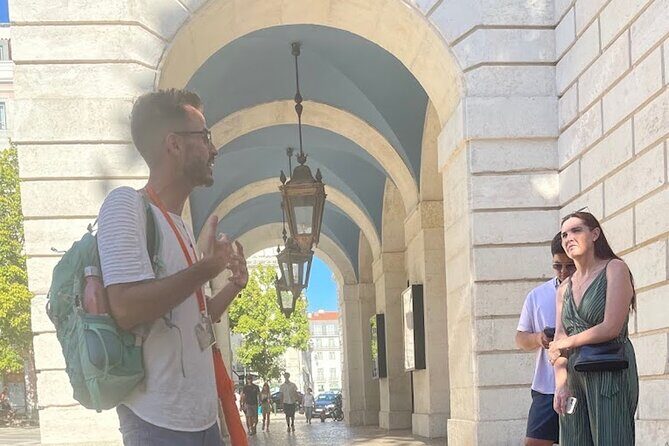
Next, you’ll see the Jardim da Praca do Imperio and the Praça do Império area. This part works because it’s transitional. The tour starts to shift from individual landmarks to the big-picture theme of empire and maritime ambition.
A square like this is not just for walking through. It is designed to frame monuments and create sightlines that make history feel grand. You get a guided sense of how these spaces connect the human scale of a neighborhood walk with the large-scale message of national exploration.
If you care about photo composition, this is a good zone for it. The architecture and open sightlines help your pictures look intentional, even if you’re taking them quickly.
Padrão dos Descobrimentos and Rosa dos Ventos: the empire explained visually
This is where the tour earns its title. You’ll stop at the Padrão dos Descobrimentos, a monument that helps you learn about Portuguese Discoveries and how Portugal forged its first global empire.
Then you move to Rosa dos Ventos, a striking map element that shows where Portuguese explorers went during the Discoveries Age. This kind of stop is worth your attention because it turns history into geography you can point to. It is one thing to hear that Portugal traveled. It is another to see the idea mapped as routes and reach.
For me, this is the best kind of guided stop: information that sticks because it is tied to a visible tool. If your brain needs visuals to remember, you’ll like this section a lot.
Ponte 25 de Abril and Cristo Rei: Lisbon’s links to global icons
Belém is the part of Lisbon that feels outward-looking. After the Discoveries monuments, the tour shifts to connections you can recognize.
You’ll learn why Ponte 25 de Abril looks so much like the Golden Gate Bridge. Even if you’ve seen Golden Gate in photos, the comparison gives you a new way to look at the bridge before you move on. It’s a quick stop, but it’s memorable.
Then you’ll head to the Santuario Nacional de Cristo Rei area. The guide explains the connection between the Christ figure in Lisbon and Rio de Janeiro. This is a fun contrast: you start with medieval exploration and end with a modern global cultural echo. It shows how Lisbon borrows and reinterprets famous symbols across time.
Torre de Belém: what to notice before you visit
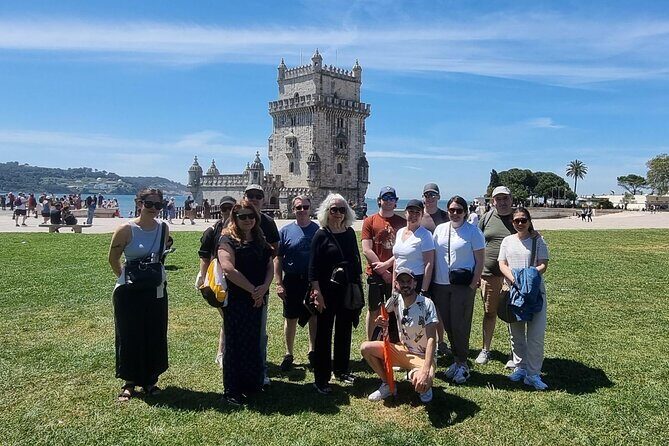
The Torre de Belém stop is a highlight for good reason. You’ll learn about the landmark and, importantly, about Manueline Style, the distinctive Portuguese architectural flavor associated with the era.
This is one of those moments where a guide can make your eyes sharper. Manueline details can be easy to miss if you do not know what to look for. With the explanation on the tour, you’re more likely to notice ornament patterns and design themes that tie the tower to national identity and the time period.
Even if you only see the tower area from outside, you will have context. And if you decide to go deeper on your own afterward, your visit will feel less like scrolling through facts and more like reading a story.
Centro Cultural de Belém and the Jerónimos ending
After the tower zone, you’ll visit the Centro Cultural de Belém (CCB), where the guide explains its origin. The tour keeps this part intentionally short, but it gives you a modern layer. Belém is not only monuments and postcards. Institutions like this keep the district active.
Then the walk ends at Jerónimos Monastery, described as the most emblematic and important building in Lisbon. You finish with a big finish, and that’s smart planning. Jerónimos is the kind of place where the details can overwhelm you if you arrive with no frame. By the time you reach it, you’ve already spent time thinking about Portugal’s maritime identity and architectural expression.
If you want to keep going afterward, this is where your curiosity usually kicks in. You have just learned how Portugal expressed power and meaning through the riverfront—and Jerónimos is one more piece of that same puzzle.
Pacing, group size, and the rain question
This tour caps at 15 people, and that size matters. Smaller groups move faster through questions, and your guide can adjust pacing without leaving people behind.
You also get clear timing per stop, which helps you manage expectations. You won’t feel dragged along for an hour in one place. Instead, you’ll build a guided “greatest hits” picture of Belém.
Weather is the one variable in a walking experience. The experience requires good weather, and if it is canceled due to poor conditions, you’ll be offered a different date or a full refund. I’d plan as if you might get some drizzle, not as if the forecast is perfect. Bring a light layer, and keep your day flexible.
Who should book this Belém walking tour
This is a great match if you:
- want a first-time Lisbon overview focused on Belém and the Discoveries Age
- like learning history in an outdoor, photo-friendly format
- have limited time and still want meaningful context for major landmarks
- prefer a smaller group walk rather than a big bus-style tour
It is also useful if you are the kind of traveler who usually “sort of” understands history but forgets it by the next day. The tour’s structure—monuments plus map ideas plus architecture cues—helps information stick.
If you’re in Belém for a long time already, you might treat this as a way to get oriented before deeper independent visits. It can prevent you from wandering without purpose.
Should you book this tour?
Yes, if you want a guided Belém overview that turns the riverfront into a coherent story. For the price, what you’re buying is interpretation: explanations that help you notice what matters at Torre de Belém and Jerónimos Monastery, plus Discoveries visuals that are hard to replicate on your own without a guide.
I’d book it if your schedule is tight or if you want to understand why Belém looks the way it does. I’d think twice only if you strongly prefer museum-style visits with long indoor times, because this is built as a walking tour with short, focused stops.
FAQ
What is the duration of the Lisbon Walking Tour – Discover Belém and the Discoveries Age?
It lasts about 2 hours 30 minutes.
How much does the tour cost?
The price is $3.60 per person.
What time does the tour start?
The start time is 11:00 am.
Where do I meet the guide?
You meet at Praça Afonso de Albuquerque, at the Garden of Afonso de Albuquerque.
Where does the tour end?
The tour ends in front of Belém Tower (Torre de Belém).
What language is the tour offered in?
The tour is offered in English.
Is admission included for the stops?
The itinerary lists admission for the sights as free.
How big is the group?
The maximum group size is 15 travelers.
What happens if weather is bad?
The experience requires good weather. If it’s canceled due to poor weather, you’ll be offered a different date or a full refund.
Is free cancellation available?
Yes. You can cancel for a full refund up to 24 hours in advance of the experience start time.