REVIEW · LISBON
Lisbon Private Tour – The best introduction to the city
Book on Viator →Operated by Hi Lisbon Walking Tours · Bookable on Viator
Lisbon makes more sense when you walk it. This private half-day tour is a smart way to get your bearings in two of the city’s most important neighborhoods, while you move between iconic squares and quieter side streets. You’ll see how Lisbon layers its stories over time, from Islamic-era traces to Catholic landmarks and the culture of fado.
I really like that the route hits major sights without feeling rushed. One highlight I love is the viewpoint run—Portas do Sol and Santa Luzia—because the scenes explain why people fall for Lisbon. Another win is how the walk connects places like Casa dos Bicos and the Lisbon Cathedral to names you’ll recognize, including Jose Saramago.
The one thing to consider: this is a walking tour with lots of short stops, so if you want a slower pace or a lot of indoor time, you might find it a touch too “on-the-go.” That said, guides such as Sara, Clayver, and Keiber are repeatedly praised for being flexible and keeping the experience engaging.
In This Review
- Key things to know before you go
- Lisbon’s Best First Impression: Alfama and Mouraria in One Shot
- From Praça do Comércio to Conceição Velha: Where Lisbon’s Past Clings
- Casa dos Bicos and Jose Saramago: Manueline Style Meets Modern Literature
- Lisbon Cathedral and the Mosque-to-Church Story
- Alfama Streets: Finding the Neighborhood’s Real Rhythm
- Portas do Sol and Santa Luzia: Viewpoints You’ll Want to Revisit
- Calçada da Amália: Portuguese Stonework as Cultural Memory
- Miradouro da Graça and Sophia de Mello: Art Names the City’s Edges
- Monumento Mouraria and Berço do Fado: The Fado Story in Street Form
- Why the Private Format Feels Worth It
- Timing, Comfort, and How to Get the Best Photos Without Stress
- Should You Book This Lisbon Private Tour?
- FAQ
- How long is the Lisbon private tour?
- How much does it cost?
- Is this tour private?
- Where does the tour start and end?
- What language is the tour offered in?
- What’s included in the price?
- Are food and drinks included?
- Can I cancel and get a full refund?
- Is there a mobile ticket?
Key things to know before you go
- A tight 3-hour route that still covers Alfama and Mouraria’s big highlights
- Top viewpoints in a short span, especially Portas do Sol and Santa Luzia
- Layered Lisbon stories, from old synagogue sites to mosque-to-cathedral history
- Fado culture in Mouraria, including the Berço do Fado monument area
- Small-group privacy (up to 6) with a professional guide leading the pacing
- Guides praised for flexibility, with named examples including Sara, Clayver, and Keiber
Lisbon’s Best First Impression: Alfama and Mouraria in One Shot
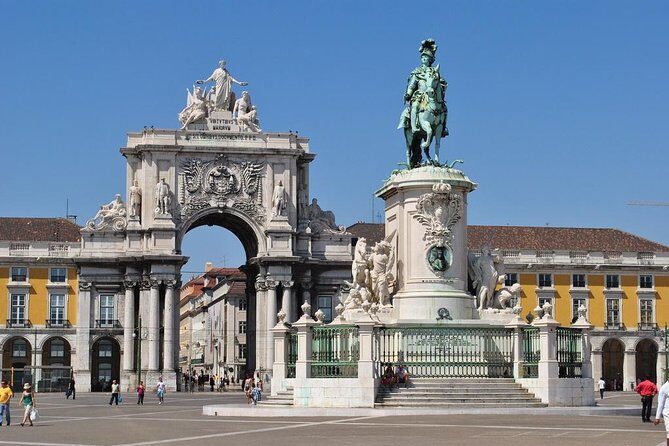
If you’re short on time, this is the kind of tour that makes your next days easier. You start in the historic center, then work your way toward Alfama, Lisbon’s oldest neighborhood, and Mouraria, tied to fado culture. Instead of just taking photos, you’ll get context that helps you recognize what you’re seeing when you wander on your own later.
I also like the way the tour balances “big-known” stops with smaller, streetside moments. The route is built around moving landmarks—churches, viewpoints, and old-stone streets—so you learn Lisbon as a place, not just a list.
And because it’s private for your group, you’re not squeezed into a mass schedule. It’s a format that tends to work well for couples, solo travelers who want personal attention, and families with older kids who can handle a few hours on foot.
You can also read our reviews of more city tours in Lisbon


From Praça do Comércio to Conceição Velha: Where Lisbon’s Past Clings

You begin at Praça do Comércio, the large, famous square that anchors the historic center. It’s a good starting point because it sets a baseline for scale and layout—Lisbon feels different once you stand in that open public space and then start walking into the tight streets.
From there, the tour points you to Igreja de Nossa Senhora da Conceição Velha, a church built on the site of an old synagogue in the 16th century. This isn’t just a quick photo stop. It’s a reminder that Lisbon’s religious and cultural layers overlap in the same small geographic spots.
You’ll also pass through places tied to grand architectural style and modern cultural memory. That matters because Lisbon isn’t only “ancient ruins.” It’s living culture that still points back to older eras, and the guide’s explanations help connect the dots.
Casa dos Bicos and Jose Saramago: Manueline Style Meets Modern Literature
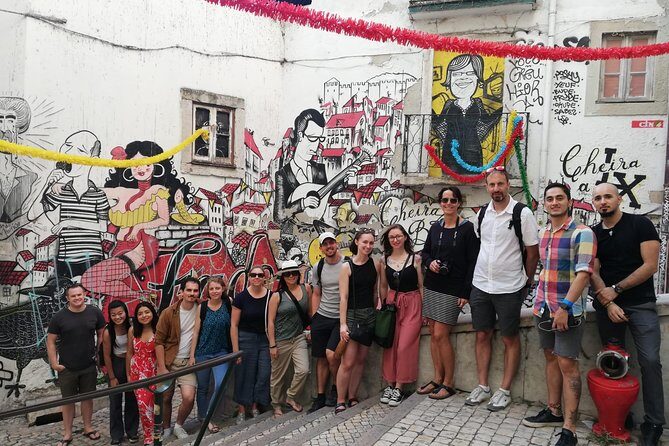
Next up is Casa dos Bicos, an older palace known for its Manueline style—Lisbon’s distinctive late-medieval/early-Renaissance look. The palace was built by a former mayor of Lisbon, and today it connects the past to a very specific cultural figure: Jose Saramago’s Foundation.
What I like about this stop is the mental reset it gives you. After religious and historic sites, you get a different angle on Lisbon: the city as a place that produces major voices and keeps them visible. Even if you’re not a hardcore Saramago fan, the connection helps you see how Lisbon values ideas and storytelling.
This stop is relatively brief, so if you want a long museum-style visit, plan that on a separate day. Here, the goal is orientation and understanding, not a full deep dive into the building.
Lisbon Cathedral and the Mosque-to-Church Story
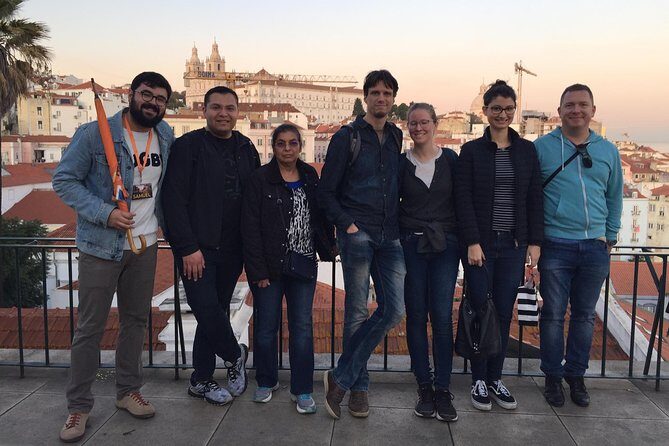
Then you shift to Lisbon Cathedral, described as the oldest church in Lisbon, built on the place of an old mosque. The idea is simple but powerful: the same ground carries different faiths and different eras. You’re not just looking at architecture—you’re watching history overlap.
Before that cathedral moment, you’ll also come across an old fountain dating to the 14th century. Small stops like that help break the tour into “breathing zones.” They also give you textures you’ll notice later when you walk around independently—different stonework, different public water history, and different street-level details.
Drawback to keep in mind: many of these stops are short. If you like to linger inside churches or spend a long time studying façades, you may want to add extra time on your own after the tour. The upside is that you’ll cover more ground and get a clearer mental map of where to return.
Alfama Streets: Finding the Neighborhood’s Real Rhythm
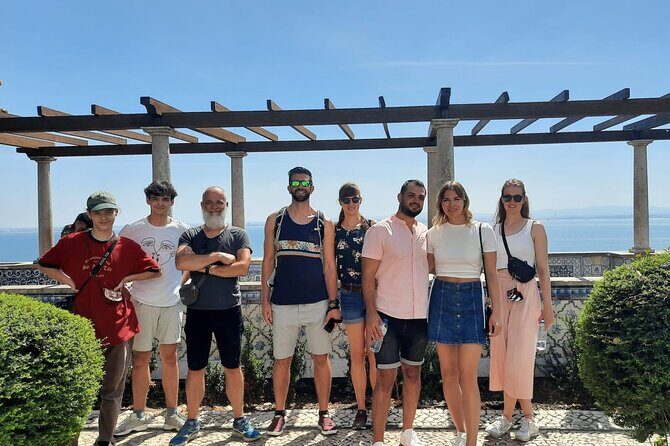
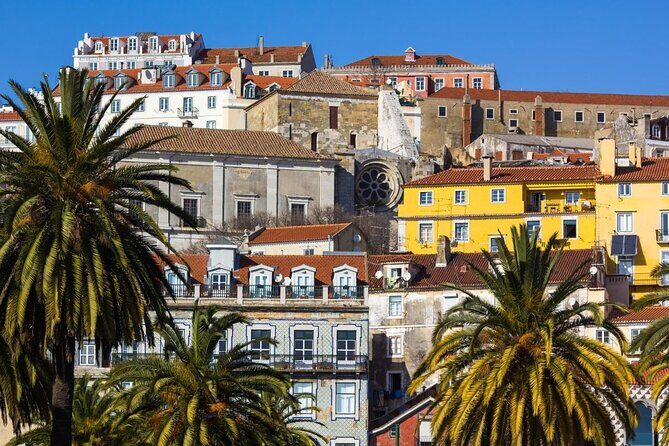
Now you enter Alfama, and the pace changes from landmark-hopping to street-walking. You’ll explore the old lanes of the neighborhood often described as Lisbon’s oldest. This is where you start to see why Alfama is famous: the streets feel different from the grander center, and the city starts to feel more intimate.
This section is designed for “getting it.” Even without museum doors, the guide can point out patterns—street layout, the way viewpoints connect to daily life, and why certain corners feel like natural stages for Lisbon’s culture.
If you’re relying on this tour to orient you, Alfama is the key. Once you know its general shape, it becomes much easier to return later without feeling lost in a maze of narrow roads.
You can also read our reviews of more private tours in Lisbon






Portas do Sol and Santa Luzia: Viewpoints You’ll Want to Revisit
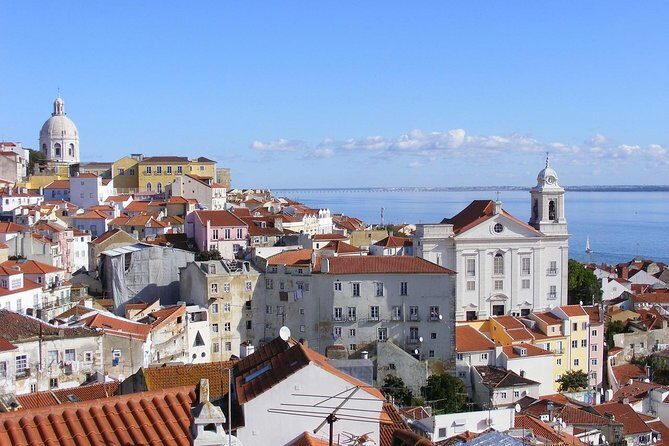
The tour includes two of Lisbon’s most memorable viewpoint moments: Miradouro das Portas do Sol and Miradouro de Santa Luzia. These are the kinds of places where you instantly understand why postcards look the way they do—because you can see the city’s structure and its hills at once.
Portas do Sol is quick, but the timing works. You’re not left standing there alone trying to interpret the scene. The guide helps you look in the right direction so you’re not just staring over railings. Then Santa Luzia gives you another angle, with a square setup that feels communal and easy to linger for a few photos.
Practical note: viewpoints mean standing and looking, and Lisbon means walking between them. Plan for a little movement with your camera, water, and comfortable footwear.
Calçada da Amália: Portuguese Stonework as Cultural Memory

Next comes Calcada da Amalia, tied to Portuguese fado through the image of Amália Rodrigues. This isn’t only a famous spot—it’s an example of how Lisbon turns art into street-level memory. The stone artwork functions like a public signature, linking a person, a music tradition, and the neighborhood’s identity.
A short stop here works well because it fits the tour’s flow: you’ve had big views, and now you shift to something tactile and local. When you see it on the ground, it sticks in your mind more than a plaque ever would.
If you love fado, this is also your bridge between “the sound” and “the place.” Mouraria will deliver more of that theme soon—but you’ll feel the connection building already.
Miradouro da Graça and Sophia de Mello: Art Names the City’s Edges
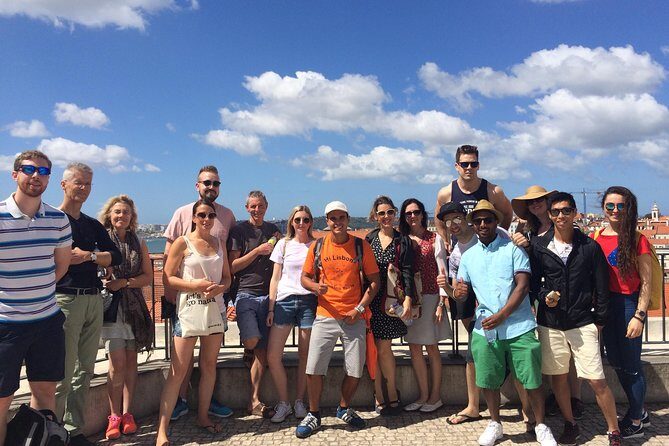
After Calçada da Amália, you reach Miradouro da Graca, also associated with Sophia de Mello Breyner Andresen. Another viewpoint, another chance to train your eyes to Lisbon’s shape. This one is great for catching the city from a different direction, so you’re building a mental 3D map as you go.
The tour also points you toward an additional landmark tied to the Moorish period. That kind of stop is valuable because it explains Lisbon’s layers without requiring you to be an expert. You learn how different periods left marks on the streets, even when buildings themselves have changed.
From here, you transition into Mouraria, where you start to feel the neighborhood identity turn from scenery into culture.
Monumento Mouraria and Berço do Fado: The Fado Story in Street Form
In Mouraria, you’ll walk around the streets shaped by the area’s long past. The tour describes Mouraria as being built by the Moors after the conquest of the city by the Christians—whether you’re already familiar with that timeline or not, the point is that the neighborhood’s identity comes from many eras, not one.
You’ll also reach Monumento Mouraria Berço do Fado. This is a strong “theme stop,” the moment where fado stops being a word you’ve heard and becomes a place you can picture. Even if you don’t attend a fado show during your trip, this gives you context so a show later feels more grounded.
There’s also a stop that points out a famous square built on the place of the biggest hospital in Lisbon. That kind of detail adds weight to a simple public space—suddenly you understand that even the city’s most everyday squares carry stories.
As the walk closes, you end at Praça da Figueira, another central landmark you can use as a launchpad for dinner, tram rides, or a relaxed stroll back toward other neighborhoods.
Why the Private Format Feels Worth It
At $181.48 per group (up to 6) for about 3 hours, you’re not paying for “more sightseeing.” You’re paying for control and interpretation.
Here’s the practical value math: if you have a full group of 6, that’s roughly $30 per person for a guided half-day in two historic neighborhoods. Even with fewer people, it can still be good value compared to booking multiple separate activities—or compared to doing it on your own with just a map and a prayer.
The biggest reason the tour earns near-universal praise is the guide quality. Reviews highlight Sara for being engaging and insightful, Clayver for knowledgeable and flexible pacing to meet needs, and Keiber for educational walking plus detours to avoid the worst crowding. In plain terms: you get someone who can adjust the experience so it fits how your group walks and what you care about.
Because it’s private, questions don’t feel awkward. You can ask why a street looks the way it does, why a viewpoint matters, or what a landmark’s name is really pointing to.
Timing, Comfort, and How to Get the Best Photos Without Stress
This is a short tour with lots of quick transitions. Many stops are scheduled for just minutes, so the goal is not lingering at each place—it’s collecting impressions in an efficient way. That’s why a guide’s pacing matters: they help you decide what’s worth a longer look and what’s best as a quick “got it” moment.
Bring or expect:
- comfortable walking shoes for street-level walking between viewpoints
- a camera or phone with enough storage for frequent view breaks
- a little patience for standing still at viewpoints (the best ones need time)
If you like photography, you’ll do well here because the itinerary builds natural photo moments. Start photos early, then use the guide’s direction to avoid wasting time aiming at the wrong part of the view.
If you prefer long indoor visits, treat this as your orientation tour. Then pick one or two places from your favorites to revisit later with more time.
Should You Book This Lisbon Private Tour?
If you want the fastest route to understanding Lisbon—especially the why behind Alfama and Mouraria—this is a strong pick. The tour format is built for orientation: you get historic anchors, viewpoint sweeps, and fado-connected stops in a manageable 3-hour window.
I’d say book it if:
- you’re in Lisbon for a short stay and want to maximize your first impressions
- you like walking tours where the guide explains what you’re seeing
- you want a private experience that avoids the feeling of being rushed by a big crowd
Skip it or add your own time if:
- you want lots of long museum-style interior time
- you struggle with street walking and short hop-to-hop pacing
With the guide attention people praise so strongly—whether it’s Sara, Clayver, or Keiber—this tour is one of the easiest ways to start your Lisbon trip with confidence. You finish with a clearer sense of where to go next.
FAQ
How long is the Lisbon private tour?
It runs about 3 hours.
How much does it cost?
It’s priced at $181.48 per group for up to 6 people.
Is this tour private?
Yes. Only your group participates.
Where does the tour start and end?
It starts at Praça do Comércio (1100-148) and ends at Praça da Figueira (1100-241), Lisbon.
What language is the tour offered in?
It’s offered in English.
What’s included in the price?
A professional guide is included.
Are food and drinks included?
No. Food and drinks are not included.
Can I cancel and get a full refund?
Yes, you can cancel for a full refund up to 24 hours in advance of the experience’s start time. If you cancel less than 24 hours before, you won’t get a refund.
Is there a mobile ticket?
Yes, it includes a mobile ticket. Confirmation is received at the time of booking.