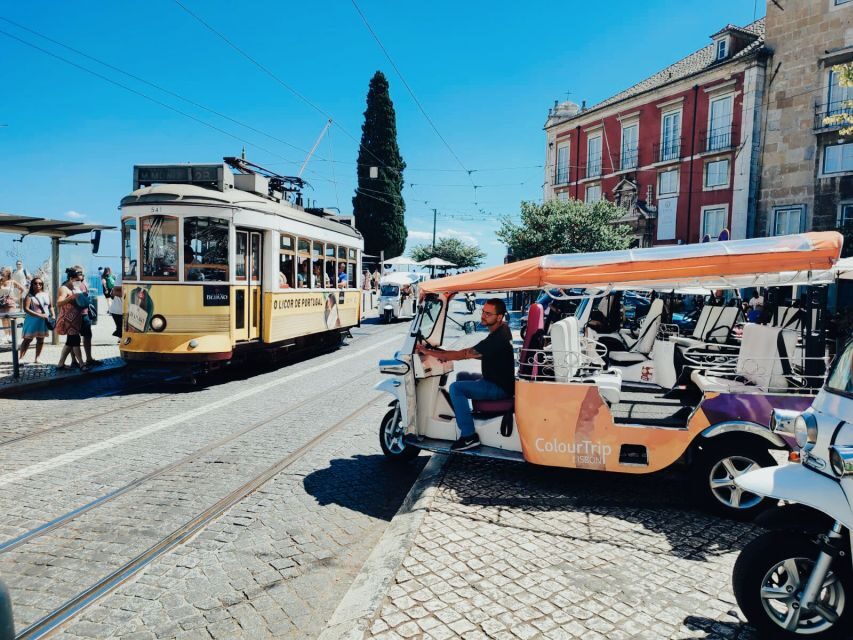
Lisbon, but at human speed. This private tour gives you a smart introduction to the city’s main neighborhoods and outlook points, with a guide who tailors the pace and then leaves you with practical ideas for the rest of your trip. You’ll hit classic places like Praca do Comercio, then slide into older districts such as Bairro Alto and Alfama, with big panoramic views from Miradouro de Sao Pedro de Alcantara built in.
I love two things most: first, it’s genuinely private (just you and your guide), so you can stop for photos, ask questions, or move slower without herding. Second, you get that “local start” feel right away, including a local drink or snack as part of the experience.
One thing to consider: this is mainly an outside-looking-in tour. You’ll see major sights from the street rather than going inside, and the total time is about 1 to 3 hours, so it’s best for orientation and momentum, not for deep ticketed visits.
In This Review
- Key moments and why they matter
- What you’re really buying with this private Lisbon intro
- Start at Praca do Comercio and the 1755 earthquake story
- Bairro Alto’s old streets and the bohemian side
- Alfama’s viewpoints, crafts, cafes, and the calm-in-the-chaos feeling
- Churches and historic monuments you see from the street
- St. Sebastian shrine roots and the São Roque connection
- Church of St. Dominic and its 1241 dedication
- Lisbon Cathedral (Sé) at the oldest-church anchor
- Convent of Our Lady of Mount Carmel
- Santa Justa Lift and the busy streets between neighborhoods
- Santa Justa Lift (also called Carmo Lift)
- Passing through one of Lisbon’s busiest streets
- The “wow” payoff: viewpoints from São Pedro de Alcantara and Alfama high points
- Your local drink or snack: ginjinha time
- How the guide makes it feel custom (and why that matters)
- Small cautions so you don’t get surprised
- Vespa vs foot option
- Short and outside-focused
- Meeting-point attention
- Who this tour fits best
- Should you book? My take
- FAQ
- How long is the private Lisbon tour?
- What does the tour cost per person?
- Is this tour private?
- Are attraction tickets included?
- Will I get a drink or snack?
- What neighborhoods and areas will we see?
- Do we go by Vespa or on foot?
- Where does the tour start and end?
- Is the tour only in English?
- Is it a crowd-free option?
Key moments and why they matter
- A private, custom pace that helps you cover Lisbon without the stop-start crowd rhythm
- Miradouros with real city-scale views so you instantly understand the hills and viewpoints
- Three old neighborhoods in one run: downtown square, Bairro Alto streets, then Alfama’s maze of lookouts
- From-the-outside sightseeing that keeps time efficient and usually lowers extra costs
- A local drink moment (often ginjinha) that feels like a Lisbon tradition, not a tourist checkbox
What you’re really buying with this private Lisbon intro

At about $106.42 per person for a 1 to 3 hour experience, the value here isn’t just “see Lisbon.” It’s learn Lisbon fast—how to read the city so the rest of your days feel easier.
In plain terms: Lisbon is hilly, old, and full of stairways and surprises. A private guide helps you make sense of the geography from street level. You’ll walk (or go by Vespa, depending on the option you book) through the center and the older quarters, so you get context for what you’ll later explore on your own.
And because it’s private, the guide can steer the route to your interests. You’ll also leave with tailored recommendations—useful when you have limited time and want to spend it on the right neighborhoods, not just whatever is easiest to reach from a map.
You can also read our reviews of more private tours in Lisbon



Start at Praca do Comercio and the 1755 earthquake story
The tour begins at Rua de Sao Pedro de Alcantara, then you work toward Lisbon’s big downtown square: Praca do Comercio, also known as Terreiro do Paco.
This is where you get the “before and after” understanding of Lisbon. The square sits on the older royal palace site that existed before the 1755 earthquake destroyed much of the area. Even if you don’t go inside any museum, the square anchors the story. You’ll quickly grasp why Lisbon’s center feels both grand and rebuilt.
What I like about this first stop is how it sets your expectations. Lisbon isn’t one uniform style—it’s layers. Starting here gives you a reference point before you go wandering into neighborhoods that feel much older.
Practical note: Praca do Comercio is open and wide, so it’s a good place to reset your bearings, pick up the route logic, and take early photos.
Bairro Alto’s old streets and the bohemian side
Next comes Bairro Alto, a district dating back to the 1500s. This is one of the places where Lisbon feels creative and lived-in, with a long reputation as a bohemian haunt of artists and writers.
In a tour like this, Bairro Alto matters because it’s a shift in tone. You go from a dramatic downtown setting into streets that feel tighter and more intimate. The guide’s job is to connect the vibe to the history—why these streets developed the way they did, and how the neighborhood’s identity shows up in daily life.
Also, Bairro Alto is a strong “learn the layout” moment. Lisbon’s streets can look similar until you know which direction the hills pull you. A private walk helps you build that mental map without wasting your first day zigzagging randomly.
Alfama’s viewpoints, crafts, cafes, and the calm-in-the-chaos feeling
Then you move into Alfama, one of Lisbon’s oldest areas. Alfama is the kind of neighborhood where the streets themselves feel like a timeline: narrow lanes, viewpoints popping up between buildings, and corners that reward slow attention.
The tour approach here is practical. You’re not just passing by. You’re learning where the best views live and how the neighborhood’s layout works. Alfama’s viewpoint culture is a big part of Lisbon’s identity, so it’s worth getting your first perspective early.
Expect to notice:
- small shops selling traditional crafts
- local cafes you wouldn’t necessarily find without someone pointing you toward them
- repeated sightlines over the city, because Alfama is built for looking out
And yes, Alfama includes plenty of stairs and slants. A private guide can pace it to you. If you’d rather keep a steady walk than stop every ten steps, you can do that too.
Churches and historic monuments you see from the street
A good thing about this tour is that it’s designed to keep time moving. The sights are largely exterior views, so you spend less time stuck at ticket lines and more time walking with context.
Here are some of the historic stops you may encounter depending on the exact route:




St. Sebastian shrine roots and the São Roque connection
One stop involves a church space that originally began as a shrine dedicated to St. Sebastian. Later, it housed artifacts tied to São Roque. São Roque became a saint through his healing work connected to plague victims during outbreaks that spread across Europe.
This is one of those moments where Lisbon’s religious history helps explain the city’s worldview. You’ll hear the story and then look at the church structure like it’s part of the city’s memory, not just a building.
Church of St. Dominic and its 1241 dedication
You’ll also pass by the Church of St. Dominic, classified as a National Monument. It was dedicated in 1241 and at one time was the largest church in Lisbon.
Even from outside, that scale has meaning. Your guide can point out details you might miss if you were just walking past.
Lisbon Cathedral (Sé) at the oldest-church anchor
Another major landmark is the Cathedral of Saint Mary Major, commonly called Lisbon Cathedral or simply the Sé. It’s often described as the oldest church in the city and the seat of the Patriarchate of Lisbon.
From street level, it’s a strong anchor after wandering through older quarters. It gives you a “center of gravity” for the area’s spiritual and historical importance.
Convent of Our Lady of Mount Carmel
In Santa Maria Maior, you may also see the Convent of Our Lady of Mount Carmel. It’s described as a former convent, and its location helps tie together the idea that Lisbon’s old neighborhoods were also shaped by religious institutions.
Santa Justa Lift and the busy streets between neighborhoods
Lisbon has a talent for connecting tiny alleys to big landmarks. Two moments capture that feeling well here:
Santa Justa Lift (also called Carmo Lift)
The Santa Justa Lift, also known as Carmo Lift, is an elevator (or lift) in the historic center of Lisbon.
Even without going inside, the lift is visually unmistakable. It also helps you understand Lisbon’s vertical life—how neighborhoods connect up and down, and why so many routes feel like a game of elevation.
Passing through one of Lisbon’s busiest streets
The route also includes time where you pass by one of the crowded, busy streets of Lisbon. The tour keeps it moving rather than turning it into a long pause. That’s actually useful. You’ll see the intensity of the center, then retreat back into calmer streets in the next neighborhood shift.
The “wow” payoff: viewpoints from São Pedro de Alcantara and Alfama high points
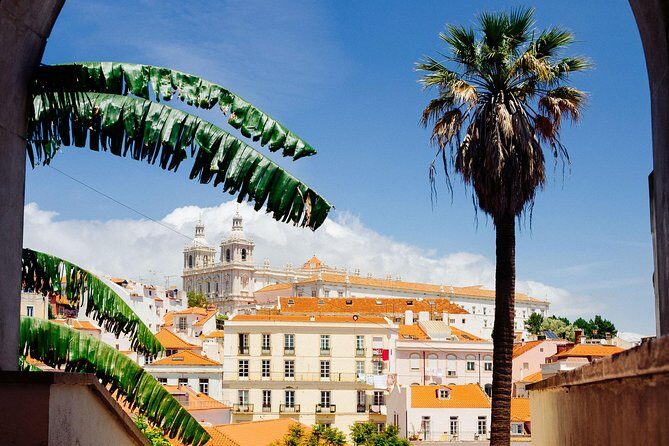
A highlight here is panoramic city viewing from Miradouro de Sao Pedro de Alcantara. If you’re trying to understand why Lisbon feels like it has countless lookouts, this viewpoint does the job fast.
What you gain at a miradouro like this isn’t just a photo. It’s spatial knowledge:
- how Alfama sits in relation to the center
- where the major downtown area fits into the view
- which directions you’ll likely want to revisit later
There’s also mention of another viewpoint located in a churchyard at one of the highest points in the neighborhood. Expect to look out over traditional Alfama houses with red roofs and churches—exactly the kind of view that makes you understand Lisbon’s texture.
Your local drink or snack: ginjinha time
This tour includes one local drink or snack, depending on the option you choose. One stop described in the experience is an open-fronted bar serving ginjinha, a cherry-like liqueur.
This is one of those “small but memorable” moments that works well early in your trip. You get a taste of what locals sip, and it gives your guide an easy, natural time to ask questions—where to go next, what to skip, and which neighborhoods feel right for your interests.
If you’re not into liqueur, you can still use the moment to understand local coffee and snack habits. The key is that the tour builds an early connection to the everyday Lisbon experience.
How the guide makes it feel custom (and why that matters)
One big reason this tour gets strong marks is the guides themselves—people are often impressed by how quickly they can steer the conversation toward what you care about.
You might be with guides such as Antonio, Joao Bento, Marisa, Chico, Igor, Ricardo, Sonia, Lucia, Angelo, David, Arthur, or Pedro. The pattern across names is consistent: guides spend time explaining Lisbon’s history and culture in a way you can use right away, not just facts for their own sake.
Practical ways this shows up for you:
- You’ll get advice on how to get around without constantly fighting Lisbon’s steep hills
- Your route can adjust to your pace and what you want to focus on
- You’ll leave with a tailored list of recommendations so your next days feel planned, not random
This is especially valuable if it’s your first day. Even if you come for the landmarks, you’ll quickly see that the guide’s job is to help you travel better, not just watch buildings go by.
Small cautions so you don’t get surprised
This experience is well-reviewed overall, but there are a couple of real-world considerations worth knowing.
Vespa vs foot option
The description says you’ll go by Vespa or foot depending on the tour you book. A mismatch can ruin the vibe if you were expecting one thing and got the other. Before you go, double-check which option you selected and what you should expect.
Short and outside-focused
You’re not getting entry tickets to attractions here, and many stops are from the outside. If you want to go deep into interiors, plan those separately. Think of this tour as the orientation layer.
Meeting-point attention
The meeting point is at Rua de Sao Pedro de Alcântara (near the viewpoint area), and the tour finishes in the city center. For a smooth start, show up a little early and use the exact Google Maps pin so you don’t waste time searching in a hilly area.
Who this tour fits best
This private tour is a strong match if:
- it’s your first visit and you want an efficient start
- you prefer walking with context rather than loud group tours
- you want viewpoints and historic neighborhoods, but not a full-day ticket marathon
- you like ending with clear next-step suggestions
It may be less ideal if you want long museum time, major church interiors, or a very slow paced wandering day with lots of stops that last.
Should you book? My take
If you’re weighing this against a standard group bus or a self-guided stroll, I’d lean toward booking it—especially early in your trip. You’ll get a clear mental map of Lisbon’s center, plus viewpoint payoffs from Miradouro de Sao Pedro de Alcantara, without wasting your energy on guesswork.
Book it if you want a private, structured start with a local drink and real neighborhood context. Skip it if you’re hoping for interior tickets or a longer, sit-down sightseeing day. And if you chose the Vespa option, verify that choice before you show up so your expectations match the plan.
In Lisbon, where hills and streets can make even a great day feel chaotic, this is the kind of tour that helps you enjoy the chaos instead of managing it.
FAQ
How long is the private Lisbon tour?
The duration is about 1 to 3 hours, depending on the option and pacing.
What does the tour cost per person?
The price is listed as $106.42 per person.
Is this tour private?
Yes. It’s a private tour, meaning only you and your local guide participate.
Are attraction tickets included?
No. Entrance to attractions is not included, and the tour focuses on visiting sights from the outside.
Will I get a drink or snack?
Yes. The tour includes 1 local drink or snack, depending on the option you book.
What neighborhoods and areas will we see?
You’ll cover Lisbon’s main square area (Praca do Comercio), then Bairro Alto, Alfama, and additional central sights depending on the route.
Do we go by Vespa or on foot?
It depends on the tour option you book. The experience may be by Vespa or foot.
Where does the tour start and end?
It starts at Rua de Sao Pedro de Alcântara and finishes in the city center of Lisbon.
Is the tour only in English?
It’s offered in English (and described as a private multilingual local guide).
Is it a crowd-free option?
Yes. Since it’s private, it skips group-tour crowds and lets you explore at your own pace.