REVIEW · LISBON
Lisbon: Jewish Quarter Guided Walking Tour
Book on GetYourGuide →Operated by CLOTHO · Bookable on GetYourGuide
Lisbon turns Jewish history into street walks. This 2-hour guided route weaves medieval and modern stories through places like Praça do Comércio and Alfama, where the streets do the talking. You’re not just looking around. You’re learning how the same city kept changing, and how Jewish life fit into those shifts.
I especially love the storytelling from the guide, often highlighted as Amber, and how she connects big historical moments to specific corners you can actually stand on. I also like the small-group setup, limited to 10 people, which keeps the pace human and the questions welcome.
One drawback to plan for: many parts of Lisbon’s Jewish past are remembered through explanation more than surviving buildings, so you’ll want curiosity and good shoes for Lisbon’s slopes.
In This Review
- Key highlights that make this walk worth your time
- Start at Praça do Comércio: where the Exodus story meets city power
- Baixa District and forced conversions: reading pressure in ordinary streets
- Alfama and the medieval Jewish quarter: segregation explained on foot
- Rossio and the 1506 Pessah massacre: a turning point you can feel
- Castle Hill vibes and the wider Lisbon story: Jewish life across neighborhoods
- WWII-era refugees and the 1940s passage: the story doesn’t end in the Middle Ages
- Amber’s guide style: clear explanations, strong pacing, real Q&A
- What the $57 price buys: value in guided context, not sites on a map
- Logistics that matter: timing, meeting point, and the dark red umbrella
- Who should book this tour, and who might feel it’s not for you
- Should you book the Lisbon Jewish Quarter guided walking tour?
- FAQ
- How long is the Lisbon Jewish Quarter guided walking tour?
- Where does the tour start, and how will I recognize the guide?
- Is the tour in English, and what is the group size?
- Does the tour include food and drinks?
- Can I cancel for a full refund?
- Can the tour be adjusted for different time frames or starting points?
Key highlights that make this walk worth your time
- Praça do Comércio as a doorway into the Exodus story, with context that reframes what you’re seeing
- Baixa District and forced conversions, tying neighborhood life to major religious and political pressure
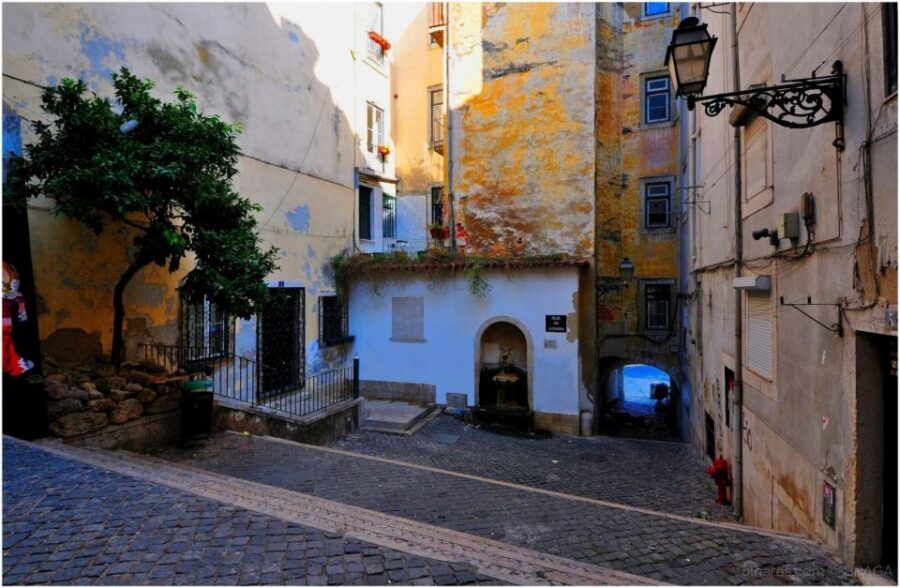
- Alfama’s medieval segregation, explained in a way that makes the streets feel like they have memory
- Rossio and the 1506 Pessah massacre, where the calendar and the city’s history collide
- WWII-era refugee passage in the 1940s, bringing Lisbon’s later role into the same narrative
- A small group capped at 10, so you don’t get lost in the back row
Start at Praça do Comércio: where the Exodus story meets city power
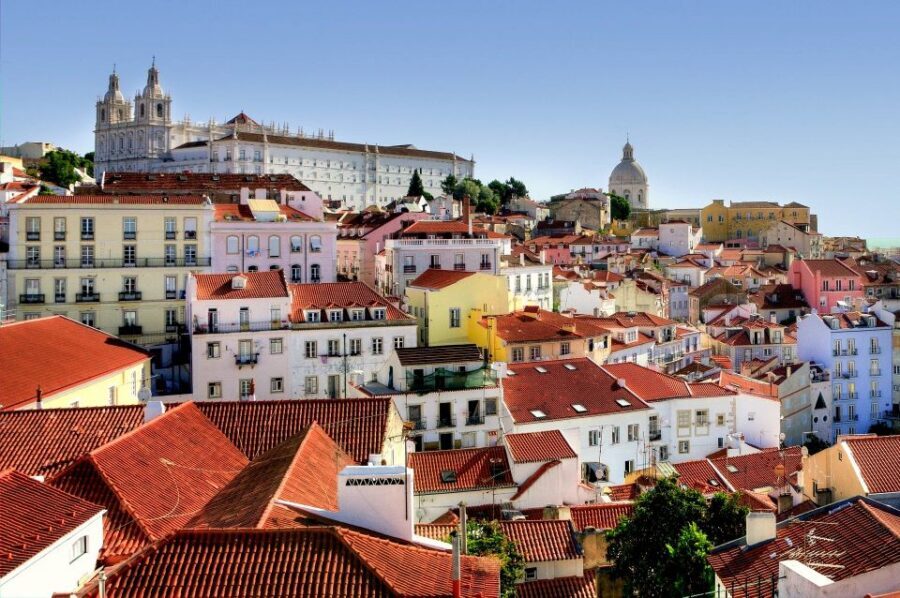
Your tour kicks off at Praça do Comércio, the classic riverfront square that feels built for grand arrivals. The guide starts by anchoring the conversation to the Exodus origin connection, then draws a line from this emblematic Lisbon space to the Jewish story you’ll be tracking through multiple districts.
From here, you’ll move through the central city—think Praça do Município and Rua do Comércio—where Lisbon’s layers overlap. These stops aren’t filler. They set up the bigger idea that Jewish presence in Lisbon wasn’t isolated to one neighborhood. It intersected trade, official power, and public life.
You’ll also pass Casa dos Bicos and Ribeira along the route. Even if you’ve seen these names before, the guide’s job is to make you read them differently: not as pretty waypoints, but as part of how people traveled, worked, and survived across centuries.
You can also read our reviews of more walking tours in Lisbon


Baixa District and forced conversions: reading pressure in ordinary streets
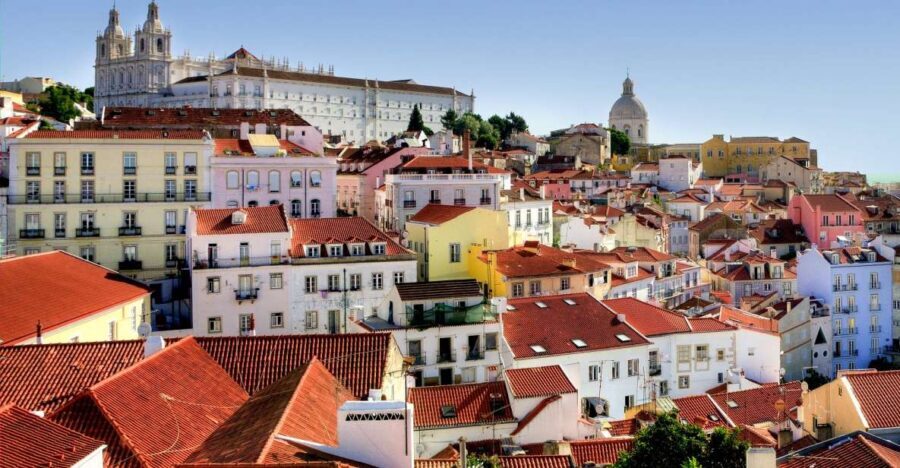
As the walk heads into Baixa territory, the tone becomes more serious. This is where you’ll hear about forced conversions tied to the wider Iberian reality, and how that pressure reshaped identity over time.
The value here is not just memorizing terms. It’s learning how religious and political decisions changed daily routines. In Lisbon, that often means interpreting how neighborhoods and institutions functioned—who had access, what risks people faced, and why secrecy could become part of life.
One practical note: Baixa streets are not the place to rush. If you let the guide slow you down and point things out, you’ll understand why the story is connected to this particular part of town. If you just walk fast to the next stop, you’ll miss the links.
Alfama and the medieval Jewish quarter: segregation explained on foot
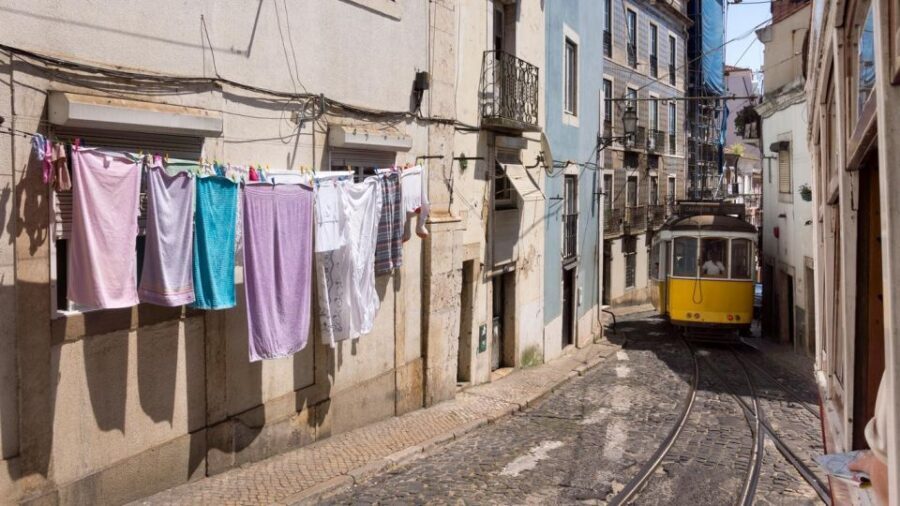
Then comes Alfama, and the walk turns steep and atmospheric. Alfama is where you’ll focus on the medieval Jewish quarter and the reality of segregation—explained as a system, not just an accident of history.
The guide helps you connect what segregation meant on the ground: where people could move, what social boundaries looked like, and how life under restriction shaped community behavior. You’ll learn that segregation wasn’t only about geography. It affected rhythms, relationships, and how communities planned for the future.
And yes, Lisbon’s hills make this part physical. Bring shoes you trust. The payoff is that when you’re climbing, the conversation about constrained life doesn’t feel abstract. You’re literally working uphill through the same kinds of routes people navigated long ago.
Rossio and the 1506 Pessah massacre: a turning point you can feel
Rossio is the stop that carries real weight. Here, the tour focuses on the 1506 Pessah massacre and what it meant for the Jewish community in Lisbon.
This isn’t a vague lesson about persecution. The guide frames the story in the context of the calendar moment—Passover—and how violence can erupt when tension is already baked into a society. You’ll understand why this event matters historically, and why it’s still a reference point when discussing Lisbon’s Jewish past.
If you’re visiting around Passover season, the significance tends to land even harder, since the story is tied to that time of year rather than sitting in a distant timeline. Even if you aren’t, you’ll still leave with a clearer sense of how quickly safety could vanish.
Castle Hill vibes and the wider Lisbon story: Jewish life across neighborhoods
Even when the tour keeps you moving through Alfama and Baixa, it keeps returning to one theme: Lisbon wasn’t one single Jewish quarter with a neat boundary. The tour covers the main sites of Jewish presence across medieval and later Lisbon, including areas near castle hill as part of the historical routing.
That matters because it fights the common mistake of thinking history is tidy. In real places, communities shift, policies change, and neighborhoods become different over time. A good guided walk makes those shifts visible, stop by stop.
This tour also links Jewish presence in Lisbon to broader Portuguese culture, including references to Jewish community legacy in science and even gastronomy. You’re not only learning about suffering. You’re also learning where influence showed up in everyday life and achievements.
You can also read our reviews of more guided tours in Lisbon




WWII-era refugees and the 1940s passage: the story doesn’t end in the Middle Ages
One reason I like this tour is that it doesn’t stop at medieval Lisbon. You’ll cover the contemporary presence in the sense of how Lisbon intersected with later Jewish history.
A key thread is the 1940s passage connected to WWII refugees. As you walk past a spot like the Resistance museum, the guide ties it back to Lisbon’s role as a transit point during a dangerous period. You get a sense of why cities like Lisbon mattered: geography, connection to the Atlantic, and the fact that people were always trying to move toward safety.
This later chapter also connects to the idea of diaspora. The guide explains how the world diaspora spread from Lisbon across the Atlantic, into the Mediterranean area, Asia, and northern Europe. It’s a helpful reminder that Lisbon was part of a much bigger story of movement and adaptation.
Amber’s guide style: clear explanations, strong pacing, real Q&A
A big part of the experience is the guide. Amber is repeatedly singled out for being articulate and personable, with a firm grasp of both Portuguese and Jewish history.
What I like about this kind of guiding is the balance: the story has depth, but the pace stays workable for a walking tour. You’re not forced through a lecture. You’re given moments to ask questions, and the answers help the next street make sense.
There’s also a practical human touch. One couple of tours ended up being very small, and the feel became closer to a personal tour. Even when it’s not that empty, the cap of 10 keeps you from disappearing into a crowd.
What the $57 price buys: value in guided context, not sites on a map
At $57 per person for about 2 hours, this isn’t an impulse buy if you’re just trying to check off a neighborhood. But it’s good value if you want interpretation.
You’re getting one live guide, and the route is designed to cover multiple districts tied to Jewish presence across centuries. For Lisbon, that matters because many of the most important details are not obvious just by looking at buildings. The guide gives you the framework to understand why these streets matter.
One thing to watch: food and drinks are not included. So don’t plan on this replacing a meal break. If you’re hungry, you’ll want to eat before or after, or bring something to hold you over on your own.
Logistics that matter: timing, meeting point, and the dark red umbrella
This is a 2-hour walking tour in English with a small group of up to 10. Starting times vary, so you’ll want to check availability for the exact slot that fits your day.
The meeting point is specific: your guide will be with a dark red umbrella or a sign. If you’ve ever arrived late and wandered in circles, this is where a quick message helps. The tour instructions tell you to contact the number on your voucher via WhatsApp or iMessages to confirm.
Also note the tour ends back at the meeting point. That makes planning the next activity simpler, especially in a city where it’s easy to lose track of where you started.
Who should book this tour, and who might feel it’s not for you
This walk is a strong fit if you like history with context. You’ll enjoy it most if you want connections between Lisbon’s Jewish story and the larger Portuguese timeline—especially forced conversions, medieval segregation, and the 1506 Pessah massacre.
It’s also a good match if you want a guide to help you notice what you’d otherwise miss. The route connects areas you might not find on your own, and the guide helps you understand how Lisbon’s geography ties to the narrative.
If you prefer tours focused on architecture details only, this may feel too story-led. And if you’re expecting many intact physical landmarks from the medieval Jewish quarter, you should adjust your mindset: the tour’s power comes from explanation, not preserved sites everywhere.
Should you book the Lisbon Jewish Quarter guided walking tour?
Yes, book it if you want a guided, story-driven walk across multiple Lisbon districts tied to Jewish history, from medieval themes through WWII-era refugee context. The small group size and the strong reputation for the guide’s clear, structured explanations make this a practical way to learn without getting lost in research on your own.
Skip it only if you’re looking for a mostly visual tour with lots of surviving Jewish sites to photograph. This one works best when you’re ready to trade a little sightseeing simplicity for understanding what the streets mean.
FAQ
How long is the Lisbon Jewish Quarter guided walking tour?
The tour lasts about 2 hours.
Where does the tour start, and how will I recognize the guide?
You’ll meet at the starting point with a guide holding a dark red umbrella and/or a sign. The instructions also say to contact the number linked to your voucher via WhatsApp or iMessages to confirm.
Is the tour in English, and what is the group size?
The tour guide speaks English, and the group is small with a maximum of 10 participants.
Does the tour include food and drinks?
No. The tour includes the guide only, and food and drinks are not included.
Can I cancel for a full refund?
Yes. You can cancel up to 24 hours in advance for a full refund.
Can the tour be adjusted for different time frames or starting points?
The tour can be tailor made and adapted to different time frames and starting points.