REVIEW · LISBON
Lisbon Golden Age – Private Tour with Van and Local Guide
Book on Viator →Operated by Essência da Latitude Turismo Lda · Bookable on Viator
Lisbon’s Golden Age story is surprisingly human. This private, air-conditioned van tour strings together viewpoints, churches, and monuments so you understand how Lisbon grew into a global power. I especially like that the pacing is built around the hills and the river, so you’re not just staring at buildings—you’re learning why each place mattered (private guide time and Golden Age context).
Two highlights I love: first, the way the route starts with orientation views from Miradouro de Santa Luzia and finishes with the Belém waterfront sites. Second, the scheduled Pastel de Belém tasting, which makes the day feel like a complete Lisbon experience rather than a checklist.
One consideration: not every stop is an inside visit. The St. George’s Castle portion is outside-only, and Jerónimos Monastery Church is closed on Mondays, so some days you’ll see more exterior architecture than interiors.
In This Review
- Key points to know before you go
- Why This Lisbon Golden Age Tour Fits Neatly Into 4 Hours
- The Van + Driver-Guide Setup That Keeps the Day Smooth
- Miradouro de Santa Luzia to St. George’s Castle: Views With a Point
- Alfama’s Narrow Streets and Praca do Comercio’s Big Transition
- Bairro Alto, Bica, Cais do Sodre, and Madragoa’s Cultural Blend
- Belém’s Key Stops: Jerónimos, Pastel de Belém, and the Tagus Finale
- Price and Value: What $156.53 Per Person Covers
- Who Should Book This Lisbon Golden Age Private Tour
- Should You Book It?
- FAQ
- What’s included in the Lisbon Golden Age private tour?
- How long is the tour?
- Is this a private tour or a group tour?
- Are entrance fees included?
- Will I visit the Jerónimos Monastery Church?
- Do you pick up from hotels and the airport?
- Is there a luggage limit?
Key points to know before you go
- Hill-first route that helps you orient fast at Miradouro de Santa Luzia before you go deep into neighborhoods.
- A story-driven walkthrough that connects Lisbon’s discoveries period with espionage-era intrigue and maritime power.
- St. George’s Castle views without the castle interior, so you get the best panoramas with less walking time.
- Alfama and Bairro Alto with practical time on the streets, not just photo stops.
- Belém set-piece ending: Jerónimos (outside + church when open), plus Belém Tower and the Monument to the Discoveries.
Why This Lisbon Golden Age Tour Fits Neatly Into 4 Hours
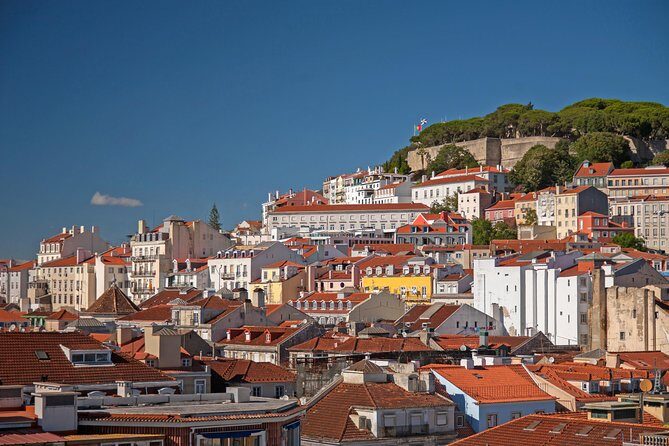
If you only have half a day in Lisbon, this is the kind of tour that actually helps you make sense of the city. Four hours sounds short until you see how the route is designed: you start high, look out over the Tagus River, then you gradually work your way down through the old districts and finish in Belém where Portugal’s maritime story becomes visible in stone.
What I like is that you get a “cause-and-effect” feel. The tour doesn’t treat Lisbon’s sites like separate attractions. It connects them through the Golden Age period—when voyages, trade, and global politics pushed the city into a new role. You’ll leave with more than photos. You’ll know what each view or building is saying.
Also, the format is practical. You ride in an air-conditioned mini van, and you walk only when the story needs it. The stops are timed (often around 10–30 minutes each), so you’re not stuck waiting around or losing the thread when energy runs low.
One more practical note: because the route is heavy on viewpoints and older streets, good shoes help. Portugal starts getting dark earlier in the October–March period (from 6pm onward), so if you’re traveling then, I’d aim for an earlier start so the light is on your side for the hilltop stops.
You can also read our reviews of more guided tours in Lisbon



The Van + Driver-Guide Setup That Keeps the Day Smooth
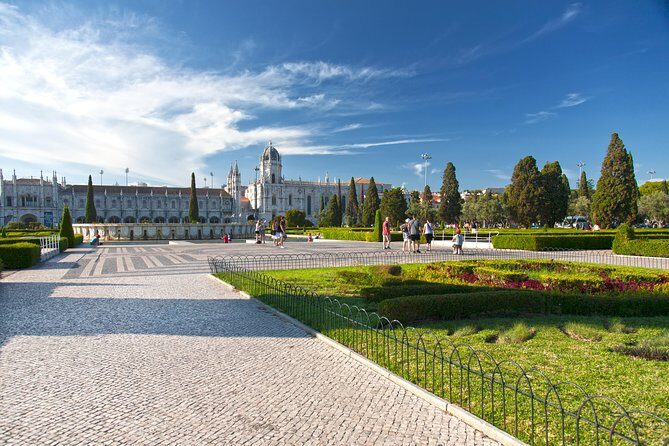
This is a private tour with a full-time driver/guide leading you through the day. That matters because Lisbon isn’t laid out like a grid. Without guidance, you can spend time figuring out directions, then lose time that should go to learning and seeing.
Because it’s private, you control the pace within the route. One review highlighted that the guide (Daniel) accommodated limited walking for a spouse while still covering the significance of each stop. That’s exactly what you want from a private format: not just “show up and talk,” but adjust how you move while keeping the narrative intact.
There’s also a comfort factor. You’re in an air-conditioned mini van, plus you’re provided fresh water. It’s a small thing, but in Lisbon’s warmer months it changes how you experience the walking stops.
Finally, the tour is in English. If you prefer history explained in plain, human terms, that language match helps. And since the tour uses a mobile ticket system, you don’t have to wrestle with paper tickets at each point.
Miradouro de Santa Luzia to St. George’s Castle: Views With a Point
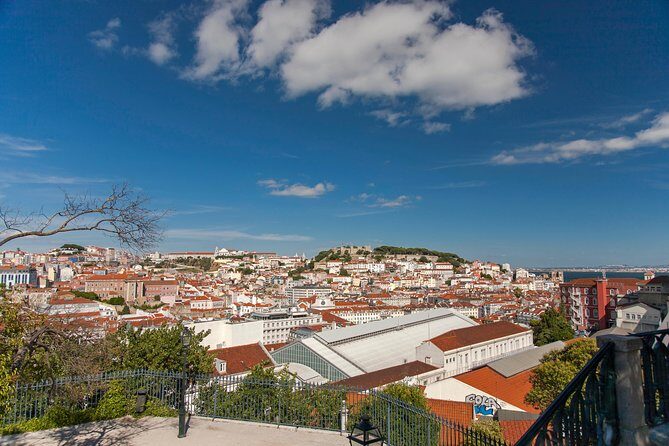
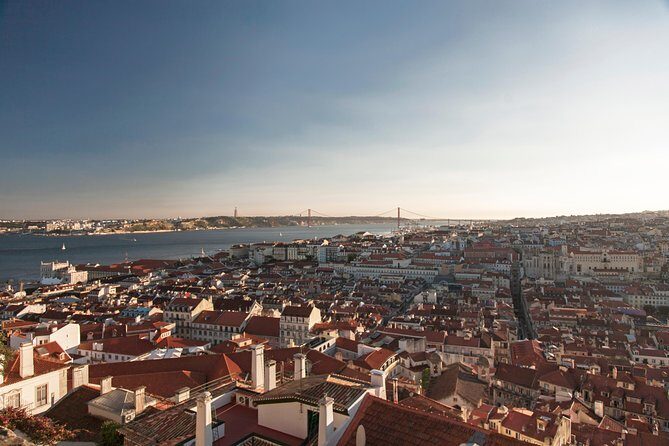
The day begins where Lisbon makes sense instantly: Miradouro de Santa Luzia. This viewpoint looks over the Tagus River with the red roofs of the medieval district below. It’s the kind of spot that makes you understand why the city grew as it did. Water, trade routes, and geography are the hidden engine behind a lot of Lisbon’s development.
Expect about 20 minutes here. Admission is listed as free, so you can focus on the view and the guide’s framing. I find viewpoint stops are most useful when someone explains what you’re looking at—like where the city’s earlier layout shows up—and this tour does that rather than treating the viewpoint like a passive waiting area.
Next comes Igreja de Santiago. You’ll hear about a five-hundred-year-old espionage case tied to major Modern Period events. It’s a clever change of pace. Instead of another “pretty church,” you get a story about power, information, and how global events ripple down into local places.
Then you head to St. George’s Castle. You’ll explore the citadel and belvedere areas, but the package does not include visiting inside the castle. For me, that’s a smart trade-off in a four-hour tour: you still get sweeping panoramas and the sense of where Lisbon began, without spending extra time on longer interior logistics.
You’ll spend around 20 minutes in this zone. Admission is listed as free for the included experience parts, but remember the tour notes entrance fees are not included. Practically, that means if you want to step into places with separate ticketing, you’d need to pay those separately (or choose a different tour day if a site you want is closed).
One more thing: if you’re sensitive to stairs or cobblestones, this is still a lot of old-city walking. The upside is that the route includes mini-van transfers and timed stops, and the guide can often adjust how you move, as shown by Daniel’s accommodation for limited walking.
Alfama’s Narrow Streets and Praca do Comercio’s Big Transition
After the hilltop views, you descend into Alfama—Lisbon’s oldest neighborhood. The magic here is that Alfama doesn’t feel like it was built for a brochure. It feels old because it is old, with narrow streets and architecture shaped by centuries of change.
You’ll have about 30 minutes here. That’s enough time to experience the neighborhood’s texture without feeling rushed through it like a photo line. The guide ties Alfama to the Golden Age evolution—how the city’s 16th-century architecture reflects an economic and cultural boom. You’ll get a better sense of why Lisbon’s “old” doesn’t mean “stuck in time.” It means layers.
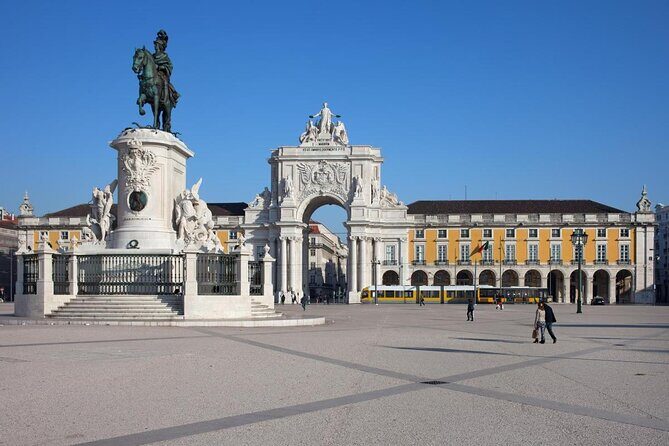
From there, you move toward Praca do Comercio (Terreiro do Paço). This is the opposite mood: wide open space, grandeur, and a clear connection to the port. The guide will help you picture what was happening when goods arrived by sea and when royal power shaped the city’s public face.
Expect about 15 minutes here. Admission is listed as free. What’s worth your attention is not just the square itself, but the transition it represents. The story shifts from medieval obscurity to the cosmopolitan energy of the modern era—especially when the city becomes tied to maritime trade and discovery routes.
If you like history that explains why cities feel the way they do, Praca do Comercio is a great anchor. It’s where you can mentally connect Lisbon’s past to the river it grew around.
Bairro Alto, Bica, Cais do Sodre, and Madragoa’s Cultural Blend
Next is Bairro Alto and nearby areas, including a stop that connects toward Bica and Cais do Sodré. This is where the tour adds an intellectual and social angle to the maritime theme.
You’ll spend around 15 minutes here, and the guide will point out a statue of a prominent intellectual who challenged 17th-century society and fought slavery. The tour also references Portugal’s first decree condemning slavery in 1761. Even if you don’t know Portuguese history details, this part helps you see that Lisbon’s Golden Age wasn’t only ships and wealth. It also created debates and moral pressure.
Then you move toward Madragoa, described as a neighborhood in Europe fully inhabited by African people. You’ll hear about how beliefs and traditions were practiced there, creating cultural blending. For me, this is one of the tour’s most important moments because it broadens the usual “Europe, explorers, capitals” story.
It’s still time-limited—about 15 minutes in this zone—so don’t expect a deep neighborhood immersion. But you do get a guided reminder that Lisbon’s global ties were not one-direction only.
A practical tip: this segment works best if you keep your phone away for a second and just listen. The streets can be busy and visually tempting, so missing the guided context makes the stop feel like random wandering.
You can also read our reviews of more private tours in Lisbon




Belém’s Key Stops: Jerónimos, Pastel de Belém, and the Tagus Finale
Now you’re at the part of Lisbon where the story becomes physical. Belém is where Portugal’s maritime ambitions show up in major monuments, and this tour uses that fact well.
First, you’ll go to Capela de São Jerónimo, described as a charming chapel and a quieter architectural moment. You’ll only have about 10 minutes, so treat it as a palate cleanser—an atmospheric break before the big names.
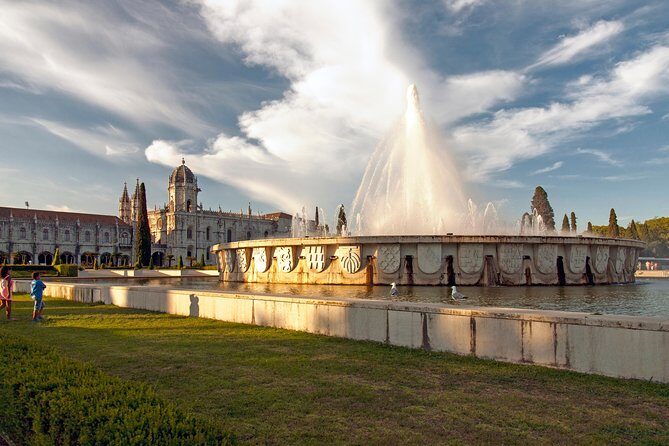
Then comes Jerónimos Monastery. The tour visits from the outside and includes the church area. The Manueline style is the highlight—architecture influenced by sea voyages and the idea of a Fifth Empire. This is one of the places where the Golden Age feels less like a lecture and more like a material design language.
The monastery church is listed as closed on Mondays. The tour notes you visit the church when open, so if you’re traveling on a Monday, plan for more exterior viewing and adjust expectations for interior time.
After that, you get the scheduled sweet break: Pastel de Belém. You’ll enjoy the tasting with about 20 minutes in Belém. This is included, and it’s one of those small value-adds that changes your memory of the day. Instead of buying a pastry as an afterthought, you’re eating it at the end of a narrative arc about sea trade and cultural identity—exactly where it fits.
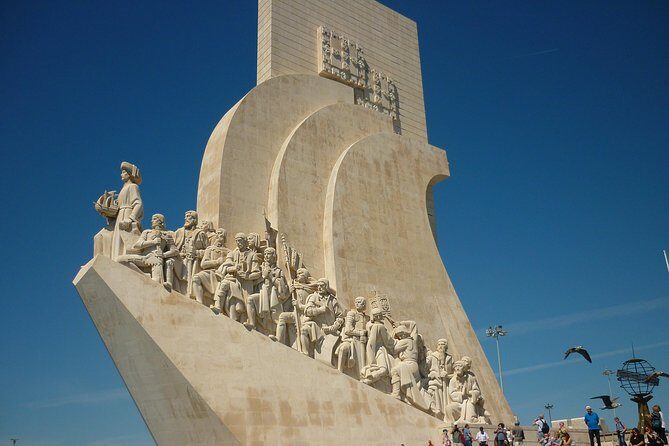
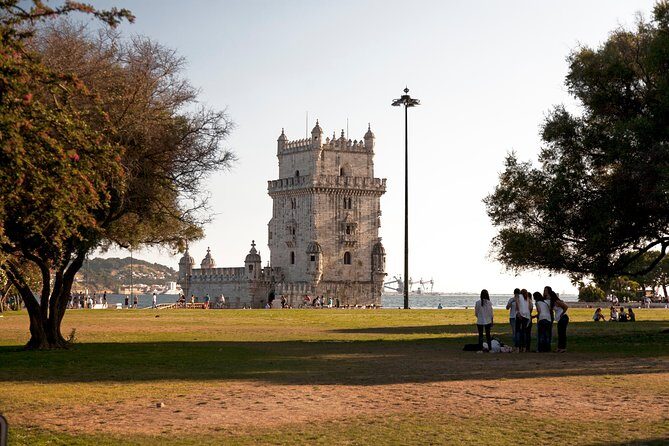
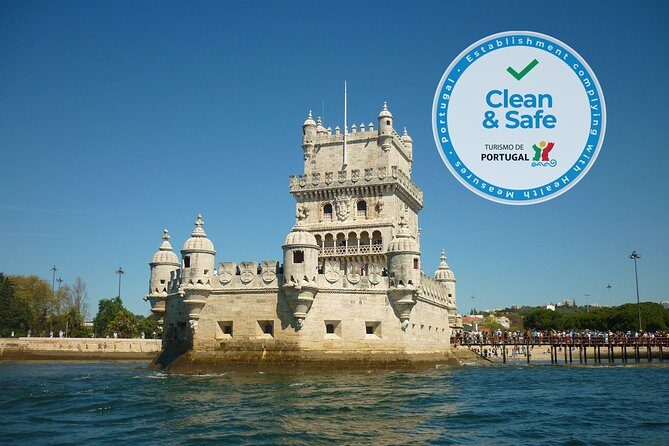
You’ll finish with Tagus River waterfront landmarks: Belém Tower (outside only) and the Monument to the Discoveries. The tower is described as a symbol of Lisbon and Portuguese nationality, standing sentinel over the maritime past. The Monument to the Discoveries celebrates explorers who launched from Lisbon and ushered in the Golden Age.
Expect around 15 minutes for the tower and discoveries stops combined. Admission is listed as free, so you’re paying for guidance and timing, not tickets at the end of the day.
Price and Value: What $156.53 Per Person Covers
At $156.53 per person for about four hours, the value depends on what you want from Lisbon.
This price buys you three things: time efficiency, private guiding, and comfort. You get pickup and drop-off from central Lisbon hotels, the Lisbon Cruise Terminal, or Lisbon airport. You also get an air-conditioned mini van and fresh water. That combination matters if you’re juggling transit stress, limited time, or you don’t want to plan how to string together Belém, the hills, and the old districts on your own.
It also includes the Pastel de Belém tasting. That’s not a huge amount of food, but it’s a meaningful part of the experience because it’s planned into the route at the right moment.
What’s not included is entrance fees, and gratuities are not included either. Even though many listed stops show admission as free, the safest mindset is: treat the tour as a guided route with mostly free viewing points, and expect that any separately ticketed interior you want to add would cost extra.
Also, baggage transport is limited to four medium-sized suitcases. If you’re traveling with more than that, I’d plan lighter luggage or talk to the provider ahead of time so the van space doesn’t become an issue. (Nothing ruins a good sightseeing day like logistical stress.)
Who Should Book This Lisbon Golden Age Private Tour
This is a strong fit if you want history explained with a clear line connecting places. You’ll likely enjoy it if you’re the kind of person who notices street names, church facades, and why one neighborhood feels different from the next.
It’s also a good choice if you:
- Don’t want to organize routes across distant districts on your own
- Like viewpoints but don’t want to get lost trying to reach them
- Prefer a narrative guided by someone like Daniel or Diogo rather than reading a few plaques and guessing connections
- Want a scheduled pastry tasting instead of a random snack stop
If you hate walking, you might want to consider how much you’re comfortable with. The itinerary includes steep hill zones and older streets. The van helps with transfers, and guides can often adjust pace (that’s been highlighted in the experience), but you’ll still do some walking.
If you already know Lisbon very well and want long museum time, you might feel this is too short for interior-only experiences. It’s built for orientation, storytelling, and key exterior views, not a full museum day.
Should You Book It?
I’d book this tour if you want a guided Golden Age overview that feels organized, human, and efficient. The combination of Santa Luzia orientation, Alfama atmosphere, and Belém’s maritime monuments gives you a full arc in one half-day.
Skip it only if you specifically want lots of inside-ticket time or you’re traveling on a day when a key interior you care about is closed. For Monday travel, Jerónimos Monastery Church being closed is the one detail that can change the feel of the ending.
If you’re trying to choose between DIY wandering and a private guided loop, this is a solid middle path: structured enough to save time, flexible enough to keep it comfortable, and story-led so you understand what you’re seeing.
FAQ
What’s included in the Lisbon Golden Age private tour?
The tour includes a private trip in an air-conditioned mini van, a driver/guide for the full time, fresh water, pickup and drop-off from central Lisbon hotels, Lisbon Cruise Terminal, or Lisbon airport, and a Pastel de Belém tasting.
How long is the tour?
It runs for about 4 hours.
Is this a private tour or a group tour?
It’s a private tour, so only your group participates.
Are entrance fees included?
Entrance fees are not included. The itinerary includes stops that are listed as free, but if you want an entrance to a ticketed interior, you should expect separate costs.
Will I visit the Jerónimos Monastery Church?
The tour includes visiting the church, but it notes the church is closed on Mondays.
Do you pick up from hotels and the airport?
Yes. Pickup is included from central Lisbon hotels, the Lisbon Cruise Terminal, or Lisbon airport. You’ll need to tell them your pickup location.
Is there a luggage limit?
Yes. Baggage transport is limited to 4 medium-sized suitcases.