REVIEW · LISBON
Lisbon Sunset Sailing with Portuguese Wine and History
Book on Viator →Operated by Breeze Passion · Bookable on Viator
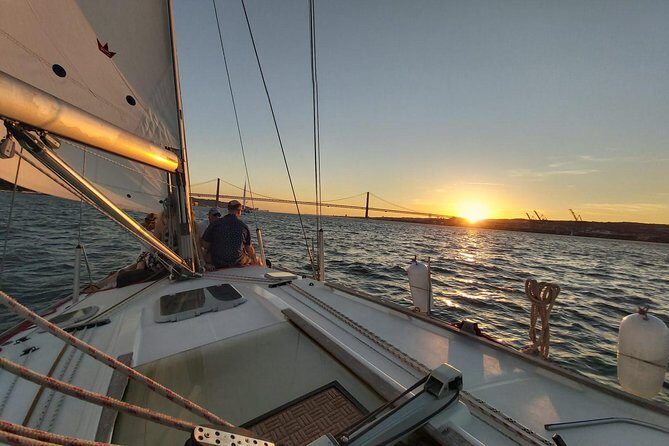
Sunset looks better from a sailboat. This Lisbon cruise mixes happy hour drinks with live commentary, so you’re not just staring at pretty water—you’re learning why the city looks the way it does from the Tagus River.
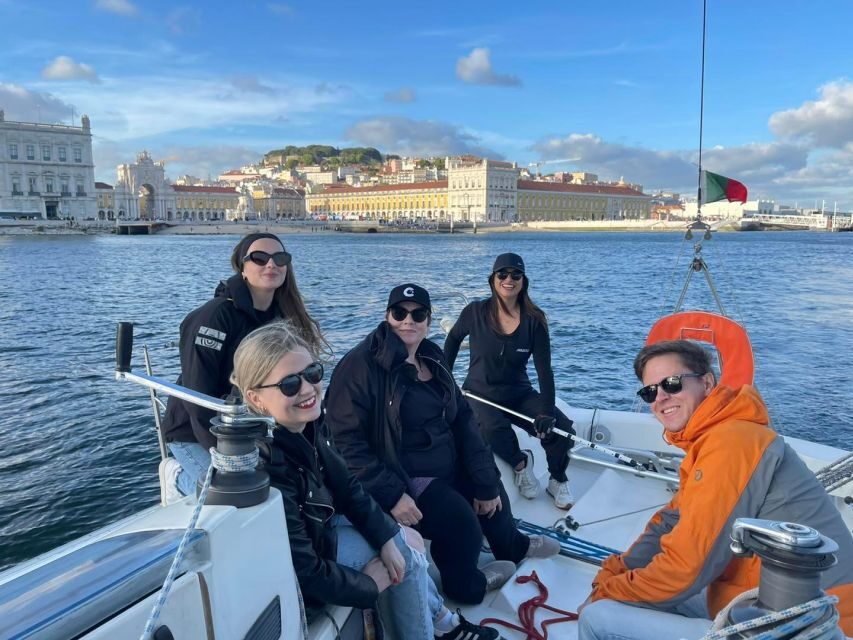
I especially love the small-group feel (max 14), which keeps the vibe relaxed and makes it easy to ask questions. The crew guiding you past key sights like Belém Tower and Praça do Comércio turns a simple sail into a fast, visual orientation to Lisbon.
One thing to consider: this experience needs good weather, and it can get chilly on the water at sunset. Dress for wind, even if the city feels mild on land.
In This Review
- Key highlights worth your time
- Doca de Santo Amaro: where the Tagus views start
- The real value: drinks + a small-group sunset that teaches you Lisbon fast
- How the route shows Lisbon as a living map
- The Tagus bridge-and-battlements view: 25th April Bridge to Christ the King
- Praça do Comércio and the Arco da Rua Augusta: Lisbon’s grand entry
- St. George’s Castle and Alfama: the medieval hill as a sunset backdrop
- Getting your bearings: Vasco da Gama Bridge and the newer Lisbon skyline
- Time Out Market, National Pantheon, Bairro Alto, and Cais do Sodré from the river
- Belém’s royal and cultural sites: Palace gardens to Electric history
- The maritime storyline: Hidroavião Lusitania and the Discoveries monument
- Jerónimos Monastery and Belém Tower: UNESCO scale in sunset light
- The last stretch: Champalimaud Research Center and Bugio lighthouse
- Comfort and timing tips that actually help
- Who should book this sunset sail
- Should you book this Lisbon sunset sailing tour?
- FAQ
- FAQ
- How long is the sunset sailing tour?
- How much does the tour cost?
- What drinks are included onboard?
- Where is the meeting point?
- Is this a shared tour?
- Is the ticket valid for any time, or only one session?
Key highlights worth your time
- Small group (max 14): you won’t feel like you’re packed in like a bus.
- Portuguese Vinho Verde included: plus iced tea and bottled water.
- Guided history from the river: landmarks are explained as you pass them.
- Comfort extras onboard: blankets are included, and wind can be a factor at sunset.
- Multiple Lisbon “eras” in one loop: medieval hills, modern bridges, and Belém’s maritime monuments.
Doca de Santo Amaro: where the Tagus views start
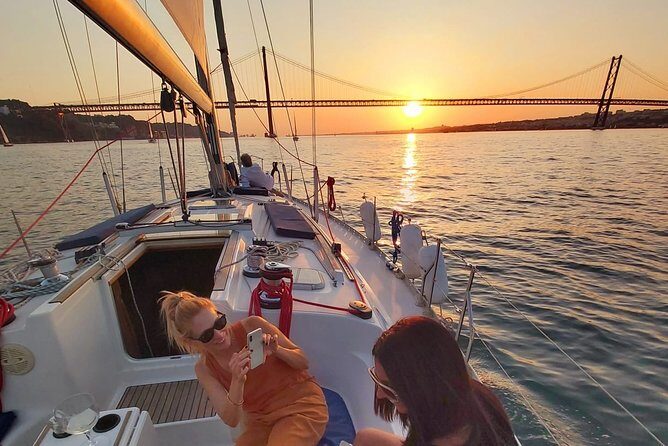
Your tour begins at Doca de Santo Amaro (1300 Lisbon), and it loops back to the same meeting point. That matters more than it sounds. You’re not spending your evening in transit trying to find “the right dock” or guessing how you’ll get back afterward.
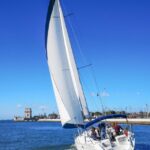
The vibe here is very “Lisbon evening.” You’ll be on a shared sailboat with a small max of 14 guests, and the pace stays easy enough that you can actually enjoy what you’re seeing—rather than scanning for the next stop like a checklist.
Also, this runs as a mobile ticket for a specific session, so plan to arrive on time. Even if you’re not stressed about logistics, the sunset clock is real: you want to settle in before the light changes.
You can also read our reviews of more boat tours in Lisbon

The real value: drinks + a small-group sunset that teaches you Lisbon fast
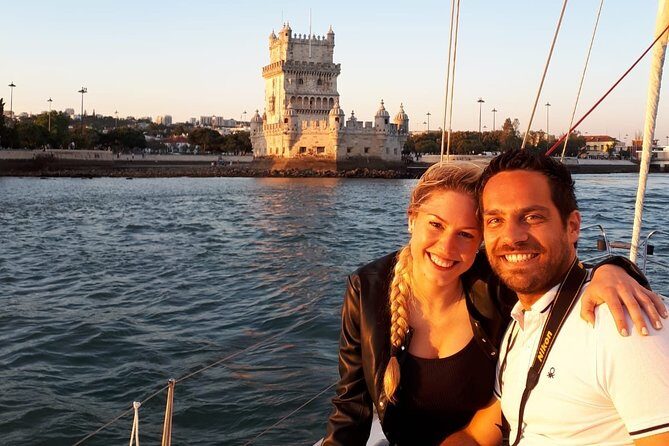
At $54.42 per person for about 2 hours, this is a practical deal—mainly because the ticket includes the drinks and because you get guided context. Included beverages are Vinho Verde (alcoholic), iced tea, and bottled water, plus blankets and two crew/guides.
Why that’s good value: on many Lisbon tours, you pay for the sights and then pay extra for refreshments. Here, your “happy hour” is part of the package. In the reviews, people kept talking about the wine staying generous, and that lines up with how this kind of hosted sailing tends to work—crew checks in, chats, and keeps things moving without feeling like a party drill.
The other value piece is scale. A max of 14 means you don’t lose the human interaction. Names like Pedro and David show up repeatedly in the feedback, with people praising them for mixing history with a friendly, personal tone.
How the route shows Lisbon as a living map
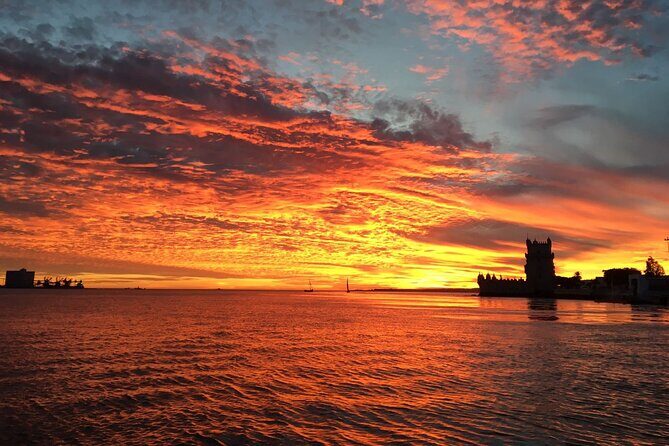
This cruise is basically a moving viewpoint. You’re sailing and scanning the skyline, but the guide connects the landmarks into a story: bridges and defense, religious monuments and royal power, then Belém’s Age of Discovery legacy.
Expect to see a long list of iconic sites—often from the water rather than from inside buildings. That’s the point of doing this at sunset: you get broad angles and dramatic silhouettes without spending your time standing in lines or waiting for timed entry windows.
Here’s the route flow in plain English, with what to look for at each “moment.”
The Tagus bridge-and-battlements view: 25th April Bridge to Christ the King
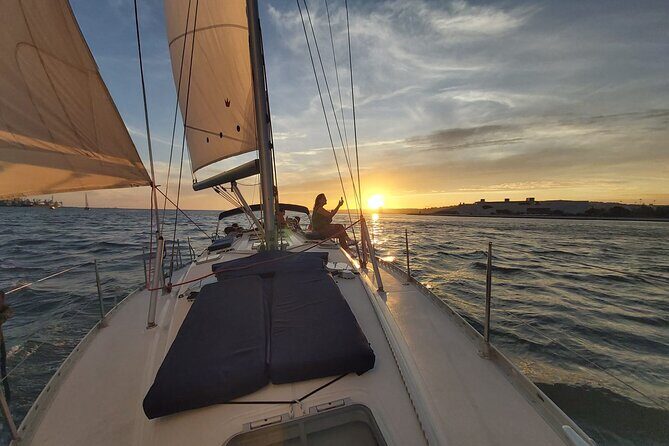
First up is the 25th April Bridge, the suspension bridge spanning the Tagus between Lisbon and Almada. It was built in the 1960s and was originally called the Salazar Bridge. From the water, you’ll see it less like an engineering landmark and more like a visual divider between neighborhoods and eras.
Then the sail carries you toward the south bank area for Christ the King in Almada. It’s a religious monument inspired by the Christ the Redeemer statue in Rio de Janeiro, and it’s best known here for views back toward Lisbon. From the river, you get the scale working in your favor: you’re low enough to feel near the city, but far enough to see the whole geometry of hills and rooftops.
Practical note: viewpoints like these are gorgeous, but don’t expect the guide to slow down for perfect photo timing every minute. It’s still a sail, and the crew’s job is to keep it smooth. If you’re serious about photos, keep your camera ready as the light starts shifting.
Praça do Comércio and the Arco da Rua Augusta: Lisbon’s grand entry
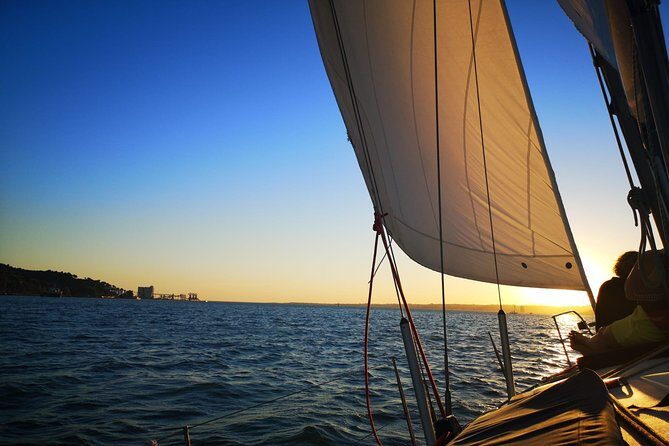
Next, you’ll see Praça do Comércio (also called Terreiro do Paço) near the Tagus. This is Lisbon’s big, open ceremonial space, once the site of the Royal Ribeira Palace before it was destroyed by the 1755 earthquake.
Right at the edge of that square is the Arco da Rua Augusta (the Augusta Street Arch), built in the 18th century with sculptures and decorative elements. From the water, these look like they belong to a different Lisbon than the one of steep hills and tiled façades. They’re Lisbon’s “formal face,” and the river gives you a chance to compare the city’s moods side by side.
Why this matters: many first-timers focus only on Alfama or Belém. This stretch reminds you that Lisbon also learned how to rebuild and plan—big spaces, big statements, and lines that guide your eye along the waterfront.
You can also read our reviews of more historical tours in Lisbon




St. George’s Castle and Alfama: the medieval hill as a sunset backdrop
As you move along the central skyline, you’ll get views of St. George’s Castle, a medieval hilltop complex built in the 11th century that served as both royal palace and military fortress.
Then comes Alfama, one of Lisbon’s oldest neighborhoods, known for winding streets, colorful houses, and traditional fado. Even if you don’t step into Alfama during this sail, you can understand it better from above-and-beside: it’s built into the terrain, not onto it. The river angle highlights how the city clings to the slopes.
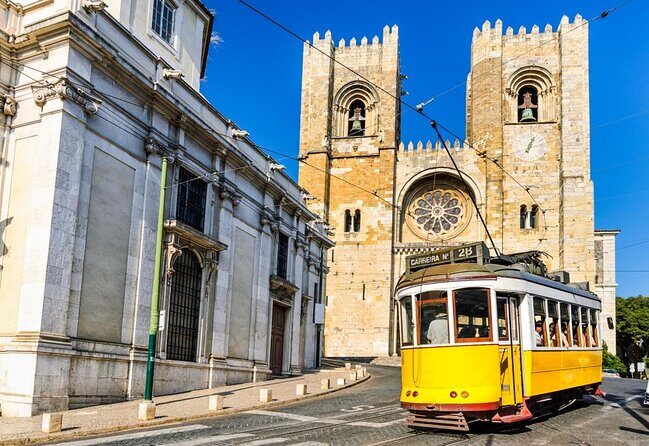
The cruise also includes the Sé de Lisboa (Lisbon Cathedral) in the Alfama area. It dates to the 12th century and mixes Romanesque, Gothic, and Baroque styles. Seeing it from the water helps you spot the layered look—like the building is a timeline you can’t miss.
One drawback to plan for: because this is a sailing experience, you’re not going up into the castle or down into narrow alley streets. You’ll trade “inside time” for sweeping sunset sightlines.
Getting your bearings: Vasco da Gama Bridge and the newer Lisbon skyline
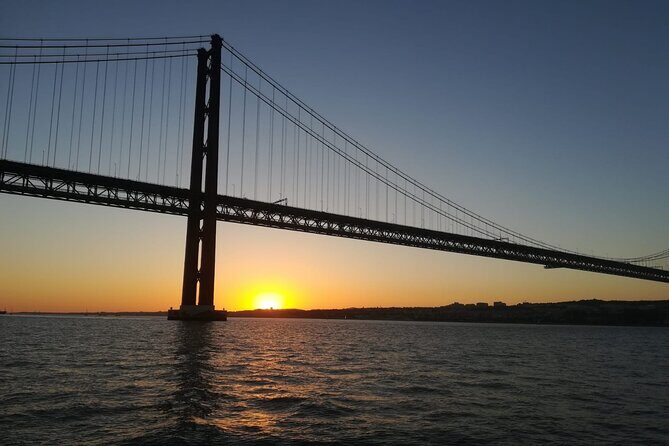
The cruise also passes by the Vasco da Gama Bridge, one of the longest bridges in Europe and opened in 1998 for the World Expo in Lisbon. It’s a different kind of landmark than the hilltop medieval sites: more modern lines, more stretch, and a reminder of how Lisbon keeps growing outward.
If you’re a “first evening in town” visitor, this is helpful. You’ll start to see Lisbon not as one postcard view, but as multiple layers—old core, working port, then newer infrastructure that reshapes how the city connects.
Time Out Market, National Pantheon, Bairro Alto, and Cais do Sodré from the river
This part of the sailing route leans into Lisbon’s present-day rhythm. You’ll get sightlines connected to Time Out Market Lisboa (reinvention of Mercado da Ribeira in Cais do Sodré). It’s tied to top chefs under one roof, and even if you don’t stop there on this sail, the river view helps you connect the food scene to the surrounding neighborhoods.
You’ll also see the National Pantheon, originally a church later converted into a national monument in the 20th century, with tombs of famous Portuguese figures. From the water, the Pantheon works as a landmark more than a destination—an anchor point for understanding “where you are” as your evening progresses.
Then it’s the neighborhoods: Bairro Alto (bohemian nightlife and street art) and Cais do Sodré (once a port area, now known for bars, restaurants, and street art). The river perspective makes these areas feel more connected than they do on foot—like Lisbon’s nightlife and Lisbon’s history are part of the same shoreline story.
If you want to do both, here’s the practical play: take this sail early in your stay so it helps you map the city. Then later, you can go back on foot to the neighborhoods that felt most “you.”
Belém’s royal and cultural sites: Palace gardens to Electric history
As the route heads toward Belém, you’ll pass by Belém Palace, the official residence of the President of Portugal, built in the 18th century and surrounded by gardens.
Then there’s the Pasteis de Belém Coffee House, famous for pastéis de nata, a classic Portuguese pastry. On a sail, you won’t taste everything, but you’ll understand why Belém is food-famous the way Lisbon is music-famous. It’s part of the same cultural loop: ships, explorers, then the everyday comforts people built into life afterward.
A little different, and worth paying attention to, is the Electricity Museum, inside a historic power station with interactive exhibits and workshops. This is Lisbon showing you it’s not only about old monuments. It also has a modern science story—still tied to the same waterfront energy.
The cruise also includes Ajuda Palace, once the royal family residence until the end of the monarchy in 1910, now a museum with decorative arts. The Centro Cultural de Belém (CCB) also appears, a modern arts center tied to music, theater, and literature.
From the river, these locations feel like two Beléms: one formal and royal, one artistic and contemporary. That contrast is a big reason the route feels complete.
The maritime storyline: Hidroavião Lusitania and the Discoveries monument
Belém is where Lisbon’s sea story goes from “background” to “headline.” You’ll see the Hidroavião Lusitania Sacadura Cabral e Gago Coutinho monument commemorating the 1922 historic flight from Lisbon to Rio de Janeiro.
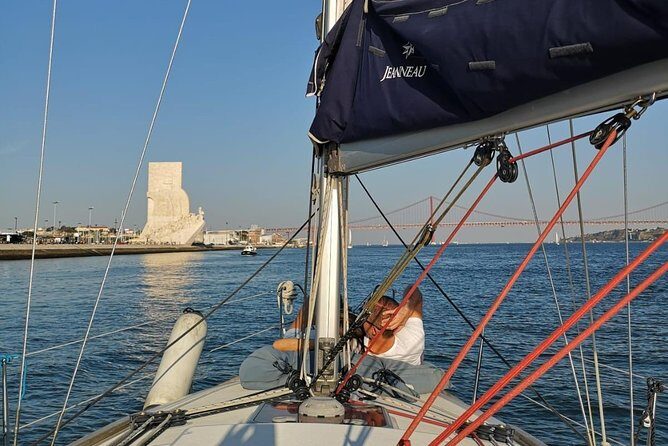
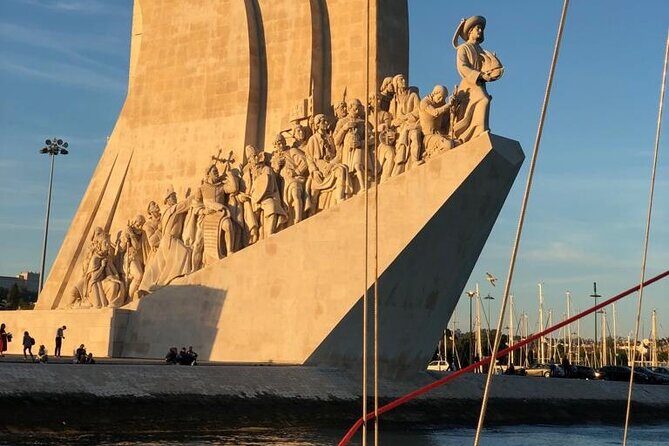
Nearby is the Monument to the Discoveries (Padrão dos Descobrimentos), built in 1960 to mark the Age of Discovery and depicting famous explorers. From water level, you’ll likely clock the scale quickly. These aren’t small statues meant to be stared at for an hour indoors. They’re meant to be seen as part of the waterfront.
Jerónimos Monastery and Belém Tower: UNESCO scale in sunset light
This is the “wow” sequence for a lot of first-timers. You’ll see the Jerónimos Monastery, a UNESCO World Heritage site and a masterpiece of Portuguese Gothic architecture built in the 16th century. It originally served as a monastery and a place of prayer for sailors departing on voyages of discovery.
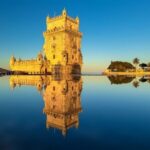
Then you’ll see Belém Tower, the iconic maritime symbol built in the 16th century. It served defense purposes and acted as a ceremonial gateway for ships arriving and departing.
Why sailing works so well here: at sunset, you get soft shadows on the stonework and long lines that make Gothic details pop without harsh midday glare. You also get the feeling that these buildings are still tied to the working river, not trapped in a museum bubble.
The last stretch: Champalimaud Research Center and Bugio lighthouse
As you continue, you’ll pass the Champalimaud Research Center, a state-of-the-art biomedical research facility in Belém. It’s a reminder that Lisbon’s waterfront is not frozen in the 1500s. It’s still a place for innovation.
Then the cruise ends with the Bugio area. Bugio is a small island in the Tagus, and it’s home to a lighthouse built in the 16th century that helps guide ships into the port of Lisbon.
This closing beat is useful if you like “theme endings.” You start with bridges and city layout, move through medieval Lisbon and modern neighborhoods, then land on maritime infrastructure and exploration monuments. By the time you’re back near Santo Amaro, it all clicks.
Comfort and timing tips that actually help
Here’s what I’d do if I were planning your evening:
- Bring layers. Blankets are included, but wind can still bite at sunset on the water. People have noted windbreakers too, but don’t count on them to replace warm clothing.
- Give yourself a little buffer at the meeting point. This tour is session-based, and it runs as a shared experience with a max of 14.
- Plan for motion. It’s a sail, so expect some rocking and deck movement, especially if the wind picks up.
- Keep your expectations realistic about “time in stops.” This is a river-view tour. Most sites are for seeing and understanding, not for walking and exploring inside.
Also, the cruise requires good weather. If conditions aren’t right, the experience may be offered on a different date or you get a full refund. That’s a key point for planning your Lisbon itinerary, especially if you only have one free evening.
Who should book this sunset sail
This is a strong fit if:
- You want a first-evening orientation to Lisbon that doesn’t burn hours in transit.
- You like history but don’t want lectures that feel like school.
- You want a relaxing plan that includes Vinho Verde and stays social without being crowded.
- You’re traveling with mixed ages. The reviews include families and groups spanning kids to seniors, and the pace looks easy to manage.
It may not be your best choice if you hate the idea of being outside in wind, or if you want a “stops and entrances” itinerary instead of river views.
Should you book this Lisbon sunset sailing tour?
Yes, if you want an efficient, feel-good evening with real Lisbon context. For $54.42, you’re not just buying a boat ride. You’re getting a hosted sunset, two crew/guides, and included drinks like Vinho Verde plus iced tea and bottled water—on a boat capped at 14 passengers.
If the weather lines up, this is the kind of tour that makes Lisbon feel larger and easier at the same time. The crew names Pedro and David come up often for a reason: people remember the mix of stories, friendly attention, and the simple pleasure of watching the city glow from the Tagus.
FAQ
FAQ
How long is the sunset sailing tour?
It runs for about 2 hours.
How much does the tour cost?
The price is $54.42 per person.
What drinks are included onboard?
You get Vinho Verde (alcoholic), iced tea, and bottled water.
Where is the meeting point?
The meeting point is Doca de Santo Amaro 1300 Lisbon, Portugal, and the tour ends back at the same place.
Is this a shared tour?
Yes. It’s a shared experience with a maximum of 14 travelers onboard.
Is the ticket valid for any time, or only one session?
The ticket is valid only for the indicated session.